The Cabibbo-Kobayashi-Maskawa matrix elements 1Vcb1 and 1Vub1 can be obtained by combining data from the experiments with lattice QCD results for the semileptonic form factors for the B over bar -> D*e nu over bar and B over bar -> pi e nu over bar decays. It is highly desirable to use the Oktay-Kronfeld (OK) action for the form factor calculation on the lattice, since the OK action is designed to reduce the heavy quark discretization error down to the O(a4?4) similar or equal to O(?4=(2mQ)4) level in the power counting rules of the heavy quark effective theory (HQET). Here, we present a matching calculation to improve heavy-heavy and heavy-light currents up to the lambda 3 order in HQET, the same level of improvement as the OK action. Our final results for the improved currents are being used in a lattice QCD calculation of the semileptonic form factors for the
The Cabibbo-Kobayashi-Maskawa matrix elements 1Vcb1 and 1Vub1 can be obtained by combining data from the experiments with lattice QCD results for the semileptonic form factors for the B over bar -> D*e nu over bar and B over bar -> pi e nu over bar decays. It is highly desirable to use the Oktay-Kronfeld (OK) action for the form factor calculation on the lattice, since the OK action is designed to reduce the heavy quark discretization error down to the O(a4?4) similar or equal to O(?4=(2mQ)4) level in the power counting rules of the heavy quark effective theory (HQET). Here, we present a matching calculation to improve heavy-heavy and heavy-light currents up to the lambda 3 order in HQET, the same level of improvement as the OK action. Our final results for the improved currents are being used in a lattice QCD calculation of the semileptonic form factors for the
We present an update on the calculation of $\bar{B}\to D^\ast \ell \bar{\nu}$ semileptonic form factor at zero recoil using the Oktay-Kronfeld bottom and charm quarks on $N_f=2+1+1$ flavor HISQ ensembles generated by the MILC collaboration. Preliminary results are given for two ensembles with $a\approx 0.12$ and $0.09$ fm and $M_\pi\approx 310$ MeV. Calculations have been done with a number of valence quark masses, and the dependence of the form factor on them is investigated on the $a\approx 0.12$ fm ensemble. The excited state is controlled by using multistate fits to the three-point correlators measured at 4--6 source-sink separations.
We present updated results for $\varepsilon_K$ determined directly from the standard model (SM) with lattice QCD inputs such as $\hat{B}_K$, $|V_{cb}|$, $|V_{us}|$, $\xi_0$, $\xi_2$, $\xi_\text{LD}$, $f_K$, and $m_c$. We find that the standard model with exclusive $|V_{cb}|$ and other lattice QCD inputs describes only 65\% of the experimental value of $|\varepsilon_K|$ and does not explain its remaining 35\%, which leads to a strong tension in $|\varepsilon_K|$ at the $4.6\sigma \sim 4.2\sigma$ level between the SM theory and experiment. We also find that this tension disappears when we use the inclusive value of $|V_{cb}|$ obtained using the heavy quark expansion based on QCD sum rules.
The CKM matrix element | V cb | can be extracted by combining data from experiments with lattice QCD results for the semileptonic form factors for the B̅ → D(*)lv̅ decays. The Oktay-Kronfeld (OK) action was designed to reduce heavy-quark discretization errors to below 1%, or through O(λ 3 ) in HQET power counting. Here we describe recent progress on bottom-to-charm currents improved to the same order in HQET as the OK action, and correct formerly reported results of our matching calculations, in which the operator basis was incomplete.
Using the MILC 2+1 flavor asqtad quark action ensembles, we are calculating the form factors f0 and f+ for the semileptonic Bs → Kℓv decay. A total of six ensembles with lattice spacing from ≈ 0.12 to 0.06 fm are being used. At the coarsest and finest lattice spacings, the light quark mass m’l is one-tenth the strange quark mass m’s. At the intermediate lattice spacing, the ratio m’l/m’s ranges from 0.05 to 0.2. The valence b quark is treated using the Sheikholeslami-Wohlert Wilson-clover action with the Fermilab interpretation. The other valence quarks use the asqtad action. When combined with (future) measurements from the LHCb and Belle II experiments, these calculations will provide an alternate determination of the CKM matrix element |Vub|.
We present the first preliminary results for the semileptonic form factor hA1 (w = 1)/ρAj at zero recoil for the B → D*lv decay using lattice QCD with four flavors of sea quarks. We use the HISQ staggered action for the light valence and sea quarks (the MILC HISQ configurations), and the Oktay-Kronfeld (OK) action for the heavy valence quarks.
We report a strong tension in $varepsilon_K$ at the $4sigma$ level between the experimental value and the theoretical value calculated directly from the standard model using lattice QCD inputs such as $hat{B}_K$, $|V_{cb}|$, $|V_{us}|$, $xi_0$, $xi_2$, $xi_text{LD}$, $F_K$, and $m_c$. The standard model with lattice QCD inputs describes only 70% of the experimental value of $varepsilon_K$, and does not explain its remaining 30%. We also find that this tension disappears when we use the inclusive value of $|V_{cb}|$ (results of the heavy quark expansion based on QCD sum rules) determine $varepsilon_K$. This tension is highly correlated with the present discrepancy between the exclusive and inclusive values of $|V_{cb}|$. In order resolve, in part, the issue with $|V_{cb}|$, it would be highly desirable have a comprehensive re-analysis over the entire set of experimental data on the $bar{B} to D^* ell bar{nu}$ decays using an alternative parametrization of the form factors, such as the BGL parametrization, and a comparison with results of the CLN method.
Jon A. Bailey ∗a†, A. Bazavov b, C. Bernard c, C. Bouchard e, C. DeTard, A.X. El-Khadra e, E.D. Freeland c, W. Freeman b, E. Gamiza,e, Steven Gottlieb e, f ,g, U.M. Heller h, J.E. Hetrick i, A.S. Kronfeld a, J. Laiho c, L. Levkova d, P.B. Mackenzie a, M.B. Oktay d, M. Di Pierro j , J.N. Simone a, R. Sugar k, D. Toussaint b, and R.S. Van de Water l aTheoretical Physics Department, Fermilab, Batavia, IL 605 1 , USA bDepartment of Physics, University of Arizona, Tucson, AZ 85 721, USA cDepartment of Physics, Washington University, St. Louis, M O 63130, USA dPhysics Department, University of Utah, Salt Lake City, UT 8 4112, USA ePhysics Department, University of Illinois, Urbana, IL 618 01, USA f Department of Physics, Indiana University, Bloomington, I N 47405, USA gNational Center for Supercomputing Applications, Univers ity of Illinois, Urbana, IL 61801, USA hAmerican Physical Society, One Research Road, Ridge, NY 119 61, USA iPhysics Department, University of the Pacific, Stockton, CA 95211, USA jSchool of Computing, DePaul University, Chicago, IL 60604, USA kDepartment of Physics, University of California, Santa Bar bara, CA 93106, USA l Department of Physics, Brookhaven National Laboratory, Up ton, NY 11973, USA
We present recent updates for $\varepsilon_K$ determined directly from the standard model (SM) with lattice QCD inputs such as $\hat{B}_K$, $|V_{cb}|$, $|V_{us}|$, $\xi_0$, $\xi_2$, $\xi_\text{LD}$, $f_K$, and $m_c$. We find that the standard model with exclusive $|V_{cb}|$ and other lattice QCD inputs describes only 66\% of the experimental value of $|\varepsilon_K|$ and does not explain its remaining 34\%, which leads to a strong tension in $|\varepsilon_K|$ at the $4.5\sigma \sim 3.7\sigma$ level between the SM theory and experiment. We also find that this tension disappears when we use the inclusive value of $|V_{cb}|$ obtained using the heavy quark expansion based on the QCD sum rule approach.
We report a strong tension in epsilon(K) at the 4 sigma level between the experimental value and the theoretical value calculated directly from the standard model using lattice QCD inputs such as (B) over cap (K), vertical bar V-cb vertical bar, vertical bar V-us vertical bar, xi(0), xi(2) xi(LD), F-K, and m(c). The standard model with lattice QCD inputs describes only 70% of the experimental value of QCD, and does not explain its remaining 30%. We also find that this tension disappears when we use the inclusive value of vertical bar V-cb vertical bar. (results of the heavy quark expansion based on QCD sum rules) to determine epsilon(K). This tension is highly correlated with the present discrepancy between the exclusive and inclusive values of vertical bar V-cb vertical bar In order to resolve, in part, the issue with vertical bar V-cb vertical bar, it would be highly desirable to have a comprehensive reanalysis over the entire set of experimental data on the (B) over bar -> D*I (v) over bar decays using an alternative parametrization of the form factors, such as the Boyd, Grinstein, and Lebed parametrization, and a comparison with results of the Caprini, Lellouch, and Neubert method.
We present an update on the calculation of $bar{B}to D^ast ell bar{nu}$ semileptonic form factor at zero recoil using the Oktay-Kronfeld bottom and charm quarks on $N_f=2+1+1$ flavor HISQ ensembles generated by the MILC collaboration. Preliminary results are given for two ensembles with $aapprox 0.12$ and $0.09$ fm and $M_piapprox 310$ MeV. Calculations have been done with a number of valence quark masses, and the dependence of the form factor on them is investigated on the $aapprox 0.12$ fm ensemble. The excited state is controlled by using multistate fits to the three-point correlators measured at 4--6 source-sink separations.
Lattice QCD calculations with different staggered valence and sea quarks can be used to improve determinations of quark masses, Gasser-Leutwyler couplings, and other parameters relevant to phenomenology. We calculate the masses and decay constants of flavored pions and kaons through next-to-leading order in staggered-valence, staggered-sea mixed-action chiral perturbation theory. We present the results in the valence-valence and valence-sea sectors, for all tastes. As in unmixed theories, the taste-pseudoscalar, valence-valence mesons are exact Goldstone bosons in the chiral limit, at non-zero lattice spacing. The results reduce correctly when the valence and sea quark actions are identical, connect smoothly to the continuum limit, and provide a way to control light quark and gluon discretization errors in lattice calculations performed with different staggered actions for the valence and sea quarks.
We present heavy-meson spectrum results obtained using the Oktay--Kronfeld (OK) action on MILC asqtad lattices. The OK action was designed to improve the heavy-quark action of the Fermilab formulation, such that heavy-quark discretization errors are reduced. The OK action includes dimension-6 and -7 operators necessary for tree-level matching to QCD through order $\mathrm{O}(\Lambda^3/m_Q^3)$ for heavy-light mesons and $\mathrm{O}(v^6)$ for quarkonium, or, equivalently, through $\mathrm{O}(a^2)$ with some $\mathrm{O}(a^3)$ terms with Symanzik power counting. To assess the improvement, we extend previous numerical tests with heavy-meson masses by analyzing data generated on a finer ($a \approx 0.12\;$fm) lattice with the correct tadpole factors for the $c_5$ term in the action. We update the analyses of the inconsistency parameter and the hyperfine splittings for the rest and kinetic masses.
Jon A. Bailey, A. Bazavov, C. Bernard, C. M. Bouchard, C. DeTar, Daping Du, A. X. El-Khadra, J. Foley, E. D. Freeland, E. Gámiz, Steven Gottlieb, U. M. Heller, R. D. Jain, J. Komijani, A. S. Kronfeld, J. Laiho, L. Levkova, Yuzhi Liu, P. B. Mackenzie, Y. Meurice, E. T. Neil, Si-Wei Qiu, J. N. Simone, R. Sugar, D. Toussaint, R. S. Van de Water, and Ran Zhou (Fermilab Lattice and MILC Collaborations)
Lattice calculations of the form factors for B̅→ D^(*)ℓν̅ decays can be used to extract the CKM matrix element |V_cb|. The Oktay-Kronfeld action is a highly improved version of the Fermilab action, which systematically reduces heavy quark discretization effects through 𝒪(λ^3) in HQET power counting, for heavy-light meson quantities. To calculate B̅→ D^(*)ℓν̅ semi-leptonic form factors using Oktay-Kronfeld heavy quarks, we need to improve the heavy quark currents to the same level. We report our progress in calculating the improvement coefficients for currents composed of bottom and charm quarks. Our results presented in this paper are preliminary.
We present results for the indirect CP violation parameter $\varepsilon_K$ determined directly from the standard model using lattice QCD to fix the inputs $\hat{B}_K$, $\xi_0$, $|V_{us}|$, and $|V_{cb}|$. We use the FLAG and SWME results for $\hat{B}_K$. We use the RBC-UKQCD result for $\xi_0$ determined using the experimental value of $\varepsilon'/\varepsilon$ and the lattice result of $\mathrm{Im}\,A_2$. To set the Wolfenstein parameter $\lambda$, we use $|V_{us}|$, which is determined from $K_{\ell3}$ and $K_{\mu2}$ decays combined with lattice evaluations of the $K \to \pi \ell \nu$ vector form factor and $f_K$. To set the Wolfenstein parameter $A$, we use the FNAL/MILC results for $|V_{cb}|$, which are determined from the exclusive decay $\bar{B} \to D^* \ell \bar{\nu}$ and the axial form factor at zero recoil. We also use the inclusive $|V_{cb}|$ obtained using the heavy quark expansion based on QCD sum rules and the OPE. We compare the results with those for exclusive $|V_{cb}|$. We find that the standard model prediction of $\varepsilon_K$ with exclusive $|V_{cb}|$ (lattice QCD results) is lower than the experimental value by 3.4$\sigma$. However, we observe no tension in $\varepsilon_K$ determined from inclusive $|V_{cb}|$.
We compute the form factors for the B --> Kl(+)l(-) semileptonic decay process in lattice QCD using gauge-field ensembles with 2 + 1 flavors of sea quark, generated by the MILC Collaboration. The ensembles span lattice spacings from 0.12 to 0.045 fm and have multiple sea-quark masses to help control the chiral extrapolation. The asqtad improved staggered action is used for the light valence and sea quarks, and the clover action with the Fermilab interpretation is used for the heavy b quark. We present results for the form factors f(+)(q(2)), f(0)(q2), and f(T)(q2), where q(2) is the momentum transfer, together with a comprehensive examination of systematic errors. Lattice QCD determines the form factors for a limited range of q(2), and we use the model-independent z expansion to cover the whole kinematically allowed range. We present our final form-factor results as coefficients of the z expansion and the correlations between them, where the errors on the coefficients include statistical and all systematic uncertainties. We use this complete description of the form factors to test QCD predictions of the form factors at high and low q(2).
The Oktay-Kronfeld action is a highly improved version of the Fermilab action and systematically reduces heavy quark discretization effects through O(λ) in HQET power counting, for the heavy-light meson spectrum. To calculate B̄ → D(∗)`ν̄ semi-leptonic form factors using Oktay-Kronfeld heavy quarks, we need to improve the heavy quark currents to the same level. We report our progress in calculating the improvement coefficients for currents composed of bottom and charm quarks.
 Andreas Kronfeld合作论文数Theoretical Physics Department, Technische Universitat Munchen;Fermi National Accelerator Laboratory, Technische Universitat Munchen;Institute for Advanced Study, Technische Universitat Munchen51
 Claude Bernard合作论文数Department of Physics, Arts & Sciences at Washington University in St.Louis44
 Steven A. Gottlieb合作论文数Department of Physics, College of Arts and Sciences, University Graduate School, Indiana University Bloomington44
 Carleton Detar合作论文数Department of Physics and Astronomy, The University of Utah43
 Urs M. Heller合作论文数American Physical Society41
 Doug Toussaint合作论文数Department of Physics, College of Science, University of Arizona41
 E. D. Freeland合作论文数40Ran Zhou合作论文数RBC and UKQCD Collaborations40J. Laiho合作论文数39
 Ludmila Levkova合作论文数The MILC Collaboration39Alexei Bazavov合作论文数38Paul B. Mackenzie合作论文数37Robert Sugar合作论文数Department of Physics, University of California, Santa Barbara34Daping Du合作论文数34
 Aida X El-Khadra合作论文数Department of Physics, The Grainger College of Engineering, University of Illinois Urbana-Champaign34R. S. Van de Water合作论文数33
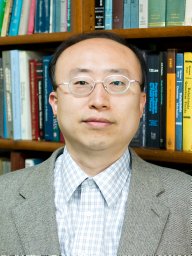 Weonjong Lee合作论文数Frontier Physics Research Division and Center for Theoretical Physics;Department of Physics and Astronomy;Seoul National University;Frontier Physics Research Division and Center for Theoretical Physics, Seoul National University33E. Gamiz合作论文数Glasgow U.32
 Si-Wei Qiu合作论文数31
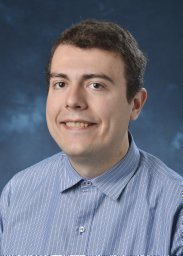 Ethan T. Neil合作论文数Department of Physics;Sloane Laboratory;Yale University;Sloane Laboratory, Yale University28
 Yannick Meurice合作论文数Department of Physics and Astronomy;University of Iowa;Department of Physics and Astronomy, University of Iowa27Jn Simone合作论文数26
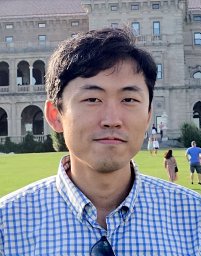 Yong-Chull Jang合作论文数23
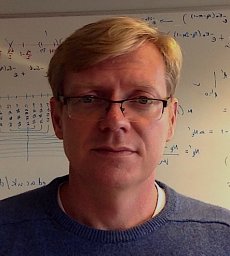 Chris Bouchard合作论文数School of Physics & Astronomy, University of Glasgow21
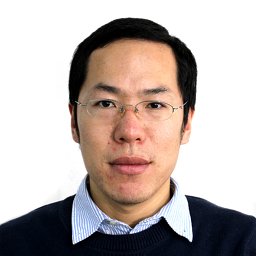 Yuzhi Liu合作论文数Demandbase18Mehmet B. Oktay合作论文数18Leem Jaehoon合作论文数17J. Foley合作论文数17Jongjeong Kim合作论文数14r d jain合作论文数12
 Sung-Woo Park合作论文数Dept Sci Criminal Invest, Chungnam Natl Univ12
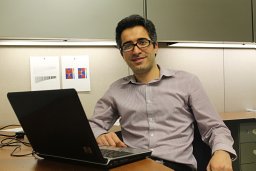 Javad Komijani合作论文数11Justin Foley合作论文数11R. S. Van De Water合作论文数10
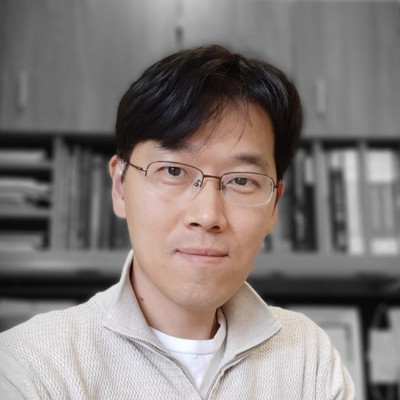 Hyungjin Kim合作论文数Department of Pharmacological Sciences, Stony Brook Cancer Center, Renaissance School of Medicine, Stony Brook University9James N. Simone合作论文数Fermi National Accelerator Laboratory9Jack Laiho合作论文数8Boram Yoon合作论文数Department of Clothing and Textiles, Yonsei University8Sunkyu Lee合作论文数7carole bouchard合作论文数7
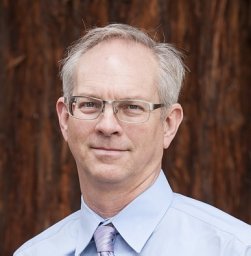 J. E. Hetrick合作论文数University of the Pacific7Fermilab Lattice合作论文数6A. X. El-Khadra合作论文数5J. Simone合作论文数5Hwancheol Jeong合作论文数5
 Steve Sharpe合作论文数Department of Physics, College of Arts & Sciences, University of Washington5D. Du合作论文数4Milc Collaborations合作论文数4
 Massimo Di Pierro合作论文数4




