ofcommunity care, multidisciplinary evaluation of community based services-are very similar. Health professionals engaged in community care in India, if invited to Britain on a regular basis, can, I believe, meaningfully participate in both the theoretical and practical aspects of the planning and implementation of community care, often to mutual benefit. This would be true of health services in general, but especially so of community based mental health care. Such services as there are in India are negligible and there is a disappointing lack of professional skill in the area. BISWAJIT SEN
AnaesthesiaVolume 40, Issue 10 p. 1015-1016 Free Access Resuscitation skills J. Barcroft, J. Barcroft The Middlesex Hospital Mortimer Street, London, WIN 8AA.Search for more papers by this author J. Barcroft, J. Barcroft The Middlesex Hospital Mortimer Street, London, WIN 8AA.Search for more papers by this author First published: October 1985 https://doi.org/10.1111/j.1365-2044.1985.tb10561.xCitations: 4AboutPDF ToolsRequest permissionExport citationAdd to favoritesTrack citation ShareShare Give accessShare full text accessShare full-text accessPlease review our Terms and Conditions of Use and check box below to share full-text version of article.I have read and accept the Wiley Online Library Terms and Conditions of UseShareable LinkUse the link below to share a full-text version of this article with your friends and colleagues. Learn more.Copy URL Share a linkShare onEmailFacebookTwitterLinkedInRedditWechat No abstract is available for this article. References 1 Skinner VS, Camm AJ, Miles S. Cardiopulmonary resuscitation skills of preregistration house officers British Medical Journal 1985: 290: 1549–50. 10.1136/bmj.290.6481.1549 CASPubMedWeb of Science®Google Scholar 2 Baskett PJF Resuscitation needed for the curriculum British Medical Journal 1985; 290: 1531–2. 10.1136/bmj.290.6481.1531 CASPubMedWeb of Science®Google Scholar Citing Literature Volume40, Issue10October 1985Pages 1015-1016 ReferencesRelatedInformation
BOTH the significance of the further education of young people and adults in Great Britain and the magnitude of the organisational problems which are involved in the creation of a national scheme are emphasized in the Education Act, 1944. The responsibility of local education authorities is clearly defined—“to secure (i) full-time and part-time education for persons over compulsory school age ; (ii) leisure-time occupation, in such organised cultural, training and recreative activities as are suited to their requirements, for any persons over compulsory school age who are able and willing to profit by the facilities provided for that purpose”. It has, however, become increasingly clear that the discharge of such a responsibility by local education authorities requires more than the provision of teachers, buildings and equipment. Not only does it involve an assessment of the educational needs of the community and presuppose, as the Education Act acknowledges, a close relationship between local education authorities and many local interests ; it also implies a change in the functions of these authorities and in their relationship to each other.
An abstract is not available for this content so a preview has been provided. As you have access to this content, a full PDF is available via the ‘Save PDF’ action button.
DURING the course of experiments conducted on the sheep foetus, dyes were injected into the umbilical cord with the object of exploring movements of substances in the cord along non-vascular pathways. The dyes used were a dis-azo dye, related to trypan blue, and the same dye linked to serum albumin by a diazo linkage. The dye, when linked to protein in this way, cannot dissociate from the albumin, and hence acts as a tag to the protein. These substances were prepared by one of us (P.D.M.).
THE report on the operation of the Colonial Development and Welfare Act, 1940, to October 31, 1942, and, more especially, Sir Frank Stockdale's report on Development and Welfare in the West Indies, 1940-1942, give a very clear picture of the ideas which are inspiring Great Britain in the discharge of its responsibilities to its Colonial dependencies at the present time. There can be no question that the future of the world depends largely on the ability of Britain and the United States to understand one another and to work together, and questions of Colonial policy must inevitably involve a searching test of that capacity for co-operation. It would be most unfortunate if Colonel Oliver Stanley's speech at Oxford on March 5, with its firm rejection of international administration of the Colonies, were misinterpreted as implying the denial of the rights of third parties to take an interest in the Colonial policy of the Colonial Powers.
IT is a matter for satisfaction that Sir William Beveridge has, in his report, recognized the principle that quantitative standards based on scientific knowledge may, and should, be applied to the measurement of minimum human requirements in food, fuel, light and clothing. As medical knowledge advances, and as cultural demands change, any standards of this nature will be gradually modified, though there can be no doubt that those for food have now been determined with a fair degree of scientific accuracy. We would express our conviction that the food standards now proposed for Great Britain, based as they are on the scales laid down by the British Medical Association and the League of Nations Technical Commission, accord with the opinion of all accredited scientific workers in this particular field.
THE recurrence of certain terrestrial magnetic storms at intervals of 27 days (the sun's rotation period) without any disturbance being visible on the sun's disk has long been an outstanding puzzle of solar physics. Observations of the chromosphere in monochromatic light have established a close connexion between the chromospheric eruptions responsible for short-wave radio fade-outs and certain of the great sporadic magnetic storms, which tend to occur about a day after the visible flare; but the recurrent storms seem as unconnected with chromospheric activity as with photospheric. A recent observation by Waldmeier (Z. Astrophys., 21, 275 ; 1942) throws light on this subject. By coronagraph observations at Arosa he has found that certain regions of the solar corona (“C-regions”) exhibit temporary bursts of activity characterized by abnormally high intensity of the coronal line at 5303 A. The appearance of these areas at the sun's edge is often followed, or preceded, according as the region is being carried in front of or behind the disk by the solar rotation, by magnetic activity on the earth, the time interval being about 7 days (roughly a quarter period). The C-regions are very long-lived compared with chromospheric eruptions (at least 24 days as against about an hour). They are confined to the spot zones and seem to exhibit the 11-year periodicity in their frequency of occurrence. If further observations should confirm the connexion between magnetic storms and the central meridian passage of these active zones in the corona, it would seem that both C-regions and chromospheric eruptions must emit corpuscles, roughly radially and at speeds up to about 1,000 miles per second, throughout their life-times of the order of a month and an. hour respectively.
THE Ministry of Food has, by arrangement with the Department of Scientific and Industrial Research and the flour milling industry, taken over for the period of the War the extensive laboratories at St. Albans which were previously occupied by the Research Association of British Flour Millers. The Ministry will have the advantage of the use of these laboratories and the existing staff for the consideration of all food research problems, but they will continue to be used in the main for specialized work connected with cereals and cereal products. The laboratories will, in future, be known as the Cereals Research Station of the Ministry of Food. Dr. P. Moran, who was previously director of research to the Research Association of British Flour Millers, has been acting as deputy scientific adviser to the Ministry since June 1940. In March last he was appointed, in addition, director of research in the Ministry of Food. In this latter capacity he will direct the work at St. Albans. From June 1, the date on which the transfer took place, the entire control and direction of the laboratories passed to the Ministry of Food.
STARTING from the general thesis that volatile acids are produced in large quantity in the rumen of the sheep, McAnally and Phillipson1 showed that some at all events of these acids are absorbed from the rumen and are found in considerably greater quantities in the blood coming from that organ and from the large intestine than in the blood coming from other parts of the alimentary canal.
THE life of the mammal is a synthesis of many diverse functions. They range from the diges-i tion of porridge to the performance of Brahms, from snoring to the niceties of mathematical analysis. Here I am concerned neither with the higher faculties of the mind nor with the lower vegetative functions of the body; but merely with that intermediate region of activity which concerns itself with the muscular movements-getting about and the like-these we share with our mammalian relations generally.
WoRKERS engaged in research on nutrition in Great Britain have been feeling
WORKERS engaged in research on nutrition in Great Britain have been feeling the need for a scientific society devoted specifically to their subject. In the past no organization has existed to enable investigatorsin the many and varied branches of the science—clinical, physiological, agricultural and sociological—to find a common meeting–ground for discussion and the exchange of views. Representative, workers in all these fields accordingly decided recently to form a Nutrition Society. The new venture owes its conception to a circular letter signed by the following heads of some of the better–known centres for research on nutrition in Great Britain: Sir Joseph Barcroft, chairman, Food Investigation Board; Dr. Harriette Chick, head of the Division of Nutrition, Lister Institute; Prof. J. C. Drummond, scientific adviser to the Ministry of Food, and professor of biochemistry in University College, London; Dr. John Hammond, superintendent of the Animal Research Station, Cambridge; Dr. Leslie J. Harris, director of the Nutritional Laboratory, Cambridge; Sir Frederick Gowland Hopkins, professor of biochemistry in the University of Cambridge; Prof. H. D. Kay, director of the National Institute for Research in Dairying, Reading; Sir Charles J. Martin, formerly director of the Lister Institute of Preventive Medicine; Sir Edward Mellanby, secretary of the Medical Research Council; Sir John Orr, director of the Rowett Research Institute, Aberdeen; Prof. R. A. Peters, professor of biochemistry in the University of Oxford. Later a meeting was held at the Royal Institution attended by representatives from the various institutes, and the following provisional committee was formed: Sir John Orr (chairman); Dr. John Hammond (vice–chairman); Dr. Leslie Harris (hon. secretary); Mr. A. L. Bacharach (hon. treasurer); Dr. Harriette Chick, Dr. E. M. Cruickshank, Dr. H. H. Green, Prof. H. P. Himsworth, Prof. A. St. G. Huggett, Dr. Franklin Kidd, Dr. S. K. Kon, Dr. B. S. Platt and Dr. H. M. Sinclair.
my own ulcer treatment it merely implies that this is the way in which we manage it in Denmark, at Bispebjerg Hospital, in my department.It consists of rest in bed, though not absolute, for four to five weeks, a soft non- irritating diet with increasing variety during the same period, frequent meals-that is to say, every second or third hour-alkali, and belladonna; tobacco is forbidden.How much importance attaches to the last restriction I shall not go into.We endeavour to make the diet qualitatively sufficient, but I must admit that in certain ways it perhaps leaves something to be desired, and it is con- ceivable that we ought to pay more attention to remedying possible vitamin deficiencies.On discharge from the hospital the patients are urged to avoid the most irritating kinds of food for six months, to continue taking frequent meals, to restrict the use of tobacco and not to let "a smoke " take the place of a snack between meals, and also to try to adopt a calmer attitude towards life and its incidents. SummaryThe treatment of bleeding ulcer is first discussed because experience with a free diet has influenced the outlook on ulcer treatment in general.The results of treating 491 cases of profusely bleeding ulcer are given.The conclusion drawn is that the more severe the bleeding the more the need for fluid and food.Operative treatment with a view to haemostasis is not advised.In non-bleeding ulcer it is maintained that use of a freer diet gives improved results ; treatment is supple- mented with alkalis and belladonna.The view is held that the basic principles of the general medical treatment of ulcer should be rest, relaxation, and adequate food taken at frequent meals.
PROF. IVAN P. PAVLOV, who died on February 27, was by common consent the doyen of physiologists. This position he achieved by reason of his great age, his great distinction, and his great vitality. His age was such he celebrated his eighty-fifth birthday in 1934 that few living workers in Great Britain even came within measurable distance of being his contemporaries, whilst to most, Pavlov's early working years appeared to go back into a distant past. Yet even apart from that, Pavlov was to English workers a somewhat remote figure until within the post-War period. This perhaps was because he was not a particularly good linguist: he spoke German and had worked in Germany, but he was never at home in English.
The present lecture is an attempt to state the principal facts known about foetal respiration in the mammalia. The word “respiration” is used in a very broad sense: the transport of gases involves the circulatory system even more in the foetus than in the free organism, and therefore the principal factors in the foetal circulation must come under review.
“UAYLISS'S book is bv far his greatest contribution to science-much more important than any of his individual discoveries is his statement of his point of view.” These were substantially the words used to me by a very competent critic. At the time I wondered whether or not it were so, and I have often wondered since. Bayliss's investigations into the electric phenomena of the heart x and the salivary glands,2 into the conditions which govern the cerebral circulation,3 into the muscular movements of the alimentary canal,4 into the mechanism of vaso-dilatation,5 into the correlation of vaso-motor reflexes;6 his establishment of the existence of antidromic fibres in the mammal,7 his researches on the application of surface phenomena to physiological action,8 and the discovery of secretin these were his principal discoveries.
The spectra of the hæmoglobins from different animals, and even different mammals, are measurably different. The relative affinities of these hæmoglobins for oxygen and carbon monoxide are also different, and it turns out that certain properties of the chemical affinities and of the spectra are so related that by the use of a simple equation they may be deduced from one another. That the spectra of the hæmoglobins of all forms of life are not the same was discovered by Sorby (1), and has since been verified by Vlès (2), who has carefully mapped out the spectra of a number of animals, notably Arenicola and the horse. The particular difference with which we are concerned in this paper is in the position of the α-band, which was found by J. and H. Barcroft (3) to occupy a place in Arenicola 18 Angstrom units from that which it occupies in man. The considerations which have led us to undertake the present research are to be found in their paper.
 F. A. E. Crew合作论文数4J. B. S. Haldane合作论文数3J. S. Huxley合作论文数3S. C. Brooks合作论文数3M. H. Jacobs合作论文数3E. Newton Harvey合作论文数3J Terry Saunders合作论文数3R. Chambers合作论文数3W Harrison Pearsall合作论文数3
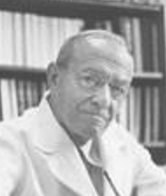 Wallace O. Fenn合作论文数University of Rochester3Charles Martin合作论文数2Robert Mccarrison合作论文数2L. T. Hogben合作论文数2B Seebohm Rowntree合作论文数2E. Ponder合作论文数2William H Wynn合作论文数2Prof By合作论文数1S Martin's Street合作论文数1R. A. McANALLY合作论文数1F. Gowland Hopkins合作论文数1Julian Huxley合作论文数1Bock A V合作论文数1Horder合作论文数1A. E. Mirsky合作论文数1J. M. D. Scott合作论文数1Alfred C Redfield合作论文数1H. J. Plenderleith合作论文数1Frederick Gowland Hopkins合作论文数1Stanley Davidson合作论文数1J. M. Mackintosh合作论文数1Andrew Phillipson合作论文数1F Llewellyn Jones合作论文数1M. L. Anson合作论文数1Sidney Burrard合作论文数1David E. Green合作论文数1Lyl E V. Beck合作论文数1M. Katharine Cary合作论文数1Henry S Forbes合作论文数1Hugh W Davies合作论文数1J. H. Doggart合作论文数1Richard M. Bond合作论文数1Robert McCarrison合作论文数1C. F. A. Pantin合作论文数1
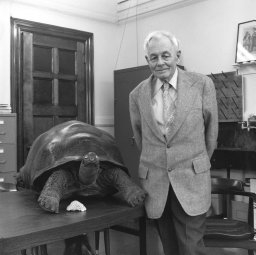 G. E. Hutchinson合作论文数Cancer Chemotherapy Department;ImPerial Cancer Research Fund;Cancer Chemotherapy Department, ImPerial Cancer Research Fund1F Gowland Hopkins合作论文数1T. R. Parsons合作论文数1JC Meakins合作论文数1Carl D Murray合作论文数1




