Tidal response analysis in coastal aquifers represents a complex but unique low-cost aquifer-scale test to determine hydraulic diffusivity ( D_h ) and connectivity to the sea. Here, a simplified numerical methodology is applied to a well-characterized Mediterranean coastal aquifer—the Argentona experimental research site, NE Spain. First, a harmonic analysis was performed over a 2-month period to identify the main tidal constituents. Then, the amplitude attenuation and phase shift for 16 observation wells, located at different distances from the coastline, were evaluated. It was found that direct application of the tidal method, considering only the hydraulic effect and aquifer homogeneity, leads to D_hvalues estimated from the amplitude attenuation one order of magnitude smaller than those derived from the phase shift. To better understand the aquifer’s response to tidal fluctuations, numerical simulations were performed, considering two different effects: (1) the hydraulic connection between the aquifer layers and the sea, and (2) the mechanical effect generated by the compression of the undersea aquifer portion. The simulations revealed that a specific stratified configuration and the inclusion of mechanical effects are required to accurately reproduce the observed wells’ head responses. A scale effect was observed when calibrating the main constituents separately. Thus, calibrating the short-period components resulted in higher D_h estimates. These numerical results demonstrate that mechanical effects can play a strong role in aquifer response to tides. This study provides the first application of the tidal method to a real aquifer considering both the hydraulic and mechanical effects generated by tides.
We describe a formulation to solve reactive transport (RT) problems. The basic idea is to represent transport as mixing water instead of individual solute concentrations, hence the Water Mixing Approach (WMA) name. This conceptual representation simplifies RT calculations as it decouples transport from chemistry. Transport is first solved in terms of water mixing ratios (lambda), which we show is feasible for any transport formulation. Chemical calculations can then be written as a set of reactive mixing calculations, which are local, so that they do not need to iterate with transport. We have implemented the WMA for a mixed Eulerian-Lagrangian transport solver with streamline-oriented grid and constant travel time between sequential cells (isochronal grid), which is free of numerical dispersion. We test the WMA on three RT cases. First, a binary system case is used to test the accuracy of the method. Second, a calcite dissolution case is used to compare the WMA to the Direct Substitution Approach to test both accuracy and computational cost (CPU). Third, the accuracy and simplicity of the proposed approach is tested on a reactive pulse injection case, solved in 2D on a spreadsheet. Results confirm the accuracy, simplicity and efficiency (low CPU cost) that result from decoupling transport and chemical steps. Transport through highly heterogeneous media remains a challenge, but the definite separation and simplification of mixing processes in WMA opens a new path for reactive transport modeling in general, and for the search of an effective transport equation.
Modeling solute transport in heterogeneous porous media faces two challenges: scale dependence of dispersion and reproducing mixing separately from spreading. Both are crucial since real applications may require km scales whereas reactions, often controlled by mixing, may occur at the pore scale. Methods have been developed in response to these challenges, but none has satisfactorily characterized both processes. In this paper, we propose a formulation based on the Water Mixing Approach extended to account for velocity variability. Velocity is taken as an independent variable, so that concentration depends on time, space and velocity. Therefore, we term the formulation the Multi-Advective Water Mixing Approach. A new mixing term between velocity classes emerges in this formulation. We test it on Poiseuille’s stratified flow using the Water Parcel method. Results show high accuracy of the formulation in both dispersion and mixing. Moreover, the mixing process exhibits Markovianity in space even though it is modeled in time.
The presence of low permeability regions within porous media impacts solute transport and the distribution of species concentrations. Therefore, (bio)chemical reactions are equally affected. Multirate Mass Transfer (MRMT) models can be used to represent this anomalous transport process. MRMT conceptualizes the medium as a set of multiple continua: one mobile zone and multiple immobile zones. It simulates species transport in mobile and immobile zones simultaneously, which are related by first-order mass exchange. Numerical modeling of reactive transport in this kind of multicontinua media is complex and demanding because of the high dimensionality of the problem. In this paper, we establish the governing equations of reactive transport in multicontinuum media incorporating chemical kinetics into the governing equations. We propose a general numerical solution of reactive transport with MRMT by applying direct substitution approach (DSA) based on Newton-Raphson method. The efficiency of the proposed algorithm benefits of the block structure of the system, which allows us to eliminate immobile zones equations and leads to significant savings in CPU time. We test the validity of the developed solution by comparison with other numerical and analytical solutions.
Tidal analysis is an aquifer scale testing that is a low-cost alternative to pumping tests for evaluating aquifer hydraulic parameters without groundwater extraction. Many analytical solutions may be used to assess aquifer head fluctuations in response to tidal fluctuations. Nonetheless, they are rarely used in practice. Aside from that, most analytical solutions are based on a conceptual model that typically consists of an unconfined aquifer and a confined aquifer separated by an aquitard, where hydraulic head fluctuations in the unconfined aquifer part are commonly neglected. Additionally, the frequent confined aquifer short response time to sea-level fluctuations cannot rely on hydraulic connection of the confined aquifer to the sea through the aquitard. As a consequence, when analytical solutions are applied to real-world cases, the hydraulic diffusivity is overestimated. In this study, we investigate through different numerical simulations the fluctuations of the phreatic surface by considering the delayed yield. Numerical results demonstrate that the mechanical effect generated by the load over the sea bottom exerted by sea-level fluctuations is a key factor when determining aquifer parameters. We further show that in multilayer systems, head fluctuations in various aquifer layers can cause interferences and, consequently, increased attenuation of the tidal signal, resulting in an overestimation of the inferred hydraulic diffusivity. Our results provide guidance on how to properly reproduce tidal responses in coastal aquifers.
The Underground Gas Storage (UGS) project of Castor, Spain, was strategically conceived to guarantee the Spanish gas demand during 50 days.Yet, the project did not enter into operation because it was cancelled as a result of a sequence of felt earthquakes induced after cushion gas injection.The project cancellation implied an investment compensation to the operating company that may cost up to 4.73 billion euros to Spanish citizens.The sequence contained the three largest earthquakes (M4.08,M4.01 and M3.97) ever induced by any of the more than 640 UGS facilities around the world.The largest earthquakes were induced some 20 days after stopping injection, which lasted for 15 days.The focal depth of these earthquakes was between 4 to 10 km, far deeper than the 1.7 km injection depth.To understand the causes of this induced seismicity, we have performed coupled two-phase flow and geomechanical numerical simulations and we have employed Okada's solution to analyze the shear slip stress transfer.We analyzed four seismicity-inducing mechanisms (pore pressure build-up, stress transfer, destabilizing buoyancy, and recovery of pressure drops that ensure transient stability in regions that are mechanically destabilized after a microseism).We found that the onset of seismicity was induced by gas injection, which reactivated the critically stressed Amposta fault through pore pressure buildup and buoyancy.The Amposta fault, a mature fault bounding the storage formation, crept, accumulating aseismic slip.Destabilization of the fault continued even after the stop of injection because of the permanent effect of buoyancy caused by the low density of the injected gas.The progressive accumulation of slip perturbed the stress around the rupture area of the Amposta fault and eventually reactivated a critically stressed unmapped fault located in the crystalline basement.Once this deep fault was reactivated, the sequence of earthquakes was induced by shear slip stress transfer, with transient slip-driven pore pressure changes likely controlling the delay between earthquakes.We contend that an analysis of fault stability prior to gas injection would have identified the high risk of inducing seismicity at Castor.
Seawater intrusion occurs in almost all coastal aquifers that are subject to human pressure. Its effects could be reduced by avoiding pumping in those wells better hydraulically connected to the sea. This paper presents a methodology to assess hydraulic connection to the sea of a well from its response to sea-level fluctuations. Head fluctuations in a well result from the superposition of hydraulic and hydro-mechanical responses. The hydraulic response requires a good hydraulic connection to the sea, whereas a hydro-mechanical response suggests a poor connection. Sea level fluctuates with a broad range of harmonics, which allows identification of the hydraulic and hydro-mechanical responses based on the harmonic frequency. It is shown that the response to low-frequency harmonics is essentially hydraulic and the response to high-frequency harmonics is mainly hydro-mechanical. The proposed methodology facilitates the discrimination of both responses with the aim to study qualitatively the hydraulic connection to the sea. This methodology is applied to the aquifer system of La Plata river estuary in western Argentina. Surprisingly, the hydraulic response of the deepest aquifer (Paraná) is less damped than the response of the overlaying aquifer (Puelches). This finding suggests that the Paraná aquifer is better connected to the sea than the Puelches.
Surface electrical resistivity tomography (ERT) is a widely used tool to study seawater intrusion (SWI). It is noninvasive and offers a high spatial coverage at a low cost, but its imaging capabilities are strongly affected by decreasing resolution with depth. We conjecture that the use of CHERT (cross-hole ERT) can partly overcome these resolution limitations since the electrodes are placed at depth, which implies that the model resolution does not decrease at the depths of interest. The objective of this study is to test the CHERT for imaging the SWI and monitoring its dynamics at the Argentona site, a well-instrumented field site of a coastal alluvial aquifer located 40 km NE of Barcelona. To do so, we installed permanent electrodes around boreholes attached to the PVC pipes to perform time-lapse monitoring of the SWI on a transect perpendicular to the coastline. After 2 years of monitoring, we observe variability of SWI at different timescales: (1) natural seasonal variations and aquifer salinization that we attribute to long-term drought and (2) short-term fluctuations due to sea storms or flooding in the nearby stream during heavy rain events. The spatial imaging of bulk electrical conductivity allows us to explain non-monotonic salinity profiles in open boreholes (step-wise profiles really reflect the presence of freshwater at depth). By comparing CHERT results with traditional in situ measurements such as electrical conductivity of water samples and bulk electrical conductivity from induction logs, we conclude that CHERT is a reliable and cost-effective imaging tool for monitoring SWI dynamics.
Clogging of artificial recharge systems is a ubiquitous problem. It consists of porosity or infiltration area diminution induced by inter-related physical, biological and chemical processes, resulting in a decrease of recharge effectiveness. Clogging is a highly site-dependent phenomenon. As a consequence, clogging prevention and redevelopment are commonly addressed by resorting to previously reported practices. However, serious reductions can occur if there is a lack of experience or if special problems exist. Based both on a thorough literature review and on field investigations from certain European countries, several recommendations and operating guidelines are presented. These include identification of basic parameters, preventive and re-development techniques, specifically defined clogging-tools and limitations on a few magnitudes. Such recommendations should represent a good starting point in order to prevent clogging, although it is evident that pilot field tests are always unavoidable when accurate clogging estimates are needed.
Numerical methods are tools used by people who develop codes for solving equations governing groundwater problems. All problems that we are interested in are governed by partial differential equations. The computer cannot directly solve these and one needs numerical methods to transform them into a solvable form. In essence, all numerical methods are based on, first, discretizing (i.e., substituting the continuum by a discrete medium) and, second, approximating the differential equation by a system of equations. Numerical methods differ in the way discretization and approximations are performed. To illustrate these two steps, we will first develop them in detail for a generic numerical method. We will, then, introduce the classical numerical methods (finite element, finite differences, etc.). This section ends with a discussion on specific methods for solute transport
Several tests are currently under execution at the Cornelia site within the framework of an European Project. One of the existing Aquifer-Storage-and-Recovery (ASR) wells was previously selected to perform specific experiments. The main objective is to study clogging around the ASR well itself, although redox reactions and water-aquifer material interactions are also being examined. Three different tasks were scheduled: analysis of recharge water and groundwater, analysis of soil cores, and completion of field tests. Both water and soil investigations served to obtain the basic parameters, to identify the aquifer characteristics and to assess some clogging-related properties. Still, natural heterogeneity and main hydraulic connectivity can not be derived through laboratory analysis. Therefore, various field tests are being carried out. The approach presented here is innovative as regards two aspects: first, a-priori relevant clogging parameters have already been measured, and, second, specifically derived numerical codes will be applied to obtained data.
Clogging is one of the most troublesome phenomena concerning Artificial Recharge. Different approaches exist in dealing with clogging, such as the measurement of specific parameters and determination of correlations, as well as empirical models. More sophisticated models have also been suggested in order to overcome the limitations of more simplistic methods. However, because clogging is affected by several mechanisms, a comprehensive model was not previously available. A new generic model is presented in this paper, which includes five fundamental processes: accumulation of suspended sediments, bacterial growth, chemical reactions (precipitation/dissolution), generation of gas, and compaction. As well as the mathematical framework, a brief description on the numerical implementation is given. An application of the model to a synthetic example, where a limestone confined aquifer is recharged by more acidic water that contains suspended sediments, is presented. This example shows how two processes, both of a very different nature, can modify the aquifer's effective porosity and, hence its permeability. Other issues, such as the validity of the conceptual model, its limitations and future work, are briefly discussed.
The processes that control water quality improvement during artificial recharge (filtering, degradation, and adsorption) can be enhanced by adding a reactive barrier containing different types of sorption sites and promoting diverse redox states along the flow path, which increases the range of pollutants degraded. While this option looks attractive for renaturazing reclaimed water, three issues have to be analyzed prior to broad scale application: (1) a fair comparison between the system with and without reactive barrier; (2) the role of plants in prevention of clogging and addition of organic carbon; and (3) the removal of pathogens. Here, we describe a pilot installation built to address these issues within a waste water treatment plant that feeds on water reclaimed from the secondary outflow. The installation consists of six systems of recharge basin and aquifer with some variations in the design of the reactive barrier and the heterogeneity of the aquifer. We report preliminary results after one year of operation. We find that (1) the systems are efficient in obtaining a broad range of redox conditions (at least iron and manganese reducing), (2) contaminants of emerging concern are significantly removed (around 80% removal, but very sensitive to the compound), (3) pathogen indicators (E. coli and Enterococci) drop by some 3-5 log units, and (4) the recharge systems maintained infiltration capacity after one year of operation (only the system without plants and the one without reactive barrier displayed some clogging). Overall, the reactive barrier enhances somewhat the performance of the system, but the gain is not dramatic, which suggests that barrier composition needs to be improved. (C) 2019 The Authors. Published by Elsevier Ltd.
This work was funded by the project CGL2016-77122-C2-1-R/2-R of the Spanish Government. We would like to thank SIMMAR (Serveis Integrals de Manteniment del Maresme) and the Consell Comarcal del Maresme in the construction of the research site.
This chapter resumes the discussion of relevant historical advances in water treatment, sanitation, and reuse, and it highlights the current challenges. The recycle and reuse of water has become essential for water-resource management because of increasing population and living standards. The most concerning contaminants in wastewater, with potential adverse effects on human health and aquatic ecosystems, are emerging organic contaminants and pathogens. There is no water treatment to remove the broad range of different molecules and pathogens without generating potentially hazardous or toxic disinfection byproducts. This chapter summarizes the available technologies for water treatment and production and points out the relevance of the artificial recharge of aquifer as a robust, low-cost, low-consuming technology.
 Marco Dentz合作论文数Department of Geosciences, Institute of Environmental Assessment
and Water Research, Spanish National Research Council59
Marco Dentz合作论文数Department of Geosciences, Institute of Environmental Assessment
and Water Research, Spanish National Research Council59 Víctor Vilarrasa Riaño合作论文数Mediterranean Institute for Advanced Studies, Consejo Superior de Investigaciones Científicas;Institute of Environmental Assessment and Water Reseach, Consejo Superior de Investigaciones Científicas51
 Maarten W. Saaltink合作论文数50carlos ayora ibanez合作论文数47E. Vázquez-Suñé合作论文数CSIC-Institute of Earth Sciences “Jaume Almera”47
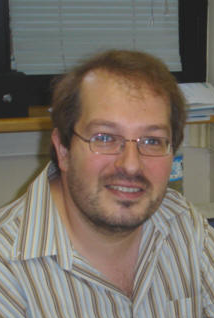 X Sanchez-Vila合作论文数Universitat Politecnica de Catalunya37
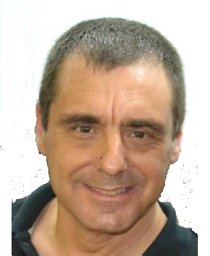 Sebastia Olivella合作论文数Department of Geotechnical Engineering and Geosciences, Technical University of Catalunya36
 Diogo Bolster合作论文数College of Engineering, University of Notre Dame23Tanguy Le Borgne合作论文数UMR Geosciences Rennes 6118, University of Rennes 119
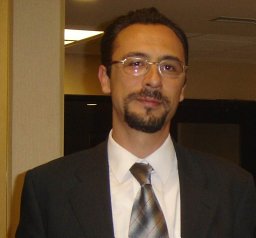 Andres Alcolea合作论文数Centre of Hydrogeology and Geothermics, University of Neuchâtel17
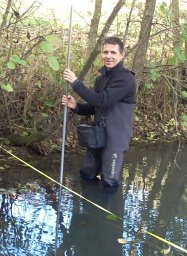 Estanislao Pujades合作论文数UPC-Barcelona Tech, Universitat Politecnica de Catalunya16
 Silvia De Simone合作论文数Geosci Rennes, Univ Rennes15
 Luquot Linda合作论文数Institute of Environmental Assessment and Water Research (IDAEA),, CSIC14María Pool合作论文数Institute of Environmental Assessment and Water Research, Universitat Politecnica de Catalunya14Tobias S. Rotting合作论文数14
 Jean-Raynald De Dreuzy合作论文数Institute of Environmental Analysis and Water Studies, CSIC14
 Anna Jurado合作论文数UPC-Barcelona Tech, Universitat Politecnica de Catalunya14
 Jorge Jodar合作论文数Department of Geotechnical Engineering and Geosciences, Technical University of Catalonia (UPC),12
 Juan J. Hidalgo合作论文数Massachusetts Institute of Technology12Luis S. Vives合作论文数Instituto de Hidrología de Llanuras, Universidad Nacional del Centro de la Provincia de Buenos Aires12
 S. A. Bea合作论文数12
 Alberto Guadagnini合作论文数Department of Civil and Environmental Engineering, Politecnico di Milano11
 Lurdes Martinez-Landa合作论文数11A Medina合作论文数10Luit Jan Slooten合作论文数10
 Orlando Silva合作论文数9Shlomo P Neuman合作论文数University of Arizona9
 Philippe Davy合作论文数Geosciences Rennes8
 Francesca De Gaspari合作论文数Dipartimento Ingegneria Idraulica, Ambientale, Infrastrutture Viarie, e Rilevamento, Politecnico di Milano8J. Bolzicco合作论文数7Agustín Medina-Sierra合作论文数7PM Meier合作论文数7
 Jordi Guimera合作论文数7Peter Meier合作论文数7
 Matthias Willmann合作论文数Department of Geotechnical Engineering and Geosciences Gran Capità S/N, Technical University of Catalonia7
 Philippe Gouze合作论文数7g galarza合作论文数6Laura Martínez-Pérez合作论文数6A. Ledesma合作论文数6
 Antonio Lloret合作论文数6
 Cristina Valhondo合作论文数UPC, Universitat Politecnica de Catalunya;Institute of Environmental Assessment &, UPC-CSIC;Water Research (IDAEA),, CSIC;Institute of Environmental Assessment & Water Research (IDAEA),, Universitat Politecnica de Catalunya6Agustín Medina合作论文数6
 Pablo Gamazo合作论文数6Insa Neuweiler合作论文数Institute of Hydraulic Engineering;Universitat Stuttgart6
 Antonio Gens合作论文数Technical University of Catalonia6
 Elena Abarca合作论文数Department of Civil and Environmental Engineering Parsons Lab., Massachusetts Institute of Technology6Auli Niemi合作论文数6
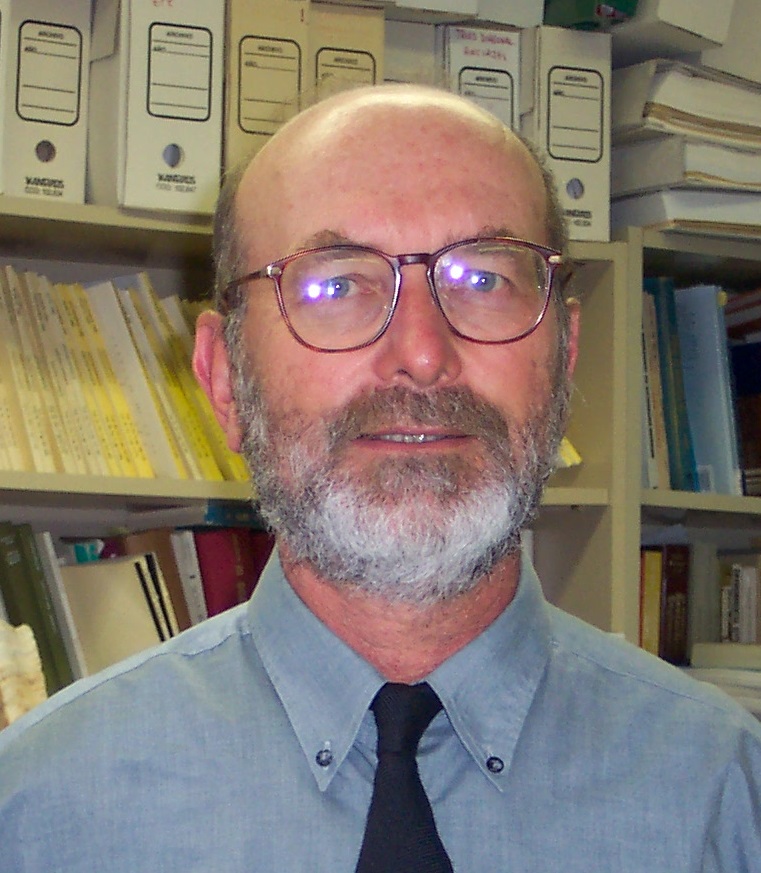 Eduardo Alonso Pérez de Àgreda (Eduardo E. Alonso)合作论文数Departamento de Ingeniería Civil y Ambiental, Universitat Politècnica de Catalunya BarcelonaTech6
 Joan Guimerà Roso合作论文数Departament de Dinàmica de la Terra i de l'Oceà, Universitat de Barcelona6




