Superconductivity is a macroscopic quantum phenomena. This chapter examines Fritz London's ideas and describes some of the experiments establishing its validity. It was London's realization that electrodynamic behavior was a natural consequence of quantum condensation that led him to propose superconductivity as being fundamentally a macroscopic quantum phenomena. The chapter also discusses only those experiments immediately relevant to the concept of the Josephson junction as a quantum-phase detector for the purpose of experimentally examining the macroscopic quantum state. Because of the unusual voltage-dependent frequency the analysis of these effects is somewhat more complex than for the zero voltage current. However, at low frequencies it is usually adequate to describe the response simply as a complicated time modulation of the zero-voltage current. The existence of singularities within the macroscopic quantum state, however, leads to noise. Unless these singularities move with precision, a noise is developed associated with the random phase motion.
We first described an all-cryogenic oscillator system at the 1982 Applied Superconductivity Conference in Knoxville. This oscillator consists of a ruby cavity maser stabilized by a high-Q superconductor-on-sapphire resonator. The maser provides gain with very low noise and small power dissipation, while the sapphire substrate's thermal coefficient of expansion is 100 times smaller than that of superconducting metals. Having tested the major components and proved them satisfactory to the design, we have now assembled the first such oscillator and tested its performance in several preliminary configurations. The results of stability tests in a more advanced configuration will be reported. We shall describe this oscillator and shall report on its performance as a high-stability frequency source.
We present the results of cryogenic tests on a superconducting half-wave resonator for the acceleration of heavy ions. The resonator was built out of OFHC copper and electroplated with 1.5 μm of Pb without chemical polish of the Pb surface. Measured properties include a low level Q of 4 × 10⁸ and a power dissipation of 6 W at 4 MV/m giving an energy gain of 1 MV per unit change to a particle of velocity 0.16 c.
Superconducting walls on sapphire-filled cavity make low-loss device. Improved microwave resonant cavity consists of sapphire cylinder coated with thin film of superconducting lead. Operated well below superconducting transition temperature at 1.5K, cavity demonstrated superior frequency stability and quality factor. Cavity frequency highly stable and therefore suitable for use in standard frequency generators and filters.
A cavity consisting of a superconducting lead film on a sapphire substrate has been fabricated to obtain the enhanced frequency stability possible with this configuration. The cavity exhibits a quality value Q exceeding 2×10⁹ in its TE011 mode with a resonant frequency of 2.689 GHz. Methods of fabrication and testing of the cavity are presented in this article. Since the interface between the film and substrate is exposed to the full value of the resonant magnetic field, our experiment is the most sensitive test to date for enhanced losses at the interface itself. We find no evidence of such losses. In fact, the measured values of the surface resistance match very well predictions for rf losses based on the BCS theory.
A computer model for the design of superconducting resonators has been developed which includes feedback effects due to non-linear superconducting surface resistance. These non-linearites may be due to either magnetic field or temperature. We have utilized this model to optimize the design of accelerating resonators for heavy ions. A half-wave structure of this design has been fabricated and is being evaluated with respect to the parameters of the model. Preliminary experimental results agree with the model to within a few percent. The half-wave design is particularly well suited to high frequency, high ß resonators because of its low magnetic field, or to low frequency, very low ß resonators because of its good mechanical stability.
The control system for the Stony Brook Superconducting Heavy-Ion LINAC is described. Familiar response characteristics and convenient operation have been given high priority in the design. A star network of 9 LSI-11 microcomputers forms the basis of the system which in addition comprises a PDP 11/34 minicomputer, one 6502 microprocessor-based RF controller for each of 43 resonators, and several I/O devices such as graphics display and reassignable control knobs.
A split-ring resonator of designed for use in the Stony Brook heavy-ion booster has been developed and tested. The resonator, operating at 150 MHz and with an effective length of 21 cm was constructed of OFHC copper and electroplated with lead. Losses of 8.5 W at an accelerating field of 3.0 MV/m and 11 W at 3.25 MV/m were obtained; the resonator could be operated continuously up to at least 3.5 MV/m without breakdown or thermal run-away. Vibration-induced frequency excursions were found to be small (∼ 20 Hz pp). Under these conditions the split-ring resonator was electronically stabilized to an accuracy of 0.005 radian at 2.5 MV/m.
The surface resistance, Rs, of niobium (Nb) films has been experimentally investigated as a function of thickness, preparation technique and substrate material at 8.86 GHz. Nb films were prepared by either sputtering or evaporation in the thickness range Between 0.1 μm and 3.0 μm on either copper (Cu) or sapphire substrate. Rswas determined using a cylindrical TE011mode resonant cavity with one removable end-plate which was utilized as the test substrate. The low field Rsat 4.2 K is lower than that of bulk Nb and shows good agreement with BCS calculation which takes into account the effects of mean free path. The temperature dependence of Rsindicates a normalized film gap parameter, Δ(0)/KTc, nearly equivalent to the bulk value for most of the films. At low temperatures, Rsis dominated by residual resistance (R0) which approaches 1 μΩ. The overall characteristics of Nb on Cu (Nb/Cu) indicate that this composite material is potentially useful in applications requiring high rf field as well as high thermal stability.
A detailed experimental examination of the dc critical supercurrent density jc and the microwave (nonzero voltage) supercurrent jμ has been made in proximity effect thin-film weak links at temperatures above the transition temperature of the link material. These results were correlated with measured dimensional and superconducting parameters of the thin films and the link via a Ginzberg-Landau (GL) formalism. In the steady state, jc was found to be adequately described by a one-dimensional GL formalism similar to that of Likharev and Yakobson but with De Gennes boundary conditions on the order parameter applied at each interface. However, jμ decreases exponentially with increasing voltage and can be interpreted in terms of an interference modulation of the induced pair density within the line at the Josephson frequency.
By a careful examination of the size of the microwave induced step structure in the dc current-voltage (I-V) characteristic of proximity effect weak links at low frequency (<4 GHz), it has been determined that the amplitude of the microwave Josephson current decreases exponentially with increasing voltage. This amplitude modulation of the Josephson effect depends on the magnitude of both the rf and dc voltages and is interpreted in terms of voltage induced pair breaking within the link rather than thermal heating. Application of this effect to produce a three terminal Josephson device is introduced.
At sufficiently low temperatures the onset of thermal hysteresis allows proximity effect weak links to be switched between two stable states. The time required for the voltage to switch between these two states was experimentally measured and found to lie in the range 200–500 psec. The measurements showed detailed agreement with calculations based on a simple heating model.
Energy stored in a superconducting resonator has been switched to an external load producing a pulse of microwave power. The peak power in the pulse was nine times that of the source feeding the cavity, and the pulse was observed to be phase locked to the source.
 G John Dick合作论文数California Institute of Technology;Jet Propulsion Laboratory;Jet Propulsion Laboratory, California Institute of Technology22
 Jean Delayen合作论文数Department of Physics, College of Science, Old Dominion University8
 d j scalapino合作论文数6H. Notarys合作论文数6john lambe合作论文数5R. Jaklevic合作论文数5Kenneth W. Shepard合作论文数5McNamara, R.P.合作论文数4Yogi, T.合作论文数4Gene D. Sprouse合作论文数4L.T. Crane合作论文数4Donald M. Strayer合作论文数4Deborah L Birx合作论文数4DW PALMER合作论文数3john clarke合作论文数3Phillip H Paul合作论文数3
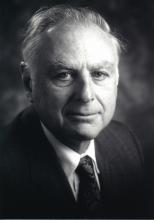 Arnold H. Silver合作论文数TRW Inc.3Ll Vanthull合作论文数2
 Julio Noe合作论文数2Ml Yu合作论文数2Thakoor, S.合作论文数2Decker, S.K.合作论文数2Kirschman, R.合作论文数2
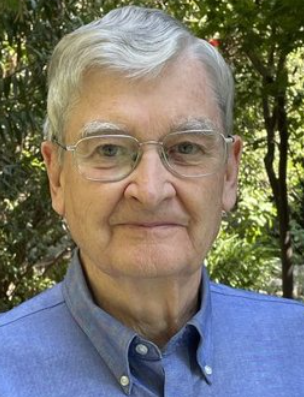 George R. Rossman合作论文数Division of Geological and Planetary Sciences, California Institute of Technology2
 A. Silver合作论文数2H.A. Notarys合作论文数2R. Kirschman合作论文数2r h wang合作论文数1j e zimmerman合作论文数1william little合作论文数1J. M. Brennan合作论文数1Yen, H.C.合作论文数1Palmer, D.合作论文数1
 Torsten Rieger合作论文数Peter Grünberg Institute (PGI-9),, Forschungszentrum Jülich GmbH1
 Ming-Lung Yu合作论文数College of Medicine, Kaohsiung Medical University;School of Medicine, National Sun Yat-sen University1
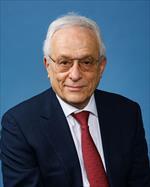 Tomas Ganz合作论文数Department of Medicine, David Geffen School of Medicine, University of California Los Angeles1
 Douglas Scalapino合作论文数Department of Physics, University of California, Santa Barbara1John Lambe合作论文数1W.L. Clinton合作论文数1Myron Strongin合作论文数1J. W. Noe合作论文数1B. Zion Levy合作论文数1John R. Pellam合作论文数1G. S. Mitchard合作论文数1
 Richard Phillips Feynman合作论文数california institute of technology1A. Scholldorf合作论文数1




