Hoplias intermedius, of the Characiformes order and Erytrinidae family, is widely distributed across South America. This commercially interesting species can reach a length of 100 cm and a weight of 15-20 kg. To evaluate the reproductive biology of H. intermedius in the São Francisco River, Brazil, 154 males and 190 females were captured bi-monthly between September 2018 and August 2019 from the downstream regions of the Três Marias dam. Gillnets with differently sized meshes were deployed at distances of 34-54 km after the confluence with the Abaeté River (18°00'49″ S, 45°10'51″ W). Biometric data, gonadosomatic index (GSI), Fulton condition factor (K) and absolute fecundity (AF) were determined for each specimen. Gonad maturation stages and the spawning season were also established. The biometric data, GSI and K average values were relatively higher in females than in males. The reproductive peak for both sexes was reached around January/February. The mean AF was 4300.5 ± 1451.2 follicles per female. Fully developed vitellogenic follicles had a mean diameter of 1014.8 ± 250.7 μm, which is characteristic of fish with moderate fecundity. Fish of all maturation stages, from mature, spawned and spermed, occurred in all bimesters, indicating that this species reproduced throughout the year. The high frequency of spawning females throughout the year and the histological characteristics of spawned ovaries indicated that trairão H. intermedius' spawning type is partial.
We studied gametogenesis and reproduction of Bokermannohyla nanuzae at an Atlantic Forest site in southeastern Brazil from August 2011 to July 2012. We observed frogs with mature germ cells almost year-round, indicating continuous gametogenesis. However, advanced gonad maturation occurred in wet months, when we observed females spawning and spermiated males. We observed calling males with mature testes in all bimesters but spermiated males only from October to January. This pattern of continuous calling may be associated with male strategies to be selected by females within male choruses. We did not observe males with testes at rest or females with ovaries at rest, and throughout the year we observed spermatogenic cells in all developmental stages in males as well as vitellogenic oocytes in different maturation stages and several post-ovulatory follicles in females, indicating that both males and females may be ready to respond to a specific environmental cue to release their gametes or even be able to breed multiple times throughout the year. This promptness to breed may be adaptive as it allows frogs to reach mature stages faster when environmental conditions are suitable for breeding and even breed more than once per breeding season.
Introduction: The fish reproduction knowledge is essential to support fish management, conservation and exploitation of the fish stocks. Fish species migrate for various purposes during different periods of their life cycle, and this involves spawning migration, habitat shifts of juveniles and drift of larval fish. Objective: Our main objective was to investigate whether the H. copelandii can adapt to small lotic stretches and lentic environments or depends on the migration to complete its life cycle. Methodology: Samplings were carried out on two tributaries of the Doce River, both containing small hydroelectric power stations in their courses, in Corrente Grande River (CGR) and in the Manhuaçu River (MR). In the CGR 408 specimens (64 females, 109 males and 235 juvenile) were captured, while in the MR were captured 64 females, 76 males and 45 juveniles. Results: Our results shows that the blockage of rivers caused by the construction of the power plants and their operation did not result in a direct negative effect on H. copelandii populations. For both rivers, our study demonstrates the maintenance of reproductive activity and the recruitment process, inserting new individuals into the environment. Conclusion: So, we showed that H. copelandii can adapt their reproductive strategy, getting reproductive success in very small lotic stretches or a semi lentic water body, indicating that the reproductive strategies of H. copelandii is not only a genetic phenomenon but can undergo ecological adaptations. Thus, the reproductive strategies of H. copelandii could undergo temporal and spatial changes and could be conditioned by environmental pressure. Keywords: Neotropical fish; Reproductive migration; Doce River basin; Environmental changes.
The gametogenesis and reproduction of S. elegans from the São Francisco River at Três Marias, Minas Gerais, were analyzed in this study. Steindachrina elegans is a species abundant in the São Francisco River basin and an important fish in the food chain. The size at first gonadal maturation (indicated by the total length of the shortest spermatid male and spawned female) was 10.5 cm and 15.0 cm, respectively. Reproduction occurred more frequently from September to April. This period had high water temperature values. A high frequency of females was observed at the mature and spawned stages and height gonadosomatic index (GSI). Meanwhile, in males, the reproductive peak was from November to February. The long spawning period and the histological characteristics of the spawned ovaries that contained oocytes at different stages of development along with post-ovulatory and atretic oocytes indicates that the spawning of S. elegans is of the partial type.
Curimatella lepidura, commonly known as the manjuba, belongs to the Curimatidae family. To assess the reproductive activity of this species, fish were collected from three sections of the São Francisco River: section 1 = the Três Marias reservoir (TMR), section 2 = the SFR immediately downstream of the TMR, and section 3 = the SFR 54 km downstream from the TMR after the confluence of the SFR with the Abaeté River. Fish were collected bimonthly from January to December 2012. From this, the gonadosomatic index (GSI), Fulton condition factor (K), gonadal maturation stages in females and males, and diameters of vitellogenic follicles were determined. That is, this study employed histological and histometrical techniques to study the ovaries and testes of collected fish. The Fulton condition factor was statistically higher in section 1 than in the other sections, indicating that C. lepidura presents better health conditions in this section. Fish in the maturation/mature gonadal stage were collected in the November/December and January/February bimesters, coinciding with high temperatures, a long photoperiod, and abundant rainfall in this region. The mean vitellogenic follicle diameter was statistically lowest for sections 2 and 3, with a better impact on reproduction than in section 1. Overall, the results show that C. lepidura has reproductive success in lentic environments, such as in section 1, the TMR.
Geophagus brasiliensis, popularly known as acará, is a common fish in lentic freshwater environments in South America. This species has a detritivorous-iliophagous or omnivorous feeding habit, with high food plasticity; however, there are no studies describing its intestinal tract histologically. Therefore, the present study analysed through histological and histochemical techniques the intestines of the acará. Adult specimens were collected with gillnets, anaesthetized and euthanized. Then, the fish were submitted to biometry and dissection to remove fragments of intestines. The samples were fixed in Bouin liquid for 12 hours and subjected to histological and histochemical techniques. Histologically, all samples of intestines were organized into four layers: mucosa, submucosa, muscular and serosa. The small intestine (foregut and midgut) was characterized by the presence of intestinal villi covered by simple prismatic epithelium with a striated border and goblet cells supported by the connective lamina propria. In the large intestine (hindgut), there was an absence of villi and an abundance of goblet cells. Positive reaction to Periodic Acid-Schiff (PAS) and Alcian Blue (AB) pH 2.5 reactions were detected in goblet cells, indicating the presence of mucosubstances. No lipids were detected in the intestine cells due to the negative reaction to the Sudan Black B. The results of the present study provide subsidies for a better understanding of the intestinal morphology of teleosts and provide valuable information for phylogenetic studies.
Introduction: Marginal lagoons constitute a complex environment that enhance the reproductive success of migratory species, providing shelter and resources. Objective: Our study aimed to evaluate the role of marginal lagoons in the recruitment of migratory fish from the São Francisco river basin. Methodology: To carry out the studies, monthly collections of fish were carried out, especially young specimens, for one year in four marginal lagoons along the Jequitaí river: Lagoão (LAG), Renero (REN), Buriti (BUR), and Tamatião (TAMA). Results: A total of 1,049 individuals belonging to seven species of migratory fish were caught: Brycon orthotaenia, Megaeporinus obtusidens, Prochilodus argenteus, Prochilodus costatus, Pseudoplatystoma corruscans, Salminus franciscanus, and Salminus hilarii. As a result it was observed that the average length of the captured specimens was 13.6 cm and the average body weight was 80.7 g, thus showing a predominance of young fish. The most representative species in absolute numbers was M. obtusidens (41.47%) while P. costatus was most representative (24.57%) in biomass. Salminus hilarii and P. argenteus had the lowest rates of body length increase (1.90 and 2.10, respectively). S. franciscanus and M. obtusidens increased their length by 4 and 3.6 fold, respectively. Also, S. franciscanus and M. obtusidens increased their weight by 81.3 and 102.4 times respectively. Conclusion: The results obtained allow us to conclude that marginal lagoons can function as large nurseries for the development and recruitment of migratory fish, thus contributing to the conservation of fish that are commercially and ecologically important. Furthermore, this study reduces the scarcity of knowledge on the use of marginal lagoons by migratory fish species and highlights the importance of these environments.
As lagoas marginais constituem ambiente complexo que potencializa o sucesso reprodutivo das espécies migratórias, fornecendo abrigo e recursos. Nosso estudo avalia o papel dessas lagoas no recrutamento de espécies migratórias no rio Jequitaí. Durante um ano, foram realizadas amostragens mensais em quatro lagoas marginais do rio Jequitaí: Lagoão (LAG), Renero (REN), Buriti (BUR) e Tamatião (TAMA). Foram capturados 1.049 indivíduos pertencentes a sete espécies de peixes migradores: Brycon orthotaenia, Megaleporinus obtusidens, Prochilodus argenteus, Prochilodus costatus, Pseudoplatystoma corruscans, Salminus franciscanus e Salminus hilarii. O comprimento médio dos exemplares capturados foi de 13,6 cm e o peso corporal médio de 80,7 g, evidenciando o predomínio de peixes jovens. A espécie mais representativa em números absolutos foi L. obtusidens (41,47%) enquanto P. costatus foi a mais representativa (24,57%) na biomassa. Salminus hilarii e i apresentaram as menores taxas de aumento do comprimento corporal (1,90 e 2,10, respectivamente). S. franciscanus e M. obtusidens aumentaram seu comprimento em 4 e 3,6 vezes, respectivamente. Além disso, S. franciscanus e M. obtusidens aumentaram seu peso em 81,3 e 102,4 vezes, respectivamente. Os resultados do presente estudo mostraram como as lagoas marginais podem funcionar como grandes berçários para o desenvolvimento e recrutamento de peixes migradores, contribuindo assim para a conservação de peixes de importância comercial e ecológica. Além disso, este estudo reduz a escassez de conhecimento sobre o uso de lagoas marginais por espécies de peixes migradores e destaca a importância desses ambientes.
The fragmentation of watercourses caused by dams is considered to be one of the main threats to aquatic biodiversity worldwide, especially for ichthyofauna. Several studies have shown that the environmental modifications caused by dammed water bodies can change the various reproductive parameters of freshwater fish. Therefore, the present study aims to comparatively analyze the reproductive potential of female Megaleporinus reinhardti, a migratory species, sampled in the lentic environment of the Três Marias Reservoir and the lotic environment of the São Francisco River. Biometric data were obtained from 79 females and the biological indices were subsequently calculated. Additionally, the microscopic analysis of the gonads was performed, and the follicular atresia index was compared. The results of the study show that fish from the lotic environment presented higher gonadal volume, fecundity, and oocyte diameter, and a lower follicular atresia index when compared to fish from the lentic environment. In summary, the data suggest that environmental changes, i.e. from a lotic to lentic environment, caused by river damming, may negatively affect the reproductive process of migratory fish, such as M. reinhardti, and impair the maintenance of the population of this species in lentic environments
Our study aimed to establish the response of Salminus franciscanus to hypophysation and describe the main morphological events of its embryonic process. Wild fish were captured in São Francisco River and selected broodstock (females: 66.4 ± 11.1 cm and 4.04 ± 2.32 kg; males: 58.3 ± 10.2 cm and 3.62 ± 1.12 kg) were kept at 26.1 ± 0.6°C for induction of final maturation/gamete release via the hypophysation technique. In females, two doses (0.8 and 5.6 mg/kg body weight) of crude pituitary extract of common carp (Cyprinus carpio) were administered with a 14 h interval. For males, a single dose (2.7 mg/kg body weight) of crude pituitary extract was applied at the same time as the females' second dose. Oocytes and sperm were manually stripped 8 h after a females' second hormonal dose. Fertilization was carried out using the dry method. Eggs were kept in funnel-type 60 L incubators at 24.3 ± 0.3°C and were analyzed and photographed every 10 min. After hormonal induction, 60% of females and 100% of males reacted positively and no broodstock mortality was recorded. The females released an average of 385.2 ± 78.4 g of oocytes and the fertilization rate observed was 50.4 ± 12.3%. The blastopore closure occurred at 7.5 h, somite formation at 12 h and hatching at 20 h post-fertilization. In general, the results of this study improve the understanding of the reproductive biology of dourado and confirm its potential for fish farming in the neotropical region.
The present study aimed to characterize the embryogenesis and larval development of matrincha (Brycon orthotaenia), through the analysis of egg and larval morphology. Fertilized eggs had a mean diameter of 1.17 mm, with yolk occupying most of the egg (1.06 mm). Embryogenesis lasted for 15 hr at an average temperature of 27 degrees C. At hatching, yolk-sac larvae measured 3.67 mm in mean standard length (SL). Pre-flexion, flexion and post-flexion larva had 5.01, 8.24 and 11.88 mm mean SL, respectively, with significant increases observed particularly in head length, head height, and eye diameter. The yolk persisted in the yolk-sac and pre-flexion stages (5.96 mm SL). The mouth opening could first be observed 13 hr after hatching, and cannibalism was observed 29 hr after hatching in pre-flexion larvae after absorption of the yolk sac; in such cases, the larvae had already developed teeth and a complete digestive tract. For an endangered species such as matrincha, early life history studies are important because they provide researchers with a better understanding of critical stages of development and thus enhance captive management by rearing and restocking of the species.
In this study, we determined the main reproductive parameters of piau gordura, Leporinus piau, in two sections of the São Francisco River basin. Between May 2015 and April 2016, a total of 573 specimens were captured from a lentic environment (section 1), the Três Marias Reservoir (TMR), and a lotic environment (section 2), downstream of the TMR at the confluence of the São Francisco River (SFR) with the Abaeté River. Analysis of reproductive activity showed that L. piau from both sections reproduced, but females and males from section 1 exhibited higher total length, body weight, Fulton condition factor, and gonadosomatic index values, as compared to section 2. Sexual dimorphism was evident in the species, with females being larger than males. Moreover, males reached first gonadal maturation at a smaller size than females. The peak maturation/mature stage was observed in November/April for females and males in section 1 and in November/December in section 2, coinciding with high temperatures and precipitation in the region. In both sections of the river, L. piau exhibited the typical characteristics of partial spawning, with a prolonged spawning period, and preferential reproduction in lentic environments.
In Brazil, fishing in continental waters is prohibited from November to February, the rainy season, when most commercially important fish species are reproductively active. Brycon nattereri is a native species to the Paraná, Tocantins, and São Francisco River basins in Brazil and is on the national list of species threatened with extinction. The goal of this study was to analyse the main reproductive variables of B. nattereri from the Lourenço Velho River, located in the Paraná River basin, south-eastern Brazil. From 2013-2016, 326 specimens (156 females and 170 males) were caught bimonthly using gill nets. Biometric data, gonadosomatic index (GSI), and fecundity were determined for each specimen. The gonadal maturation stages and the breeding season were established. There were relatively greater GSI values for males and average values were similar to those of females, an uncommon feature in Neotropical freshwater fish. The greatest frequencies of mature fish occurred from April to July in the dry season, which is when there are least ambient temperatures. The fecundity for body weight varied from 16,300 to 62,800 oocytes per female and fully developed vitellogenic oocytes had a mean diameter of 1175 ± 278.87 μm. These results indicate that B. nattereri breeds in the dry season when the water temperature is colder and, therefore, protection from fishing of this species during this season needs to be established.
The anatomical arrangement of the digestive tract and the length (cm) of the oesophagus and intestine of the catfish Lophiosilurus alexandri were described, and the intestinal coefficient was determined. L. alexandri oesophagus is short, in median position, and presents longitudinally folded mucosa, whilst its epithelium is stratified and non-keratinised, with mucous, claviform and epithelial cells. Stomach has "C" shape, with folded mucosa along cardiac region, disordered in the fundic region, and directed to the sphincter in the pyloric region. Its epithelium is simple prismatic, and cardiac and fundic portions have gastric glands. Cranial intestine is formed by pyloric flexure and descending loop attached to the right side of stomach. Middle intestine is winding and positioned to the right of caudal portion of stomach. Caudal intestine is linear and with a median position up to the anus. Intestinal coefficient was 1.39 +/- 0.30 cm. Epithelium is simple prismatic with brush border and contains epithelial and goblet cells. Caudal region has highest concentration of goblet cells. Were detected neutral glycoproteins, carboxylated and sulphated acid glycoconjugates for mucous cells and goblet cells, and neutral glycoproteins for the apical region of gastric epithelial cells. Morphological features could be related to piscivorous species feeding habit.
In order to assess the influence of the Três Marias dam on the reproduction of the white piranha, Serrasalmus brandtii, 1569 specimens captured from June 2011 to May 2012 in three sections of the São Francisco River basin were analyzed: section 1 = Três Marias reservoir (TMR); section 2 = São Francisco River (SFR) segment immediately downstream of TMR; and section 3 = SFR segment at the confluence with the Abaeté River. Total length (TL), body weight (BW), gonadosomatic index (GSI), and gonadal maturation stages were determined for each specimen, while vitellogenic follicle diameter, and absolute (AF) and relative (RF) fecundities were also determined for females. Reproductive activity, including spawned females and spermed males, was recorded throughout the year in the three river segments. Higher frequencies of females and males at the maturing/mature stage were found in the November/December and January/February, which coincided with the period of higher temperature, rainfall, and dissolved oxygen concentration. Mean GSI and vitellogenic follicle diameter were higher in sections 1 and 3 than in section 2 (P <0.05), while AF and RF were higher in section 1 (P <0.05) than in sections 2 and 3. The results of the present study showed that S. brandtii had lower reproductive performance in section 2, probably due to thermal disturbances caused by the dam, thus confirming the influence of dams on the reproduction of fish downstream from hydroelectric plant reservoirs.
The reproduction of Iheringichthys labrosus (Lütken, 1874) from the Turvo River, Brazil, was studied using anatomical, biometric, histological, and ultrastructural techniques. Between April 2014 and March 2015, a total of 278 males and 512 females were captured bimonthly. The testes of Iheringichthys labrosus are fringed and possess a cranial spermatogenic region and an exclusively secretory caudal region. Histologically, the cranial region is composed of seminiferous tubules with spermatogenesis being completed in cysts. The spermatozoa are of the primitive type with a spherical head and have a rudimentary intermediate piece and a long tail with an axonemic arrangement of 9 + 2. The caudal region does not form an individualized gland, and cells in this testis area have characteristics of protein secretion. A variable density electron-dense secretion accumulates in the cisternae of the rough endoplasmic reticulum in the lumen of the seminiferous tubules and in the testicular ducts during maturation. The cortical alveoli are discontinuous, and the zona pellucida consists of three layers crossed by pore canals, and the follicular cells are squamous in the early stages of oogenesis and cuboidal in advanced stages. The gonadosomatic index was associated with the maturation of the gonads while the condition factor indicated that the fish feed less and utilize adipose reserves during the reproductive period. Males and females reproductively functional throughout the year with spawning being partial or multiple, similar to that reported in studies of the species in lentic environments.
Describing the link between culture (as a phenomenon pertaining to social aggregates) and the beliefs and behaviors of individuals has eluded satisfactory resolution; however, contemporary cognitive culture theory offers hope. In this theory, culture is conceptualized as cognitive models describing specific domains of life that are shared by members of a social group. It is sharing that gives culture its aggregate properties. There are two aspects to these cultural models at the level of the individual. Persons have their own representations of the world that correspond incompletely to the shared model—this is their ‘cultural competence.’ Persons are also variable in the degree to which they can put cultural models into practice in their own lives—this is their ‘cultural consonance.’ Low cultural consonance is a stressful experience and has been linked to higher psychological distress. The relationship of cultural competence per se and psychological distress is less clear. In the research reported here, cultural competence and cultural consonance are measured on the same sample and their associations with psychological distress are examined using multiple regression analysis. Results indicate that, with respect to psychological distress, while it is good to know the cultural model, it is better to put it into practice.
In fishes, gonad morphology is an important parameter to understand the reproductive biology, phylogenetic relationships and systematic studies. The main objective of this study was to make a comparative analysis of the morphology of mature ovary and testis in six fish species of the family Anostomidae. A total of 212 specimens, presenting maturing gonads, were captured from the São Francisco River, Três Marias Reservoir area, in Southeastern Brazil, between August 2008 and December 2010. The six analyzed species had mature ovaries and showed a grayish color. In vitellogenic oocytes (VO), cortical alveoli (CA) were composed by small vesicles in all Leporinus species, but in Leporellus vittatus and Schizodon knerii the CA were large vesicles. However, the CA of all species showed similar histochemical content. The pellucid zone consists of two layers to all species, but it was thicker in S. knerii (11.5 ± 1.8 µm) than in L. vittatus (9.0 ± 0.8 µm) and Leporinus species (3.5 ± 0.6 - 8.7 ± 0.9 µm). Follicular cells of the VO were respectively cubic and prismatic in animal and vegetative poles of S. knerii (22.3 ± 3.2 and 61.1 ± 9.6 µm), and squamous in the other species (1.3 ± 0.3 - 1.6 ± 0.3 µm). Females of S. knerii and males of L. vittatus showed lower values of gonadosomatic index (GSI) than the other assessed species. All evaluated species presented testicular morphology similar to most neotropical Characiformes, with unrestricted spermatogonial testis and anastomosing tubular organization of seminiferous tubules. Phenotypical differences in the vitellogenic oocyte of Anostomidae fishes, confirmed the taxonomic position of S. knerii as different genus in relation to Leporinus and L. vittatus. Despite being placed in different genera, the characteristics of the vitellogenic oocytes of L. vittatus were similar to those found in the studied Leporinus.
This paper aims to establish possible changes in the main reproductive parameters of the so-called piau-branco, Schizodon knerii, in three sections of the SAo Francisco River basin. Fish (n=388) were captured quarterly between May 2012 and April 2013 from three sections of the SAo Francisco River (SFR): section 1=Tres Marias Reservoir (TMR), a lentic environment; section 2=SFR, the first 34km downstream of TMR, a lotic environment in which the temperature, oxygen levels, and flow are not suitable for reproduction; section 3=SFR, 34-54km downstream from TMR after the confluence with the Abaete River, a lotic environment in which temperature, oxygen levels and flow are suitable for reproduction. In section 2, females and males showed lower values of total length and body weight in relation to fish from sections 1 and 3. The reproductive mode of S. knerii in sections 1 and 3 exhibited a prolonged reproductive period, parceled spawning, and a reproductive peak from January to March. In section 2, neither spawning females or spermiated males were captured, probably due to the fact that this section receives cold water with low oxygen levels from the hypolimium of the dam that presents thermal stratification in the summer. This study showed in section 2, immediately downstream of the Tres Marias Reservoir, that S. knerii does not reproduce successfully.
Os bagres, cachara (Pseudoplatystoma fasciatum) e o pintado (Pseudoplatystoma corruscans) espécies migratórias de água doce no Brasil que possuem grande importância ecológica e potencial para aquicultura, no entanto, o crescimento dessas espécies em cativeiro ainda é problemático. Nesse sentido, a produção de animais híbridos provenientes do cruzamento entre a cachara e o pintado (Pseudoplatystoma sp.) tem sido praticado de forma intensa no Brasil, pois os híbridos demonstram melhores taxas de sobrevivência e de desempenho de crescimento em cativeiro. No intuito de avaliar a ocorrência e a biologia de peixes híbridos na bacia do rio São Francisco, peixes foram coletados de janeiro de 2011 a janeiro de 2012 em dois trechos do rio Paraopeba. Durante as campanhas de campo realizadas, foi registrada a presença e a atividade reprodutiva desse bagre híbrido de grande porte em uma das maiores bacias hidrográficas do Brasil, uma área rica em fauna de peixes endêmicos. A introdução de peixes não nativos ou mesmo híbridos em sistemas naturais, frequentemente ocorre devido a fugas acidentais de tanques de piscicultura ou mesmo de pesque-pague. A verificação da ocorrência Pseudoplatystoma sp. em grande parte da sub-bacia do rio Paraopeba e de seu sucesso reprodutivo no ambiente natural, juntamente ao fato de que este peixe é um predador de grande porte, são resultados que mostram uma ameaça real para a fauna de peixes nativos da bacia do rio São Francisco. Uma vez que o impacto ecológico da introdução de Pseudoplatystoma sp. na comunidade de peixes nativos pode ser desastroso, a elaboração de novos estudos com ênfase principalmente no desenvolvimento de técnicas para controlar sua dispersão é de fundamental importância.
 Nilo Bazzoli合作论文数Programa de Pós graduação em Zoologia de Vertebrados (PUC-minas), Belo Horizonte, Brazil23
 Fabio Arantes合作论文数16
 Elizete Rizzo合作论文数Universidade Federal de Minas Gerais16
 Lucas Marcon合作论文数9
 Naiara Sales合作论文数CESAM - Centre for Environmental and Marine Studies, Faculdade de Ciências da Universidade de Lisboa5
 Hugo Pereira Godinho合作论文数Conservation, Ecology and Animal Behaviour Group, Pontifícia Universidade Católica de Minas Gerais5
 Rodrigo J. Guimarães-Cruz合作论文数5V. C. Veloso-Junior合作论文数4K B Santiago合作论文数4Santos M L合作论文数4Júlia K. Hotta合作论文数3
 Marcelo Fulgêncio Guedes Brito合作论文数Dept Biol, Univ Fed Sergipe3
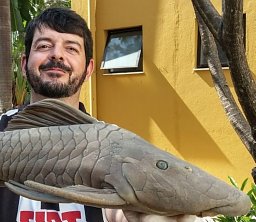 Tiago Casarim Pessali合作论文数3Gilmar B. Santos合作论文数3Yoshimi Sato合作论文数3
 Alessandro Loureiro Paschoalini合作论文数3
 Lucas de Esquivel Dias Brandao合作论文数2
 Vania D'Almeida合作论文数Dept Psychobiol, Univ Fed Sao Paulo2
 Bill Dressler合作论文数Department of Anthropology, College of Arts & Sciences, The University of Alabama2
 Marcela Pinhel合作论文数Laboratório de Estudos em Nutrigenômica, Departamento de Clínica Médica, Faculdade de Medicina de Ribeirão Preto, Universidade de São Paulo;Faculdade de Medicina de São José do Rio Preto2Maria Do Socorro De Mendonça Cavalcanti合作论文数2Erika R. F. Siqueira合作论文数2Rosane P. Ribeiro合作论文数2Claudio A.M. Sampaio合作论文数2
 Mauro C Balieiro合作论文数Department of Psychology, Paulista University2
 Rosana Fonseca合作论文数2
 Maria Tereza Cartaxo Muniz合作论文数2Marcos Vinicius Teles Gomes合作论文数1R. S. L. Barata合作论文数1n da s dias合作论文数1Er Nakandakare合作论文数1helberth jose cardoso peixoto合作论文数1Sergio Antonio Medeiros Marinho合作论文数1alyne perillo合作论文数1
 Maria Jose Franco Brochado合作论文数1M. Neves合作论文数1
 Nathalia G.S. Lima合作论文数1Ana C. J. S. Rosa e Silva合作论文数1thiago oliveira e almeida合作论文数1Mateus Augusto Silva Diniz合作论文数1José E. dos Santos合作论文数1
 Wilson Aparecido Silva合作论文数1k biana santiago合作论文数1Bernardo Borges Ervilha合作论文数1
 Rosana Sobral Floresta Oliveira合作论文数1
 Rodrigo Morais合作论文数1
 Lucas Penna Soares Santos合作论文数1Pedro Gargur合作论文数1
 Bruno Pereira De Oliveira合作论文数1




