This paper describes a new $\nu_e$ identification method specifically designed to improve the low-energy ($< 30\,\mathrm{GeV}$) $\nu_e$ identification efficiency attained by enlarging the emulsion film scanning volume with the next generation emulsion readout system. A relative increase of 25-70% in the $\nu_e$ low-energy region is expected, leading to improvements in the OPERA sensitivity to neutrino oscillations in the framework of the 3 + 1 model. The method is applied to a subset of data where the detection efficiency increase is expected to be more relevant, and one additional $\nu_e$ candidate is found. The analysis combined with the $\nu_\tau$ appearance results improves the upper limit on $\sin^2 2\theta_{\mu e}$ to 0.016 at 90% C.L. in the MiniBooNE allowed region $\Delta m^2_{41} \sim 0.3\,\mathrm{eV}^2$.
Cross-sections and angular distributions for hadronic and lepton pair final states in e+e− collisions at a centre-of-mass energy near 189 GeV, measured with the OPAL detector at LEP, are presented and compared with the predictions of the Standard Model. The results are used to measure the energy dependence of the electromagnetic coupling constant αem, and to place limits on new physics as described by four-fermion contact interactions or by the exchange of a new heavy particle such as a sneutrino in supersymmetric theories with R-parity violation. A search for the indirect effects of the gravitational interaction in extra dimensions on the μ+μ− and τ+τ− final states is also presented. Submitted to European Journal of Physics C The OPAL Collaboration G.Abbiendi, K.Ackerstaff, G.Alexander, J. Allison, K.J.Anderson, S.Anderson, S.Arcelli, S.Asai, S.F.Ashby, D.Axen, G.Azuelos, A.H.Ball, E. Barberio, R.J. Barlow, J.R.Batley, S. Baumann, J. Bechtluft, T.Behnke, K.W.Bell, G.Bella, A.Bellerive, S. Bentvelsen, S. Bethke, S. Betts, O.Biebel, A.Biguzzi, I.J. Bloodworth, P. Bock, J. Böhme, O.Boeriu, D.Bonacorsi, M.Boutemeur, S. Braibant, P. Bright-Thomas, L. Brigliadori, R.M.Brown, H.J. Burckhart, P.Capiluppi, R.K.Carnegie, A.A.Carter, J.R.Carter, C.Y.Chang, D.G.Charlton, D.Chrisman, C.Ciocca, P.E.L.Clarke, E.Clay, I. Cohen, J.E.Conboy, O.C.Cooke, J. Couchman, C.Couyoumtzelis, R.L.Coxe, M.Cuffiani, S.Dado, G.M.Dallavalle, S.Dallison, R.Davis, S.De Jong, A. de Roeck, P.Dervan, K.Desch, B.Dienes, M.S.Dixit, M.Donkers, J.Dubbert, E.Duchovni, G.Duckeck, I.P.Duerdoth, P.G.Estabrooks, E. Etzion, F. Fabbri, A. Fanfani, M. Fanti, A.A. Faust, L. Feld, P. Ferrari, F. Fiedler, M. Fierro, I. Fleck, A. Frey, A. Fürtjes, D.I. Futyan, P.Gagnon, J.W.Gary, G.Gaycken, C.Geich-Gimbel, G.Giacomelli, P.Giacomelli, W.R.Gibson, D.M.Gingrich, D.Glenzinski, J.Goldberg, W.Gorn, C.Grandi, K.Graham, E.Gross, J.Grunhaus, M.Gruwé, C.Hajdu G.G.Hanson, M.Hansroul, M.Hapke, K.Harder, A.Harel, C.K.Hargrove, M.Harin-Dirac, M.Hauschild, C.M.Hawkes, R.Hawkings, R.J.Hemingway, G.Herten, R.D.Heuer, M.D.Hildreth, J.C.Hill, P.R.Hobson, A.Hocker, K.Hoffman, R.J.Homer, A.K.Honma, D.Horváth, K.R.Hossain, R.Howard, P.Hüntemeyer, P. Igo-Kemenes, D.C. Imrie, K. Ishii, F.R. Jacob, A. Jawahery, H. Jeremie, M. Jimack, C.R. Jones, P. Jovanovic, T.R. Junk, N.Kanaya, J.Kanzaki, D.Karlen, V.Kartvelishvili, K.Kawagoe, T.Kawamoto, P.I.Kayal, R.K.Keeler, R.G.Kellogg, B.W.Kennedy, D.H.Kim, A.Klier, T.Kobayashi, M.Kobel, T.P.Kokott, M.Kolrep, S.Komamiya, R.V.Kowalewski, T.Kress, P.Krieger, J. von Krogh, T.Kuhl, P.Kyberd, G.D. Lafferty, H. Landsman, D. Lanske, J. Lauber, I. Lawson, J.G. Layter, D. Lellouch, J. Letts, L. Levinson, R. Liebisch, J. Lillich, B. List, C. Littlewood, A.W.Lloyd, S.L. Lloyd, F.K. Loebinger, G.D. Long, M.J. Losty, J. Lu, J. Ludwig, D. Liu, A.Macchiolo, A.Macpherson, W.Mader, M.Mannelli, S.Marcellini, T.E.Marchant, A.J.Martin, J.P.Martin, G.Martinez, T.Mashimo, P.Mättig, W.J.McDonald, J.McKenna, E.A.Mckigney , T.J.McMahon, R.A.McPherson, F.Meijers, P.Mendez-Lorenzo, F.S.Merritt, H.Mes, I.Meyer, A.Michelini, S.Mihara, G.Mikenberg, D.J.Miller, W.Mohr, A.Montanari, T.Mori, K.Nagai, I. Nakamura, H.A.Neal, R.Nisius, S.W.O’Neale, F.G.Oakham, F.Odorici, H.O.Ogren, A.Okpara, M.J.Oreglia, S.Orito, G. Pásztor, J.R. Pater, G.N.Patrick, J. Patt, R. Perez-Ochoa, S. Petzold, P. Pfeifenschneider , J.E. Pilcher, J. Pinfold, D.E. Plane, P. Poffenberger, B. Poli, J. Polok, M.Przybycień, A.Quadt, C.Rembser, H.Rick, S. Robertson, S.A.Robins, N.Rodning, J.M.Roney, S. Rosati, K.Roscoe, A.M.Rossi, Y.Rozen, K.Runge, O.Runolfsson, D.R.Rust, K. Sachs, T. Saeki, O. Sahr, W.M. Sang, E.K.G. Sarkisyan, C. Sbarra, A.D. Schaile, O. Schaile, P. Scharff-Hansen, J. Schieck, S. Schmitt, A. Schöning, M. Schröder, M. Schumacher, C. Schwick, W.G. Scott, R. Seuster, T.G. Shears, B.C. Shen, C.H. Shepherd-Themistocleous , P. Sherwood, G.P. Siroli, A. Skuja, A.M. Smith, G.A. Snow, R. Sobie, S. Söldner-Rembold , S. Spagnolo, M. Sproston, A. Stahl, K. Stephens, K. Stoll, D. Strom, R. Ströhmer, B. Surrow, S.D.Talbot, P.Taras,
The OPERA experiment was designed to discover the v τ appearance in a v μ beam, due to neutrino oscillations. The detector, located in the underground Gran Sasso Laboratory, consisted of a nuclear photographic emulsion/lead target with a mass of about 1.25 kt, complemented by electronic detectors. It was exposed from 2008 to 2012 to the CNGS beam: an almost pure v μ beam with a baseline of 730 km, collecting a total of 1.8·10 20 protons on target. The OPERA Collaboration eventually assessed the discovery of v μ → v τ oscillations with a statistical significance of 6.1 σ by observing ten v τ CC interaction candidates. These events have been published on the Open Data Portal at CERN. This paper provides a detailed description of the v τ data sample to make it usable by the whole community.
An event topology with two secondary vertices compatible with the decay of short-lived particles was found in the analysis of neutrino interactions in the OPERA target. The observed topology is compatible with tau neutrino charged current (CC) interactions with charm production and neutrino neutral current (NC) interactions with $$c\overline{c}$$ pair production. However, other processes can mimic this topology. A dedicated analysis was implemented to identify the underlying process. A Monte Carlo simulation was developed and complementary procedures were introduced in the kinematic reconstruction. A multivariate analysis technique was used to achieve an optimal separation of signal from background. Most likely, this event is a $$\nu _{\tau }$$ CC interaction with charm production, the tau and charm particle decaying into 1 prong and 2 prongs, respectively. The significance of this observation is evaluated.
OPERA is a long-baseline experiment designed to search for \nu_{\mu}\to\nu_{\tau}νμ→ντ oscillations in appearance mode. It was based at the INFN Gran Sasso laboratory (LNGS) and took data from 2008 to 2012 with the CNGS neutrino beam from CERN. After the discovery of \nu_\tauντ appearance in 2015, with 5.1\sigma5.1σ significance, the criteria to select \nu_\tauντ candidates have been extended and a multivariate approach has been used for events identification. In this way the statistical uncertainty in the measurement of the oscillation parameters and of \nu_\tauντ properties has been improved. Results are reported.
The OPERA experiment discovered muon neutrino into tau neutrino oscillations in appearance mode, detecting tau leptons by means of nuclear emulsion films. The apparatus was also endowed with electronic detectors with tracking capability, such as scintillator strips and resistive plate chambers. Because of its location, in the underground Gran Sasso laboratory, under 3800 m.w.e., the OPERA detector has also been used as an observatory for TeV muons produced by cosmic rays in the atmosphere. In this paper the measurement of the single muon flux modulation and of its correlation with the seasonal variation of the atmospheric temperature are reported.
The OPERA experiment has discovered the tau neutrino appearance in the CNGS muon neutrino beam, in agreement with the 3 neutrino flavour oscillation hypothesis. The OPERA neutrino interaction target, made of Emulsion Cloud Chambers, was particularly efficient in the reconstruction of electromagnetic showers. Moreover, thanks to the very high granularity of the emulsion films, showers induced by electrons can be distinguished from those induced by pi(0)s, thus allowing the detection of charged current interactions of electron neutrinos. In this paper the results of the search for electron neutrino events using the full dataset are reported. An improved method for the electron neutrino energy estimation is exploited. Data are compatible with the 3 neutrino flavour mixing model expectations and are used to set limits on the oscillation parameters of the 3+1 neutrino mixing model, in which an additional mass eigenstate m(4) is introduced. At high Delta m(41)(2) (greater than or similar to 0.1 eV(2)), an upper limit on sin(2) 2 theta(mu e) is set to 0.021 at 90% C.L. and Delta m(41)(2) greater than or similar to 4 x 10(-3) eV(2) is excluded for maximal mixing in appearance mode.
The OPERA experiment has discovered the tau neutrino appearance in the CNGS muon neutrino beam, in agreement with the 3 neutrino flavour oscillation hypothesis. The OPERA neutrino interaction target, made of Emulsion Cloud Chamber, was particularly efficient in the reconstruction of electromagnetic showers. Moreover, thanks to the very high granularity of the emulsion films, showers induced by electrons can be distinguished from those induced by π^0s, thus allowing the detection of charged current interactions of electron neutrinos. In this paper the results of the search for electron neutrino events using the full dataset are reported. An improved method for the electron neutrino energy estimation is exploited. Data are compatible with the 3 neutrino flavour mixing model expectations and are used to set limits on the oscillation parameters of the 3+1 neutrino mixing model, in which an additional mass eigenstate m_4 is introduced. At high Δ m^2_41 ( ≳ 0.1 eV^2), an upper limit on sin^2 2θ_μ e is set to 0.021 at 90 10^-3 eV^2is excluded for maximal mixing in appearance mode.
A bstract The OPERA experiment has discovered the tau neutrino appearance in the CNGS muon neutrino beam, in agreement with the 3 neutrino flavour oscillation hypothesis. The OPERA neutrino interaction target, made of Emulsion Cloud Chambers, was particularly efficient in the reconstruction of electromagnetic showers. Moreover, thanks to the very high granularity of the emulsion films, showers induced by electrons can be distinguished from those induced by π 0 s, thus allowing the detection of charged current interactions of electron neutrinos. In this paper the results of the search for electron neutrino events using the full dataset are reported. An improved method for the electron neutrino energy estimation is exploited. Data are compatible with the 3 neutrino flavour mixing model expectations and are used to set limits on the oscillation parameters of the 3+1 neutrino mixing model, in which an additional mass eigenstate m 4 is introduced. At high Δ m 41 2 (≳0.1 eV 2 ), an upper limit on sin 2 2 θ μe is set to 0.021 at 90% C.L. and Δ m 41 2 ≳ 4 × 10 − 3 eV 2 is excluded for maximal mixing in appearance mode.
Section Analysis, line 9: sub-sample of 818 events becomes sub-sample of 817 events.
Results are presented on the production of excited charm and excited charm-strange mesons in hadronic Z0 decays. The results are obtained from approximately 4.3 million hadronic Z0 decays, collected on or near the Z0 resonance using the OPAL detector at LEP. The D~(2420) and D2°(2460) mesons are reconstructed in the n•+"final state and their separate production rates in charm fragmentation and in weak decays of bhadrons are determined. From these measurements, the charm hadronization fractions and the inclusive branching ratios ofb-hadrons to these neutral P-wave charm mesons are determined to be f(cD~) f(c-D2°) f(bD~) f(bD2°) 0.021 ± 0.007( stat) ± 0.003( syst ), 0.052 ± 0.022(stat) ± 0.013( syst ), 0.050 ± 0.014(stat) ± 0.006(syst), 0.04 7 ± 0.024(stat) ± 0.013( syst ). We also present the first observation at LEP of the D;i (2536) meson which is reconstructed in both the D*+K~ and D*°K+ final states. After correcting for the expected contribution from bb events, these results are used to derive the charm hadronization fraction f( c ~ D;i): f(c ~ D;i) = 0.016 ± 0.004(stat) ± 0.003(syst). (To be submitted to Zeitschrift fiir Physik C) The OPAL Collaboration K. Ackersta:ffS, G. Alexander23 , J. Allison16 , N. Altekamp5 , K.J. Anderson9 , S. Anderson12 , S.Arcell?, S.Asai , D.Axen 29 , G.Azuelos18·a, A.H.BalF 7 , E.Barberio , R.J.Barlow , R.Bartoldus3 , J.R.Batley5 , S.Baumann3 , J.Bechtluft1\ C.Beeston , T.Behnke , A.N.BelF, K.W. Bell20 , G. Bella , S. Bentvelsen , P. Berlich , S. Bethke1\ 0. BiebeF\ A. Biguzzi5 , S.D. Bird16 , V. BlobeJ2 , I.J. Bloodworth1 , J .E. Bloomer , M. Bobinski , P. BocPl, D. Bonacors?, M. Boutemeur3\ B.T. Bouwens , S. Braibant , L. Brigliador?, R.M. Brown , H.J. Burckhart8 , C. Burgard8 , R. Biirgin10 , P. Capilupp?, R.K. Carnegie6 , A.A. Carter13, J.R. Carter5 , C.Y. Chang17 , D.G. Charlton1•b, D. Chrisman\ P.E.L. Clarke15 , I. Cohen23 , J.E.Conboy15 , O.C.Cooke16 , M.Cuffian?, S.Dado , C.Dallapiccola , G.M.Dallavalle , S.De Jong , L.A. del Pozo\ K.Desch , M.S.Dixit 7 , E. do Couto e Silva , M.Doucet , E. Duchovn?6 , G. Duckeck\ I.P. Duerdoth , D. Eatough , J.E.G. Edwards , P.G. Estabrooks6 , H.G. Evans9 , M. Evans13 , F. Fabbr?, M. Fanti2 , A.A. Faust30 , F. Fiedler27 , M. Fierro , H.M. Fischer\ I. Fleck , R. Folman , D.G. Fong , M. Foucher , A. Fiirtjes , D.I. Futyan16, P. Gagnon', J.W. Gary\ J. Gascon , S.M. Gascon-Shotkin17 , N.I. Geddes 20 , C. Geich-Gimbel , T. Geralis20 , G. Giacomelli , P. Giacomelli , R. Giacomell?, V. Gibson , W.R.Gibson13 , D.M.Gingrich30·", D.Glenzinski , J.Goldberg , M.J.Goodrick , W.Gorn\ C.Grandi2 , E.Gross 26 , J.Grunhaus 23 , M.Gruwe , C.Hajdu32 , G.G.Hanson , M.Hansroul8 , M. Hapke13 , C.K. Hargrove , P.A. Hart , C. Hartmann , M. Hauschild , C.M. Hawkes", R.Hawkings27 , R.J.Hemingway , M.Herndon, G.Herten, R.D.Heuer , M.D.Hildreth , J .C. HillS, S.J. Hillier1 , T. Hilse10 , P.R. Hobson25 , R.J. Homer\ A.K. Honma28·", D. Horvath ·c, R. Howard29 , D.E. Hutchcroft5 , P. Igo-Kemenes , D.C. Imrie , M.R. Ingram , K. Ishii\ A.Jawahery17 , P.W.Jeffreys20 , H.Jeremie, M.Jimackl, A.Joly , C.R.Jones , G.Jones , M.Jones6 , U.Jost11, P.Jovanovic , T.R.Junk", D.Karlen6 , V.Kartvelishvili , K.Kawagoe\ T. Kawamoto2\ R.K. Keeler28 , R.G. Kellogg , B.W. Kennedy, J. Kirk , A. Klier , S. Kluth8 , T. Kobayash?\ M. KobeF0 , D.S. Koetke , T.P. Kokotts, M. Kolrep , S. Komamiya2\ T. Kress 11 , P. Krieger6 , J. von Krogh1 \ P. Kyberds, G.D. Lafferty , R. Lahmann17 , W.P. Lai19 , D. Lanske1\ J. Lauber15 , S.R. Lautenschlagers\ J.G. Layter\ D.Lazic22 , A.M.Lee31, E.Lefebvre18 , D.Lellouch , J.Letts12 , L.Levinson , S.L.Lloyds, F .K. Loebinger16 , G.D. Long28 , M.J. Losty7 , J. Ludwig10 , A. Macchiolo , A. Macpherson so, M. Mannelli8 , S. Marcellini2 , C. Markuss, A.J. Martin1s, J.P. Martin18 , G. Martinez , T. Mashimo2\ P. Miittigs, W.J. McDonald , J. McKenna , E.A. Mckigney, T.J. McMahon\ R.A. McPherson8 , F. Meijers8 , S. Menkes, F.S. Merritt9 , H. Mes7 , J. Meyer27, A. Michelin?, G. Mikenberg26 , D.J. Miller15 , A. Mincer22·e, R. Mir , W. Mohr10 , A. Montanari , T. Mor?\ M.Morii2\ U.Miillers, K.Nagai26 , I.Nakamura\ H.A.Neal , B.Nellen , R.Nisius , S.W. O'Neale\ F.G. Oakham , F. Odorici , H.O. Ogren , N.J. Oldershaw , M.J. Oreglia , S.Orito2\ J.Palinkas33·d, G.Pasztor32 , J.R.Pater16 , G.N.Patrick , J.Patt10 , M.J.Pearcel, S. Petzold27 , P. Pfeifenschneider14 , J .E. Pilcher9 , J. Pinfold , D.E. Plane , P. Poffenberger , B.Poli , A.Posthaus , H.Przysiezniak , D.L.Rees\ D. Rigby\ S.Robertson , S.A.Robins , N. Rodning , J.M. Roney, A. Rooke , E. Ros , A.M. Rossi', M. Rosvick , P. Routenburg , Y. Rozen22 , K. Runge10 , 0. Runolfsson8 , U. Ruppel\ D.R. Rust , R. Rylko , K. Sachs , T. Saeki2\ E.K.G. Sarkisyan2S, C. Sbarra29 , A.D. Schailes\ 0. Schaile\ F. Scharf\ P. Scharff-Hansen8 , P. Schenk3\ J. Schieck11 , P. Schleper11 , B. Schmitt , S. Schmitt ,
The cross section of the pure QED process e+ e-> "/"/ has been measured using data accumulated during the 1989 and 1990 scans of the Z resonance at LEP. Both the energy dependence and the angular distribution are in good agreement with the QED prediction, Upper limits on the branching ratios of Z -> "f"f, Z -> 1r "f and Z -> rn have been set at lAx I o-4 , 1 Ax 10-'1 and 2.0 x 10⁻⁴ respectively. Lower limits on the cutoff parameters of the modified electron propagator have been found to be A+> 117 GeV and A_ > 110 GeV. The reaction e+e-> "/"1"1 has also been studied and was found to be consistent with the QED prediction_ An upper limit on the branching ratio of Z _,"/"/"/has been set at 6 .. 6 x 10• All the limits are given at 95% confidence leveL (Submitted to Physics Letters D) The OPAL Collaboration lii.Z. Akrawy 12 , G. Alexander22 , J. Allison 15 , P.P. Allport5 , K.J. Anderson9 , J.C. Armitage6 , G.T.J. Arnison 9, P. Ashton15 , G. Azuelos·d, J.T.l\I. Baines15 , A. H. Ball 16 , J. Banks15 , G.J. Barker , R.J. Barlow 15 , .I.R. Batley5 , G. Beaudoin'\ A. Beck 22 , J. Becker10 , T. Behnkes, K.W. Bell' 9 , G. Bella22 , S. Bethken, 0. Bicbel , U. Binder 10 , I.J. Bloodworth', P. Bockn, II. Breukers, R.l\1. Brown 19 , R. Bruns, A. Buijss, H.J. Burckharts, P. Capiluppi2 , R. K. Carncgie , A.A. Carler12 , J .R. Carter5 , C.Y. Chang16 , D.G. Charltons, J .T.l\1. Chrin 15 , P.E.L. Clarkc , I. Cohen , W.J. Collins , J .E. Conboy14 , i\1. Couch , 1\l. Coupland , 1\l. Cuffiani , S. Dado21 , G.l\1. Dallamlle , S. De Jongs, P. Dcbu20 , 1\l.l\l. Deninno , A. Dieckmann ll, 1\l. Dittmar', 1\l.S. Dixit 1 , E. Duchovni25 , l.P. Duerdoth 15 , D .. J.P. Dumas6 , P.A. Elcombe , P.G. Estabrooks6 , E. Etzion , F. Fabbr?, P. Farthouat20 , H.l\1. Fischer , D.G. Fong , 1\LT. French19 , C. Fukunaga , A. Gaidot20 , 0. GaneF5 , J.W. Garyll, .) . Gascon , N .I. Geddes19 , C.N .P. Gee19 , C. Geich-GimbeP, S. W. Gensler9 , F .X. Gentit20 , G. Giacomcll?, V. Gibson 5 , W.R. Gibson 12 , J.D. Gillies , J. Goldberg21 , i\I.J. Goodrick5 , W. Gorn4 , D. Granite21 , E. Gross25 , J. Grunhaus , H. Hagedorn 10 , J. llagemanns, 1\l.llansrouls, C.K.IIargrove7, I. Harrus21 , J. Hart5 , P.l\1. Hattersley', 1\l.llauschilds, C.l\1. Haw kess, E. Heflin 4 , R.J. llemingway6 , ltD. Heuers, J .C. llill5 , S.J. Hillier1 , D.A.llinshaw 17 , C. Ho4, J.D. Hobbs9 , P.R. Hobson', D. Hochman25 , B. HoUS, R.J. l!omer1 , S.R. Ilou16 , C.P.llowarth1\ R.E.llughcs-Jones , R. Humbert10 , P.lgo-Kemcnesn, H. lhssenll, D.C. lmrie24 , L. Janissen6 , A. Jawahery , P.\V. Jcffreys19 , H. Jeremie , M.Jimacks,.M.Jobes1 , R.W.L.Jones12 , P.Jovanovic1 , D. Karlen6 , K.Kawagoe23 , T. Kawamoto23 , R.G. Kcllogg16 , B.W. Kennedy 14 , C. Klein worts, D.E. Klem1s, G. Knop3 , T. Kobayash? , T.P. Kokott3 , L. Kopkes, R. Kowalewski6 , H. Kreutzmann\ J. Kroll , 1\I. Kuwano , P. Kyberd 12 , G.D. Lalferty'5 , F. Lamarche17 , W.J. Larson', J.G. Layter , P. Le Du20 , P. Leblanc17 , A.M. Lee16 , I\!. H. Lehto14 , D. Lellouchs, P. Lennertn, C. Leroy17 , L. Lessard17 , S. Levegriin3 , L. Levinson25 , S.L. Lloyd , F.K. Loebinger15 , J.l\1. Lorah16 , B. Lora.zo17 , 1\l.J. Losty 7, J. Ludwig10 , J. l\Ia4•b, A.A.l\!acbeth15 , 1\L 1\Iannellis, S. Marcellini2, G.l\Iaringer , A.J.l\Iartin12 , J.P. i\Iartin , T. Mashimo , P.l\Iiittig , U.l\Iaur , T.J. Mcl\!ahon 1 , J.R.l\IcNutt24 , F. Meijerss, D. Mensznern, F.S.l\Ierritt9 , H.l\Ies 7, A.l\Iichelinis, R.P. Middleton 19 , G.l\Iikenberg, J. l\!ildenbcrger6 , D.J. Miller 14 , C.l\Iilstcne22 , l\l.l\Iinowa23 , W.l\lohr10 , C.l\loisan17 , A. Montanari2 , T. Mori23 , 1\l.W. Moss , P.G.l\Iurphy' 5 , W.J.l\lurray , B. Ncllen , lUI. Nguyen , 1\l. Nozaki , A.J.P. O'Dowd15 , S.W. O'Neales,c, B.P. O'Neill', F.G. Oakham', F. Odorici2 , 1\I. Ogg6 , II. Oh 4 , 1\I.J. Oreglia9 , S. Orito23 , J.P. Pansart , G.N. Patrick19 , S.J. Pawley' 5 , P. Pfister10 , J.E. Pilcher9 , J.L. Pinfold25 , D.E. Planes, B. Pol?, A. Pouladdej", E. Prebyss, T.W. Pritchard 12 , II. Przysiezniak17 , G. Quasts, M.W. Redmond 9 , D.L. Rees1 , 1\1. Regimbald11 , K. Riles', C.M. Roach , S.A. Robins 12 , A. Rollnik3 , J.l\1. Roney9 , S. Rossberg 10 , A.M. Rossi2·•, P. Routenburg , K. Runge 10 , 0. Runolfssons, S. Sanghera6 , R.A. Sansum , 1\1. Sasaki23 , B.J. Saunders , A.D. Schaile10 , 0. Scha.ile10 , W. Schappert6 , P. Scha.rlf-Ha.nsens, S. Schreiber3 , J. Schwarz , A. Shapira.25 , B.C. Shen\ P. Sherwood", A. Simon3 , P. Singh 12 , G.P. Siroli2 , A. Skuja16 , A.M. Smiths, T.J. Smiths, G.A. Snow 16 , R.W. Springer , 1\I. Sproston , K. Stephens , H.E. Stier10 , R. Stroehmerll, D. Strom9 , H. Ta.kcda , T. Takeshita. , P. Taras, N.J. Tha.ckra.y', T. Tsukamoto23 , I\!. F. Turner5 , G. Tysarczyk-Niemeyeru, D. Va.n den pla.s , R. Va.n Kootens, G.J. VanDalen', G. Va.sseur20 ,
We present evidence for the existence of the strange b-flavoured meson B~ in a data sample of 470 628 hadronic Z decays recorded with the OPAL detector at LEP. A signal of 18.3±5.2(stat.)±0.9(syst.) D;;-£+ pairs (or charge conju,gate, R=e or R=Jl) is found after background subtraction, where the D, meson is detected in the )'lr and K*°K final states. Interpreting this signal as coming from the semileptonic deeay B~ --+ D; e+ v X and combining the two decay modes of the D., we find J(b--+ B~) · B(B~--+ D;;-R+vX) · B(D;;---+ >7r-)= (3.9±l.l(stat.)±0.8(syst.))x10-\ where J(b--+ B~) is the fraction of b quarks that result in a B~ meson in Z decays. This signal for the B~ is supported by our observation of an excess of 147±48 inclusive D, mesons in the >1r and K*°K modes above the number expected from B0 and B+ decays and from the fragmentation of primary c quarks. In addition, a search is made for the exclusive decay B~--+ JflP>. Based on one candidate event the 90% confidence level upper limit is determined to be f(b-+ B~) · B(B~ -+Jj./J>) < 0.22%. (Submitted to Physics Letters B) The 0 PAL Collaboration P.D. Acton, G. Alexander, J. Allison's, P.P. Allports, K.J. Anderson9 , S. Arcell?, A. Astbury2s, D. Axen29 , G. Azuelos1s,a, G.A. Bahan's, J.T.M. Baines's, A.H. Ball17, J. Banks's, R.J. Barlow's, S. Barnett's, J.R. Batley\ G. Bea.udoin18, A. Beck23, J. Becker10, T. Behnke27, K.W. BelP0, G. Bella, P. Berlich, S. Bethke , 0. Biebel', U. Binder10, l.J.Bloodworth , P.Bock11 , B.Boden3 , H.M.Bosch11 , S.Bougerolle29, H.Breukers, R.M. Brown20, A. Buijss, H.J. Burckharts, C. Burgard, I'. Capilupp?, R.K. Carnegies, A.A. Carter, J.R. CarterS, C.Y. Chang , D.G. Charlton8 , P.E.L. Clarke2S, I. Cohen23 , J.C. Clayton', W.J. Collins , J.E. Conboy , M. Cooper , M. Coupland , M. Cuffiani , S. Dado , G.M. Dallavalle, S. De Jong , L.A. del Pozos, H. Deng17, A. Dieckmann11 , M. Dittmar\ M.S. Dixit7 , E. do Couto e Silva12 , J.E. Duboscq , E. Duchovnis, G. Duckeck11 , l.P. Duerdoth1s, D.J.P. Dumass, P.A. ElcombeS, P.G. Estabrooks6 , E. Etzion23 , H. G. Evans9 , F. Fabbri2, M. Fincke-Keeler28, H.M. Fischer3, D.G. Fong17 , M. Foucher17, A. Gaidot 21 , 0. GaneFs, J.W. Gary\ J. Gascon , R.F. McGowan's, N.I. Geddes20, C. Geich-Gimbel3, S.W. Gensler , F.X. Gentit 21 , G. Giacomelli 2, V. Gibsons, W.R. Gibson13, J.D. Gillies20, J.Goldberg22 , M.J.Goodrick5 , W.Gorn\ C.Grandi , F.C.Grant5 , J.Hagemann27, G.G. Hanson , M. Hansroul8 , C.K. Hargrove7, P.F. Harrison1\ J. Hart8 , P.M. Hattersley', M. Hauschild , C.M. Haw kess, E. Heflin\ R.J. Hemingways, R.D. Heuer , J.C. Hill, S.J. Hillier', T. Hilse, D.A. Hinshaw, J.D. Hobbs , P.R. Hobson2s, D. Hochman26, R.J. Homer', A.K. Honma28·•, C.P. Howarth15 , R.E. Hughes-Jones16 , R. Humbert10, P. lgo-Kemenes11 , H. Ihssen11 , D.C. Imrie, A. C. Janissens, A. Jawahery, P.W. Jeffreys20 , H. Jeremie, M. Jimack2 , M. Jobes', R.W.L. Jones13, P. Jovanovic', C. Jui4 , D. Karlen6 , K. Kawagoe24, T. Kawamoto4, R.K. Keeler, R.G. Kellogg, B.W. Kennedy, S. Kluth', T. Kobayashi; T.P. Kokott3 , S. Komamiya24, L. Kopke8 , J.F. Krals, R. Kowalewski6, J. von Krogh11 , J. Kroll , M. Kuwano4, P. Kyberd, G.D. Lafferty's, F. Lamarche, J.G. Layter\ P. Le Du2', P. Leblanc1s, A.M. Lee17, M.H. Lehto15, D. Lellouch2s, P. Lennert11 , C. Leroy18, J. Letts\ S. Levegriin3 , L. Levinsons, S.L. Lloyd'', F.K. Loebinger16, J.M. Lorah17 , B. Lorazo , M.J. Losty7, X. C. Lou12 , J. Ludwig10 , M. Mannellis, S. Marcellini 2, G. Maringer3 , C. Markus3 , A.J. Martin, J.P. Martin, T. Mashimo<, P. Mattig , U. Maur', J. McKenna2s, T.J. McMahon', J.R. McNutt2s, F. Meijerss, D. Menszner11 , F.S. Merritt9 , H. Mes , A. Michelinis, R.P. Middleton, G. Mikenberg, J. Mildenberger, D.J. Miller, R. Mir, W. Mohr, C. Moisan18 , A. Montanari2 , T. Mori24, M. Mo:rii24, T. Mouthuy12 •b, B. Nellen3, H.H. Nguyen9 , M. Nozaki24, S.W. O'Neale•', F.G. Oakham, F. Odorici, H.O. Ogren12 , C.J. Oram•", M.J. Oreglia9 , S. Orito24, J.P. Pansart2', B. Panzer-Steindel8 , P. Paschievici2s, G.N. Patrick, N. Paz-Jaoshvili" , P. Pfister10 , J.E. Pilcher9 , D. Pitman28, D.E. Plane8 , P. Poffenberger28 , B. Poli2 , A. Pouladdejs, E. Prebys8 , T.W. Pritchard13, H. Przysiezniak1s, G. Quast, M.W. Redmond , D.L. Rees', G.E. RichardE
We present measurements of triple gauge boson coupling parameters using data recorded by the OPAL detector at LEP2 at a centre-of-mass energy of 172 GeV. A total of 120 W-pair candidates has been selected in the qqqq, qq`ν` and `ν`` ′ ν`′ decay channels, for an integrated luminosity of 10.4 pb. We use these data to determine several different anomalous coupling parameters using the measured cross-section and the distributions of kinematic variables. We measure αBφ=0.35 +1.29 −1.07 ± 0.38, αWφ=0.00 +0.30 −0.28 ± 0.11, αW=0.18 +0.49 −0.47 ± 0.23, ∆g z 1=−0.03 +0.40 −0.37 ± 0.14, ∆κ γ =0.03 +0.55 −0.51± 0.20, and ∆κ=0.03 +0.49 −0.46± 0.21. Combining the αWφ result with our previous result obtained from the 161 GeV data sample we measure αWφ=−0.08 +0.28 −0.25 ± 0.10. All of these measurements are consistent with the Standard Model. (To be submitted to Zeitschrift fur Physik C.) The OPAL Collaboration K. Ackerstaff, G. Alexander, J. Allison, N. Altekamp, K.J. Anderson, S. Anderson, S. Arcelli, S. Asai, D. Axen, G. Azuelos, A.H. Ball, E. Barberio, R.J. Barlow, R. Bartoldus, J.R. Batley, S. Baumann, J. Bechtluft, C. Beeston, T. Behnke, A.N. Bell, K.W. Bell, G. Bella, S. Bentvelsen, S. Bethke, O. Biebel, A. Biguzzi, S.D. Bird, V. Blobel, I.J. Bloodworth, J.E. Bloomer, M. Bobinski, P. Bock, D. Bonacorsi, M. Boutemeur, B.T. Bouwens, S. Braibant, L. Brigliadori, R.M. Brown, H.J. Burckhart, C. Burgard, R. Burgin, P. Capiluppi, R.K. Carnegie, A.A. Carter, J.R. Carter, C.Y. Chang, D.G. Charlton, D. Chrisman, P.E.L. Clarke, I. Cohen, J.E. Conboy, O.C. Cooke, M. Cuffiani, S. Dado, C. Dallapiccola, G.M. Dallavalle, R. Davis, S. De Jong, L.A. del Pozo, K. Desch, B. Dienes, M.S. Dixit, E. do Couto e Silva, M. Doucet, E. Duchovni, G. Duckeck, I.P. Duerdoth, D. Eatough, J.E.G. Edwards, P.G. Estabrooks, H.G. Evans, M. Evans, F. Fabbri, M. Fanti, A.A. Faust, F. Fiedler, M. Fierro, H.M. Fischer, I. Fleck, R. Folman, D.G. Fong, M. Foucher, A. Furtjes, D.I. Futyan, P. Gagnon, J.W. Gary, J. Gascon, S.M. Gascon-Shotkin, N.I. Geddes, C. Geich-Gimbel, T. Geralis, G. Giacomelli, P. Giacomelli, R. Giacomelli, V. Gibson, W.R. Gibson, D.M. Gingrich, D. Glenzinski, J. Goldberg, M.J. Goodrick, W. Gorn, C. Grandi, E. Gross, J. Grunhaus, M. Gruwe, C. Hajdu, G.G. Hanson, M. Hansroul, M. Hapke, C.K. Hargrove, P.A. Hart, C. Hartmann, M. Hauschild, C.M. Hawkes, R. Hawkings, R.J. Hemingway, M. Herndon, G. Herten, R.D. Heuer, M.D. Hildreth, J.C. Hill, S.J. Hillier, P.R. Hobson, R.J. Homer, A.K. Honma, D. Horvath, K.R. Hossain, R. Howard, P. Huntemeyer, D.E. Hutchcroft, P. Igo-Kemenes, D.C. Imrie, M.R. Ingram, K. Ishii, A. Jawahery, P.W. Jeffreys, H. Jeremie, M. Jimack, A. Joly, C.R. Jones, G. Jones, M. Jones, U. Jost, P. Jovanovic, T.R. Junk, D. Karlen, V. Kartvelishvili, K. Kawagoe, T. Kawamoto, P.I. Kayal, R.K. Keeler, R.G. Kellogg, B.W. Kennedy, J. Kirk, A. Klier, S. Kluth, T. Kobayashi, M. Kobel, D.S. Koetke, T.P. Kokott, M. Kolrep, S. Komamiya, T. Kress, P. Krieger, J. von Krogh, P. Kyberd, G.D. Lafferty, R. Lahmann, W.P. Lai, D. Lanske, J. Lauber, S.R. Lautenschlager, J.G. Layter, D. Lazic, A.M. Lee, E. Lefebvre, D. Lellouch, J. Letts, L. Levinson, S.L. Lloyd, F.K. Loebinger, G.D. Long, M.J. Losty, J. Ludwig, A. Macchiolo, A. Macpherson, M. Mannelli, S. Marcellini, C. Markus, A.J. Martin, J.P. Martin, G. Martinez, T. Mashimo, P. Mattig, W.J. McDonald, J. McKenna, E.A. Mckigney, T.J. McMahon, R.A. McPherson, F. Meijers, S. Menke, F.S. Merritt, H. Mes, J. Meyer, A. Michelini, G. Mikenberg, D.J. Miller, A. Mincer, R. Mir, W. Mohr, A. Montanari, T. Mori, M. Morii, U. Muller, S. Mihara, K. Nagai, I. Nakamura, H.A. Neal, B. Nellen, R. Nisius, S.W. O’Neale, F.G. Oakham, F. Odorici, H.O. Ogren, A. Oh, N.J. Oldershaw, M.J. Oreglia, S. Orito, J. Palinkas, G. Pasztor, J.R. Pater, G.N. Patrick, J. Patt, M.J. Pearce, R. Perez-Ochoa, S. Petzold, P. Pfeifenschneider , J.E. Pilcher, J. Pinfold, D.E. Plane, P. Poffenberger, B. Poli, A. Posthaus, D.L. Rees, D. Rigby, S. Robertson, S.A. Robins, N. Rodning, J.M. Roney, A. Rooke, E. Ros, A.M. Rossi, P. Routenburg, Y. Rozen, K. Runge, O. Runolfsson, U. Ruppel, D.R. Rust, R. Rylko, K. Sachs, T. Saeki, E.K.G. Sarkisyan, C. Sbarra, A.D. Schaile, O. Schaile, F. Scharf, P. Scharff-Hansen, P. Schenk, J. Schieck, P. Schleper, B. Schmitt, S. Schmitt, A. Schoning, M. Schroder, H.C. Schultz-Coulon, M. Schumacher, C. Schwick, W.G. Scott, T.G. Shears, B.C. Shen, C.H. Shepherd-Themistocleous , 1 P. Sherwood, G.P. Siroli, A. Sittler, A. Skillman, A. Skuja, A.M. Smith, G.A. Snow, R. Sobie, S. Soldner-Rembold, R.W. Springer, M. Sproston, K. Stephens, J. Steuerer, B. Stockhausen, K. Stoll, D. Strom, P. Szymanski, R. Tafirout, S.D. Talbot, S. Tanaka, P. Taras, S. Tarem, R. Teuscher, M. Thiergen, M.A. Thomson, E. von Torne, S. Towers, I. Trigger, Z. Trocsanyi, E. Tsur, A.S. Turcot, M.F. Turner-Watson, P. Utzat, R. Van Kooten, M. Verzocchi, P. Vikas, E.H. Vokurka, H. Voss, F. Wackerle, A. Wagner, C.P. Ward, D.R. Ward, P.M. Watkins, A.T. Watson, N.K. Watson, P.S. Wells, N. Wermes, J.S. White, B. Wilkens, G.W. Wilson, J.A. Wilson, G. Wolf, T.R. Wyatt, S. Yamashita, G. Yekutieli, V. Zacek, D. Zer-Zion School of Physics and Space Research, University of Birmingham, Birmingham B15 2TT, UK Dipartimento di Fisica dell’ Universita di Bologna and INFN, I-40126 Bologna, Italy Physikalisches Institut, Universitat Bonn, D-53115 Bonn, Germany Department of Physics, University of California, Riverside CA 92521, USA Cavendish Laboratory, Cambridge CB3 0HE, UK 6 Ottawa-Carleton Institute for Physics, Department of Physics, Carleton University, Ottawa, Ontario K1S 5B6, Canada Centre for Research in Particle Physics, Carleton University, Ottawa, Ontario K1S 5B6, Canada CERN, European Organisation for Particle Physics, CH-1211 Geneva 23, Switzerland Enrico Fermi Institute and Department of Physics, University of Chicago, Chicago IL 60637, USA Fakultat fur Physik, Albert Ludwigs Universitat, D-79104 Freiburg, Germany Physikalisches Institut, Universitat Heidelberg, D-69120 Heidelberg, Germany Indiana University, Department of Physics, Swain Hall West 117, Bloomington IN 47405, USA Queen Mary and Westfield College, University of London, London E1 4NS, UK Technische Hochschule Aachen, III Physikalisches Institut, Sommerfeldstrasse 26-28, D-52056 Aachen, Germany University College London, London WC1E 6BT, UK Department of Physics, Schuster Laboratory, The University, Manchester M13 9PL, UK Department of Physics, University of Maryland, College Park, MD 20742, USA Laboratoire de Physique Nucleaire, Universite de Montreal, Montreal, Quebec H3C 3J7, Canada University of Oregon, Department of Physics, Eugene OR 97403, USA Rutherford Appleton Laboratory, Chilton, Didcot, Oxfordshire OX11 0QX, UK Department of Physics, Technion-Israel Institute of Technology, Haifa 32000, Israel Department of Physics and Astronomy, Tel Aviv University, Tel Aviv 69978, Israel International Centre for Elementary Particle Physics and Department of Physics, University of Tokyo, Tokyo 113, and Kobe University, Kobe 657, Japan Brunel University, Uxbridge, Middlesex UB8 3PH, UK Particle Physics Department, Weizmann Institute of Science, Rehovot 76100, Israel Universitat Hamburg/DESY, II Institut fur Experimental Physik, Notkestrasse 85, D-22607 Hamburg, Germany University of Victoria, Department of Physics, P O Box 3055, Victoria BC V8W 3P6, Canada University of British Columbia, Department of Physics, Vancouver BC V6T 1Z1, Canada 2 University of Alberta, Department of Physics, Edmonton AB T6G 2J1, Canada Duke University, Dept of Physics, Durham, NC 27708-0305, USA Research Institute for Particle and Nuclear Physics, H-1525 Budapest, P O Box 49, Hungary Institute of Nuclear Research, H-4001 Debrecen, P O Box 51, Hungary Ludwigs-Maximilians-Universitat Munchen, Sektion Physik, Am Coulombwall 1, D-85748 Garching, Germany a and at TRIUMF, Vancouver, Canada V6T 2A3 b and Royal Society University Research Fellow c and Institute of Nuclear Research, Debrecen, Hungary d and Department of Experimental Physics, Lajos Kossuth University, Debrecen, Hungary e and Department of Physics, New York University, NY 1003, USA
The OPERA long-baseline neutrino-oscillation experiment has observed the direct appearance of ντ in the CNGS νμ beam. Two large muon magnetic spectrometers are used to identify muons produced in the τ leptonic decay and in νμ CC interactions by measuring their charge and momentum. Besides the kinematic analysis of the τ decays, background resulting from the decay of charmed particles produced in νμ CC interactions is reduced by efficiently identifying the muon track. A new method for the charge sign determination has been applied, via a weighted angular matching of the straight track-segments reconstructed in the different parts of the dipole magnets. Results obtained for Monte Carlo and real data are presented. Comparison with a method where no matching is used shows a significant reduction of up to 40% of the fraction of wrongly determined charges.
The OPERA experiment, exposed to the CERN to Gran Sasso ν μ beam, collected data from 2008 to 2012. Four oscillated ν τ Charged Current interaction candidates have been detected in appearance mode, which are consistent with ν μ → ν τ oscillations at the atmospheric Δm 2 within the “standard” three-neutrino framework. In this paper, the OPERA ν τ appearance results are used to derive limits on the mixing parameters of a massive sterile neutrino.
The OPERA experiment was designed to search for ν_{μ}→ν_{τ} oscillations in appearance mode, i.e., by detecting the τ leptons produced in charged current ν_{τ} interactions. The experiment took data from 2008 to 2012 in the CERN Neutrinos to Gran Sasso beam. The observation of the ν_{μ}→ν_{τ} appearance, achieved with four candidate events in a subsample of the data, was previously reported. In this Letter, a fifth ν_{τ} candidate event, found in an enlarged data sample, is described. Together with a further reduction of the expected background, the candidate events detected so far allow us to assess the discovery of ν_{μ}→ν_{τ} oscillations in appearance mode with a significance larger than 5σ.
The OPERA detector, designed to search for νμ→ντ oscillations in direct appearance mode, is located in the underground Gran Sasso laboratory, a privileged location to study TeV-scale cosmic rays. Given the large rock depth and the detector's wide acceptance, the apparatus was used to measure the atmospheric muon charge ratio in the TeV energy region. The muon charge ratio, defined as the number of positive over negative charged muons, provides an understanding of the mechanism of multiparticle production in the atmosphere in kinematic regions not accessible to accelerators, as well as information on the primary cosmic ray composition. We present the results obtained with the full statistics collected by OPERA from 2008 to 2012. The combination of two data sets with opposite magnet polarities allows minimizing systematic uncertainties and reaching an accurate determination of the muon charge ratio. Relevant parameters on the composition of primary cosmic rays and the associated kaon production in the forward fragmentation region are obtained.
 S. Dado合作论文数437
 Gideon Alexander合作论文数School of Physics and Astronomy, Tel-Aviv University409G. Giacomelli合作论文数397Gabor Bella合作论文数Department of Physics and Astronomy Tel Aviv University 69978 Tel Aviv Israel392M. Hauschild合作论文数European Organisation for Particle Physics CERN CH-1211 Geneva 23 Switzerland389Ties Behnke合作论文数388Antony A. Carter合作论文数Queen Mary University of London384P. Jovanovic合作论文数383P. Igo-Kemenes合作论文数380
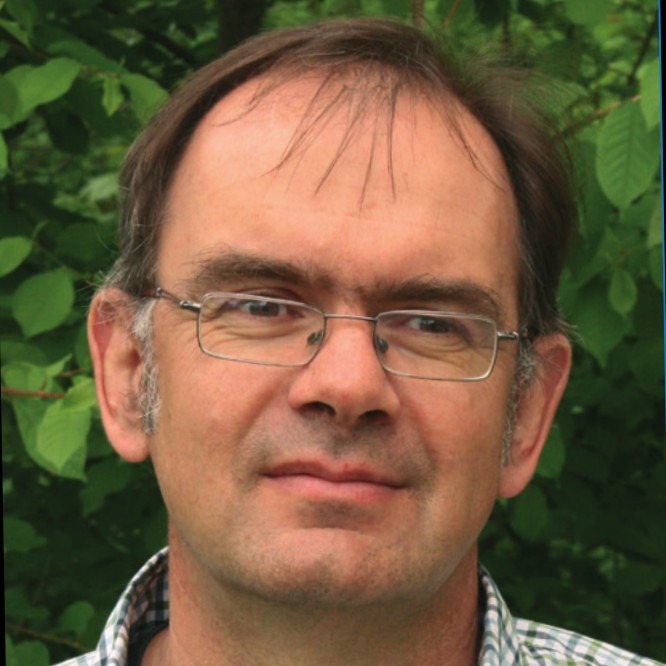 Günter Duckeck合作论文数Faculty of Physics, Ludwig Maximilian University of Munich379P. Bock合作论文数378G. Mikenberg合作论文数376B.W. Kennedy合作论文数376Aldo Michelini合作论文数376J. Ludwig合作论文数375
 Steve Lloyd合作论文数School of Physical and Chemical Sciences, Queen Mary University of London;Institute of Physics, Queen Mary University of London374
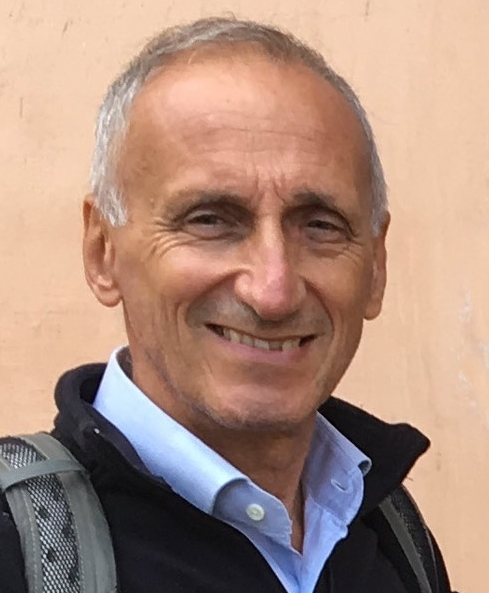 Fabrizio Fabbri合作论文数Istituto Nazionale di Fisica Nucleare Sezione di Bologna374
 Georges Azuelos合作论文数Department of Physics, Faculty of Arts and Science, Université de Montréal;TRIUMF374F. K. Loebinger合作论文数371A. D. Schaile合作论文数371
 David Axen合作论文数Department of Physics & Astronomy, The University of British Columbia370Shuji Orito合作论文数370
 Roger Barlow合作论文数School of Computing and Engineering, University of Huddersfield369O. Schaile合作论文数369R.D. Heuer合作论文数369J.W. Gary合作论文数366D. G. Charlton合作论文数365L. Levinson合作论文数365R. Keeler合作论文数364R.K. Carnegie合作论文数361
 Waad Mohr合作论文数360Runge K合作论文数360
 J. Allison合作论文数Geant4 Associates International Ltd359Meijers F合作论文数359S. Marcellini合作论文数357P. Sherwood合作论文数356Richard J Hemingway合作论文数356D. Lellouch合作论文数352
 Andris Skuja合作论文数Department of Physics, College of Computer, Mathematical, and Natural Sciences, University of Maryland352S. Komamiya合作论文数351M. Cuffiani合作论文数351
 Mark J. Oreglia合作论文数Department of Physics, The University of Chicago;Enrico Fermi Institute, The University of Chicago351
 Paul de Jong合作论文数Institute of Physics, Faculty of Science, Universiteit van Amsterdam;Nikhef350H. J. Burckhart合作论文数European Organisation for Particle Physics CERN CH-1211 Geneva 23 Switzerland350George Lafferty合作论文数School of Physics and Astronomy, The University of Manchester350
 Ken Bell合作论文数Rutherford Appleton Laboratory348
 Heinrich Voß合作论文数Institute of Mathematics, Hamburg University of Technology347
 James Pinfold合作论文数Department of Physics, Faculty of Science, University of Alberta347Silvia Arcelli合作论文数346




