Ontologies and knowledge graphs (KGs) are general-purpose computable representations of some domain, such as human anatomy, and are frequently a crucial part of modern information systems. Most of these structures change over time, incorporating new knowledge or information that was previously missing. Managing these changes is a challenge, both in terms of communicating changes to users and providing mechanisms to make it easier for multiple stakeholders to contribute. To fill that need, we have created KGCL, the Knowledge Graph Change Language (https://github.com/INCATools/kgcl), a standard data model for describing changes to KGs and ontologies at a high level, and an accompanying human-readable Controlled Natural Language (CNL). This language serves two purposes: a curator can use it to request desired changes, and it can also be used to describe changes that have already happened, corresponding to the concepts of "apply patch" and "diff" commonly used for managing changes in text documents and computer programs. Another key feature of KGCL is that descriptions are at a high enough level to be useful and understood by a variety of stakeholders-e.g. ontology edits can be specified by commands like "add synonym 'arm' to 'forelimb'" or "move 'Parkinson disease' under 'neurodegenerative disease'." We have also built a suite of tools for managing ontology changes. These include an automated agent that integrates with and monitors GitHub ontology repositories and applies any requested changes and a new component in the BioPortal ontology resource that allows users to make change requests directly from within the BioPortal user interface. Overall, the KGCL data model, its CNL, and associated tooling allow for easier management and processing of changes associated with the development of ontologies and KGs.Database URL: https://github.com/INCATools/kgcl
There is an explosion in the number of ontologies and semantic artefacts being produced in science. This paper discusses the need for common platforms to receive, host, serve, align, and enable their reuse. Ontology repositories and semantic artefact catalogues are necessary to address this need and to make ontologies FAIR (Findable, Accessible, Interoperable, and Reusable). The OntoPortal Alliance ( https://ontoportal.org ) is a consortium of research and infrastructure teams dedicated to promoting the development of such repositories based on the open, collaboratively developed OntoPortal software. We present the OntoPortal technology as a generic resource to build ontology repositories and semantic artefact catalogues that can support resources ranging from SKOS thesauri to OBO, RDF-S, and OWL ontologies. The paper reviews the features of OntoPortal and presents the current and forthcoming public and open repositories built with the technology maintained by the Alliance.
Despite progress in the development of standards for describing and exchanging scientific information, the lack of easy-to-use standards for mapping between different representations of the same or similar objects in different databases poses a major impediment to data integration and interoperability. Mappings often lack the metadata needed to be correctly interpreted and applied. For example, are two terms equivalent or merely related? Are they narrow or broad matches? Are they associated in some other way? Such relationships between the mapped terms are often not documented, leading to incorrect assumptions and making them hard to use in scenarios that require a high degree of precision (such as diagnostics or risk prediction). Also, the lack of descriptions of how mappings were done makes it hard to combine and reconcile mappings, particularly curated and automated ones. The Simple Standard for Sharing Ontological Mappings (SSSOM) addresses these problems by: 1. Introducing a machine-readable and extensible vocabulary to describe metadata that makes imprecision, inaccuracy and incompleteness in mappings explicit. 2. Defining an easy to use table-based format that can be integrated into existing data science pipelines without the need to parse or query ontologies, and that integrates seamlessly with Linked Data standards. 3. Implementing open and community-driven collaborative workflows designed to evolve the standard continuously to address changing requirements and mapping practices. 4. Providing reference tools and software libraries for working with the standard. In this paper, we present the SSSOM standard, describe several use cases, and survey some existing work on standardizing the exchange of mappings, with the goal of making mappings Findable, Accessible, Interoperable, and Reusable (FAIR). The SSSOM specification is at http://w3id.org/sssom/spec.
It is challenging to determine whether datasets are findable, accessible, interoperable, and reusable (FAIR) because the FAIR Guiding Principles refer to highly idiosyncratic criteria regarding the metadata used to annotate datasets. Specifically, the FAIR principles require metadata to be "rich" and to adhere to "domain-relevant" community standards. Scientific communities should be able to define their own machine-actionable templates for metadata that encode these "rich," discipline-specific elements. We have explored this template-based approach in the context of two software systems. One system is the CEDAR Workbench, which investigators use to author new metadata. The other is the FAIRware Workbench, which evaluates the metadata of archived datasets for their adherence to community standards. Benefits accrue when templates for metadata become central elements in an ecosystem of tools to manage online datasets--both because the templates serve as a community reference for what constitutes FAIR data, and because they embody that perspective in a form that can be distributed among a variety of software applications to assist with data stewardship and data sharing.
The Simple Standard for Ontological Mappings (SSSOM) was first published in December 2021 (v. 0.9). After a number of revisions prompted by community feedback, we have published version 0.10.1 in August 2022. One of the key new features is the use of a controlled vocabulary for mapping-related processes, such as preprocessing steps and matching approaches. In this paper, we give an update on the development of SSSOM since v. 0.9, introduce the Semantic Mapping Vocabulary (SEMAPV) and outline some of our thoughts on the establishment of mapping commons in the future.
The limited volume of COVID-19 data from Africa raises concerns for global genome research, which requires a diversity of genotypes for accurate disease prediction, including on the provenance of the new SARS-CoV-2 mutations. The Virus Outbreak Data Network (VODAN)-Africa studied the possibility of increasing the production of clinical data, finding concerns about data ownership, and the limited use of health data for quality treatment at point of care. To address this, VODAN Africa developed an architecture to record clinical health data and research data collected on the incidence of COVID-19, producing these as human- and machine-readable data objects in a distributed architecture of locally governed, linked, human- and machine-readable data. This architecture supports analytics at the point of care and—through data visiting, across facilities—for generic analytics. An algorithm was run across FAIR Data Points to visit the distributed data and produce aggregate findings. The FAIR data architecture is deployed in Uganda, Ethiopia, Liberia, Nigeria, Kenya, Somalia, Tanzania, Zimbabwe, and Tunisia.
Metadata-the machine-readable descriptions of the data-are increasingly seen as crucial for describing the vast array of biomedical datasets that are currently being deposited in public repositories. While most public repositories have firm requirements that metadata must accompany submitted datasets, the quality of those metadata is generally very poor. A key problem is that the typical metadata acquisition process is onerous and time consuming, with little interactive guidance or assistance provided to users. Secondary problems include the lack of validation and sparse use of standardized terms or ontologies when authoring metadata. There is a pressing need for improvements to the metadata acquisition process that will help users to enter metadata quickly and accurately. In this paper we outline a recommendation system for metadata that aims to address this challenge. Our approach uses association rule mining to uncover hidden associations among metadata values and to represent them in the form of association rules. These rules are then used to present users with real-time recommendations when authoring metadata. The novelties of our method are that it is able to combine analyses of metadata from multiple repositories when generating recommendations and can enhance those recommendations by aligning them with ontology terms. We implemented our approach as a service integrated into the CEDAR Workbench metadata authoring platform, and evaluated it using metadata from two public biomedical repositories: US-based National Center for Biotechnology Information (NCBI) BioSample and European Bioinformatics Institute (EBI) BioSamples. The results show that our approach is able to use analyses of previous entered metadata coupled with ontology-based mappings to present users with accurate recommendations when authoring metadata.
A key BioPortal deliverable has been the Virtual Appliance, which any community can deploy to create their own repository of ontologies and vocabularies. Adoption of the Virtual Appliance has increased significantly, with many developers, operators, and end users adopting and improving the code. We now present this software stack as OntoPortal, and release it as the OntoPortal Virtual Appliance.
A key BioPortal deliverable has been the Virtual Appliance, which any community can deploy to create their own repository of ontologies and vocabularies. Adoption of the Virtual Appliance has increased significantly, with many developers, operators, and end users adopting and improving the code. We now present this software stack as OntoPortal, and release it as the OntoPortal Virtual Appliance.
Agronomy/agriculture and biodiversity (ag & biodiv) communities face several major societal, economic, and environmental challenges that data science approaches will help address. To achieve their goals, researchers of these communities must be able to rapidly discover, aggregate, integrate, and analyse different types of data and information sources. Semantic technologies, combined to open, FAIR data and services, is one of the answers to fully knowledge-driven, and transparent science and innovation. The D2KAB project (www.d2kab.org) aims to create a framework to turn agronomy and biodiversity data into knowledge – semantically described, interoperable, actionable, open – and investigate the scientific methods and tools to exploit this knowledge for applications in agriculture and biodiversity sciences. This project, funded by French ANR (2019-2023), will provide the means –ontologies and linked open data– for ag & biodiv to embrace semantic Web technologies in order to produce and exploit FAIR data and services. To do so, D2KAB will develop new original methods and algorithms in the following areas: data integration, text mining, semantic annotation, ontology alignment and linked data exploitation and visualization. D2KAB project brings together a unique multidisciplinary consortium of 12 partners to achieve this objective: 2 informatics research units (LIRMM, I3S); 6 INRA/IRSTEA/IRD research units at the interface of computer science and ag & biodiv (URGI, MaIAGE, IATE, DIST, TSCF, DIADE) specialized in agronomy or agriculture; 2 labs in biodiversity and ecosystem research (CEFE, URFM); 1 association of agriculture stakeholders (ACTA); and 1 partnership with Stanford BMIR department. Three main goals drive D2KAB’s roadmap: 1. To develop state-of-the-art methods and technologies for ontology lifecycle and alignment. 2. To build the agronomy, agriculture and biodiversity Linked Open Data cloud. 3. To enable new semantically driven agronomy and biodiversity science. The work is starting from the recommendations of several RDA WG and IG already published or in progress (e.g. Agrisemantic WG, Vocabulary Services IG, Wheat and Rice Data Interoperability WGs, Agricultural Data IG, SHARC IG). Some of the key technological building blocks of D2KAB are AgroPortal, a reference repository for ontologies and vocabularies in agronomy; AgroLD, a semantic Web knowledge base that integrates agronomic data from public databases including GO associations, Gramene, UniprotKB, and OryGenesDB ; Corese, a semantic Web factory that implements the W3C standards RDF, RDFS, OWL-RL and SPARQL, and LDScript, a Linked Data Script Language, and STTL, the SPARQL Template Transformation Language for RDF; and Alvis, a text mining for semantic normalisation of free text by ontologies. D2KAB will allow the valorization of ag & biodiv data into real world applications leading to economic impact, smart agriculture and ecological preservation. Five driving scenarios are planned: development of an ontology-based expert system to select food packaging solutions; creation of an augmented semantic reader for Plant Health Bulletins; advanced integration of textual and experimental data on wheat phenotypes; development of new ontologies on plant root traits and extension of the Thesaurus Of Plant Characteristics; integration of plant functional biogeography data related to the Mediterranean Basin. Each of the project scenarios will have a significant impact and produce concrete outcomes for ag & biodiv scientific communities and socio-economic stakeholders in agriculture.
There is a growing acknowledgement in the scientific community of the importance of making experimental data machine findable, accessible, interoperable, and reusable (FAIR). Recognizing that high quality metadata are essential to make datasets FAIR, members of the GO FAIR Initiative and the Research Data Alliance (RDA) have initiated a series of workshops to encourage the creation of Metadata for Machines (M4M), enabling any self-identified stakeholder to define and promote the reuse of standardized, comprehensive machine-actionable metadata. The funders of scientific research recognize that they have an important role to play in ensuring that experimental results are FAIR, and that high quality metadata and careful planning for FAIR data stewardship are central to these goals. We describe the outcome of a recent M4M workshop that has led to a pilot programme involving two national science funders, the Health Research Board of Ireland (HRB) and the Netherlands Organisation for Health Research and Development (ZonMW). These funding organizations will explore new technologies to define at the time that a request for proposals is issued the minimal set of machine-actionable metadata that they would like investigators to use to annotate their datasets, to enable investigators to create such metadata to help make their data FAIR, and to develop data-stewardship plans that ensure that experimental data will be managed appropriately abiding by the FAIR principles. The FAIR Funders design envisions a data-management workflow having seven essential stages, where solution providers are openly invited to participate. The initial pilot programme will launch using existing computer-based tools of those who attended the M4M Workshop.
Developing promising treatments in biomedicine often requires aggregation and analysis of data from disparate sources across the healthcare and research spectrum. To facilitate these approaches, there is a growing focus on supporting interoperation of datasets by standardizing data-capture and reporting requirements. Common Data Elements (CDEs)-precise specifications of questions and the set of allowable answers to each question-are increasingly being adopted to help meet these standardization goals. While CDEs can provide a strong conceptual foundation for interoperation, there are no widely recognized serialization or interchange formats to describe and exchange their definitions. As a result, CDEs defined in one system cannot be easily be reused by other systems. An additional problem is that current CDE-based systems tend to be rather heavyweight and cannot be easily adopted and used by third-parties. To address these problems, we developed extensions to a metadata management system called the CEDAR Workbench to provide a platform to simplify the creation, exchange, and use of CDEs. We show how the resulting system allows users to quickly define and share CDEs and to immediately use these CDEs to build and deploy Web-based forms to acquire conforming metadata. We also show how we incorporated a large CDE library from the National Cancer Institute's caDSR system and made these CDEs publicly available for general use.
Licensed-Assisted Access (LAA) is a promising technology to address the issues of ever-increasing traffic demands in cellular systems. However, the efficient coexistence of Wi-Fi and LAA in the same unlicensed spectrum raises many challenges. Most of the studies addressing this coexistence issue focus on a coexistent LAA and Wi-Fi network sharing a single carrier. In this paper, we investigate a coexistent network with multiple available carriers, which is the case for practical deployments. Specifically, we develop an efficient adaptive energy detection algorithm to avoid frequent collisions in coexistent Wi-Fi and LAA networks. moreover, a carrier selection algorithm, based on the LAA energy detection threshold, is proposed to further improve the coexistence performance. Simulation results validate the effectiveness of the proposed adaptive energy detection and carrier selection schemes.
There is an expectation that scientists will archive their experimental data online in public repositories to enable other investigators to verify their work and to re-explore their data in search of new discoveries. When left to their own devices, however, scientists do a poor job creating the metadata that describe their datasets. A lack of standardization makes it difficult for other investigators to find relevant datasets and to perform secondary analyses. The Center for Expanded Data Annotation and Retrieval (CEDAR) was founded with the goal of enhancing the authoring of experimental metadata to make online datasets more useful to the scientific community. CEDAR technology includes Web-based methods for creating and managing libraries of templates for representing metadata. CEDAR's templates interoperate with a repository of scientific ontologies to standardize the way in which the templates may be filled out. Collaborations with several major research projects are allowing us to explore how CEDAR may ease access to scientific data sets stored in public repositories.
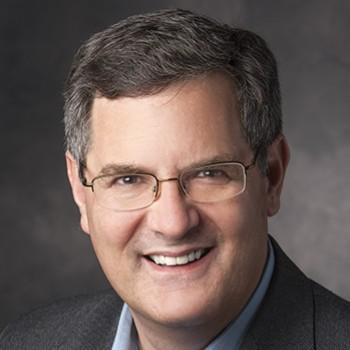 Mark Musen合作论文数Stanford Center for Biomedical Informatics Research, School of Medicine, Stanford University35
 Marcos Martinez-Romero合作论文数Stanford University21
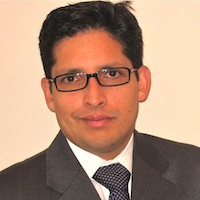 Luis Bermudez合作论文数OGC21
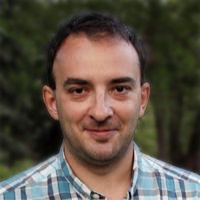 Attila L. Egyedi合作论文数Stanford Ctr Biomed Informat Res, Stanford, CA 94305 USA15
 Debra Willrett合作论文数15Martin O'Connor合作论文数Stanford University14luiz e bermudez合作论文数12
 Kevin Gomes合作论文数9
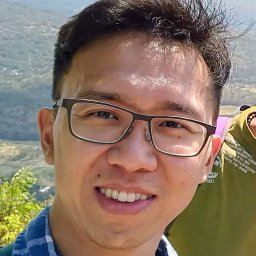 Josef Hardi合作论文数Stanford Univ, Sch Med, Stanford Ctr Biomed Informat Res, 1265 Welch Rd, Stanford, CA 94305 USA8
 Clement Jonquet合作论文数INRAE8Philip S. Bogden合作论文数8
 Erik A. Schultes合作论文数Department of Computer Science, Duke University7
 Martin J. Connor合作论文数Department of Surgery & Cancer, Faculty of Medicine, Imperial College London7
 Alan D. Chave合作论文数Deep Submergence Laboratory, Department of Applied Ocean Physics and Engineering, Woods Hole Oceanographic Institution6
 Michel Dumontier (M.J.)合作论文数Department of Advanced Computing Sciences, Maastricht University;Institute of Data Science, Maastricht University6
 Matthew Arrott合作论文数6
 Rafael Gonçalves合作论文数Center for Biomedical Informatics Research, Stanford University6Hana Pergl Sustkova合作论文数5
 Steven Kleinstein合作论文数Department of Pathology, Yale School of Medicine, Yale University;Center for Biomedical Data Science, Yale University;Center for Infection and Immunity, Yale University5
 Maryam Panahiazar合作论文数Cedars-Sinai;Department of Surgery, School of Medicine, University of California, San Francisco5
 Kei-Hoi Cheung合作论文数Yale University5Gerry Creager合作论文数4eric bridger合作论文数4Jennifer Vendetti合作论文数4
 Chris Mungall合作论文数Biosystems Data Science Department, Environmental Genomics and Systems Biology Division, Lawrence Berkeley National Laboratory;Berkeley Institute for Data Science4
 Robert A. Arko合作论文数4
 Francisco P. Chavez合作论文数Monterey Bay Aquarium Research Institute4Michael Meisinger合作论文数4
 Krzysztof Janowicz合作论文数Department of Geography and Regional Research, University of Vienna;Center for Spatial Studies, University of California, Santa Barbara4
 Oscar Corcho合作论文数Ontology Engineering Group, Departamento de Inteligencia Artificial, Universidad Politécnica de Madrid;LibrAIry_eu;DIH - AIR4S;LocaliData4
 John Orcutt合作论文数Institute of Geophysics and Planetary Physics, University of California,San Diego4
 Kerry Taylor合作论文数School of Computing, Australian National University4
 Csongor Nyulas合作论文数Stanford University4
 Dawn Wright合作论文数College of Earth, Ocean, and Atmospheric Sciences, Oregon State University;Environmental Systems Research Institute4
 Arthur Herzog合作论文数Fraunhofer Gesellschaft, Germany4Anthony W. Isenor合作论文数4
 Payam Barnaghi合作论文数Department of Brain Sciences, Faculty of Medicine, Imperial College London;UK Dementia Research Institute4
 Raul Garcia Castro合作论文数Departamento de Inteligencia Artificial, Universidad Politicnica de Madrid;School of Computer Science, Universidad Politicnica de Madrid4
 Olivier Gevaert合作论文数Department of Biomedical Data Science, School of Medicine, Stanford University4
 Laurent Lefort合作论文数Australian Bureau of Statistics4
 Mark Chaffey合作论文数Monterey Bay Aquarium Research Institute4
 Michael Compton合作论文数CSIRO ICT Centre, Canberra, ACT 2601, Australia4
 Cory Henson合作论文数Bosch Research and Technology Center;Bosch Center for Artificial Intelligence4Holger Neuhaus合作论文数4
 Andriy Nikolov合作论文数AstraZeneca4
 Barend Mons合作论文数University of Rotterdam and4
 Syed Ahmad Chan Bukhari合作论文数College of Professional Studies, St John s University4n r galbraith合作论文数3camilo rueda合作论文数3




