Herbivores can have indirect effects on local nutrient availability if their direct effects on plants lead to changes in the amount or chemical composition of litter reaching the soil surface. Using two exclosure experiments, we evaluated this possibility for black-tailed deer (Odocoileus hemionus columbianus) feeding on silver bush lupine (Lupinus chamissonis) in a coastal dune system in northern California. Our first experiment assessed the effects of deer herbivory on 360 lupines that were tracked from newly germinated seedlings in 1996 and 1997 until 2000, when most surviving individuals had reached reproductive age. Results from this experiment showed that browsing by deer significantly reduced growth rates and seed production of lupines and delayed the onset of reproductive maturity. Although deer had no effect on the density of litter accumulating underneath shrubs (g m(-2)), browsing significantly decreased C:N ratios of leaf tissue, due primarily to increased nitrogen content of leaves. Deer browsing also caused significantly increased net nitrogen mineralization rates in the soil under shrubs, although pools of ammonium and nitrate were uninfluenced. The second experiment examined 72 established bush lupines from 1997 to 2000, and showed that deer browsing significantly decreased seed production but had no effect on shrub growth. We also detected trends for browsed shrubs to have reduced pools of ammonium and nitrate underneath their canopies, although no such patterns emerged for nitrogen mineralization rates. Collectively, these data suggest that changes in litter quality, more so than litter quantity, contributed to the indirect effects of deer herbivory on local nitrogen dynamics. We hypothesize that deer browsing induced chemical changes in lupine plant tissue, which increased the nitrogen content of litter reaching the soil surface and subsequently increased rates of nitrogen mineralization.
Biological invasions are a global phenomenon that can accelerate disturbance regimes and facilitate colonization by other nonnative species. In a coastal grassland in northern California, we conducted a four-year exclosure experiment to assess the effects of soil disturbances by feral pigs (Sus scrofa) on plant community composition and soil nitrogen availability. Our results indicate that pig disturbances had substantial effects on the community, although many responses varied with plant functional group, geographic origin (native vs. exotic), and grassland type. (''Short patches'' were dominated by annual grasses and forbs, whereas ''tall patches'' were dominated by perennial bunchgrasses.) Soil disturbances by pigs increased the richness of exotic plant species by 29% and native taxa by 24%. Although native perennial grasses were unaffected, disturbances reduced the bio- mass of exotic perennial grasses by 52% in tall patches and had no effect in short patches. Pig disturbances led to a 69% decrease in biomass of exotic annual grasses in tall patches but caused a 62% increase in short patches. Native, nongrass monocots exhibited the opposite biomass pattern as those seen for exotic annual grasses, with disturbance causing an 80% increase in tall patches and a 56% decrease in short patches. Native forbs were unaffected by disturbance, whereas the biomass of exotic forbs increased by 79% with disturbance in tall patches and showed no response in short patches. In contrast to these vegetation results, we found no evidence that pig disturbances affected nitrogen mineral- ization rates or soil moisture availability. Thus, we hypothesize that the observed vegetation changes were due to space clearing by pigs that provided greater opportunities for colo- nization and reduced intensity of competition, rather than changes in soil characteristics. In summary, although responses were variable, disturbances by feral pigs generally pro- moted the continued invasion of this coastal grassland by exotic plant taxa.
Biorefineries refer to conversion operations where biomass feedstock is converted to multiple products such as chemicals, fuels, and bioproducts. The concept focuses on maximizing valued extractables while minimizing waste streams. A low cost collection and converting the biomass to feedstock is critical to the success of these emerging industries. A conservative estimate shows that demand for feedstock for biorefineries may reach 172 million dry tons over the next decade (2010) and more than 508 million dry tons in 2020 if biomass technology implementation achieves the stated goals. An orderly supply of this large amount of biomass to biorefineries requires new and robust equipment and well-established infrastructure. At the present, low and inconsistent demand for biomass for energy is the main reason for lack of interest on the part of manufacturers to invest in equipment development. It is important however, that research and development in production and supply technologies proceed in parallel with developments in conversion technologies. This paper reviews the operations involved in biomass supply and identifies three areas of research: moisture control, densification, and systems modeling as key areas of research. Other areas of work such as single step harvesting and on farm fractionation of biomass for added value purposes has also been identified as important areas of work. Manufacturers and processors need reliable engineering data on harvesting and handling of biomass in order to embark on improving and designing new equipment for biomass to feedstock operations.
We examined interactions between the ant Iridomyrmex nitidiceps and the lycaenid butterfly Paralucia aurifera in southeastern Australia, and present data supporting the hypothesis that both participants benefit from their association. In the field, lycaenids persisted only on those host plants that ants subsequently colonized. In the laboratory, lycaenid larvae reared with ants were 31—76% heavier, developed 37% faster, and commonly completed one or two fewer instars than larvae reared without ants. Ant tending also resulted in 20% heavier pupae, 69% shorter pupal duration, and 5% larger adults as measured by forewing length; adults were not significantly different as measured by body length. We hypothesize that these positive effects occurred largely because ant—tended lycaenid larvae spent more time feeding than did untended larvae. Field data documented that ants colonized host plants only after lycaenid larvae were present, indicating that ants actively maintained the association. In laboratory experiments, 40% more ant workers survived when lycaenid larvae were present than when they were absent, although ant mass was not significantly affected. We hypothesize that the survivorship effects occurred because ants consumed the lycaenid's nectary gland secretions, which contained considerable amounts of glucose and amino acids. Our results showed that lycaenids can benefit from ants in ways other than, or in addition to, protection from natural enemies and that they incur minimal developmental costs from associating with ants.
I present and evaluate the hypothesis that host plants indirectly affect the fitness of many homopterans and lepidopterans by mediating the outcome of their interactions with ants. Two conditions must be met to support this contention. First, the attractiveness of herbivores to ants must vary predictably with intra- and/or interspecific changes in host-plant quality. Such variation will occur if a) the chemical composition and/or quantity of ant attractants (excretions and secretions) produced by herbivores varies with changes in host quality and b) ants preferentially tend those herbivores that produce the most nutritionally rewarding attractants. Second, the number of tending ants must have a significant effect on the fitness of herbivores. While there is abundant evidence to support these individual conditions, few studies have examined both conditions for a single herbivore-ant association.I outline a series of testable predictions based on the host-mediation hypothesis. 1) The effects of host plants will vary with the degree to which herbivores depend on ants. 2) Hosts will affect the ability of herbivores to compete for ant mutualists. 3) Tended herbivores will exhibit host-selection behaviors that increase their ability to attract ants. And most importantly, 4) variation in host quality will predict fluctuations in the strength and sign of herbivore-ant interactions. I present a graphical model to illustrate 1) the ways in which plant-induced variation in the value of attractants to ant colonies can be used to predict switchpoints in the behavior of ants and 2) the effects of distance to servicing ant nests and nutritional status of these colonies on the predictions.
A great number and variety of interactions are widely assumed to be mutualistic because the species involved exchange goods or services from which they appear to derive benefit. A familiar example is pollination, in which animal vectors receive food in the form of nectar and/or pollen, while the ovules of plants are fertilized. Unfortunately, most studies fail to demonstrate that both participants benefit in any significant way and therefore lack the information necessary to determine whether a given interaction is mutualistic. While mutualism is thought to be a common type of species interaction, there is still little evidence for this belief.
Ethanol produced from cellulosic biomass is examined as a large-scale transportation fuel. Desirable features include ethanol's fuel properties as well as benefits with respect to urban air quality, global climate change, balance of trade, and energy security. Energy balance, feedstock supply, and environmental impact considerations are not seen as significant barriers to the widespread use of fuel ethanol derived from cellulosic biomass. Conversion economics is the key obstacle to be overcome. In light of past progress and future prospects for research-driven improvements, a cost-competitive process appears possible in a decade.
Although competition for mutualists is known to be an influential force in plant-animal interactions, its importance in animal-animal associations is largely unexplored. Here, we demonstrate that phloem-feeding membracids (Publilia modesta) compete intraspecifically for the protective services of an ant mutualist (Formica altipetens). By experimentally increasing membracid densities in the field, we observed three negative effects due to competition for ants: (1) a 45%-59% reduction in the number of ants tending membracid aggregations, (2) a 63% increase in the abundance of a predatory salticid spider (Pellenes sp.), and (3) a 59% reduction in the mean number of membracid nymphs per plant. In total, the loss of protective services due to competition for mutualists translated into a 92% decrease in the production of newly eclosed membracid adults. These findings provide the first experimental demonstration that animal species compete for mutualists. In addition, our work indicates that mutualisms can be strongly influenced by the local biotic neighborhoods in which they occur and thus may be far more variable than previously thought.
Reduction of feedstock costs is necessary, and genetic techniques can be used to increase productivity, thereby lowering costs. Current regional average productivities in the SRWCP range from 7 to 17 dry Mg ha/sup /minus/1/ year/sup /minus/1/ and the best average productivity found in the Pacific Northwest is 32.8 dry Mg ha/sup /minus/1/ year/sup /minus/1/ on hybrid poplar. Average regional productivities in screening trials of the HECP for lignocellulosic crops range from 3.6 to 21.4 dry Mg ha/sup /minus/1/ year/sup /minus/1/. Average annual rapeseed seed yields varied from 0.7 to 4.21 Mg/ha depending on the planting site, with a maximum yield of 5.53 Mg/ha. Breeding and biotechnology are or will be used to improve the yields of the energy crops. SRWCP productivity goals have been met and exceeded in small plots when genetically improved clones have been used. The SRWCP is currently performing genetic improvement research on five tree species and has inserted genes for herbicide tolerance into a hybrid poplar clone. The HECP plans to initiate genetic improvement of selected grass species in the near future. 28 refs., 4 figs., 7 tabs.
 j w ranney合作论文数15
 John Trimble合作论文数Rehabilitation Research and Development Center, VA Hines Hospital4
 Harold Mooney合作论文数Department of Biology, School of Humanities and Sciences, Stanford University;Stanford Woods Institute for the Environment, Stanford University;Freeman Spogli Institute for International Studies, Stanford University3Robert D. Perlack合作论文数3Ll Wright合作论文数2
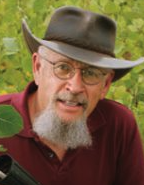 Thomas G. Whitham合作论文数Center for Adaptable Western Landscapes, Northern Arizona University;Department of Biological Sciences, Northern Arizona University;Museum of Northern Arizona2
 Andrew Beattie合作论文数School of Natural Sciences, Macquarie University2Osvaldo E. Sala合作论文数2
 Ernesto Medina合作论文数Centro de Ecología, Venezuelan Institute for Scientific Research;Center for Applied Tropical Ecology and Conservation, University of Puerto Rico2
 Ernst-Detlef Schulze合作论文数Max Planck Institute for Biogeochemistry2PA LAYTON合作论文数1d a posey合作论文数1r l h poels合作论文数1
 Gerardo Mery合作论文数1m r guariguata合作论文数1A. F. Turhollow合作论文数1william f barron合作论文数1L.L. Wright合作论文数1m camacho合作论文数1rodolfo dirzo合作论文数1Gh Orians合作论文数1peter schmidt合作论文数1Antonio Martín合作论文数1Lynn L. Wright合作论文数1f c合作论文数1ernesto medina合作论文数1
 Robin Chazdon合作论文数Department of Ecology and Evolutionary Biology, College of Arts and Sciences, University of Colorado Boulder;Tropical Forests & People Research Centre, Forest Research Institute, University of the Sunshine Coast1
 Dave Richardson合作论文数Centre for Invasion Biology, University of Stellenbosch;Department of Botany and Zoology, Faculty of Science, Stellenbosch University1
 Osvaldo Sala合作论文数School of Sustainability, Arizona State University;School of Life Sciences, Arizona State University;Global Drylands Center, Arizona State University1
 Jon Keeley合作论文数Western Ecological Research Center, United States Geological Survey1
 Charles Wyman合作论文数Department of Chemical and Environmental Engineering, University of California Riverside;Center for Environmental Research and Technology, University of California Riverside;Vertimass LLC1
 Richard B. Primack合作论文数Department of Biology, College of Arts & Sciences, Boston University1
 Thomas E. Lovejoy合作论文数College of Science, George Mason University;Heinz Center for Science Economics and the Environment;lnstitute for a Sustainable Earth, George Mason University1
 Andrew Smith合作论文数School of Agriculture, Food and Wine, The University of Adelaide1
 Robin Lambert Graham合作论文数Lab for Computing, Environment and Life Sciences, Argonne National Laboratory1
 Roberta J. Nichols合作论文数Ford Motor Company1
 Shahab Sokhansanj合作论文数Department of Chemical and Biological Engineering, Faculty of Applied Science, The University of British Columbia1
 Stan D. Wullschleger合作论文数Environmental Sciences Division|Oak Ridge National Laboratory1Linda L. Wright合作论文数Department of Physical Therapy, Armstrong Atlantic State University1
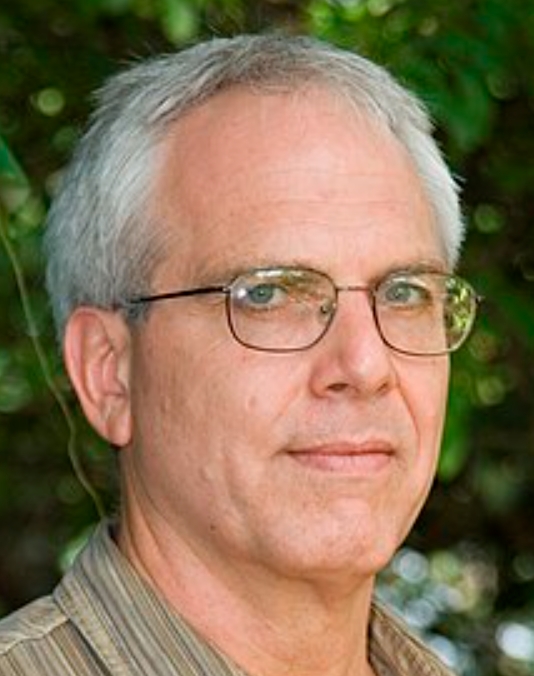 William Laurance合作论文数Centre for Tropical Environmental and Sustainability Science, James Cook University1
 FJJM (Frans) Bongers合作论文数Wageningen University and Research1
 Ian R. Noble (Ian Noble)合作论文数Institute for Climate, Energy & Disaster Solutions, Australian National University;Research School of Earth Sciences, College of Science, Australian National University1
 Stephen Mulkey合作论文数Botany University of Florida1
 Juan F. Silva合作论文数Facultad de Ciencias;Universidad de Los Andes;Fakultatf ur Biologie;Fakultatf ur Biologie, Universidad de Los Andes1
 Richard Bierregaard合作论文数Department of Biology;University of North Carolina at Charlotte;Department of Biology, University of North Carolina at Charlotte1
 Laura Huenneke合作论文数School of Earth Sciences and Environmental Sustainability, Northern Arizona University1
 Lee Rybeck Lynd合作论文数Thayer School of Engineering, Dartmouth College1E.-D. Schulze合作论文数1




