The problem of estimating parameters of discrete-time non-Gaussian autoregressive (AR) processes is addressed. The subclass of such processes considered is restricted to those whose driving noise samples are statistically independent and identically distributed according to a Gaussian-mixture probability density function (PDF). Because the likelihood function for this problem is typically unbounded in the vicinity of undesirable, degenerate parameter estimates, a global maximum likelihood approach is not appropriate. Hence, an alternative approach is taken whereby a finite local maximum of the likelihood surface is sought. This approach, which is termed the quasi-maximum likelihood (QML) approach, is used to obtain estimates of the AR parameters as well as the means, variances, and weighting coefficients that define the Gaussian-mixture PDF. A technique for generating solutions to the QML problem is derived using a generalized version of the expectation-maximization principle.
Optimal decentralized control of a discrete-time stochastic system is considered under a periodic sharing information pattern. In this scenario, controllers share information with one-step delay every K time steps. The periodic sharing pattern is a generalization of the previously studied one-step delay sharing pattern, which is known to possess a nonclassical separation property. It is proven that the periodic sharing pattern has an analogous separation property.
We present an algorithmic approach to the design of low-power frequency-selective digital filters based on the concepts of adaptive filtering and approximate processing. The proposed approach uses a feedback mechanism in conjunction with well-known implementation structures for finite impulse response (FIR) and infinite impulse response (IIR) digital filters; Our algorithm is designed to reduce the total switched capacitance by dynamically varying the filter order based on signal statistics. A factor of 10 reduction in power consumption over fixed-order filters is demonstrated for the filtering of speech signals.
We present an IIR filtering technique based upon a recently proposed approach for reducing power consumption in implementation of frequency-selective filters. The basic idea in such techniques is to utilize the most recent input and output signal samples to estimate the current SNR (defined as the ratio of the in-band signal power to the out-of-band signal power) at the filter's input. This estimated input SNR is then used to update the filter order to the minimum value which would guarantee a minimum tolerable SNR at the filter's output. A key issue addressed in this paper is how well the estimated filter order converges to the theoretical minimum for situations satisfying the assumptions behind the derivation of the technique. Experimental results are used to verify that convergence to the correct filter order depends (1) upon the number of input and output samples used for estimating the input SNR, (2) upon the filter order applied in generating the output samples that are used in estimating the input SNR and (3) upon the proximity of the actual input SNR to boundaries in the input-SNR space corresponding to changes in the optimal choice for filter order.
The growing demand for portable multimedia devices has placed increased importance on low power solutions for DSP tasks such as filtering and source coding. An approach to power reduction in digital CMOS filter design using approximate processing is presented. This involves adaptively reducing the number of operations switched per sample based on signal statistics. Speech filtering examples demonstrate that power consumption can be reduced over conventional solutions by an order of magnitude for wireless applications
 S. Hamid Nawab合作论文数4
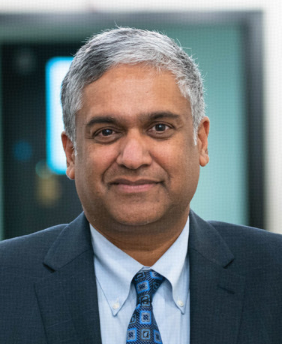 Anantha Chandrakasan合作论文数Department of Electrical Engineering and Computer Science, School of Engineering, Massachusetts Institute of Technology4JM Ooi合作论文数1SM VERBOUT合作论文数1
 Gregory W. Wornell合作论文数Department of Electrical Engineering and Computer Science, MIT1S.M. Verbout合作论文数1
 Alan Oppenheim合作论文数Department of Electrical Engineering and Computer Science, College of Computing, Massachusetts Institute of Technology1A. V. Oppenheim合作论文数1Joseph M. Winograd合作论文数1




