The ability of Porphyromonas gingivalis to biosynthesize tetrapyrroles de novo has been investigated. Extracts of the bacterium do not possess activity for 5-aminolevulinic-acid dehydratase or porphobilinogen deaminase, two key enzymes involved in the synthesis of uroporphyrinogen III. Similarly, it was not possible to detect any genetic evidence for these early enzymes with the use of degenerate polymerase chain reaction. However, the bacterium does appear to harbor some of the enzymes for cobalamin biosynthesis since cobyric acid, a pathway intermediate, was converted into cobinamide. Furthermore, degenerate polymerase chain reaction with primers to cbiP, which encodes cobyric-acid synthase, produced a fragment with a high degree of identity to Salmonella typhimurium cbiP. Indeed, the recently released genome sequence data confirmed the presence of cbiP together with 14 other genes of the cobalamin pathway. A number of these genes were cloned and functionally characterized. Although P. gingivalis harbors all the genes necessary to convert precorrin-2 into cobalamin, it is missing the genes for the synthesis of precorrin-2. Either the organism has a novel pathway for the synthesis of precorrin-2, or more likely, it has lost this early part of the pathway. The remainder of the pathway may be being maintained to act as a salvage route for corrin synthesis.
The biosynthesis of the corrin ring component of cobalamin (vitamin B12) is reviewed with regard to how two separate though broadly similar pathways may have evolved. The more ancient “anaerobic” pathway is characterized by the early chelation of cobalt and the release of acetaldehyde whereas the “aerobic” pathway is characterized by an absolute dependency on molecular oxygen, the late chelation of cobalt and the release of acetic acid. Both pathways require the addition of 8S-adenosyl-L-methionine-derived methyl groups to the periphery of the tetrapyrrole framework. The sequences of these enzymes reveal that they are clearly related, most likely having evolved from an ancestral methylase gene. The three-dimensional structure of one of these methyltransferases is highlighted and discussed in light of a common mechanism for this family of enzymes. Moreover, the aerobic and anaerobic chelatases are described and parallels with the chelatases found in heme and chlorophyll synthesis are drawn.
The enzyme 5-aminolaevulinic acid dehydratase (ALAD), a key regulatory enzyme in tetrapyrrole biosynthesis, was measured in the haem-dependent species Porphyromonas gingivalis, Treponema denticola, Prevotella nigrescens and Prevotella loescheii. Despite the fact that the last species accumulates porphyrins, enzyme activity was not detected in either cell-free extracts or subcellular fractions. However, P. gingivalis, T. denticola and Pr. nigrescens all possessed significant levels of ALAD (0.15-1.2 nmol/min per mg protein) in cell-free extracts. In addition, degenerate primers, designed to conserved regions of the gene encoding ALAD (hemB), amplified a 337 bp fragment from Pr. nigrescens which shares 60-82% identity at the amino acid level with other bacterial hemB genes.
A clone encoding aspartate aminotransferase (AAT, EC 2.6.1.1) was isolated from an Arabidopsis thaliana leaf cDNA library. This clone contains a 1365 bp open reading frame encoding a polypeptide of 49.8 kDa, designated Ataat1. The clone was shown to contain a chloroplastic isoenzyme as an in organellar protein import assay demonstrated that a radiolabelled transcription/translation product of 49.8 kDa was imported into viable pea chloroplasts and was subsequently processed to yield a mature protein of 45 kDa. The open reading frame corresponding to the predicted mature AAT was manipulated into an expression construct (pEC14). Transformed Escherichia coli cells containing pEC14 expressed up to 16 times more AAT activity than vector only controls, thus demonstrating conclusively that the clone encoded AAT.
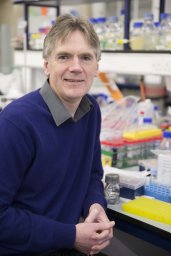 Martin Warren合作论文数Department of Biochemistry, University of Southampton5
 Heidi L. Schubert合作论文数Department of Biochemistry, University of Utah3
 Keith S Wilson合作论文数Department of Chemistry, University of York2
 Evelyne Raux合作论文数2Haroun N. Shah合作论文数Department of Oral Microbiology;Medical College, London Hospital;Department of Oral Microbiology, London Hospital Medical College2SE GHARBIA合作论文数1E Raux合作论文数1
 Alison Smith合作论文数Department of Plant Sciences, School of Biological Sciences, University of Cambridge1
 Amanda A Brindley合作论文数1Nancy Lois Ruth Anderson合作论文数1




