The objective of this paper is twofold: (a) to review the current knowledge of cultural, psychological, psychiatric, cognitive, interpersonal, and organizational issues that are relevant to the behavior and performance of astronaut crews and ground support personnel and (b) to make recommendations for future human space missions, including both transit and planetary surface operations involving the Moon or Mars. The focus will be on long-duration missions lasting at least six weeks, when important psychological and interpersonal factors begin to take their toll on crewmembers. This information is designed to provide guidelines for astronaut selection and training, in-flight monitoring and support, and post-flight recovery and re-adaptation.
aDepartment of Psychiatry, University of California/San Francisco, VAMC (116A), 4150 Clement Street, San Francisco, CA 94121, USA bUniversity of Bergen, Norway cUniversity of California/San Francisco, and VA Medical Center, San Francisco, USA dInstitute for Biomedical Problems, Russia eBerlin University of Technology, Germany fNASA Johnson Space Center, USA gUniversity of Minnesota, USA hUniversity of British Columbia, Canada iUniversity of Texas Medical Branch, Galveston, USA jNational Space Biomedical Research Institute, USA kJAXA Tsukuba Space Center, Japan lDLR, Germany mCentre for Intercultural Learning, Canada nNASA Ames Research Center, USA oUniversity of Tsukuba, Japan pMcMaster University, Canada qUniversity of Southern California, USA rAnacapa Sciences, USA sAstronaut Center, China
Previous studies of isolated and confined environments (ICEs) have been unable to assign relative priority to the many behavioral issues affecting participants. The current study analyzed psychologically relevant entries in the journals of nine leaders and physicians of French circumpolar expeditions. More than 100 specific themes emerged, distributed across 22 categories. Group Interaction was found to be the most salient of the categories, followed by Outside Communications, Workload, Recreation and Leisure, Medical Support, Adjustment, Leadership, Event, and Food. Substantial evidence of a third quarter phenomenon was found in all expeditions. Unexpectedly, shorter missions (69-180 d) generated more negative reactions than longer missions (230-363 d) and diaries from the sub-Antarctic stations were more negative than those from the Antarctic. The study provides quantitative bases for judgments concerning the relative importance of psychological issues.
Analogous experience is often instructive when attempting to understand human behavior in extreme environments. The current paper refers to the experiences of polar explorers and remote duty personnel to help identify the factors that influence individual and team performance when small groups are isolated and confined for long durations. The principal factors discussed include organizational structure, intracrew communications, interpersonal relations, leadership style, personnel selection, and training. Behavioral implications also are addressed for the design of procedures and equipment to facilitate sustained individual and group performance under conditions of isolation and confinement. To be consistent with the theme of the symposium, this paper emphasizes the crew requirements for an international expedition to Mars.
 N Kraft合作论文数3Johannes B合作论文数3
 Lawrence A. Palinkas合作论文数Department of Population and Public Health Sciences, Keck School of Medicine, University of Southern California;Suzanne Dworak-Peck School of Social Work, University of Southern California3
 Nick Kanas合作论文数Psychiatry, University of California, San Francisco3V. P. Salnitskiy合作论文数3
 Vadim Gushin合作论文数3Gloria Rakita Leon合作论文数Department of Psychology, College of Liberal Arts, University of Minnesota3J. Wang合作论文数2D.J. Kealey合作论文数2S. Bishop合作论文数2
 David M Musson合作论文数Department of Electrical and Computer Engineering, McMaster University2N. Inoue合作论文数2
 Gro Mjeldheim Sandal合作论文数Faculty of Psychology, University of Bergen2W. Sipes合作论文数2
 Dietrich Manzey合作论文数Engn & Org Psychol, Berlin Inst Technol2R. North合作论文数2Ichiyo Matsuzaki合作论文数Institute of Community Medicine, University of Tsukuba2E.R. Fiedler合作论文数1J.E. Boyd合作论文数1
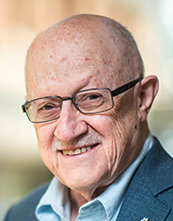 Peter Suedfeld合作论文数Department of Psychology, The University of British Columbia1Jennifer Boyd Ritsher合作论文数1




