Lasers have many applications in dermatology. Recent developments in laser technology have produced significant therapeutic advances in several areas. The introduction of pulsed tunable dye lasers has considerably improved the treatment of vascular lesions, particularly port wine stain malformations in children. A wider range of continuous-wave and quasi-continuous-wave lasers have also become available for treating vascular lesions, and their use in conjunction with automated delivery systems has improved results whilst reducing adverse effects. Increasing interest in treatment of pigmented lesions and tattoos has led to investigation of a range of high-power short-pulse lasers, and early results look very promising. However, further work is needed in all these areas to determine which lesions respond best to each laser system, and which treatment techniques are optimal.
The sequential light microscopic histological changes produced in human skin by a single exposure of UV-A, UV-B, UV-C and oral 8-methoxypsoralen plus UV-A (PUVA) causing approximately equal degress of delayed erythema response, have been evaluated. UV-C and UV-B affect the epidermis to a greater degree than UV-A, while UV-A affects the dermis to a greater degree than UV-B and UV-C. PUVA has prominent effects on both epidermis and dermis, differing in degree from those changes induced by UV-A, UV-B, and UV-C and are longer lasting. The sequence of histological changes following UV exposure is completed more rapidly after exposure to shorter UV wavelengths.
In some animal species, exposure of the ocular lens to 8-methoxypsoralen (8-MOP) and ultraviolet-A radiation (PUVA) induces lens opacities. Case reports have suggested that PUVA therapy in humans may be associated with an increased risk of ocular lens abnormalities. To examine this risk, we compared the results of the initial and final examinations, which were performed on an average of 10 years apart in 1,235 individuals enrolled in the PUVA Follow-up Study.After adjustment for age and sex, there was no significant relation between the risk of developing an ocular lens abnormality or cataract and the level of exposure to PUVA. A higher incidence of cataract was noted, however, in the PUVA cohort compared to a large population-based study. In addition, rates of cataract extraction were significantly higher among male members of the PUVA study compared to enrollees in the Physician Health Study.Overall, our data strongly argue against a dose-dependent increase in the risk of cataract or other lens abnormality in association with PUVA therapy in a cohort most of whose members we believe usually used recommended eye protection. Our data do not explain the higher incidence and prevalence of ocular lens pathology in our cohort compared to groups without psoriasis. These differences could reflect differences in criteria for defining these abnormalities, other exposures, or PUVA.
Previous studies have demonstrated that brief pulses of selectively absorbed optical radiation can be used to confine thermal injury to pigmented targets within tissues. We performed studies in rabbits to assess the usefulness of this technique for selectively coagulating the colonic vasculature. By measuring the optical absorbance of rabbit colon with a spectrophotometer, it was determined that hemoglobin exhibits strong absorption relative to the rabbit colon at a wavelength of 577 nm. Because light must be absorbed to affect tissue, it was hypothesized that laser pulses of this wavelength would selectively damage blood vessels. This hypothesis was tested by examining the effect of 300-microseconds-long 577-nm laser pulses on rabbit colon in vivo. For delivered radiant exposures between 4 and 8 J/cm2, selective coagulation of the colonic vasculature could be produced without damage to the surrounding colon. At greater radiant exposures, vessel hemorrhage was occasionally noted but no transmural thermal injury was produced with delivered radiant exposures as high as 22 J/cm2. This technique may form the basis of a safe and simple treatment of vascular lesions of the colon such as angiodysplasia.
The properties of a laser which effect stone fragmentation have been studied. The pulsed dye laser emitting at 504nm. in one microsecond duration pulses appears to be the optimum out of a wide range of parameters tested. The laser is coupled to a 200 micron core fiber; this complete with its cladding has a total diameter of only 0.25mm. Most calculi are fragmented by a series of pulses of up to 30mJ. The system is used by firing bursts of pulses with the fiber actually in contact with the stone. The result is a very controlled fragmentation which is particularly suited to use in the confines of the ureter. This modality of treatment utilises less energy than ultrasound or electrohydraulic probes to fragment a stone and the very fine, flexible fiber represents a considerable miniaturisation.
The cytotoxicity of 193 and 248 nm excimer laser radiation was compared to that produced by a germicidal lamp (predominantly 254 nm) using Chinese hamster ovary cells (CHO), and a human diploid fibroblast line, AG-1522A. Excimer laser radiation at 248 nm (3.5 X 10(2) w/m2) and germicidal radiation (5.3 X 10(-5) w/m2) caused toxicity in both cell lines, with the AG-1522A cells (D37 = 7-8 J/m2) being slightly more sensitive than the CHO cells (D37 = 11 J/m2). Incident 193 nm radiation was less cytotoxic than 248 nm to AG-1522A and CHO cells with D37 values of 18 and 85 J/m2, respectively. The mutagenic potential of UV excimer radiation at 193 and 248 nm was evaluated using the hypoxanthine guanine phosphoribosyl transfer assay system with CHO cells. Excimer laser radiation at 248 nm induced mutation in proportion to dose (1.7 X 10(-5) resistant colonies per survivor per J/m2 incident radiation) up to 14 J/m2, similar to results reported for 254 nm light. However, excimer laser radiation at 193 nm did not cause mutation greater than the dark control. The decreased cytotoxicity and mutagenicity of 193 nm radiation may be due to the shielding of the nucleus by cytoplasmic and membrane components or to the formation of different DNA photoproducts. These differences between 193 and 248 nm radiation may be important in choosing an excimer wavelength for ablation in biological systems.
A tunable pulsed dye laser emitting at 577 nm and 360 microseconds pulse width was used to treat benign cutaneous vascular ectasias other than port wine stain in 77 patients. Except for leg telangiectasias (34 patients), the overall response was excellent. Forty-two of forty-five patients with hemangiomas, spider nevi, angioma serpiginosum, venous lakes or facial telangiectasias showed excellent results after 1-4 consecutive treatments. Scarring was observed in none of the patients. These results confirm previous data on the use of the tunable dye laser in the treatment of port wine stain, and suggest that 577 nm wavelength and 360 microseconds pulse width allow the selective photothermolysis of vascular cutaneous ectasias with better clinical results than previously reported.
The pulsed dye laser, emitting at wavelengths of 504 nm. for 1 microsecond. at a frequency of 5 Hz. transmitted via a 250 mu in diameter silicon-coated quartz fiber, was passed into the ureter through the working channel of a 9.5F rigid ureteroscope. Seventeen patients with ureteral calculi too large to be extracted directly, who were unable to be treated by extracorporeal shock wave lithotripsy or who otherwise would have required transureteral or percutaneous ultrasonic stone removal, underwent attempted stone fragmentation by pulsed dye laser application. Of the 17 calculi 16 were fragmented to spontaneously passable or easily extractable fragments. There was no significant ureteral injury, thermal or otherwise, attributable to laser energy action. At 3-month followup 15 of the 17 ureters had improved and 2 showed evidence of ureterscopic injury. The mechanism of stone fragmentation by laser is small volume "shock wave" formation.
Phototherapy using sunburn spectrum ultraviolet radiation (UVB) is now a frequently utilized treatment for psoriasis that is extensive or has not responded to topical preparations. Four university centers performed a prospective randomized clinical trial to compare remission times of patients with psoriasis who continued UVB phototherapy after initial clearing with this therapy and patients whose UVB phototherapy was discontinued within 3 weeks of clearing. As assessed by life table methods, the time to flare after initial clearing for patients on UVB maintenance therapy was significantly longer than for patients who discontinued UVB within 3 weeks after initial clearing. Our data suggest that continuing UVB phototherapy after initial clearing contributes to the duration of disease control and is justified for many patients.
Laser angioplasty, the in situ ablation of arterial obstructions with laser radiation, has been demonstrated in animal models and early clinical trials. A problem with this technique, however, is the possibility of thermal damage to adjacent or underlying normal tissues that also absorb the radiation. Using a spectrophotometer with an integrating sphere and a specially constructed tunable-dye laser-based spectrophotometer, we evaluated the transmittance and remittance of human cadaveric atheromas and adjacent normal aorta from 250 to 1,300 nm to identify wavebands where there is preferential light absorption by atheromas. Data were analyzed by both the Kubelka-Munk formalism and a Beer's law model. Both methods indicate that atheromas absorb more than normal aorta between 420 and 530 nm. At 470 nm the average Kubelka-Munk absorption coefficient of atheromas from 10 cadavers was 54 +/- 9 cm-1 compared with 26 +/- 6 cm-1 for normal aortic specimens from seven cadavers. Yellow chromophores responsible for the atheroma absorbance were extractable with xylenes. Thin-layer chromatography and absorption spectra identified the extracted chromophores as predominantly consisting of a mix of carotenoids, which are known constituents of atheromatous lesions. Preferential absorption of blue light by carotenoids in atheromas may permit selective ablation of atheromatous obstructions with appropriate pulses of laser radiation.
Lasers could come to occupy a highly important position in the armament of medicine. They are the brightest known sources of light, man-made or natural, and emit light having such properties as coherence and monochromaticity. Furthermore, lasers have the ability to deliver very brief pulses of light which can cause unique alterations in biological materials. The major obstacle to the increased use of lasers in medicine and surgery is not the availability of laser devices, but the dearth of basic information about laser-tissue interactions. We have recently demonstrated that, even in turbid tissue such as the dermis, it is possible simultaneously to induce microscopically selective thermal damage, localized to millions of selectively absorbing targets, while sparing surrounding tissues. These "targets" may be as small as organelles or as large as blood vessels. Such localized thermal damage is truly unique to pulsed laser exposures. The scope and medical utility of these lesions has yet to be fully understood. Thus, there is much research to be done in describing and characterizing laser-induced injury. There is, however, ample evidence that several laser therapies could be improved by using selectively absorbed, short pulses that lead to the spatial confinement of thermal injury. Treatment of port wine stains, pigmented lesions, atheromatous arterial plaques, and the fragmentation of kidney and gall stones are examples. It should also be possible to use a variety of systems to deliver exogenous laser targets on or within individual types of cells or organelles. Such chromophores may lead to new forms of cancer therapy, for example.
 Rox Anderson合作论文数Mass General Research Institute, Massachusetts General Hospital;Wellman Center for Photomedicine, Massachusetts General Hospital;Harvard Medical School17
 TB FITZPATRICK合作论文数15Warwick L. Morison合作论文数12
 Robert S. Stern合作论文数Dana-Farber / Harvard Cancer Center;Beth Israel Deaconess Medical Center;Harvard Medical School11AR OSEROFF合作论文数9OT TAN合作论文数9Rw Gange合作论文数9Kurt J. Bloch合作论文数6Pc Levins合作论文数5Martin R. Prince合作论文数5R KERSCHMANN合作论文数4T F Deutsch合作论文数4Kurt F. Jaenicke合作论文数4Khosrow Momtaz合作论文数4ME WOEHLER合作论文数3Db Mosher合作论文数3La Thibodeau合作论文数3Hl Bleich合作论文数3DJ MCAULIFFE合作论文数3Pathak M A合作论文数3J Wimberly合作论文数3
 Steven L. Jacques合作论文数University of Washington3K Momtazt合作论文数3James Boll合作论文数3Ruth A. Kleinerman合作论文数3Randall J. Margolis合作论文数3barry s paul合作论文数2Ll Polla合作论文数2J O Pretell合作论文数2Paul C. Levins合作论文数2Pathak Ma合作论文数2TJ HARRIST合作论文数2
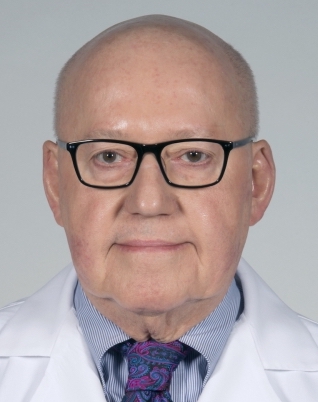 John J. Voorhees合作论文数Department of Dermatology, University of Michigan Medical School in Ann Arbor2G Watson合作论文数2TF ANDERSON合作论文数2
 Kenneth A. Arndt合作论文数SkinCare Physicians2Dretler S P合作论文数2
 Irene Emily Kochevar合作论文数Wellman Center for Photomedicine, Department of Dermatology, Massachusetts General Hospital, Harvard Medical School2San Wan合作论文数2WA Farinelli合作论文数1D WHITAKER合作论文数1R Margolis合作论文数1RD BAUGHMAN合作论文数1Tp Nigra合作论文数1Y. K. Park合作论文数1KJ BLOCH合作论文数1WL MORISON合作论文数1jeffrey d bernhard合作论文数1Ba Gilchrest合作论文数1




