The ‘Honeycrisp’ apple is highly prone to developing physiological disorders such as soft scald, bitter pit, and core browning during storage, but disorder incidences are affected by fruit maturity stage. To investigate relationships between fruit maturity and physiological disorders, a difference of absorbance meter was used to separate fruit into index of absorbance difference (I AD ) value categories with the objective of reducing fruit-to-fruit variability within a population of fruit harvested at any one time. Fruit from two harvest dates, 10 days apart, were separated by I AD values and stored at 0.5 or 3 °C. The internal ethylene concentration (IEC) of fruit during storage and the incidence of physiological disorders after 18 weeks were assessed. The results indicate that earlier harvest, colder storage temperature, and lower I AD values (less green fruit) were associated with lower IECs during storage. The incidences of soft scald, bitter pit, and core browning, as well as superficial scald, were affected by I AD values within each harvest date and storage temperature, and more precisely than an evaluation of bulked fruit samples. This study highlights the potential of categorizing fruit by I AD values as a tool to minimize variation of fruit within a population and therefore increase sensitivity of investigations into factors affecting storage performance.
‘Honeycrisp’ apples are prone to physiological disorder development during storage, fruit susceptibility to disorder incidence being affected by harvest date. The effects of fruit maturity from untreated trees and those sprayed at 1 week before the first harvest with 1-methylcyclopropene (1-MCP; Harvista TM ) were investigated by categorizing fruit into index of absorbance difference ( I AD ) values before storage. Maturity indices, chlorophyll, carotenoid, and sugar concentrations were assessed at harvest. The incidences of physiological disorders were assessed after 4 months plus 7 days at 20 °C. The internal ethylene concentration and the starch pattern index were lower in fruit treated with preharvest 1-MCP compared with untreated fruit, while fruit firmness was higher in preharvest 1-MCP–treated fruit. The difference was more pronounced in fruit with higher I AD values (higher chlorophyll) categories at harvests 2 and 3. Chlorophyll a and total chlorophyll concentrations were positively correlated with the I AD values in both untreated and preharvest 1-MCP–treated fruit. Acetaldehyde and ethanol were unaffected by harvest time, but preharvest 1-MCP–treated fruit had lower ethyl acetate accumulation at all harvests. Sucrose, fructose, glucose, galactose, sorbitol, and malic acid concentrations were often higher in preharvest 1-MCP–treated fruit than in untreated fruit. Soft scald incidence was higher in fruit with lower I AD values. However, the disorder was lowest in harvest 1 and 2 fruit of higher I AD values when the fruit were treated with preharvest 1-MCP. Additionally, fruit senescence was higher in late-harvested fruit. Principal components analysis, multivariate analysis, and the nonlinear iterative partial least square algorithm showed that fruit physiological disorder development after storage was correlated with fruit maturity based on the I AD value and maturity at harvest as affected by preharvest 1-MCP treatment.
The effects of plant growth regulators (PGRs) and harvest date on antioxidant contents at harvest and superficial scald development in 'NY2' apple during storage have been studied. Aminoethoxyvinylglycine (AVG, ReTain (R)) and 1-methylcyclopropane (1-MCP, Harvista (TM)) were sprayed two and one weeks, respectively, before the first of three weekly harvests. The apples were stored at 0.5 degrees C for 20 weeks + 7 d at 20 degrees C. At harvest, color and index of absorbance difference (I-AD) values, and contents of total phenolics, anthocyanins, chlorophylls, carotenoids, ascorbic acid (TAA), dehydroascorbic acid (DHA) glutathione (GSH), reduced glutathione (GSSG) and total antioxidant activity of blushed and unblushed sides of the apple were measured. The antioxidant contents increased with later harvest dates. Chlorophyll and GSSG were higher in unblushed than blushed skin tissues, while all antioxidant contents were highest in blushed skin tissues. Superficial scald incidence was highly correlated with less mature fruit, lower fruit anthocyanin, higher chlorophyll content at harvest. alpha-Farnesene, conjugated trienols (CTols), and I-AD value index were measured at 0, 1, 2, 4, 6, 10, 15, and 20 weeks at 0.5 degrees C for fruit from harvest 1. Scald incidence and severity was higher in AVG-treated fruit than untreated or 1-MCP treated fruit and did not decrease at later harvest dates. Using harvest management and preharvest application of plant growth regulators is a promising strategy to improve the nutritional value of 'NY2 ' apples, reduce physiological disorders, and maintain fruit quality.
'Gala' apples are susceptible to development of stem-end flesh browning and subsequently flesh browning (FB) throughout the fruit during storage. Factors causing the browning are not well understood. In this study, fruit were obtained from an orchard block either untreated or treated with preharvest 1-methylcyclopropene (1-MCP; HarvistaTM) at two different harvest dates, one week apart. Preharvest 1-MCP was applied 7 d before the first harvest. Based on the commercially acceptable red coloration (66%), fruit were spot picked at the first harvest date, stripped picked at the second harvest date, or the remaining fruit from the first spot pick harvested on the second harvest date. Fruit were then untreated or treated with 1-MCP after overnight cooling to 0.5 degrees C (no conditioning treatment) or 10 degrees C for temperature conditioning (10 degrees C for 7 d), followed by storage in 2 kPa O2/2 kPa CO2 at 0.5 degrees C for 6 months. Fruit were generally less mature when harvested at H1 (spot pick) than at H2 (spot or strip pick), and with preharvest 1-MCP than without, and had the lowest FB incidence after storage. The picking method did not affect fruit maturity or FB incidence, but strip picked fruit softened more in storage than selective picked fruit. Overall, FB incidence was reduced by 5.9-, 1.2- and 1.6-fold by preharvest 1-MCP, postharvest 1-MCP and by conditioning, respectively. IAD values (higher values reflect higher chlorophyll concentrations) at harvest were positively correlated with flesh firmness, and negatively correlated with FB incidence. Preharvest 1-MCP treatment and early harvest contributes to reduced risk of FB development during storage of 'Gala' apples.
γ-Aminobutyric acid (GABA), a nonprotein amino acid, can accumulate in plants in response to abiotic stresses. The effects of postharvest treatments on endogenous GABA concentrations and exogenous GABA on whole horticulture product quality has recently received attention. However, knowledge of the effects of mechanical damage events such as peeling and cutting on GABA concentrations of fresh-cut products is limited. In this study, concentrations of GABA and antioxidants including total phenolics and ascorbic acid in fresh-cut cantaloupe, pineapple, and cauliflower during storage at 5 °C for 9 days were investigated. We found that GABA accumulated in fresh-cut pineapple and cauliflower during storage, but that the increase in cantaloupe was not significant. Total phenolics, total ascorbic acid, and dehydroascorbic acid (DHA) remained stable in fresh-cut cantaloupe and cauliflower. In pineapple, however, total phenolics and total ascorbic acid concentrations decreased, whereas the DHA concentration increased. No correlation was found between GABA and antioxidants in fresh-cut cauliflower and cantaloupe; however, GABA was negatively related to antioxidants, including total phenolics and total ascorbic acid, in fresh-cut pineapple. The results show that GABA accumulation may represent a stress response to damage that occurs during the preparation of fresh cut products, but that the degree of response is affected by the specific product. Further research of GABA metabolism in response to minimal processing, including GABA biosynthesis, in a wider range of horticultural products and relationships with antioxidants is warranted.
Susceptibility of apple fruit to physiological storage disorders is affected by both pre-and postharvest factors that influence their ethylene production. In this study, the inhibitor of ethylene perception, 1-methycyclopropene (1 MCP), applied before and after harvest, has been used to investigate the interactions between ethylene and development of physiological disorders in 'Honeycrisp' apples during storage. Preharvest 1-MCP (HarvistaTM) was applied to trees, either 2 weeks (early), 1 week (late), at 1 and 2 weeks (repeated), or at double rate 1 week, before first commercial harvest. Fruit were then untreated or treated with postharvest 1-MCP (SmartFresh (R)) and stored at 0.5 degrees C, or conditioned at 10 degrees C for 7 d and then stored at 3 degrees C (C + 3 degrees C), for 20 weeks. Fruit quality and physiological disorders were assessed after 4 d at 20 degrees C. Fruit from all preharvest 1-MCP treatments had lower internal ethylene concentrations (IECs) and were greener as indicated by higher IAD values compared with untreated controls, while effects on starch pattern indices (SPI) were inconsistent. After storage, preharvest 1-MCP-treated fruit were firmer than untreated fruit, but effects of the different application timings were inconsistent. Effects of postharvest 1-MCP on IEC and IAD values were greater at 0.5 degrees C than at C + 3 degrees C. High incidences of core browning and vascular browning developed during storage, especially in the preharvest 1-MCP-treated fruit. Soft scald was reduced by preharvest 1-MCP treatments compared with control. In the C + 3 degrees C storage treatment, preharvest 1-MCP-treated fruit had a higher bitter pit incidence than in control fruit, but less skin wrinkling and senescent breakdown. Postharvest 1-MCP treatment of preharvest 1-MCP fruit slightly decreased bitter pit incidence while greatly increasing that of core browning and leather blotch, and sometimes flesh browning and carbon dioxide injury. This study shows that pre-and postharvest inhibition of ethylene perception by 1 MCP can have marked effects on storage disorders that are affected by fruit maturity and storage temperatures.
gamma-Aminobutyric acid (GABA) can accumulate in apple fruit in response to stress, but little is known about the responses of fruit to GABA treatments. The hypothesis that GABA would inhibit physiological disorder development in 'Floneycrisp' apples has been tested in a three-year study. In 2015, 'Floneycrisp' apple trees were sprayed with 40 mM GABA 2 and 4 weeks before harvest, and harvested fruit stored at 0.5 degrees C, a chilling injury-inducing temperature, or 3 degrees C, for 4 months. In 2016, the same GABA concentration was sprayed on trees at 1 and 2 weeks before harvest and fruit stored at 0.5 degrees C for 5 months. In the 2017 season, trees were sprayed with 40 mM GABA and 0.12% CaCl2 , either alone or in combination, at 1, 2, and 3 weeks before harvest. Postharvest treatments were also applied by dipping fruit in 100 mM GABA and/or 2% CaCl2 at harvest. Fruit were stored in air at 3 degrees C after 1 week of conditioning at 10 degrees C, or at 0.5 degrees C continuously for 5 months. In the first two years, GABA field treatments had little effect on harvest indices, but inhibited soft scald development depending on spray timing. In year 3, GABA provided no benefit, either alone or in combination with CaCl2 . Bitter pit incidence was increased by the GABA/CaCl2 combination in fruit from one orchard block, but at times decreased in fruit from a second orchard block. Treatment of fruit by dipping with GABA after harvest decreased soft scald, bitter pit or senescent breakdown incidence in one orchard block, and in combination with CaCl2 inhibited bitter pit to the same extent as CaCl2 alone. Further research is warranted to better understand the effects of GABA on apple fruit metabolism.
'Minneiska', a cross between 'Honeycrisp' and 'Minnewashta' (Zestar!(R)), was the first commercialized progeny of the 'Honeycrisp' apple. The effects of harvest date and storage under air for 3 and 6 months, and controlled atmosphere (CA) conditions for 4 and 8 months, at 0 degrees C, on 'Minneiska' fruit firmness were tested at multiple locations in Michigan, Minnesota, and New York over two years. Harvest date affected flesh firmness, starch pattern index, soluble solids concentration, internal ethylene concentration, and percentage of red blush at harvest. Harvest date affected all quality attributes of fruit after air and CA storage, except for flesh firmness 7 d after removal from air storage. Fruit stored under CA for 8 months developed CO2 injury and senescent breakdown. Fruit treated with 1-methylcyclopropane retained firmness during 6 months of storage. All attributes varied by year and orchard. Harvest date did not affect sensory panelists' liking of Minnesota-grown fruit. Although stored fruit developed decay and shriveling, no or low incidences of soft scald and soggy breakdown were observed. In general, 'Minneiska' fruit maintained good firmness and soluble solids concentration for up to 3 months when stored in air and for 4 months in CA conditions of 1.5-2.5% O-2 and 1.5-2.5% CO2.
The effects of preharvest and postharvest treatments of 1-methylcyclopropene (1-MCP) in combination or alone on fruit quality and the incidence of physiological disorders during storage of ‘Fuji’ apples [Malus sylvestris (L.) Mill var. domestica (Borkh.) Mansf.] at 20 and 0.5 °C were investigated. Preharvest 1-MCP (Harvista) treatments were applied 4 or 10 days before harvest (DBH), and then fruit were either untreated or treated with 1-MCP (SmartFresh) postharvest. Fruit were stored at 20 °C for up to 4 weeks or at 0.5 °C for up to 36 weeks. At harvest, starch pattern indices and watercore incidence and severity were lower in fruit with preharvest 1-MCP treatment applied 10 DBH than in untreated fruit and in fruit treated 4 DBH. At 20 °C, the combination of preharvest and postharvest 1-MCP treatments reduced the internal ethylene concentration (IEC) more than preharvest 1-MCP treatment alone, but not to a greater extent than postharvest 1-MCP treatment alone. Greasiness and watercore were reduced more by the combination of preharvest and postharvest 1-MCP treatments than by either treatment alone. However, preharvest and postharvest 1-MCP treatments, in combination or alone, did not consistently affect flesh firmness, titratable acidity (TA), soluble solids concentration, color a* values, or incidences of flesh browning, core browning, and stem-end flesh browning. At 0.5 °C, the combination of preharvest and postharvest 1-MCP treatments inhibited IECs and maintained firmness and TA more than no treatment or preharvest 1-MCP treatment alone. However, there was a lesser extent of differences than there was with postharvest 1-MCP treatment alone. Incidences of physiological disorders were not consistently affected by the preharvest and postharvest 1-MCP treatments. Overall, the results suggested that the preharvest 1-MCP treatment positively affected fruit quality attributes compared with no treatment during shelf life and long-term cold storage, but not as effectively as a combination of preharvest and postharvest 1-MCP treatments.
Aminoethoxyvinylglycine (AVG; ReTain (R)) and 1-methylcyclopropene (1-MCP; Harvista (TM)) are used to delay apple fruit maturation and ripening, and thereby reduce fruit drop and manage harvest logistics. In this study, 'McIntosh' and `Empire' fruit were treated with AVG at four weeks or two weeks, or with 1-MCP one week, prior to the anticipated first harvest date, to assess effects of these chemicals on maturation and ripening in relation to starch degradation. In a second season, `Empire' fruit were treated with either AVG or 1-MCP four weeks and one week prior to the anticipated first harvest. Fruit from this experiment were also harvested to investigate the effects of treatment on ripening in air storage. Cultivar and timing of application influenced the efficacy of both AVG and 1-MCP in delaying the increase of internal ethylene concentration (IEC) and the starch pattern index (SPI), and the decrease of starch concentration, in the fruit. Little effect of treatment was found for the high ethylene producing 'McIntosh', with only the SPI being affected on the date of first harvest. 'Empire' fruit from trees treated with 1-MCP or AVG had lower IEC and were greener (higher absorbance difference index (I AD ) values), and had lower SPIs and higher starch concentrations, but the effects were inconsistent and limited to only some harvest dates. In storage, only 1-MCP applied 10 d before harvest markedly slowed the increase in IEC and the rate of softening. AVG treatment effects on IEC were intermediate, between the one week 1-MCP treatment and the untreated controls and 4 week 1-MCP treatment, while it did not affect softening. Treatments did not affect the rate of starch concentration loss during storage.
Development of firm flesh browning, a physiological disorder, in 'Empire' apples during long term controlled atmosphere (CA) storage, can be enhanced by 1-methylcyclopropene (1-MCP), an inhibitor of ethylene perception. The disorder develops earlier in stem-end tissues than in calyx-end tissues. The antioxidant scavenging systems in the tissue zones of fruit stored under CA conditions (2 kPa O-2/2 kPa CO2) at 3 degrees C at 6 and 10 months were investigated. Flesh tissue browning as indicated by lightness and hue angle was greater in 1-MCP treated than in untreated fruit, and in stem-end tissues than in calyx-end tissues. 1-MCP treatment decreased superoxide production as indicated by nitroblue tetrazolium (NBT) reducing activity but increased H2O2 concentrations, while treatment effects on malondialdehyde concentrations were inconsistent. Ascorbic acid (AsA) and glutathione (GSH) concentrations declined during storage, regardless of 1-MCP treatment, but were lower in stem-end tissue than in calyx-end tissue. While ascorbate peroxidase (APX) activity was not affected by 1-MCP treatment, its activity in untreated fruit was lower in stem-end tissues than in calyx-end tissues. The activities of superoxide dismutase (SOD) and copper/zinc-superoxide dismutase (Cu/Zn-SOD) increased during storage. The activities of catalase (CAT) and peroxidase (PDX) decreased in 1-MCP treated fruit but effects on activities of other enzymes were inconsistent. Overall, higher browning may be associated with lower AsA and GSH concentrations in stem-end tissues, but the enhanced browning resulting from 1-MCP treatment does not appear to be directly related to antioxidant metabolism.
‘Minneiska’, a cross between ‘Honeycrisp’ and ‘Minnewashta’ (Zestar!®), was the first commercialized progeny of the ‘Honeycrisp’ apple. The effects of harvest date and storage under air for 3 and 6 months, and controlled atmosphere (CA) conditions for 4 and 8 months, at 0 °C, on ‘Minneiska’ fruit firmness were tested at multiple locations in Michigan, Minnesota, and New York over two years. Harvest date affected flesh firmness, starch pattern index, soluble solids concentration, internal ethylene concentration, and percentage of red blush at harvest. Harvest date affected all quality attributes of fruit after air and CA storage, except for flesh firmness 7 d after removal from air storage. Fruit stored under CA for 8 months developed CO 2injury and senescent breakdown. Fruit treated with 1-methylcyclopropane retained firmness during 6 months of storage. All attributes varied by year and orchard. Harvest date did not affect sensory panelists’ liking of Minnesota-grown fruit. Although stored fruit developed decay and shriveling, no or low incidences of soft scald and soggy breakdown were observed. In general, ‘Minneiska’ fruit maintained good firmness and soluble solids concentration for up to 3 months when stored in air and for 4 months in CA conditions of 1.5-2.5% O 2and 1.5-2.5% CO 2.
'Honeycrisp' apple fruit are highly susceptible to development of soft scald and bitter pit during storage. However, the commercial postharvest treatment of conditioning fruit at 10 degrees C for 7 d before storage at 3 degrees C to reduce soft scald development can increase bitter pit incidence. Prediction of these physiological disorders would enable storage operators to modify management techniques to reduce fruit losses due to both disorders. To develop prediction tools, harvest indices and mineral concentrations of fruit were analyzed from orchard blocks in Pennsylvania (PA) for three years, the Hudson Valley region (HV) for four years, the Champlain region for two years, and Western New York (WNY) for five years. Fruit were stored at 3 degrees C, without or with conditioning, and stored for 2-5 months in 2013-2017. Fruit were also stored at 0.5 degrees C without or with conditioning in 2013, 2015, 2016. Multivariate analysis described significant relationships that were different for unconditioned and conditioned fruit. In unconditioned fruit, bitter pit incidence was negatively correlated with increasing internal ethylene concentration (IEC) and starch pattern indices (lower starch content), positively with higher chlorophyll content as indicated by the index of absorbance difference and with all minerals except N, as well as mineral ratios. In conditioned fruit, bitter pit incidence was correlated negatively with IEC, Ca, and positively with firmness, and all mineral ratios. Soft scald incidence in fruit stored at 0.5 degrees C was positively correlated with IEC and firmness, and all fruit mineral ratios except N/Ca and P/Ca, and negatively with Ca and Mg. For conditioned and unconditioned fruit stored at 3 degrees C, harvest indices predicted 27-28 % and 21-26 % bitter pit, respectively, while minerals and mineral ratios predicted 22-55 % and 18-54 % bitter pit, respectively. Harvest indices predicted 29-57 % soft scald, while minerals and mineral ratios predicted 29-49 for % soft scald for fruit stored at 0.5 degrees C. Correlations of bitter pit against P, K, and Mg were higher, and Ca and all mineral ratios lower, in conditioned fruit stored at 3 degrees C as opposed to those stored unconditioned at 3 degrees C. Nonlinear iterative partial least square algorithms based on variable importance plots vs coefficients showed that the regression of determination was affected by postharvest treatment in relation to harvest indices, minerals and their ratios. A negative correlation of bitter pit incidence against soft scald incidence was found for a region with high bitter pit and soft scald development.
Bitter pit is a physiological disorder that can develop during storage and result in major economic losses of susceptible apple cultivars such as 'Honeycrisp'. Prediction methods to determine the risk of disorder development have focused primarily on mineral composition of the fruit, but there has also been interest in nonmineral based methods. In this study, we have compared non-mineral methods with mineral analyses for bitter pit prediction. Fruit of 'Honeycrisp' were harvested three weeks before anticipated commercial harvest and at commercial harvest. Mineral contents in peel from the calyx-end were measured in fruit at both harvest times. In year 1, fruit were kept at 20 degrees C (passive method), dipped in 2000 mg L-1 2-chloroethylphosphonic acid (ethylene method) or 0.8 M MgCl2 (Mg method). Treated fruit were then kept at 20 degrees C for three weeks. At commercial harvest, fruit were stored at 0.5 or 3 degrees C with and without 1 week of conditioning at 10 degrees C. The Mg method showed toxicity on the fruit, which was hard to distinguish from bitter pit. Therefore, in year 2, only the passive and ethylene methods were used, and fruit from the commercial harvest were stored at 3 degrees C with or without conditioning. In year 3, only the passive method was used because of its simplicity and lack of registration of ethephon for this purpose. Fruit from the commercial harvest of 38 orchards in three growing regions were stored at 3 degrees C after conditioning. Fruit were stored for two months in year 1 and four months in years 2 and 3, and assessed after 4 d at 20 degrees C. Multivariate analysis shows that the passive and ethylene methods for fruit harvested three weeks before the anticipated harvest had higher or similar correlations with the actual bitter pit after cold storage than those from minerals. Although actual bitter pit incidence was higher than that predicted from the passive method, the method results in predictions that are similar to mineral-based predictions, and also is more straightforward for commercial application.
Soluble solids content (SSC) is an important factor for assessing quality of apples as it is linked to consumer taste preferences. Fruit dry matter content (DMC) is dominated by soluble sugar and starch concentrations at harvest, and therefore the DMC at the time of harvest can be strongly correlated with the post-storage SSC. The objective of this study was to develop models based on near-infrared (NIR) spectroscopy using a commercially available handheld instrument to predict SSC and DMC of fruit at harvest and after storage. 'Gala', 'Honeycrisp', 'McIntosh', 'onagold', 'NY1', 'NY2', 'Red Delicious' and 'Fuji' apples were tested. Partial least square regression was used to build calibration models for prediction of SSC and DMC. Models were also built for individual and multiple cultivars. Internal and external validations were applied to test the accuracy and precision of both models. In general, the individual- and multi-cultivar models have similar calibration performance. In internal validations, R(2 )and RMSE from multi-cultivar and individual-cultivar models were similar, but the slope values were higher in individual-cultivar than multi-cultivar models, indicating that the prediction using individual-cultivar model was more accurate. However, for individual-cultivar models, data-overfitting and the reference values distribution may lead to poor prediction in external validation. Overall the results support use of a portable NIR-based instrument to predict SSC and DMC, but to obtain precision and accurate predictions, calibration models should be built based on individual cultivars and the variability from seasonal and regional effects have to be taken into consideration.
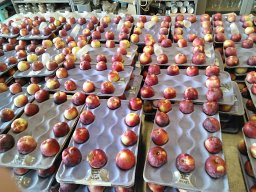
As every grower and storage operator knows well, ‘Honeycrisp’ apples are highly susceptible to bitter pit (Figure 1). The disorder is found both in the orchard as tree pit, and after storage. The first type reduces harvest yield, but the latter type is especially devastating, as losses of high quality fruit can occur during storage, resulting in major reductions of pack out rates. The conditioning treatment of 7 days at 50°F, and the warmer storage temperature of 38°F that is recommended to reduce risk of soft scald, also contributes to the bitter pit problem (Al Shoffe et al. 2016). Our overall goal is to develop prediction methods for soft scald and bitter pit susceptibility of fruit from different orchard blocks so that management decisions can be made about storage protocols. Examples include: 1. Storage of fruit with high bitter pit susceptibility without conditioning and at 33°F prior to early marketing; and 2. Storage of fruit with low bitter pit susceptibility with conditioning and at 38°F with confidence of minimal losses due to bitter pit during storage. The majority of research on prediction methods for bitter pit susceptibility has been focused on mineral analyses. Typically, fruit with low calcium and high magnesium, potassium and nitrogen concentrations have higher risk of bitter pit development during storage. Correlations between calcium, either alone or as ratios with other minerals, can be used as predictors of risk, but the industry is not well set up for routine rapid mineral sampling of fruit just before harvest. These methods are also costly and require access to laboratories. Several non-chemical methods to predict bitter pit have been investigated around the world. These include dipping or infiltrating fruit with magnesium solutions, use of an ethylene releasing agent such as ethephon, and a passive method where fruit are kept at warm temperatures (e.g., 68°F) to allow bitter pit to develop. In this NY Apple Research and Development trial, we tested these three methods in the 2016/2017 season. The results were promising enough to warrant further expansion beyond just two orchards. We chose the ethylene and passive methods for further work; magnesium treatments were not used further, Figure 1. Severity ratings for bitter pit in ‘Honeycrisp’ apples. (1= slight, 2= moderate, and 3= severe).
 Christopher Watkins合作论文数College of Agriculture and Life Sciences, Cornell University72
 Yosef Al Shoffe合作论文数Corresponding author.27
 Yiyi Zhang合作论文数Cornell University;Shanghai Jiao Tong University11
 Franziska C Doerflinger合作论文数Sch Agr Food & Wine, Univ Adelaide8Youngjae Shin合作论文数7
 Ruihai Liu (刘瑞海)合作论文数Department of Food Science, College of Agriculture and Life Sciences, Cornell University6
 Nurdan Tuna Gunes合作论文数4john delong合作论文数3
 Bill Miller合作论文数Horticulture Section, School of Integrative Plant Science, College of Agriculture and Life Sciences, Cornell University3
 Lailiang Cheng (程来亮)合作论文数School of Integrative Plant Science, Horticulture Section, College of Agriculture and Life Sciences, Cornell University3
 Yanping Ma (马艳萍)合作论文数College of Forestry, Northwest A&F University3
 Xingang Lv (吕新刚)合作论文数College of Food Science and Technology, Northwest University3
 Rujira Deewatthanawong合作论文数3Jung-A Ryu合作论文数2
 Carolina Contreras合作论文数2
 Terence Robinson合作论文数Cornell AgriTech, College of Agriculture and Life Sciences, Cornell University2
 Susan Brown合作论文数School of Integrative Plant Science, College of Agriculture and Life Sciences, Cornell University2
 Jinwook Lee合作论文数Department of Horticultural Science, Kyungpook National University2
 Haiyan Gao (郜海燕)合作论文数School of Food Science and Biotechnology, Zhejiang Gongshang University;Institute of Food Science, Zhejiang Academy of Agricultural Sciences2
 Bradley Rickard合作论文数Charles H. Dyson School of Applied Economics and Management, Cornell SC Johnson College of Business, Cornell University2
 Randolph M. Beaudry合作论文数Department of Horticulture, College of Agriculture & Natural Resources, Michigan State University2
 James Luby合作论文数Department of Horticultural Science, College of Food, Agricultural and Natural Resource Sciences, University of Minnesota2
 Xingfeng Shao (邵兴锋)合作论文数College of Food Sciences and Engineering, Ningbo University2
 Fanja Fawbush合作论文数2
 Kazem Arzani合作论文数Department of Horticultural Sciences;Tarbiat Modares University;Department of Horticultural Sciences, Tarbiat Modares University2Tara A. Baugher合作论文数2
 Inkyu Kang合作论文数Department of Horticultural Science, Kyungpook National University2
 J. Pablo Fernández-Trujillo合作论文数ETSIA and Institute of Plant Biotechnology, Technical University of Cartagena (UPCT),2Harrison Wright合作论文数2Cindy B. S. Tong合作论文数2Steven J. McKay合作论文数1Kevin Maloney合作论文数1
 Stephen A. Hoying合作论文数1
 Sattar Shah合作论文数1David S. Bedford合作论文数1Fanjaniaina Razafimbelo合作论文数1Seok-Kyu Jung合作论文数1Gapper Nigel E合作论文数Department of Horticulture, Cornell University1
 Oz Ayse Tulin合作论文数Engineering Faculty, Osmaniye Korkut Ata University1
 Yifan Cheng合作论文数Department of Biochemistry and Biophysics, University of California1
 Koushesh saba Mahmoud合作论文数Department of Horticultural Science, Tarbiat Modares University (TMU)1
 Zata Vickers合作论文数Department of Food Science and Nutrition, College of Food Agricultural and Natural Resource Sciences, University of Minnesota1
 Bruce D Whitaker合作论文数1
 Xinghua Liu合作论文数Department of Applied Physics, Chongqing University1Hannah James合作论文数1
 Jim Giovannoni合作论文数Robert W. Holley Center, Agricultural Research Service, United States Department of Agriculture1Eleni Tsantili合作论文数Department of Pomology, Agricultural University of Athens1Apple Orchards合作论文数1
 Darryl Holliday合作论文数1




