The study by Gheiasvand and Bartolini (2023) treated Balkhania balkhanica and Torinosuella peneropliformis as morphotypes of a single species, Balkhania balkhanica, leading to incorrect conclusions about its characteristics. Their analysis overlooked key aspects of the life cycle, morphotypes, ecological roles, and paleogeographical distribution of B. balkhanica due to a misunderstanding of foraminiferal systematics. Notably, its megalospheric forms can reach a maximal diameter of 5.2 mm, whereas its microspheric forms may reach up to 15 mm. Its stratigraphic range is limited to the Barremian-early Aptian interval. Although B. balkhanica and Choffatella decipiens share equivalent ecological niches, they are not found together in the same strata. Ch. decipiens has a much wider distribution, over most of the Tethys realm, whereas Balkhania balkhanica is primarily found in the northern Tethys platforms, with the notable exception of Lebanon in the southern Tethys platforms.
Shark teeth discovered in the late Paleocene-early Eocene Chehel-Kaman Formation in NE Iran bring new data on the fossil fish record from this country. Two genera from the location are described and figured. The present record is one of the very few reports of fossil shark teeth from the Cenozoic of Iran and the first one from this formation and region. The marine vertebrates known from this region of the Tethys Sea are very scarce.
The Zouzan area is located in the SE of Torbat-e- Heydarieh city (NE Iran). This area is located on north part of the Lut block which consists of basaltic andesite, tuff and porphyritic andesite. The purpose of this research is to investigate the enrichment of metal elements in the Zouzan area and provide a metallic geochemical model. For this purpose, 488 stream samples were analyzed using by ICP-MS. The results were interpreted using staged factor analysis to determine the components that are rich in the study area. However, Concentration-Number (C-N) fractal modeling was used for interpretation of these data and presenting a fmal model. The results of this study indicate the concentration of anomalies of the Au, Ag, Cu, Pb and Zn as main elements in the central, NE and SW of the Zouzan area. Moreover, results obtained by the staged factor analysis shows the elements of the specified components by this method that enriched together in the study area. The place of enrichment is in the central NE and SW parts of the study area.
In this paper we present the first record of well preserved specimens of Gitolampas subrotundus (Cotteau, 1856) from the Late Paleocene of Iran (Jorasan Razavi county, northeast Iran). the detailed biostratigraphic and calcareous nannofossils investigations were carried out on a stratigraphic section in Chehel Formation. this study extends the palaeogeographical distribution of Late Paleocene echinids along the northern tethyanmargins. the investigated fossiliferous section is compared with coeval strata from other european regions.
Two echinoid species from the Sarcheshmeh Formation, early Aptian, Lower Cretaceous, of the Kopet-Dagh Basin, NE Iran, are described: a phymosomatoid specimen of Tetragramma sp., and the spatangoid echinoid Miotoxaster collegnii (Sismonda, 1844). This is the first report of echinoids from the Sarcheshmeh Formation from northeastern Iran.
during micropaleontological investigations on the lower cretaceous successions of the tirgan Formation in Kopet-dagh sedimentary basin, some new achievements are yielded. in this regards, the first occurrence of Bispiraloconulus serbicus Schlagintweit, Bucur & Sudar in close association with Torremiroella hispanica Brun & canerot is reported for the first time from the upper Barremian of Kopet-dagh sedimentary basin (ne iran). the biostratigraphic investigations were carried out on a 197.5 m thick gelian stratigraphic succession cropping out along the tirgan Formation located 35 km southwest of Shirvan town. this study reviews the palaeogeographical distribution and age of Bispiraloconulus serbicus Schlagintweit, Bucur & Sudar and Torremiroella hispanica Brun & canerot along the northern tethyan margins and extends its pal?eobiogeographical existence.
Three species of Paleogene ostreoids are reported for first time from the Khangiran Formation of North Iran. Although there are numerous specimens of ostreoids, only a few are preserved sufficiently well to enable a specific identification. The species include Pycnodonte brongniarti (Bronn, 1831), Pycnodonte pharaonum (Oppenheim, 1903) and Turkostrea multicostata (Deshayes, 1832), all of them previously reported from Paleogene deposits of Europe
The upper part of Shirgesht (UPS) and lower part of Niur (LPN) formations (Ordovician-Silurian) consist of sandstone, shale and limestone, respectively. The petrography and geochemical analysis conducted to evaluate provenance of siliciclastic deposits in order to understand the paleogeography of Central Iran during the Early Paleozoic time. This study shows that quartz and K-feldspar are the most abundant minerals in these siliciclastic rocks and the felsic igneous rock, probably granite, is the possible source rock. The average CIA (71) value and rare earth elements diagram, such as Th/U ratio versus Th, reveal a high degree of paleo-weathering in the source area. The craton interior and transitional continent were interpreted as a tectonic setting for UPS and LPN formations, respectively. Furthermore, the geochemical analysis revealed active continental margin and mostly passive margin during deposition of these two formations, respectively. Rifting in Central Iran during Ordovician-Silurian time generated normal faults at the edge of platform which had a major role in production of siliciclastic deposits.
ABSTRACT Sulfur occurs naturally in the earth's crust as a pure element (native sulfur), as well as sulfide and sulfate minerals. From the biochemical point of view, sulfur is a vital element because it is a constituent of enzymes and other key proteins. In addition to modern uses of minerals, in old Iranian documents of traditional medicine, attention was paid to physico-chemical properties of minerals and the various methods of administration. In this review, the traditional usage of sulfur and sulfide minerals (e.g. orpiment, realgar and stibnite) and sulfate minerals (e.g. alum, jarosite, epsomite and melanterite) as documented in the Canon of Medicine of Avicenna (also known as Ibn Sina) and the Zakhireh Kharazmshahi of Jorjani, is compared with new findings about the advantages and disadvantages of these minerals in medical geology. The main conditions for the selection of mineral drugs was described first by Avicenna. There is a high correlation between old and modern pharmaceutical practices. The most important results concern the application of alum as a hemostatic agent (to inhibit hemorrhages), the use of jarosite as a method for treating osteoarthritis, the choice of melanterite for treating eczema, killing insects and as an anti-bacterial agent, the use of epsomite as an active ingredient in laxatives, homeostatics and mineral supplements, and the extensive use of sulfur in dermatology for its keratolytic effects and its supposed anti-microbial effects. In this review, newly developed pharmaceutical information about the use and effects on health of sulfide minerals will be compared to traditional pharmaceutical applications.
Neotrocholina Reichel, 1956 is one of the most important benthic foraminifera in Early Cretaceous. Some of the species of this genus are indexes in biostratigraphy especially for this interval (e.g., Neotrocholina friburgensis: Late Barremian–Early Aptian; Neotrocholina aptiensis: Early Aptian). In order to conduct accurate paleontological investigations, sampling from the carbonate units of the Tirgan Formation in Kopet Dagh sedimentary basin is done. According to the occurrence level in the studied stratigraphic sections as well as biometric interpretations, two species of this genus (N. friburgensis and Neotrocholina valdensis) are pointed out.
The new ichnospecies Cellicalichnus antiquus from upper Lower to lower Middle Jurassic strata of the Shemshak Group of north-eastern Iran consists of bundles of horizontal tunnels, from which at regular intervals elongate cells opposing each other emerge. The burrow has been constructed in floodplain deposits of a braided river system. It is interpreted as an arthropod brood structure of either insects, most likely hymenopterans, which may belong to the ancestral stock of soil-dwelling bees, or else of terrestrial crustaceans (crayfishes).
From the Permian onwards, the Gondwana-derived Iran Plate drifted northward to collide with Eurasia in the Late Triassic, thereby closing the Palaeotethys. This Eo-Cimmerian Orogeny formed the Cimmeride fold-and-thrust belt. The Upper Triassic-Middle Jurassic Shemshak Group of northern Iran is commonly regarded as the Cimmerian foreland molasse. However, our tectono-stratigraphic analysis of the Shemshak Group resulted in a revised and precisely dated model for the Triassic-Jurassic geodynamic evolution of the Iran Plate: initial Cimmerian collision started in the Carnian with subsequent Late Triassic synorogenic peripheral foreland deposition (flysch, lower Shemshak Group). Subduction shifted south in the Norian (onset of Neotethys subduction below Iran) and slab break-off around the Triassic-Jurassic boundary caused rapid uplift of the Cimmerides followed by Liassic post-orogenic molasse (middle Shemshak Group). During the Toarcian-Aalenian (upper Shemshak Group), Neotethys back-arc rifting formed a deep-marine basin, which developed into the oceanic South Caspian Basin during the Late Bajocian-Late Jurassic.
A strongly subsiding rift basin in NE Iran, the Kashafrud Basin, opened in the Late Bajocian with the accumulation of more than 2000 m of Upper Bajocian-Upper Bathonian siliciclastic sediments. These sediments comprise the Kashafrud Formation, which crops out along a NW-SE stretch of more than 200 km and occupies a width of 50 km, situated between the Koppeh Dagh and the Binalud Mountains. Ten sections of the formation were logged. Sedimentary environments range from non-marine alluvial fans and braided rivers in the lowermost part of the succession to deltas, succeeded by storm-dominated shelf, slope and deep-marine basin. Monotonous mudstones and turbidites prevail in the deep-marine part of the basin. The thickness and facies of the Kashafrud Formation vary strongly between localities, and reflect distance from the rift margins as well as submarine topography, which was shaped by block tectonics. The Kashafrud Basin is interpreted as the eastern extension of the South Caspian Basin, which entered the rifting stage in the late Early Jurassic and the spreading stage in the Late Bajocian.
The Lower-lower Middle Jurassic non-marine sedimentary succession of the Binalud Mountains of NE Iran is correlated with the Jurassic part of the Shemshak Group of the Alborz Mountains and subdivided into three formations: the Arefi, the Bazehowz and the Aghounj formations. The succession rests, with angular unconformity, on a metamorphic basement deformed during the Late Triassic Eo-Cimmerian orogeny. The lowermost unit, the Arefi Formation, is subdivided into a lower Derekhtoot Member and an upper Kurtian Member. The Derekhtoot Member (up to 750 m thick) consists of very coarse-grained, chaotic boulder beds, breccias and conglomerates representing rock-fall deposits and proximal-middle alluvial fans, deposited along steep fault scarps. The succeeding Kurtian Member (>300 m) comprises finer-grained conglomerates with well-rounded clasts, reflecting deposition in a proximal braided river system. The overlying Bazehowz Formation is more than 1000 m thick and consists of vertically stacked, decametre-scale channel-fill cycles of the middle reaches of a braided fluvial system. The uppermost unit, the Aghounj Formation, consists of at least 400 m of granule- to pebble-size, thick-bedded and large-scale trough cross-bedded quartz conglomerates and sandy interbeds of a proximal braided fluvial system. The overall succession fines upwards due to erosion, down to metamorphic basement, of a high-relief source area in the NE, and rests on Cimmerian basement, suggesting that the strata are intramontane deposits of the Cimmerian mountain chain in NE Iran. This interpretation has important implications concerning the position of the NW-SE-trending Eo-Cimmerian suture in NE Iran, which should be placed further SW than formerly assumed.
The graphoglyptid trace fossil Paleodicyon, characterized by a stratiform hexagonal net, is a diagnostic member of the deep-water Nereites ichnofacies and usually found in deep-sea flysch successions. Scattered records of the trace fossil from shallower, lower-shelf-toupper-slope environments, particularly since the mid-Mesozoic, have been substantially augmented by new data from Upper Triassic and Jurassic sedimentary basins of Iran. Paleodictyon has been found on the soles of mid-to-lower-shelf event beds produced by storm-induced currents and on the soles of prodelta turbidite deposits in the Upper Triassic Nayband Formation of east-central Iran, the lower Middle Jurassic Shemshak Formation of north-central Iran, the Middle Jurassic Kashafrud Formation of the Koppeh Dagh, and the Middle Jurassic Dalichai Formation of the Binalud Mountains. It appears that the bathymetric range of Paleodictyon throughout the Phanerozoic was considerably wider than generally assumed. The observed dominance of the trace fossil in deep-water flysch successions we interpret as being at least partially due to preservational effects. The conservation of the networks requires limited erosion, immediate casting and sealing of the exhumed negative epireliefs by sand, and limited subsequent bioturbation at deeper tiers. This restricts the trace fossil to event beds, either deep-sea turbidites or shallow-water storm beds in environments characterized by high-sedimentation rates. For bathymetric interpretations of paleoenvironments, whole ichnoassemblages should be used rather than single ichnotaxa to avoid erroneous conclusions.
 Markus Wilmsen合作论文数8
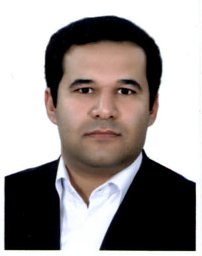 Morteza Taherpour-Khalil-Abad合作论文数Young Researchers and Elite Club, Islamic Azad University7
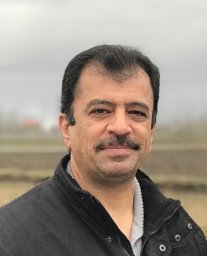 Mahmoud Reza Majidifard合作论文数6
 Franz Fürsich合作论文数Friedrich Alexander University of Erlangen-Nuremberg4Kazem Seyed-Emami合作论文数3Habibollah Torshizian合作论文数1
 Ehsan Khazaei合作论文数MD in Management Information Technology.1j f carrasco合作论文数1
 Alireza Ganji合作论文数Lahijan Branch, Islamic Azad Univ1
 Nicolae Trif合作论文数1
 Masumeh Molaei合作论文数Young Researchers & Elite Club, Islamic Azad Univ1Afshin Ashja Ardalan合作论文数1Nils Schlüter合作论文数Museum Nat Kunde, Leibniz Inst Evolut & Biodiversitsforsch1
 Ivana Carevic合作论文数1
 Seyed Hamid Vaziri合作论文数North Tehran Branch, Islamic Azad Univ1
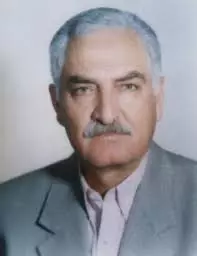 Reza Moussavi-Harami合作论文数Department of Geology, Ferdowsi University of Mashhad1
 Asadollah Mahboubi合作论文数Faculty of Sciences, Ferdowsi University of Mashhad1Felix Schlagintweit合作论文数1Francisco J. Vega合作论文数Instituto de Geología;Universidad Nacional Autónoma de México;Instituto de Geología, Universidad Nacional Autónoma de México1
 Bruno Granier合作论文数Département des Sciences de la Terre;Université de Bretagne Occidentale;Département des Sciences de la Terre, Université de Bretagne Occidentale1




