The black soldier fly, Hermetia illucens , is mass-reared throughout the world to convert organic waste into ingredients for pet and livestock feed, as well as frass and other biological products. To promote the optimization of breeding regimes carried out by industrial black soldier fly production plants, it is critical to better understand adult reproductive physiology and its potential relationship with fertile egg production. However, in this species, little is known about how reproductive morphology changes with respect to increases in body size, nor the potential impacts selection can have on the form of reproductive structures. Hence, this study investigated the nutritional static allometric relationship between the external genitalia of adult male black soldier flies and their body size. Size differences were induced top-down by varying larval rearing densities, which has a downstream effect on adult body size. For each rearing density, a random sample of 30 individuals was selected, and measurements taken three times each for the head, thorax, parameral sheath, and gonostylus. Fitting a generalized linear log-log model to the data revealed that for every 10.0% increase in body size (thorax length), genital length (parameral shealth) only increased by 1.8%. The resulting allometric slope of genitalia to thorax size was 0.195, indicating a pattern of hypoallometry. The presence of hypoallometric genitalia in a domestic population indicates individuals can copulate irregardless of differences in body size, which is consistent with most other insects. Moreover, it is likely that the ancestral population of black soldier flies historically underwent selection to maintain a single genitalia-size independent of body size that continues to persist in captivity. To confirm, future work should investigate the direct impacts of hypoallometric genitalia on fitness, especially in flies which have been genetically edited or artificially selected to be increasingly large. LAY SUMMARY Adult male black soldier fly shown to have similar sized genitals despite differences in body size. SHORT SUMMARY The black soldier fly, Hermetia illucens, is an economically important insect mass-reared throughout the globe; however, a large knowledge gap exists in terms of its reproductive physiology. This study examined the relationship of male genitalia to body size, finding a 10% increase in body size corresponded with a 1.8% increase in genitalia size, meaning the structures are hypoallometric. This finding is important because it indicates little adverse consequences for selecting larger flies, as differently-sized individuals should be able to copulate. ### Competing Interest Statement Material for use in this project was purchased from EVO Conversion Systems LLC, a company with which Dr. Tomberlin has a significant financial interest. This conflict of interest is managed by a plan submitted to and approved by Texas A&M University and Texas A&M AgriLife. National Science Foundation Graduate Research Fellowship, 1746932
A survey for parasitoids of Lopholeucaspis japonica Cockerell (Hemiptera: Diaspididae), an exotic scale of woody ornamentals, resulted in the discovery of 3 species of aphelinid parasitoid wasps, Pteroptrix chinensis (Howard), Aphytis hispanicus (Mercet), and Marlattiella prima Howard. This serves as the first report of these parasitoids reared from a host in the state of Tennessee, USA. Despite routine pesticide applications in the surveyed nursery and directed treatments of the infested plants to control the scale outbreak, the percentage of parasitized scale in privet and euonymus shrubs averaged 7.0% and 7.9%, respectively. These parasitoids may be useful in the natural or managed control of this pest in the United States, but additional research is needed to understand how these parasitoids contribute to the control of L. japonica in the landscape and how nursery production practices can be modified to promote parasitoid populations.
Data sets used in the following manuscript : Cruaud, A., Rasplus, J.-Y., Zhang, J., Burks, R., Delvare, G., Fusu, L., Gumovsky, A., Huber, J.T., Janšta, P., Mitroiu, M.-D., Noyes, J.S., van Noort, S., Baker, A., Böhmová, J., Baur, H., Blaimer, B.B., Brady1, S.G., Bubeníková, K., Chartois, M., Copeland, R.S., Dale-Skey Papilloud, N., Dal Molin, A., Dominguez, C., Gebiola, M., Guerrieri, E., Kresslein, R.L., Krogmann, L., Moriarty Lemmon, E., Murray, E., Nidelet, S., Nieves Aldrey, J.L., Perry, R., Peters, R.S., Polaszek, A., Sauné, L., Torréns, J., Triapitsyn, S., Tselikh, E.V., Yoder, M., Lemmon, A., Woolley, J.B., Heraty, J.M., 2023-inpress. The Chalcidoidea bush of life - Evolutionary history of a massive radiation of minute wasps. Cladistics accepted. DOI: 10.1111/cla.12561 #this repo contains the data sets analysed in our study and associated "partition by locus" files exons : Exons as nucleotide sequences (414 taxa 1007 loci)exonsRY : Exons with RY coding of 3rd codon positions (414 taxa 1007 loci)exonsAA : Exons as amino acid sequences (414 taxa 1007 loci)UCEs50-25 : UCEs with alignment positions kept only when they are present in at least 50% of the taxa + sequences with more than 25% gaps removed (407 taxa 1048 loci)UCEs70-25 : UCEs with alignment positions kept only when they are present in at least 70% of the taxa + sequences with more than 25% gaps removed (407 taxa 1048 loci)UCEs90-25 : UCEs with alignment positions kept only when they are present in at least 90% of the taxa + sequences with more than 25% gaps removed (407 taxa 1048 loci)UCEs90-25_1locusRemovedForCombWithExonsAA.phy : UCEs90-25 with locus shared among the exons and the UCE data sets removed (407 taxa 1047 loci)combined : exonsAA + UCEs90-25 (433 taxa 2054 loci)AHE520 : subdirectory that includes the AHE520RY and AHE520AA data sets (520 taxa 989 loci); see SI mat met
Chalcidoidea are mostly parasitoid wasps that include as many as 500 000 estimated species. Capturing phylogenetic signal from such a massive radiation can be daunting. Chalcidoidea is an excellent example of a hyperdiverse group that has remained recalcitrant to phylogenetic resolution. We combined 1007 exons obtained with Anchored Hybrid Enrichment with 1048 ultra-conserved elements (UCEs) for 433 taxa including all extant families, >95% of all subfamilies, and 356 genera chosen to represent the vast diversity of the superfamily. Going back and forth between the molecular results and our collective knowledge of morphology and biology, we detected bias in the analyses that was driven by the saturation of nucleotide data. Our final results are based on a concatenated analysis of the least saturated exons and UCE datasets (2054 loci, 284 106 sites). Our analyses support an expected sister relationship with Mymarommatoidea. Seven previously recognized families were not monophyletic, so support for a new classification is discussed. Natural history in some cases would appear to be more informative than morphology, as illustrated by the elucidation of a clade of plant gall associates and a clade of taxa with planidial first-instar larvae. The phylogeny suggests a transition from smaller soft-bodied wasps to larger and more heavily sclerotized wasps, with egg parasitism as potentially ancestral for the entire superfamily. Deep divergences in Chalcidoidea coincide with an increase in insect families in the fossil record, and an early shift to phytophagy corresponds with the beginning of the "Angiosperm Terrestrial Revolution". Our dating analyses suggest a middle Jurassic origin of 174 Ma (167.3-180.5 Ma) and a crown age of 162.2 Ma (153.9-169.8 Ma) for Chalcidoidea. During the Cretaceous, Chalcidoidea may have undergone a rapid radiation in southern Gondwana with subsequent dispersals to the Northern Hemisphere. This scenario is discussed with regard to knowledge about the host taxa of chalcid wasps, their fossil record and Earth's palaeogeographic history.
Diaphorencyrtus aligarhensis (Hymenoptera: Encyrtidae) is herein reported for the first time from Colombia based on specimens collected in the municipality of Palmira, department of Valle del Cauca. Adult male and female wasps of this endoparasitoid are diagnosed based on published literature and character states taken from specimens collected in the present study. The adult parasitoids were ex-tracted from parasitized nymphs (mummies) of the Asian citrus psyllid, Diaphorina citri (Hemiptera: Liviidae). Information is provided on the differences in the morphology of parasitized nymphs of D. citri with exit holes made by the two main primary parasitoids, i.e., Tamarixia radiata (Hymenoptera: Eulophidae) and D. aligarhensis. Rates of parasitization on D. citri ranged from 1.5 to 24.2 % for T. radiata and 0.3 to 1.0 % for D. aligarhensis. With the present study, the presence of D. aligarhensis in Colombia becomes the second confirmed report of the species in South America, after Ecuador.
The family Pteromalidae (Hymenoptera: Chalcidoidea) is reviewed with the goal of providing nomenclatural changes and morphological diagnoses in preparation for a new molecular phylogeny and a book on world fauna that will contain keys to identification. Most subfamilies and some tribes of Pteromalidae are elevated to family level or transferred elsewhere in the superfamily. The resulting classification is a compromise, with the aim of preserving the validity and diagnosability of other, well-established families of Chalcidoidea. The following former subfamilies and tribes of Pteromalidae are elevated to family rank: Boucekiidae, Ceidae, Cerocephalidae, Chalcedectidae, Cleonymidae, Coelocybidae, Diparidae, Epichrysomallidae, Eunotidae, Herbertiidae, Hetreulophidae, Heydeniidae, Idioporidae, Lyciscidae, Macromesidae, Melanosomellidae, Moranilidae, Neodiparidae, Ooderidae, Pelecinellidae (senior synonym of Leptofoeninae), Pirenidae, Spalangiidae, and Systasidae. The following subfamilies are transferred from Pteromalidae: Chromeurytominae and Keiraninae to Megastigmidae, Elatoidinae to Neodiparidae, Nefoeninae to Pelecinellidae, and Erotolepsiinae to Spalangiidae. The subfamily Sycophaginae is transferred to Pteromalidae. The formerly incertae sedis tribe Lieparini is abolished and its single genus Liepara is transferred to Coelocybidae. The former tribe Tomocerodini is transferred to Moranilidae and elevated to subfamily status. The former synonym Tridyminae (Pirenidae) is treated as valid. The following former Pteromalidae are removed from the family and, due to phylogenetic uncertainty, placed as incertae sedis subfamilies or genera within Chalcidoidea: Austrosystasinae, Ditropinotellinae, Keryinae, Louriciinae, Micradelinae, Parasaphodinae, Rivasia, and Storeyinae. Within the remaining Pteromalidae, Miscogastrinae and Ormocerinae are confirmed as separate from Pteromalinae, the former tribe Trigonoderini is elevated to subfamily status, the former synonym Pachyneurinae is recognized as a distinct subfamily, and as the senior synonym of Austroterobiinae. The tribe Termolampini is synonymized under Pteromalini, and the tribe Uzkini is synonymized under Colotrechnini. Most former Otitesellinae, Sycoecinae, and Sycoryctinae are retained in the tribe Otitesellini, which is transferred to Pteromalinae, and all other genera of Pteromalinae are treated as Pteromalini. Eriaporidae is synonymized with Pirenidae, with Eriaporinae and Euryischiinae retained as subfamilies. Other nomenclatural acts performed here outside of Pteromalidae are as follows: Calesidae: elevation to family rank. Eulophidae: transfer of Boucekelimini and Platytetracampini to Opheliminae, and abolishment of the tribes Elasmini and Gyrolasomyiini. Baeomorphidae is recognized as the senior synonym of Rotoitidae. Khutelchalcididae is formally excluded from Chalcidoidea and placed as incertae sedis within Apocrita. Metapelmatidae and Neanastatidae are removed from Eupelmidae and treated as distinct families. Eopelma is removed from Eupelmidae and treated as an incertae sedis genus in Chalcidoidea. The following subfamilies and tribes are described as new: Cecidellinae (in Pirenidae), Enoggerinae (incertae sedis in Chalcidoidea), Erixestinae (in Pteromalidae), Eusandalinae (in Eupelmidae), Neapterolelapinae (incertae sedis in Chalcidoidea), Solenurinae (in Lyciscidae), Trisecodinae (in Systasidae), Diconocarini (in Pteromalidae: Miscogastrinae), and Trigonoderopsini (in Pteromalidae: Colotrechninae). A complete generic classification for discussed taxa is provided.
ABSTRACT Capturing phylogenetic signal from a massive radiation can be daunting. The superfamily Chalcidoidea is an excellent example of a hyperdiverse group that has remained recalcitrant to phylogenetic resolution. Chalcidoidea are mostly parasitoid wasps that until now included 27 families, 87 subfamilies and as many as 500,000 estimated species. We combined 1007 exons obtained with Anchored Hybrid Enrichment with 1048 Ultra-Conserved Elements (UCEs) for 433 taxa including all extant families, over 95% of all subfamilies and 356 genera chosen to represent the vast diversity of the superfamily. Going back and forth between molecular results and our collective morphological and biological knowledge, we detected insidious bias driven by the saturation of nucleotide data and highlighted morphological convergences. Our final results are based on a concatenated analysis of the least saturated exons and UCE data sets (2054 loci, 284,106 sites). Our analyses support a sister relationship with Mymarommatoidea. Seven of the previously recognized families were not monophyletic, so foundations for a new classification are discussed. Biology appears potentially more informative than morphology, as illustrated by the elucidation of a clade of plant gall associates and a clade of taxa with planidial first-instar larvae. The phylogeny suggests a shift from smaller soft-bodied wasps to larger and more heavily sclerotized wasps. Deep divergences in Chalcidoidea coincide with an increase in insect families in the fossil record, and an early shift to phytophagy corresponds with the beginning of the “Angiosperm Terrestrial Revolution”. Our dating analyses suggest a Middle Jurassic origin of 174 Ma (167.3-180.5 Ma) and a crown age of 162.2 Ma (153.9–169.8 Ma) for Chalcidoidea. During the Cretaceous, Chalcidoidea underwent a rapid radiation in southern Gondwana with subsequent dispersals to the Northern Hemisphere. This scenario is discussed with regard to knowledge about host taxa of chalcid wasps, their fossil record, and Earth’s paleogeographic history.
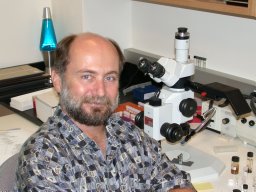 John M. Heraty合作论文数Department of Entomology and the Institute for Integrative Genome Biology, University of California44
 Burks Roger A合作论文数Department of Evolution, Ecology, and Organismal Biology, The Ohio State University28
 Jean-Yves Rasplus合作论文数Centre de biologie et de gestion;Campus International de Baillarguet;Centre de biologie et de gestion, Campus International de Baillarguet28
 Astrid Cruaud合作论文数INRA-UMR Centre de Biologie et de Gestion des Populations, (INRA/IRD/CIRAD/Montpellier SupAgro),26
 Petr Jansta合作论文数Faculty of Science, Charles University24
 Lucian Fusu合作论文数Faculty of Biology23
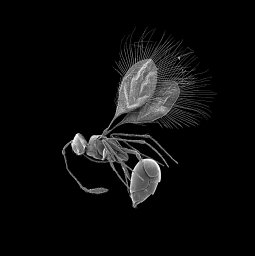 Lars Krogmann合作论文数23
 Ralph S. Peters合作论文数Arthropoda Department, Leibniz Institute for the Analysis of Biodiversity Change, Museum Koenig Bonn22
 Simon van Noort合作论文数Natural History Department, Iziko South African Museum22
 Hannes Baur合作论文数22
 Ekaterina Tselikh合作论文数Zoological Institute, Russian Academy of Sciences22
 Mircea-Dan Mitroiu合作论文数Faculty of Biology22Natalie Dale-Skey合作论文数21Steve Heydon合作论文数20
 Michael Haas合作论文数19Keith R. Hopper合作论文数Beneficial Insects Introduction Research Unit, Agricultural Research Service, United States Department of Agriculture17D. Christopher Darling合作论文数Department of Entomology;Royal Ontario Museum;Department of Ecology and Evolutionary Biology;University of Toronto;Department of Entomology, University of Toronto14
 John S. Noyes合作论文数8ana dal molin合作论文数7
 Chris Darling合作论文数Department of Ecology and Evolutionary Biology, Faculty of Arts and Science, University of Toronto7
 Christopher H. Dietrich合作论文数Illinois Natural History Survey, Prairie Research Institute, University of Illinois at Urbana-Champaign6
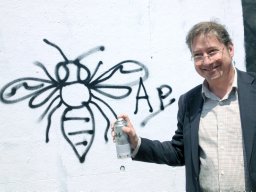 Andrew Polaszek合作论文数International Institute of Entomology6
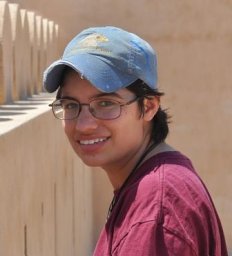 Therese Catanach合作论文数6
 Gary A. P. Gibson合作论文数Integrated Pest Management6
 Xanthe Shirley合作论文数5
 John Theodore Huber合作论文数5
 Alex Gumovsky合作论文数5
 JUNXIA ZHANG合作论文数4
 Murray Elizabeth A合作论文数Department of Entomology, University of California4Robert A. Wharton合作论文数4
 Michael J Sharkey合作论文数Department of Entomology;University of Kentucky;Department of Entomology, University of Kentucky4
 Ramona L. Walls合作论文数Data Collaboration Center, Critical Path Institute4
 Roberto Romani合作论文数Faculty of Agriculture, University of Perugia4Gérard Delvare合作论文数4Serguei V. Triapitsyn合作论文数4
 Martha (Molly) S. Hunter合作论文数Department of Entomology, College of Agriculture, Life & Environmental Sciences, University of Arizona4Yenifer Campos-Patino合作论文数3Kathryn Lanier合作论文数3Matthew Yoder合作论文数3
 Laure Saune合作论文数3István Mikó合作论文数3Kim A. Hoelmer合作论文数3
 Lars Vogt合作论文数Univ Bonn, Inst Evolut Biol & Okol, Immenburg 1, D-53121 Bonn, Germany3
 Sean Brady合作论文数Department of Microbiology and Immunology, Weill Cornell Medical College;Laboratory of Genetically Encoded Small Molecules, The Rockefeller University3
 Javier Torrens合作论文数3
 Chris Mungall合作论文数Biosystems Data Science Department, Environmental Genomics and Systems Biology Division, Lawrence Berkeley National Laboratory;Berkeley Institute for Data Science3
 Michael Ashburner合作论文数Department of Genetics, University of Cambridge;Churchill College, University of Cambridge3
 George E. Heimpel合作论文数Department of Entomology, College of Food, Agricultural and Natural Resources Sciences, University of Minnesota3Kim Jung-Wook合作论文数3




