We measure the time-integrated CP asymmetry in D-0 -> (KSKS0)-K-0 decays reconstructed in e(+)e(-) -> c (c) over bar events collected by the Belle and Belle II experiments. The corresponding data samples have integrated luminosities of 980 and 428 fb(-1), respectively. The D-0 decays are required to originate from the D*(+) -> D-0 pi(+) decay, which determines the charm flavor at production time. A control sample of D-0 -> K+K- decays is used to correct for production and detection asymmetries. The result, (-1.4 +/- 1.3(stat) +/- 0.1(syst))%, is consistent with previous determinations and with CP symmetry.
We present measurements of B → K*(892)γ decays using 365 fb−1 of data collected from 2019 to 2022 by the Belle II experiment at the SuperKEKB asymmetric-energy e+e− collider. The data sample contains (387 ± 6) × 106 Υ(4S) events. We measure branching fractions ( ℬ ) and CP asymmetries ( 𝒜_CP ) for both B0 → K*0γ and B+ → K*+γ decays. The difference in CP asymmetries ( Δ𝒜_CP ) and the isospin asymmetry (∆0+) between these neutral and charged channels are also measured. We obtain the following branching fractions and CP asymmetries: ℬ(B^0→K^*0γ)=(4.14± 0.10± 0.11)×10^-5 , ℬ(B^+→K^*+γ)=(4.04±0.13_-0.15^+0.13)×10^-5 , 𝒜_CP(B^0→K^*0γ)=(-3.3± 2.3± 0.4)% , and Δ𝒜_CP(B^+→K^*+γ)=(-0.7± 2.9± 0.5)% . The measured difference in CP asymmetries is Δ𝒜_CP=(+2.6±3.8± 0.6)% , and the measured isospin asymmetry is ∆0+ = (+4.8 ± 2.0 ± 1.8)
We perform the first search for CP violation in D_(s)^+→K_S^0K^-π^+π^+ decays. We use a combined data set from the Belle and Belle II experiments, which study e+e− collisions at center-of-mass energies at or near the Υ(4S) resonance. We use 980 fb−1 of data from Belle and 428 fb−1 of data from Belle II. We measure six CP-violating asymmetries that are based on triple products and quadruple products of the momenta of final-state particles, and also the particles’ helicity angles. We obtain a precision at the level of 0.5 D^+→K_S^0K^-π^+π^+ decays, and better than 0.3 D_s^+→K_S^0K^-π^+π^+ decays. No evidence of CP violation is found. Our results for the triple-product asymmetries are the most precise to date for singly-Cabibbo-suppressed D+ decays. Our results for the other asymmetries are the first such measurements performed for charm decays.
Abstract We report measurements of the absolute branching fractions $$\mathcal{B}\left({B}_{s}^{0}\to {D}_{s}^{\pm }X\right)$$ , $$\mathcal{B}\left({B}_{s}^{0}\to {D}^{0}/{\overline{D} }^{0}X\right)$$ , and $$\mathcal{B}\left({B}_{s}^{0}\to {D}^{\pm }X\right)$$ , where the latter is measured for the first time. The results are based on a 121.4 fb −1 data sample collected at the Υ(10860) resonance by the Belle detector at the KEKB asymmetric-energy e + e − collider. We reconstruct one $${B}_{s}^{0}$$ meson in $${e}^{+}{e}^{-}\to \Upsilon\left(10860\right)\to {B}_{s}^{*}{\overline{B} }_{s}^{*}$$ events and measure yields of $${D}_{s}^{+}$$ , D 0, and D + mesons in the rest of the event. We obtain $$\mathcal{B}\left({B}_{s}^{0}\to {D}_{s}^{\pm }X\right)=\left(68.6\pm 7.2\pm 4.0\right)\%$$ , $$\mathcal{B}\left({B}_{s}^{0}\to {D}^{0}/{\overline{D} }^{0}X\right)=\left(21.5\pm 6.1\pm 1.8\right)\%$$ , and $$\mathcal{B}\left({B}_{s}^{0}\to {D}^{\pm }X\right)=\left(12.6\pm 4.6\pm 1.3\right)\%$$ , where the first uncertainty is statistical and the second is systematic. Averaging with previous Belle measurements gives $$\mathcal{B}\left({B}_{s}^{0}\to {D}_{s}^{\pm }X\right)=\left(63.4\pm 4.5\pm 2.2\right)\%$$ and $$\mathcal{B}\left({B}_{s}^{0}\to {D}^{0}/{\overline{D} }^{0}X\right)=\left(23.9\pm 4.1\pm 1.8\right)\%$$ . For the $${B}_{s}^{0}$$ production fraction at the Υ(10860), we find $${f}_{s}=\left({21.4}_{-1.7}^{+1.5}\right)\%$$ .
We present a measurement of the branching fraction and time-dependent charge-parity (CP) decay-rate asymmetries in B0→J/ψπ0 decays. The data sample was collected with the Belle II detector at the SuperKEKB asymmetric e+e− collider in 2019–2022 and contains (387±6)×106 BB¯ meson pairs from ϒ(4S) decays. We reconstruct 392±24 signal decays and fit the CP parameters from the distribution of the proper-decay-time difference of the two B mesons. We measure the branching fraction to be (B0→J/ψπ0)=(2.00±0.12±0.09)×10−5 and the direct and mixing-induced CP asymmetries to be CCP=0.13±0.12±0.03 and SCP=−0.88±0.17±0.03, respectively, where the first uncertainties are statistical and the second are systematic. We observe mixing-induced CP violation with a significance of 5.0 standard deviations for the first time in this mode. Published by the American Physical Society 2025
A series of data samples was collected with the Belle II detector at the SuperKEKB collider from March 2019 to June 2022. We determine the integrated luminosities of these data samples using three distinct methodologies involving Bhabha (e(+) e(-) -> e(+) e(-)(n gamma)), digamma (e(+) e(-) -> gamma gamma(n gamma)), and dimuon (e(+) e(-) -> mu(+) mu(-)(n gamma)) events. The total integrated luminosity obtained with Bhabha, digamma, and dimuon events is (426.88 +/- 0.03 +/- 2.61) fb(-1), (429.28 +/- 0.03 +/- 2.62) fb(-1), and (423.99 +/- 0.04 +/- 3.83) fb(-1), where the first uncertainties are statistical and the second are systematic. The resulting total integrated luminosity obtained from the combination of the three methods is (427.87 +/- 2.01) fb(-1).
We report measurements of time-dependent CP asymmetries in B^{0}→K_{S}^{0}π^{0}γ decays based on a data sample of (388±6)×10^{6} BB[over ¯] events collected at the ϒ(4S) resonance with the Belle II detector. The Belle II experiment operates at the SuperKEKB asymmetric-energy e^{+}e^{-} collider. We measure decay-time distributions to determine CP -violating parameters S and C. We determine these parameters for two ranges of K_{S}^{0}π^{0} invariant mass: m(K_{S}^{0}π^{0})∈(0.8,1.0) GeV/c^{2}, which is dominated by B^{0}→K^{*0}(→K_{S}^{0}π^{0})γ decays, and a complementary region m(K_{S}^{0}π^{0})∈(0.6,0.8)∪(1.0,1.8) GeV/c^{2}. Our results have improved precision as compared to previous measurements and are consistent with theory predictions.
We search for the rare decay B+ -> K+ v (v) over bar in a 362 fb(-1) sample of electron-positron collisions at the Upsilon(4S) resonance collected with the Belle II detector at the SuperKEKB collider. We use the inclusive properties of the accompanying B meson in Upsilon(4S) -> B (B) over bar events to suppress background from other decays of the signal B candidate and light-quark pair production. We validate the measurement with an auxiliary analysis based on a conventional hadronic reconstruction of the accompanying B meson. For background suppression, we exploit distinct signal features using machine learning methods tuned with simulated data. The signal-reconstruction efficiency and background suppression are validated through various control channels. The branching fraction is extracted in a maximum likelihood fit. Our inclusive and hadronic analyses yield consistent results for the B+ -> K+ v (v) over bar branching fraction of [2.7 +/- 0.5(stat) +/- 0.5(syst)] x 10(-5) and [1.1(-0.8)(+0.9)(stat)(-0.5)(+0.8)(syst)] x 10(-5), respectively. Combining the results, we determine the branching fraction of the decay B+ -> K+ v (v) over bar to be [2.3 +/- 0.5_stat)(-0.4)(+0.5)(syst)] x 10(-5), providing the first evidence for this decay at 3.5 standard deviations. The combined result is 2.7 standard deviations above the standard model expectation.
Abstract We report results from a study of B±→ DK± decays followed by D decaying to the CP-even final state K+K− and CP-odd final state $$ {K}_S^0{\pi}^0 $$ K S 0 π 0 , where D is an admixture of D0 and $$ {\overline{D}}^0 $$ D ¯ 0 states. These decays are sensitive to the Cabibbo-Kobayashi-Maskawa unitarity-triangle angle ϕ3. The results are based on a combined analysis of the final data set of 772 × 106$$ B\overline{B} $$ B B ¯ pairs collected by the Belle experiment and a data set of 198 × 106$$ B\overline{B} $$ B B ¯ pairs collected by the Belle II experiment, both in electron-positron collisions at the Υ(4S) resonance. We measure the CP asymmetries to be $$ \mathcal{A} $$ A CP+ = (+12.5 ± 5.8 ± 1.4)% and $$ \mathcal{A} $$ A CP− = (−16.7 ± 5.7 ± 0.6)%, and the ratios of branching fractions to be $$ \mathcal{R} $$ R CP+ = 1.164 ± 0.081 ± 0.036 and $$ \mathcal{R} $$ R CP− = 1.151 ± 0.074 ± 0.019. The first contribution to the uncertainties is statistical, and the second is systematic. The asymmetries $$ \mathcal{A} $$ A CP+ and $$ \mathcal{A} $$ A CP− have similar magnitudes and opposite signs; their difference corresponds to 3.5 standard deviations. From these values we calculate 68.3% confidence intervals of (8.5° < ϕ3 < 16.5°) or (84.5° < ϕ3 < 95.5°) or (163.3° < ϕ3 < 171.5°) and 0.321 < rB < 0.465.
We report measurements of the e+e− → BB , BB^∗ , and B^∗B^∗ cross sections at four energies, 10653, 10701, 10746 and 10805 MeV, using data collected by the Belle II experiment. We reconstruct one B meson in a large number of hadronic final states and use its momentum to identify the production process. In the first 2 – 5 MeV above B^∗B^∗ threshold, the e+e− → B^∗B^∗ cross section increases rapidly. This may indicate the presence of a pole close to the threshold.
We present GFlaT, a new algorithm that uses a graph-neural-network to determine the flavor of neutral $B$ mesons produced in $\Upsilon(4S)$ decays. It improves previous algorithms by using the information from all charged final-state particles and the relations between them. We evaluate its performance using $B$ decays to flavor-specific hadronic final states reconstructed in a 362 $\text{fb}^{-1}$ sample of electron-positron collisions collected at the $\Upsilon(4S)$ resonance with the Belle II detector at the SuperKEKB collider. We achieve an effective tagging efficiency of $(37.40 \pm 0.43 \pm 0.36) \%$, where the first uncertainty is statistical and the second systematic, which is $18\%$ better than the previous Belle II algorithm. Demonstrating the algorithm, we use $B^{0}\to J/\psi K^0_\text{S}$ decays to measure the mixing-induced and direct $CP$ violation parameters, $S = (0.724 \pm 0.035 \pm 0.009)$ and $C = (-0.035 \pm 0.026 \pm 0.029)$.
We report a measurement of decay-time-dependent charge-parity (CP) asymmetries in B0→KS0KS0KS0 decays. We use 387×106 BB¯ pairs collected at the ϒ(4S) resonance with the Belle II detector at the SuperKEKB asymmetric-energy electron-positron collider. We reconstruct 220 signal events and extract the CP-violating parameters S and C from a fit to the distribution of the decay-time difference between the two B mesons. The resulting confidence region is consistent with previous measurements in B0→KS0KS0KS0 and B0→(cc¯)K0 decays and with predictions based on the standard model. Published by the American Physical Society 2024
We present GFlaT, a new algorithm that uses a graph-neural-network to determine the flavor of neutral B mesons produced in Upsilon(4S) decays. It improves previous algorithms by using the information from all charged final-state particles and the relations between them. We evaluate its performance using B decays to flavor-specific hadronic final states reconstructed in a 362 fb(-1) sample of electron-positron collisions collected at the Upsilon(4S) resonance with the Belle II detector at the SuperKEKB collider. We achieve an effective tagging efficiency of (37.40 +/- 0.43 +/- 0.36%), where the first uncertainty is statistical and the second systematic, which is 18% better than the previous Belle II algorithm. Demonstrating the algorithm, we use B-0 -> J/psi K-S(0) decays to measure the mixing-induced and direct CP violation parameters, S = (0.724 +/- 0.035 +/- 0.009) and C = (-0.035 +/- 0.026 +/- 0.029).
We perform a model-independent measurement of the D^0-D^0 mixing parameters using samples of e^+e^--collision data collected by the Belle and Belle II experiments that have integrated luminosities of 951fb^-1 and 408 fb^-1, respectively. Approximately 2.05×10^6 neutral D mesons are reconstructed in the D^0→ K^0_Sπ^+π^- channel, with the neutral D flavor tagged by the charge of the pion in the D^*+→ D^0π^+ decay. Assuming charge-parity symmetry, the mixing parameters are measured to be x = (4.0±1.7±0.4)× 10^-3 and y = (2.9±1.4±0.3)× 10^-3, where the first uncertainties are statistical and the second systematic. The results are consistent with previous determinations.
We measure the complete set of angular coefficients J(i) for exclusive (B) over bar -> D*l (nu) over bar (l) (l = e, mu). Our analysis uses the full 711 fb(-1) Belle dataset with hadronic tag-side reconstruction. The results allow us to extract the form factors describing the (B) over bar -> D* transition and the Cabibbo-Kobayashi-Maskawa matrix element jVcbj. Using recent lattice QCD calculations for the hadronic form factors, we find vertical bar V-cb vertical bar = (40.7 +/- 0.7) x 10(-3) using the Boyd-Grinstein-Lebed parametrization, compatible with determinations from inclusive semileptonic decays. We search for lepton flavor universality violation as a function of the hadronic recoil parameter w and investigate the differences of the electron and muon angular distributions. We find no deviation from standard model expectations.
We report a measurement of decay-time dependent charge-parity (CP) asymmetries in B^0 → K^0_S K^0_S K^0_S decays. We use 387 × 10^6 BB̅ pairs collected at the Υ(4S) resonance with the Belle II detector at the SuperKEKB asymmetric-energy electron-positron collider. We reconstruct 220 signal events and extract the CP-violating parameters S and C from a fit to the distribution of the decay-time difference between the two B mesons. The resulting confidence region is consistent with previous measurements in B^0 → K^0_S K^0_S K^0_S and B^0 → (cc̅)K^0 decays, and with predictions based on the standard model.
The ratio of branching fractions R(D*) = B((B) over bar -> D* tau(-) (nu) over bar (tau))/B((B) over bar -> D* l(-)(nu) over bar (l)), where l is an electron or muon, is measured using a Belle II data sample with an integrated luminosity of 189 fb(-1) at the SuperKEKB asymmetric-energy e(+)e(-) collider. Data is collected at the Upsilon(4S) resonance, and one B meson in the Upsilon(4S) -> B (B) over bar decay is fully reconstructed in hadronic decay modes. The accompanying signal B meson is reconstructed as (B) over bar -> D* tau(-) (nu) over bar (tau)using leptonic t decays. The normalization decay, (B) over bar -> D* l(-)(nu) over bar (l,) produces the same observable final-state particles. The ratio of branching fractions is extracted in a simultaneous fit to two signal-discriminating variables in both channels and yields R(D*) = 0.262(-0.039)(+0.041) (stat)(-0.032)(+0.035) (syst). This result is consistent with the current world average and with Standard Model predictions.
We report a measurement of decay-time-dependent charge-parity (CP) asymmetries in B-0 -> (KSKSKS0)-K-0-K-0 decays. We use 387 x 10(6) B (B) over bar pairs collected at the Upsilon(4S) resonance with the Belle II detector at the SuperKEKB asymmetric-energy electron-positron collider. We reconstruct 220 signal events and extract the CP-violating parameters S and C from a fit to the distribution of the decay-time difference between the two B mesons. The resulting confidence region is consistent with previous measurements in B-0 -> (KSKSKS0)-K-0-K-0 and B-0 -> (c (c) over bar )K-0 decays and with predictions based on the standard model.
We present the results of a search for the b→dℓ^{+}ℓ^{-} flavor-changing neutral-current rare decays B^{+,0}→(η,ω,π^{+,0},ρ^{+,0})e^{+}e^{-} and B^{+,0}→(η,ω,π^{0},ρ^{+})μ^{+}μ^{-} using a 711 fb^{-1} data sample that contains 772×10^{6} BB[over ¯] events. The data were collected at the ϒ(4S) resonance with the Belle detector at the KEKB asymmetric-energy e^{+}e^{-} collider. We find no evidence for signal and set upper limits on branching fractions at the 90% confidence level in the range (3.8-47)×10^{-8} depending on the decay channel. The obtained limits are the world's best results. This is the first search for the channels B^{+,0}→(ω,ρ^{+,0})e^{+}e^{-} and B^{+,0}→(ω,ρ^{+})μ^{+}μ^{-}.
We present a search for the baryon number B and lepton number L violating decays tau(-) -> Lambda pi(-) and tau(-) -> (Lambda) over bar pi(-) produced from the e(+) e(-) -> tau(+) tau(-) process, using a 364 fb(-1) data sample collected by the Belle II experiment at the SuperKEKB collider. No evidence of signal is found in either decay mode, which have vertical bar Delta(B - L)vertical bar equal to 2 and 0, respectively. Upper limits at 90% credibility level on the branching fractions of tau(-) -> Lambda pi(-) and tau(-) -> (Lambda) over bar pi(-) are determined to be 4.7 x 10(-8) and 4.3 x 10(-8), respectively.
 G. Finocchiaro合作论文数1251
 Gerald Eigen合作论文数Department of Physics and Technology, University of Bergen1215
 Blair Ratcliff合作论文数SLAC National Accelerator Laboratory;Stanford University1161Serednyakov Sergey Ivanovich合作论文数Budker Institute of Nuclear Physics, Siberian Division, Russian Academy of Sciences1134
 Lucien Cremaldi合作论文数Department of Physics and Astronomy, University of Mississippi1119
 Christopher Hearty合作论文数Department of Physics & Astronomy, Faculty of Science, The University of British Columbia1114
 Glen Cowan合作论文数Centre for Particle Physics and Astronomy, Department of Physics, Royal Holloway, University of London1111
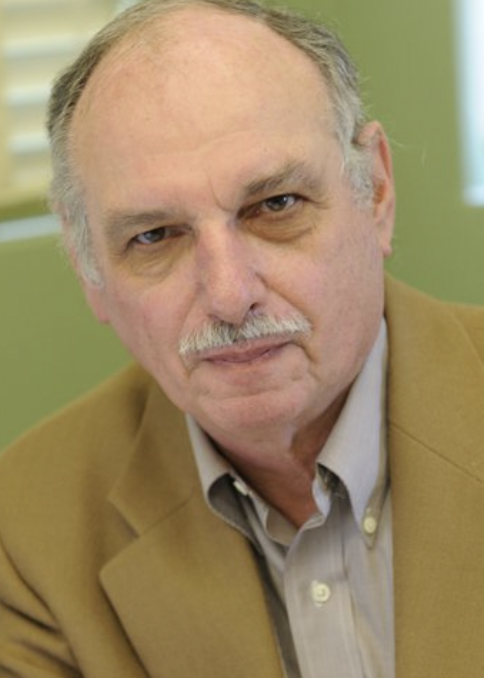 David Hitlin合作论文数Division of Physics Mathematics and Astronomy, California Institute of Technology1110
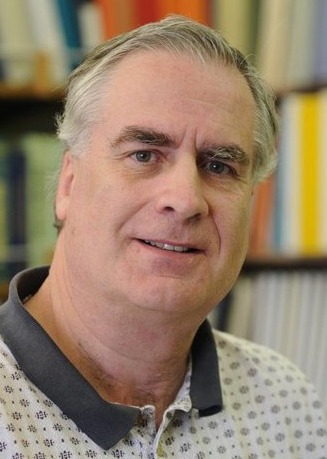 Frank C. Porter合作论文数The Division of Physics, Mathematics and Astronomy, California Institute of Technology1107
 Heiko Lacker合作论文数Institut für Physik, Mathematisch-Naturwissenschaftliche Fakultät, Humboldt-Universität zu Berlin;Department of Physics, Humboldt-Universität zu Berlin1107
 Roger Barlow合作论文数School of Computing and Engineering, University of Huddersfield1106
 Masahiro Morii合作论文数Department of Physics, Harvard University1103
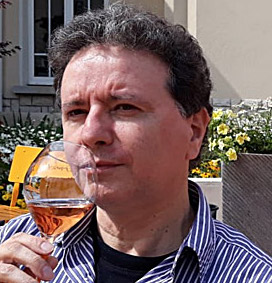 Fabio Anulli合作论文数Istituto Nazionale di Fisica Nucleare1101S. Passaggio合作论文数1100
 Francesca Di Lodovico合作论文数Department of Physics, Faculty of Natural, Mathematical & Engineering Sciences, King’s College London1099S. Prell合作论文数1096George Lafferty合作论文数School of Physics and Astronomy, The University of Manchester1095
 Gr Bonneaud合作论文数University of Paris1093
 Terry L. Schalk合作论文数Division of Physical & Biological Sciences, Department of Physics, University of California, Santa Cruz;Santa Cruz Institute for Particle Physics, University of California, Santa Cruz1090J. Ocariz合作论文数1086
 j a mckenna合作论文数University of British Columbia1084Erwin Gabathuler合作论文数University of Liverpool1082
 David Leith合作论文数Stanford Linear Accelerator Center1082
 A. V. Gritsan合作论文数Johns Hopkins University1080
 Carlo Dallapiccola合作论文数Department of Physics, College of Natural Sciences, University of Massachusetts Amherst1080T. S. Mattison合作论文数1078
 Concezio Bozzi合作论文数Istituto Nazionale di Fisica Nucleare Sezione di Ferrara1077
 Romulus Godang合作论文数Department of Physics, College of Arts and Sciences, University of South Alabama;University of Mississippi1074
 Bjarne Sandvik Stugu合作论文数Department of Physics and Technology University of Bergen1074
 Francesco Forti合作论文数Department of Physics, University of Pisa;Istituto Nazionale di Fisica Nucleare1071Gilbert Grosdidier合作论文数Laboratoire de l'Accélérateur Linéaire, Institut National de Physique Nucléaire et de Physique des Particules1068
 Bill Lockman合作论文数Santa Cruz Institute for Particle Physics, Department of Physics, University of California, Santa Cruz1066
 Fernando Palombo合作论文数Department of Physics, University of Milan1052Evgeny Solodov合作论文数1050L. Piemontese合作论文数1047J. Chauveau合作论文数1044G. Lynch合作论文数Lawrence Berkeley National Laboratory1039M. Verderi合作论文数1037O. Long合作论文数1037
 Adrian Bevan合作论文数School of Physical and Chemical Sciences, Queen Mary University of London;CERN1037
 Rolf Dubitzky合作论文数CARIAD1032
 Claudio Campagnari合作论文数Physics Department, University of California Santa Barbara;CERN1032
 Antimo Palano合作论文数University of Bari1032Stefano Bettarini合作论文数Dipartimento di Fisica, Università di Pisa1027Am Eisner合作论文数1025
 Abraham Seiden合作论文数Santa Cruz Institute for Particle Physics, University of California, Santa Cruz;Department of Physics, University of California, Santa Cruz1024
 Abolhassan Jawahery合作论文数Department of Physics, College of Computer, Mathematical, & Natural Sciences, University of Maryland1016Ap Onuchin合作论文数1014
 Michel Davier合作论文数Université Paris-Saclay1013




