Harnessing the full power of nascent quantum processors requires the efficient management of a limited number of quantum bits with finite coherent lifetimes. Hybrid algorithms, such as the variational quantum eigensolver (VQE), leverage classical resources to reduce the required number of quantum gates. Experimental demonstrations of VQE have resulted in calculation of Hamiltonian ground states, and a new theoretical approach based on a quantum subspace expansion (QSE) has outlined a procedure for determining excited states that are central to dynamical processes. We use a superconducting-qubit-based processor to apply the QSE approach to the H_{2} molecule, extracting both ground and excited states without the need for auxiliary qubits or additional minimization. Further, we show that this extended protocol can mitigate the effects of incoherent errors, potentially enabling larger-scale quantum simulations without the need for complex error-correction techniques.
Incorporating ferromagnetic dopants into three-dimensional topological insulator thin films has recently led to the realisation of the quantum anomalous Hall effect. These materials are of great interest since they may support electrical currents that flow without resistance, even at zero magnetic field. To date, the quantum anomalous Hall effect has been investigated using low-frequency transport measurements. However, transport results can be difficult to interpret due to the presence of parallel conductive paths, or because additional non-chiral edge channels may exist. Here we move beyond transport measurements by probing the microwave response of a magnetised disk of Cr-(Bi,Sb)2Te3. We identify features associated with chiral edge plasmons, a signature that robust edge channels are intrinsic to this material system. Our results provide a measure of the velocity of edge excitations without contacting the sample, and pave the way for an on-chip circuit element of practical importance: the zero-field microwave circulator.
Circulators are non-reciprocal circuit elements integral to technologies including radar systems, microwave communication transceivers, and the readout of quantum information devices. Their non-reciprocity arises from the interference of microwaves over the centimetre-scale of the signal wavelength in the presence of bulky magnetic media that break time-reversal symmetry. Here we realize a completely passive on-chip microwave circulator with size one-thousandth the wavelength by exploiting the chiral, slow-light response of a 2-dimensional electron gas (2DEG) in the quantum Hall regime. For an integrated GaAs device with 330 um diameter and 1 GHz centre frequency, a non-reciprocity of 25 dB is observed over a 50 MHz bandwidth. Furthermore, the direction of circulation can be selected dynamically by varying the magnetic field, an aspect that may enable reconfigurable passive routing of microwave signals on-chip.
Harnessing the full power of nascent quantum processors requires the efficient management of a limited number of quantum bits with finite lifetime. Hybrid algorithms leveraging classical resources have demonstrated promising initial results in the efficient calculation of Hamiltonian ground states–an important eigenvalue problem in the physical sciences that is often classically intractable. In these protocols, a Hamiltonian is parsed and evaluated term-wise with a shallow quantum circuit, and the resulting energy minimized using classical resources. This reduces the number of consecutive logical operations that must be performed on the quantum hardware before the onset of decoherence. We demonstrate a complete implementation of the Variational Quantum Eigensolver (VQE), augmented with a novel Quantum Subspace Expansion, to calculate the complete energy spectrum of the H2 molecule with near chemical accuracy. The QSE also enables the mitigation of incoherent errors, potentially allowing the implementation of larger-scale algorithms without complex quantum error correction techniques.
We present the design and characterization of a multi-qubit circuit for quantum simulation experiments. Using the newly-developed Josephson traveling-wave parametric amplifier, we demonstrate simultaneous, multiplexed, single-shot readout of 8 transmon qubits.
We describe the operation of a cryogenic instrumentation platform incorporating commercially available field-programmable gate arrays (FPGAs). The functionality of the FPGAs at temperatures approaching 4 K enables signal routing, multiplexing, and complex digital signal processing in close proximity to cooled devices or detectors within the cryostat. The performance of the FPGAs in a cryogenic environment is evaluated, including clock speed, error rates, and power consumption. Although constructed for the purpose of controlling and reading out quantum computing devices with low latency, the instrument is generic enough to be of broad use in a range of cryogenic applications.
We demonstrate an implementation of the variational quantum eigensolver using superconducting qubits. We explore the algorithm’s ability to go beyond ground state estimation to determine molecular excited states and its inherent robustness to noise.
A fundamental limitation of precision radial velocity measurements is the accuracy and stability of the calibration source. Here we present a low-cost alternative to more complex laser metrology based systems that utilises a single-mode fibre Fabry-Perot etalon. There are three key elements on this photonic comb: i) an optical fibre etalon with thermo-electric coolers; ii) a Rubidium Saturation Absorption Spectroscopy (SAS) setup; and iii) an optical fibre switch system for simultaneous laser locking of the etalon. We simultaneously measure the Rubidium D2 transitions around 780.2 nm and the closest etalon line. A PID loop controls the etalon temperate to maintain the position of its peak with an RMS error of <10cm/s for 10 minute integration intervals in continous operation. The optical fibre switch system allows for a time multiplexed coupling of the etalon to a spectrograph and SAS system.
Solid-state qubits have recently advanced to the level that enables them, in-principle, to be scaled-up into fault-tolerant quantum computers. As these physical qubits continue to advance, meeting the challenge of realising a quantum machine will also require the engineering of new classical hardware and control architectures with complexity far beyond the systems used in today's few-qubit experiments. Here, we report a micro-architecture for controlling and reading out qubits during the execution of a quantum algorithm such as an error correcting code. We demonstrate the basic principles of this architecture in a configuration that distributes components of the control system across different temperature stages of a dilution refrigerator, as determined by the available cooling power. The combined setup includes a cryogenic field-programmable gate array (FPGA) controlling a switching matrix at 20 millikelvin which, in turn, manipulates a semiconductor qubit.
The compound semiconductor gallium-arsenide (GaAs) provides an ultra-clean platform for storing and manipulating quantum information, encoded in the charge or spin states of electrons confined in nanostructures. The absence of inversion symmetry in the zinc-blende crystal structure of GaAs however, results in a strong piezoelectric interaction between lattice acoustic phonons and qubit states with an electric dipole, a potential source of decoherence during charge-sensitive operations. Here we report phonon generation in a GaAs double quantum dot, configured as a single- or two-electron charge qubit, and driven by the application of microwaves via surface gates. In a process that is a microwave analogue of the Raman effect, phonon emission produces population inversion of the two-level system and leads to rapid decoherence of the qubit when the microwave energy exceeds the level splitting. Comparing data with a theoretical model suggests that phonon emission is a sensitive function of the device geometry.
 David Reilly合作论文数School of Physics, Faculty of Science, The University of Sydney15
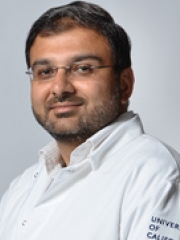 Irfan Siddiqi合作论文数Quantum Nanoelectronics Laboratory, Department of Physics, University of California, Berkeley11
 Vinay Ramasesh合作论文数8
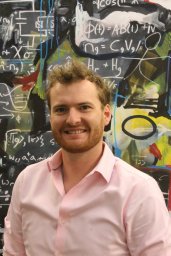 Machiel S. Blok合作论文数Kavli Institute of Nanoscience Delft, Delft University of Technology;Kavli Institute of Nanoscience Delft, Delft University of Technology8
 Hornibrook, J.M.合作论文数Mater. Sci. & Eng., CSIRO;c;Mater. Sci. & Eng., CSIRO8
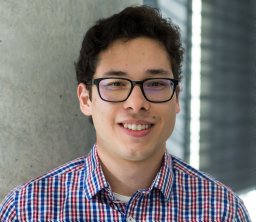 S. J. Pauka合作论文数ARC Ctr Excellence Engn Quantum Syst, Univ Sydney7
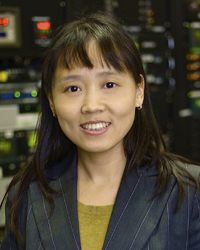 Hong Lu (芦红)合作论文数College of Engineering and Applied Sciences, Nanjing University7
 Coralene Mahoney合作论文数School of Physics, The University of Sydney7
 Arthur Gossard合作论文数College of Engineering, University of California, Santa Barbara7Dar Dahlen合作论文数6
 Xanthe Croot合作论文数Dept Phys, Princeton Univ6
 Andrew Doherty合作论文数Faculty of Science, The University of Sydney6
 Kevin O’Brien合作论文数Department of Electrical Engineering and Computer Science, Massachusetts Institute of Technology5
 John Mark Kreikebaum合作论文数Mat Sci Div, Lawrence Berkeley Natl Lab5
 Geoffrey C. Gardner合作论文数Birck Nanotechnol Ctr, Purdue Univ4William Livingston合作论文数Dept Phys, Univ Calif Berkeley4
 Tom Stace合作论文数School of Mathematics and Physics, Faculty of Science, The University of Queensland4
 Michael J. Manfra合作论文数Department of Physics and Astronomy, College of Science, Purdue University;Birck Nanotechnology Center, Purdue University;Microsoft4
 Wibe de Jong合作论文数Materials Sciences Division, Lawrence Berkeley National Laboratory;Atom Computing4i d conway lamb合作论文数3
 Allison Dove合作论文数Dept Phys, Univ Calif Berkeley3
 Jarrod McClean合作论文数Google’s Quantum Artificial Intelligence Lab;Computational Research Division, Lawrence Berkeley National Laboratory3Watson John D合作论文数Department of Physics and Birck Nanotechnology Center, Purdue University3
 Jonathan Carter合作论文数3S. J. Waddy合作论文数2Lucas Peeters合作论文数2
 Saeed Fallahi合作论文数Dept Phys & Astron, Purdue Univ2Eli J. Fox合作论文数Stanford Univ, Dept Phys, Stanford, CA 94305 USA2
 Lei Pan合作论文数Univ Calif Los Angeles, Dept Elect & Comp Engn, Los Angeles, CA 90095 USA2
 Sean Declan Barrett合作论文数2
 Kang Wang合作论文数Device Research Laboratory, Department of Electrical and Computer Engineering, Samueli School of Engineering, University of California, Los Angeles2Michael Frechtling合作论文数The University of Sydney2
 Joss Hawthorn合作论文数Sydney Institute for Astronomy, School of Physics, Faculty of Science, The University of Sydney2
 David Goldhaber-Gordon合作论文数Laboratory for Advanced Materials, Stanford University;Geballe Lab for Advanced Materials, Stanford University;Department of Physics, Stanford University2V. V. Ramasesh合作论文数1
 Bradley K. Mitchell合作论文数1Maxime Hermouet合作论文数LETI, Univ Grenoble Alpes1William J. Huggins合作论文数Google Res, Venice, CA 90291 USA1haihan lu合作论文数1
 Chris Betters合作论文数School of Physics, Faculty of Science, The University of Sydney;Sydney Institute for Astronomy, The University of Sydney1
 K. Birgitta Whaley合作论文数Department of Chemistry, College of Chemistry, University of California, Berkeley;Lawrence Berkeley National Laboratory1
 Sergio G. Leon Saval合作论文数School of Physics, University of Sydney/Institute of Photonics and Optical Science, University of Sydney1Janez Kos合作论文数1
 Emmanuel Flurin合作论文数Université Pierre et Marie Curie-Sorbonne Universités, Université Paris Diderot-Sorbonne Paris Cité1
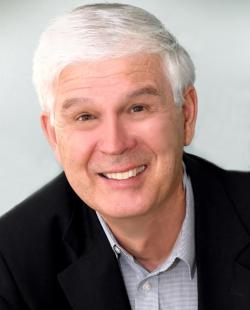 Kevin O'Brien合作论文数Department of Political Science, University of California, Berkeley1
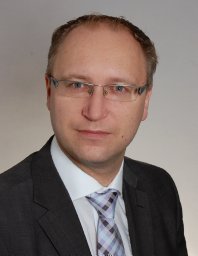 Thomas Schuster合作论文数Dept Math, Saarland Univ1
 Matthew Colless合作论文数Research School of Astronomy and Astrophysics, College of Science and Medicine, Australian National University1
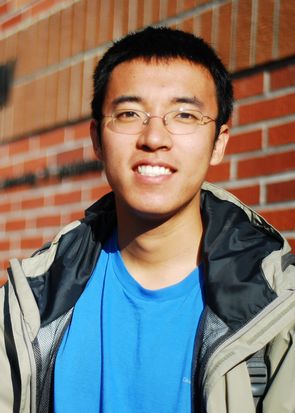 Xufeng Kou (寇煦丰)合作论文数School of Information Science and Technology, ShanghaiTech University1




