Protected superconducting qubits such as the 0-π qubit promise to substantially reduce physical error rates. However, a key challenge in the field is designing gates for these qubits that do not compromise their protection or become infeasibly slow as the protection of the qubit is improved. In this work we propose a protected phase gate that is compatible with the protected regime of the 0-π qubit and does not suffer from spurious coupling to additional circuit modes. Our gate utilizes an internal mode of the circuit as an ancilla and is achieved by varying the qubit-ancilla coupling via a tunable Josephson element. Through numerical simulations, we study how the gate error scales with the circuit parameters of the 0-π qubit and the tunable Josephson element that enacts the gate. Ultimately, we find that a protected gate with the 0-π qubit is possible with near-term circuit parameters. Our work opens up the possibility of performing protected gates on protected superconducting qubits, which may significantly reduce hardware overheads for quantum computation.
Unlike other quantum hardware, photonic quantum architectures can produce millions of qubits from a single device. However, controlling photonic qubits remains challenging, even at small scales, due to their weak interactions, making non-deterministic gates in linear optics unavoidable. Nevertheless, a single photon can readily spread over multiple modes and create entanglement within the multiple modes deterministically. Rudolph's concept of third quantization leverages this feature by evolving multiple single-photons into multiple modes, distributing them uniformly and randomly to different parties, and creating multipartite entanglement without interactions between photons or non-deterministic gates. This method requires only classical communication and deterministic entanglement within multi-mode single-photon states and enables universal quantum computing. The multipartite entanglement generated within the third quantization framework is nearly deterministic, where ``deterministic'' is achieved in the asymptotic limit of a large system size. In this work, we propose a near-term experiment using antimony donor in a silicon chip to realize third quantization. Utilizing the eight energy levels of antimony, one can generate two eight-mode single-photon states independently and distribute them to parties. This enables a random multipartite Bell-state experiment, achieving a Bell state with an upper-bound efficiency of 87.5% among 56 random pairs without non-deterministic entangling gates. This approach opens alternative pathways for silicon-based photonic quantum computing.
We construct several explicit instances of quantum Tanner codes, a class of asymptotically good quantum low-density parity check (qLDPC) codes. The codes are constructed using dihedral groups and random pairs of classical codes and exhibit high encoding rates, relative distances, and pseudo-thresholds. Using the BP+OSD decoder, we demonstrate good performance in the phenomenological and circuit-level noise settings, comparable to the surface code with similar distances. Finally, we conduct an analysis of the space-time overhead incurred by these codes.
It’s not your grandfather’s quantum mechanics. Today, researchers treat entanglement as a physical resource: Quantum information can now be measured, mixed, distilled, concentrated, and diluted.
A macroscopic energy barrier is a necessary condition for self-correcting quantum memory. In this paper, we prove tight bounds on the energy barrier applicable to any quantum code obtained from the hypergraph product of two classical codes. If the underlying classical codes are low-density parity-check codes (LDPC), the energy barrier of the quantum code is shown to be the minimum energy barrier of the underlying classical codes (and their transposes) up to an additive $O(1)$ constant.
The Gottesman-Kitaev-Preskill (GKP) error correcting code encodes a finite dimensional logical space in one or more bosonic modes, and has recently been demonstrated in trapped ions and superconducting microwave cavities. In this work we introduce a new subsystem decomposition for GKP codes that we call the stabilizer subsystem decomposition, analogous to the usual approach to quantum stabilizer codes. The decomposition has the defining property that a partial trace over the non-logical stabilizer subsystem is equivalent to an ideal decoding of the logical state. We describe how to decompose arbitrary states across the subsystem decomposition using a set of transformations that move between the decompositions of different GKP codes. Besides providing a convenient theoretical view on GKP codes, such a decomposition is also of practical use. We use the stabilizer subsystem decomposition to efficiently simulate noise acting on single-mode GKP codes, and in contrast to more conventional Fock basis simulations, we are able to to consider essentially arbitrarily large photon numbers for realistic noise channels such as loss and dephasing.
The algebraic tools used to study topological phases of matter are not clearly suited to studying processes in which the bulk energy gap closes, such as phase transitions. We describe an elementary two edge thought experiment which reveals the effect of an anyon condensation phase transition on the robust edge properties of a sample, bypassing a limitation of the algebraic description. In particular, the two edge construction allows some edge degrees of freedom to be tracked through the transition, despite the bulk gap closing. The two edge model demonstrates that bulk anyon condensation induces symmetry breaking in the edge model. Further, the construction recovers the expected result that the number of chiral current carrying modes at the edge cannot change through anyon condensation. We illustrate the construction through detailed analysis of anyon condensation transitions in an achiral phase, the toric code, and in chiral phases, the Kitaev spin liquids.
The Gottesman-Kitaev-Preskill (GKP) code may be used to overcome noise in continuous variable quantum systems. However, preparing GKP states remains experimentally challenging. We propose a method for preparing GKP states by engineering a time-periodic Hamiltonian whose Floquet states are GKP states. This Hamiltonian may be realized in a superconducting circuit comprising a SQUID shunted by a superinductor and a capacitor, with a characteristic impedance twice the resistance quantum. The GKP Floquet states can be prepared by adiabatically tuning the frequency of the external magnetic flux drive. We predict that highly squeezed $>11.9$ dB ($10.8$ dB) GKP magic states can be prepared on a microsecond timescale, given a quality factor of $10^6$ ($10^5$) and flux noise at typical rates.
The Gottesman-Kitaev-Preskill (GKP) code is an exciting route to fault-tolerant quantum computing since Gaussian resources and GKP Pauli-eigenstate preparation are sufficient to achieve universal quantum computing. In this work, we provide a practical proposal to perform Clifford gates and state read-out in GKP codes implemented with active error correction in superconducting circuits. We present a method of performing Clifford circuits without physically implementing any single-qubit gates, reducing the potential for them to spread errors in the system. In superconducting circuits, all the required two-qubit gates can be implemented with a single piece of hardware. We analyze the error-spreading properties of GKP Clifford gates and describe how a modification in the decoder following the implementation of each gate can reduce the gate infidelity by multiple orders of magnitude. Moreover, we develop a simple analytical technique to estimate the effect of loss and dephasing on GKP codes that matches well with numerics. Finally, we consider the effect of homodyne measurement inefficiencies on logical state read-out and present a scheme that implements a measurement with a $0.1\%$ error rate in $630$ ns assuming an efficiency of just~$75\%$.
Haah's cubic code is the prototypical type-II fracton topological order. It instantiates the no stringlike operator property that underlies the favorable scaling of its code distance and logical energy barrier. Previously, the cubic code was only explored in translation-invariant systems on infinite and periodic lattices. In these settings, the code distance scales superlinearly with the linear system size, while the number of logical qubits within the degenerate ground space exhibits a complicated functional dependence that undergoes large fluctuations within a linear envelope. Here, we extend the cubic code to systems with open boundary conditions and crystal lattice defects. We characterize the condensation of topological excitations in the vicinity of these boundaries and defects, finding that their inclusion can introduce local stringlike operators and enhance the mobility of otherwise fractonic excitations. Despite this, we use these boundaries and defects to define new encodings where the number of logical qubits scales linearly without fluctuations, and the code distance scales superlinearly, with the linear system size. These include a subsystem encoding with open boundary conditions and a subspace encoding using lattice defects.
Rotation symmetric bosonic codes are are an attractive encoding for qubits into oscillator degrees of freedom, particularly in superconducting qubit experiments. While these codes can tolerate considerable loss and dephasing, they will need to be combined with higher level codes to achieve large-scale devices. We investigate concatenating these codes with the planar code in a measurement-based scheme for fault-tolerant quantum computation. We focus on binomial codes as the base level encoding, and estimate break-even points for such encodings under loss for various types of measurement protocol. These codes are more resistant to photon loss errors, but require both higher mean photon numbers and higher phase resolution for gate operations and measurements. We find that it is necessary to implement adaptive phase measurements, maximum likelihood quantum state inference, and weighted minimum weight decoding to obtain good performance for a planar code using binomial code qubits.
We describe a protocol for the universal control of non-ideal $\pi$-periodic superconducting qubits. Our proposal relies on a $\pi$-SQUID: a superconducting loop formed by two $\pi$-periodic circuit elements, with an external magnetic flux threading the circuit. The system exhibits an extensive sweet spot around half-flux where residual $2\pi$-periodic Cooper pair tunneling is highly suppressed. We demonstrate that universal single-qubit operations can be realised by tuning the flux adiabatically and diabatically within this broad sweet spot. We also assess how residual $2\pi$-periodicity in $\pi$-SQUIDs impacts holonomic phase gates.
Haah's cubic code is the prototypical type-II fracton topological order. It instantiates the no string-like operator property that underlies the favorable scaling of its code distance and logical energy barrier. Previously, the cubic code was only explored in translation-invariant systems on infinite and periodic lattices. In these settings, the code distance scales superlinearly with the linear system size, while the number of logical qubits within the degenerate ground space exhibits a complicated functional dependence that undergoes large fluctuations within a linear envelope. Here, we extend the cubic code to systems with open boundary conditions and crystal lattice defects. We characterize the condensation of topological excitations in the vicinity of these boundaries and defects, finding that their inclusion can introduce local string-like operators and enhance the mobility of otherwise fractonic excitations. Despite this, we use these boundaries and defects to define new encodings where the number of logical qubits scales linearly without fluctuations, and the code distance scales superlinearly, with the linear system size. These include a subsystem encoding with open boundary conditions and a subspace encoding using lattice defects.
We study solutions to the quantum trajectory evolution of $N$-mode open quantum systems possessing a time-independent Hamiltonian, linear Heisenberg-picture dynamics, and Gaussian measurement noise. In terms of the mode annihilation and creation operators, a system will have linear Heisenberg-picture dynamics under two conditions. First, the Hamiltonian must be quadratic. Second, the Lindblad operators describing the coupling to the environment (including those corresponding to the measurement) must be linear. In cases where we can solve the $2N$-degree polynomials that arise in our calculations, we provide an analytical solution for initial states that are arbitrary (i.e. they are not required to have Gaussian Wigner functions). The solution takes the form of an evolution operator, with the measurement-result dependence captured in $2N$ stochastic integrals over these classical random signals. The solutions also allow the POVM, which generates the probabilities of obtaining measurement outcomes, to be determined. To illustrate our results, we solve some single-mode example systems, with the POVMs being of practical relevance to the inference of an initial state, via quantum state tomography. Our key tool is the representation of mixed states of quantum mechanical oscillators as state vectors rather than state matrices (albeit in a larger Hilbert space). Together with methods from Lie algebra, this allows a more straightforward manipulation of the exponential operators comprising the system evolution than is possible in the original Hilbert space.
We prove upper and lower bounds relating the quantum gate complexity of a unitary operation, U , to the optimal control cost associated to the synthesis of U . These bounds apply for any optimal control problem, and can be used to show that the quantum gate complexity is essentially equivalent to the optimal control cost for a wide range of problems, including time-optimal control and finding minimal distances on certain Riemannian, subriemannian, and Finslerian manifolds. These results generalize the results of [Nielsen, Dowling, Gu, and Doherty, Science 311, 1133-1135 (2006)], which showed that the gate complexity can be related to distances on a Riemannian manifold.
Motivated by several approaches to quantum gravity, there is a considerable literature on generalised uncertainty principles particularly through modification of the canonical position-momentum commutation relations. Some of these modified relations are also consistent with general principles that may be supposed of any physical theory. Such modified commutators have significant observable consequences. Here we study the noisy behaviour of an optomechanical system assuming a certain commonly studied modified commutator. From recent observations of radiation pressure noise in tabletop optomechanical experiments as well as the position noise spectrum of advanced LIGO we derive bounds on the modified commutator. We find how such experiments can be adjusted to provide significant improvements in such bounds, potentially surpassing those from sub-atomic measurements.
We propose a protocol for quantum state tomography of nonclassical states in optomechanical systems. Using a parametric drive, the procedure overcomes the challenges of weak optomechanical coupling, poor detection efficiency, and thermal noise to enable high efficiency homodyne measurement. Our analysis is based on the analytic description of the generalized measurement that is performed when optomechanical position measurement competes with thermal noise and a parametric drive. The proposed experimental procedure is numerically simulated in realistic parameter regimes, which allows us to show that tomographic reconstruction of otherwise unverifiable nonclassical states is made possible.
Scalable quantum processors require tunable two-qubit gates that are fast, coherent and long-range. The Heisenberg exchange interaction offers fast and coherent couplings for spin qubits, but is intrinsically short-ranged. Here, we demonstrate that its range can be increased by employing a multielectron quantum dot as a mediator, while preserving speed and coherence of the resulting spin-spin coupling. We do this by placing a large quantum dot with 50-100 electrons between a pair of two-electron double quantum dots that can be operated and measured simultaneously. Two-spin correlations identify coherent spin-exchange processes across the multielectron quantum dot. We further show that different physical regimes of the mediated exchange interaction allow a reduced susceptibility to charge noise at sweet spots, as well as positive and negative coupling strengths up to several gigahertz. These properties make multielectron dots attractive as scalable, voltage-controlled coherent coupling elements.
We compare the performance of quantum error correcting codes when memory errors are unitary with the more familiar case of dephasing noise. For a wide range of codes we analytically compute the effective logical channel that results when the error correction steps are performed noiselessly. Our examples include the entire family of repetition codes, the 5-qubit, Steane, Shor, and surface codes. When errors are measured in terms of the diamond norm, we find that the error correction is typically much more effective for unitary errors than for dephasing. We observe this behavior for a wide range of codes after a single level of encoding, and in the thresholds of concatenated codes using hard decoders. We show that this holds with great generality by proving a bound on the performance of any stabilizer code when the noise at the physical level is unitary. By comparing the diamond norm error $D'_\diamond$ of the logical qubit with the same quantity at the physical level $D_\diamond$, we show that $D'_\diamond \le c D^d_\diamond $ where $d$ is the distance of the code and $c$ is constant that depends on the code but not on the error. This bound compares very favorably to the performance of error correction for dephasing noise and other Pauli channels, where an error correcting code of odd distance $d$ will exhibit a scaling $D'_\diamond \sim D_\diamond^{(d+1)/2}$.
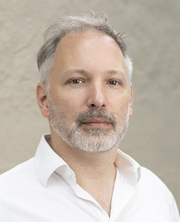 Stephen Bartlett合作论文数School of Physics, Faculty of Science, The University of Sydney;The University of Sydney Nano Institute;ARC Centre of Excellence for Engineered Quantum Systems32
 Hideo Mabuchi合作论文数Department of Applied Physics, Stanford University19
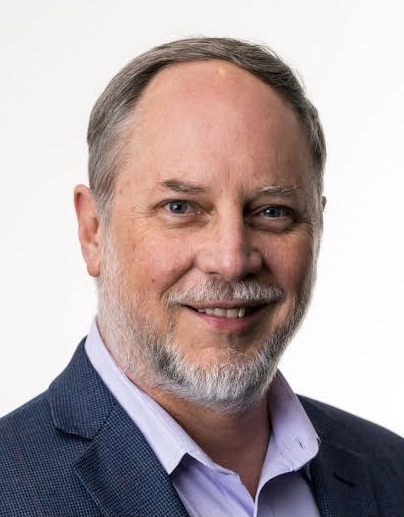 Howard Wiseman合作论文数Centre for Quantum Dynamics, Griffith University11
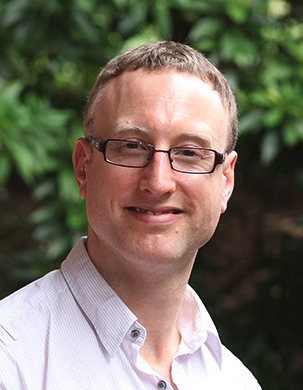 Warwick Bowen合作论文数School of Mathematics and Physics, Faculty of Science, University of Queensland;ARC Centre of Excellence in Quantum Biotechnology, Faculty of Science, University of Queensland;ARC Centre of Excellence for Engineered Quantum Systems, Faculty of Science, University of Queensland10
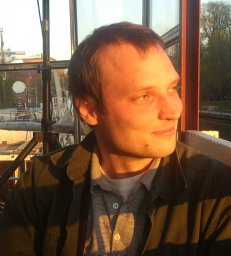 Alex Szorkovszky合作论文数Centre for Eng. Quantum Syst., Univ. of Queensland;c;Centre for Eng. Quantum Syst., Univ. of Queensland9
 Geoffrey C. Gardner合作论文数Birck Nanotechnol Ctr, Purdue Univ7
 David Reilly合作论文数School of Physics, Faculty of Science, The University of Sydney7
 Tom Stace合作论文数School of Mathematics and Physics, Faculty of Science, The University of Queensland7
 Charles Marcus合作论文数Department of Materials Science and Engineering, University of Washington;Pacific Northwest National Laboratory;Niels Bohr Institute, University of Copenhagen7
 Michael J. Manfra合作论文数Department of Physics and Astronomy, College of Science, Purdue University;Birck Nanotechnology Center, Purdue University;Microsoft7
 John K. Stockton合作论文数Laboratory of Physics;California Institute of Technology;Laboratory of Physics, California Institute of Technology7
 Ferdinand Kuemmeth合作论文数Niels Bohr Institute, Exercise and Sports, Faculty of Science, University of Copenhagen6
 S. M. Tan合作论文数6
 Saeed Fallahi合作论文数Dept Phys & Astron, Purdue Univ6
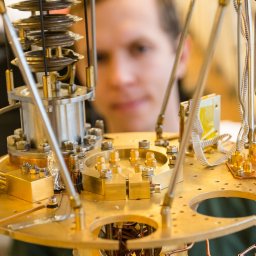 Filip K. Malinowski合作论文数Delft University of Technology6
 James Colless合作论文数School of Physics, The University of Sydney6
 Scott Parkins合作论文数Department of Physics, Faculty of Science, University of Auckland6
 Gerard Milburn合作论文数School of Mathematics and Physics, The University of Queensland6
 Frederico R. Martins合作论文数QuantrolOx6
 S.D.C. Wehner合作论文数Quantum & Computer Engineering Department, Faculty of Electrical Engineering, Mathematics and Computer Science, Delft University of Technology;Delft Networks6Peter Dahl Nissen合作论文数6
 Dan Walls合作论文数University of Auckland5
 Sean Declan Barrett合作论文数5
 Matthew J. Woolley合作论文数School of Engineering & Information Technology, The University of New South Wales Canberra5Ong F R合作论文数5
 Glen I Harris合作论文数5
 Alexandre Blais合作论文数Département de Physique, Faculté des Sciences, Universite de Sherbrooke;Institut Quantique, Universite de Sherbrooke5
 Yeong-Cherng Liang合作论文数Group of Applied Physics;University of Geneva;Group of Applied Physics, University of Geneva5
 Patrice Bertet合作论文数Institut IRAMIS5
 Daniel Esteve合作论文数Quantronics Group5
 Alexei Gilchrist合作论文数Centre for Quantum Computer Technology;Department of Physics;University of Queensland;Centre for Quantum Computer Technology, University of Queensland5Maxime Boissonneault合作论文数5Denis Vion合作论文数5
 Xanthe Croot合作论文数Dept Phys, Princeton Univ4
 Federico M. Spedalieri合作论文数Univ Southern Calif, Inst Informat Sci, Marina Del Rey, CA 90292 USA4
 Hong Lu (芦红)合作论文数College of Engineering and Applied Sciences, Nanjing University4
 Arthur Gossard合作论文数College of Engineering, University of California, Santa Barbara4
 Pablo A. Parrilo合作论文数Department of Electrical Engineering and Computer Science, Massachusetts Institute of Technology4
 Kurt Jacobs合作论文数Department of Physics, University of Massachusetts at Boston;U.S. Army DEVCOM Army Research Laboratory4
 Mark R. Dowling合作论文数School of Physical Sciences;University of Queensland;School of Physical Sciences, University of Queensland4Jm Geremia合作论文数4
 Steven Flammia合作论文数Department of Computer Science, Virginia Tech4Thomas Schiet合作论文数3
 Francois Mallet合作论文数Lab Mat & Phenomenes Quant, Univ Paris3
 Hornibrook, J.M.合作论文数Mater. Sci. & Eng., CSIRO;c;Mater. Sci. & Eng., CSIRO3Jit kee Chin合作论文数3
 Gu Mile (顾麦然)合作论文数Division of Physics and Applied Physics, School of Physical and Mathematical Sciences, Nanyang Technological University;Interdisciplinary Institute of Information Sciences, Tsinghua University;Centre for Quantum Technologies, National University of Singapore3
 Coralene Mahoney合作论文数School of Physics, The University of Sydney3Wardrop Matthew P合作论文数3




