The first T2T reference genome of Guazuma ulmifolia is reported, which serves as a core genomic resource for stress adaptation research and stress-tolerant breeding in cacao wild relatives. Climate change, particularly increased incidence of drought, poses a major threat to food security. Understanding the genomic basis of environmental adaptation in crop wild relatives can provide valuable resources for improving stress resilience. Guazuma ulmifolia, a wild relative of Theobroma cacao with important ecological and medicinal value, lacks high-quality reference genomic resources. Here, we report the first telomere-to-telomere (T2T) chromosome-level genome assembly of G. ulmifolia, with a genome size of 311.31 Mb, contig N50 of 35.19 Mb, and 98.70
The tribe Cunonieae comprises five genera and 214 species of shrubs and trees currently distributed in the Southern Hemisphere and the tropics, exhibiting an amphi-Pacific disjunct distribution shared with Araucariaceae, Myrtaceae, Nothofagaceae, Podocarpaceae, and Proteaceae, among others. To address the central question of how historical geological forces have shaped the distribution of plant diversity in the southern hemisphere, we aimed to provide evidence from the biogeographical history of Cunonieae. We generated the most densely sampled phylogenetic trees of Cunonieae available to date, with 121 samples and 81 species, based on 404 new sequences of plastid and nuclear DNA regions with high hierarchical phylogenetic signal (matK, trnL-F, rpl16, and internal transcribed spacer (ITS)). We included 184 samples of Rosids to estimate divergence times using fossil calibration points. For biogeographic inference, we employed a time-stratified model including fossils as tips. Cunonia and Pterophylla were paraphyletic in the ITS tree, and Cunonia was paraphyletic in the plastid tree. Pancheria, Vesselowskya, and Weinmannia were monophyletic, the latter with conflicting nuclear and plastid phylogenies. The crown group Cunonieae was dated at similar to 56 Ma, and its ancestral areas were Antarctica and Patagonia. Antarctica acted as a bridge between Australia and South America before the consolidation of the Antarctic Ice Sheet and the extinction of the lineage in Antarctica from the Oligocene to the Miocene. Following that, Cunonieae spread to lower latitudes via Zealandia/Oceania and Patagonia/South America. Geological changes during the Pliocene facilitated a further burst in diversification along the Andes, in Madagascar, and in New Caledonia, where at least three colonization events occurred.
Flavonoids are rich active components in plants, widely used in pharmaceuticals and nutritional supplements. Flavonoids are the important active healthcare components in Astragalus membranaceus. Methyl jasmonate (MeJA) is an important growth regulator that promotes the accumulation of flavonoids in a variety of plants. However, the molecular regulatory mechanism of the flavonoid synthesis in A. membranaceus after MeJA treatment is unclear. We conducted metabolomic and transcriptomic analyses of A. membranaceus subjected to MeJA treatment were conducted. A group of 118 differentially accumulated metabolites (DAMs) identified were primarily associated with the biosynthesis pathways of flavones. Flavonoid biosynthesis was one of the most enriched pathways in differentially expressed genes (DEGs). Multiple-omics analysis revealed an association between gene expression levels and the metabolic flux within the flavonoid pathway. Weighted gene co-expression network analysis (WGCNA) identified five co-expression modules and nineteen hub genes involved in flavonoid biosynthesis. AmMYB30 interacted with the promoters of AmCHS, AmFLS, and AmF3H, thereby regulating the flavonoid signaling pathway in A. membranaceus. Elevated expression of AmMYB30 in hairy roots resulted in heightened levels of AmCHS, AmFLS, and AmF3H expression, along with an increase in total flavonoid content, indicated AmMYB30 induced flavonoid accumulation after MeJA treatment. In summary, this study identified key regulators for flavonoid biosynthesis and offered valuable insights for understanding the regulation of flavonoid biosynthesis in A. membranaceus.
Data gaps and biases are two important issues that affect the quality of biodiversity information and downstream results. Understanding how best to fill existing gaps and account for biases is necessary to improve our current information most effectively. Two current main approaches for obtaining and improving data include (1) curation of biological collections, and (2) fieldwork. However, the comparative effectiveness of these approaches in improving biodiversity data remains little explored. We used the Flora de Bogotá project to study the magnitude of change in species richness, spatial coverage, and sample coverage of plant records based on curation versus fieldwork. The process of curation resulted in a decrease in species richness (synonym and error removal), but it significantly increased the number of records per species. Fieldwork contributed to a slight increase in species richness, via accumulation of new records. Additionally, curation led to increases in spatial coverage, species observed by locality, the number of plant records by species, and localities by species compared to fieldwork. Overall, curation was more efficient in producing new information compared to fieldwork, mainly because of the large number of records available in herbaria. We recommend intensive curatorial work as the first step in increasing biodiversity data quality and quantity, to identify bias and gaps at the regional scale that can then be targeted with fieldwork. The stepwise strategy would enable fieldwork to be planned more cost-effectively given the limited resources for biodiversity exploration and characterization.
Theobroma (Malvaceae, Byttnerioideae), the cacao genus, has a taxonomic history spanning over two centuries. Currently, it comprises 23 species of trees from lowland forests from the Tropical Americas. Herrania, a closely related genus described later, includes 17 additional species commonly referred to as “wild cacaos.” Phylogenetic relationships and morphological circumscriptions between Theobroma and Herrania have been the subject of debate. While Herrania has traditionally been treated as a separate genus based on evident morphological differences in leaf and petal features, it shares similarities with Theobroma in terms of habit, inflorescence, and fruit types. Recent phylogenetic evidence, incorporating a broader taxonomic sampling and a total-evidence analysis, suggested that Theobroma is paraphyletic, with Herrania nested within it. This finding supports the restoration of a classical circumscription of Theobroma wherein Herrania is considered a section of the former genus. Here, we provide a detailed account of the taxonomic history at infrageneric levels and propose one new subsection, two names at new ranks (to better allocate the diversity within T. sect. Herrania), and nine new combinations encompassing this expanded circumscription of Theobroma. In our study, we delimit Theobroma with forty species divided into six sections: T. sect. Glossopetalum (14 spp.), T. sect. Herrania (17 spp.), T. sect. Oreanthes (5 spp.), T. sect. Rhytidocarpus (1 sp.), T. sect. Telmatocarpus (2 spp.), and T. sect. Theobroma (1 sp.). Furthermore, we recognize three subsections within T. sect. Herrania. Alongside these newly proposed changes, we present a section-level identification key and provide diagnostic characters for each taxon.
Crop wild relatives (CWRs) of cultivated species may provide a source of genetic variation that can contribute to improving product quantity and quality. To adequately use these potential resources, it is useful to understand how CWRs are related to the cultivated species and to each other to determine how key crop traits have evolved and discover potentially usable genetic information. The chocolate industry is expanding and yet is under threat from a variety of causes, including pathogens and climate change. Theobroma cacao L. (Malvaceae), the source of chocolate, is a representative of the tribe Theobromateae that consists of four genera and c . 40 species that began to diversify over 25 million years ago. The great diversity within the tribe suggests that its representatives could exhibit advantageous agronomic traits. In this study, we present the most taxonomically comprehensive phylogeny of Theobromateae to date. DNA sequence data from WRKY genes were assembled into a matrix that included 56 morphological characters and analyzed using a Bayesian approach. The inclusion of a morphological data set increased resolution and support for some branches of the phylogenetic tree. The evolutionary trajectory of selected morphological characters was reconstructed onto the phylogeny. This phylogeny provides a framework for the study of morphological and physiological trait evolution, which can facilitate the search for agronomically relevant traits.
Astragalus membranaceus is a medicinal herb extensively used in China. R2R3-MYB is one of the largest transcription factor families in plants, playing a key role in plant development and environmental stress responses. Although quite a few R2R3-MYB transcription factors from economic plants have been characterized, the biological roles of the R2R3-MYB genes in A. membranaceus remain largely unknown. Here, 123 AmR2R3-MYB members in A. membranaceus were systematically identified and their phylogenetic positions, protein and gene structures, and expression patterns were analyzed. Co-expression network analysis revealed that AmMYB82 was a key gene in regulation of flavonoid synthesis. AmMYB82 was found to localize in the nucleus and activated transcription of AmCHS. In the AmMYB82 overexpressing Arabidopsis thaliana, the content of total flavonoids increased, and the expression levels of six enzyme coding genes for flavonoid synthesis, including AmPAL, AmCHS, AmC4H, AmFLS, AmF3H, and Am4CL, were elevated. Overexpression of AmMYB82 enhanced drought tolerance of Arabidopsis seedlings. Furthermore, overexpression of AmMYB82 in A. membranaceus hairy roots increased flavonoid concentration, transcription of the corresponding enzyme genes, and drought stress tolerance. Building on these findings, we developed a working model for AmMYB82 regulating flavonoid biosynthesis and contributing to the abiotic stress response of A. membranaceus. AmMYB82 directly activated enzyme coding genes in the flavonoid biosynthesis pathway such as AmCHS, promoting flavonoid accumulation and increasing drought tolerance. This research enhanced our knowledge of the biological functions of R2R3-MYB genes and provided candidate genes for the genetic breeding of A. membranaceus.
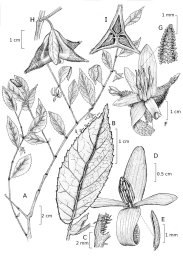
During the preparation of a taxonomic revision of Theobroma sensu lato (Malvaceae, Byttnerioideae), three new species of T. sect. Herrania were found: Theobroma globosum, T. nervosum and T. schultesii, which are described herein. Theobroma globosum and T. nervosum belong to T. sect. Herrania subsect. Subcymbicalyx, with species mostly found in the Amazon Basin, characterised, among other features, by petal ligules at least ten times longer than the petal claws. Theobroma schultesii is from T. sect. Herrania subsect. Herrania, with species with petal ligules less than ten times longer than the claw and is mainly found in the southern parts of the Caribbean Sea, the Pacific Ocean, western Colombia, and northern Ecuador. Theobroma globosum is diagnosed by the combination of spherical fruits with smaller leaflets and midrib proportions when compared to other species from the same region. Theobroma nervosum is identified by its toothed, obovate leaflets with secondary veins protruding beyond the leaflet margins, forming elongated projections across the entire leaflet. Theobroma schultesii exhibits a unique set of features in T. sect. Herrania subsect. Herrania, having both petiolulate leaflets and a cupuliform calyx.
Cacao ( Theobroma cacao , Malvaceae) is an important tree crop in Africa and in the Americas. Current genomic evidence suggests that its original range in Tropical Americas was smaller than its current distribution and that human-mediated dispersal occurred before European colonization. This includes regions like Mesoamerica and Eastern Amazonia where cacao is supposedly naturally occurring. In this study, we utilize remote sensing and land use data to examine the influence of human activities on cacao-growing regions and explore patterns between cacao distribution and anthropized areas. By evaluating nearly nine thousand preserved specimen collections, we worked with a comprehensive occurrence dataset that considers taxonomy and distribution. We then analyzed remote sensing images of specimen locations and compared land use profiles of regions into which cacao was introduced with documented native areas. Our findings revealed a clear association between anthropized areas and cacao specimens, with the majority located in areas strongly affected by human activities. Conversely, regions closer to the proposed native range of cacao exhibit less human impact. These results, while accounting for sampling bias, reinforce the idea that humans may have played a significant role in cacao’s dispersal, even in parts of the Amazon where its native status remains uncertain. The discussion on cacao’s native range and identification of introduced areas hold implications for jurisdiction, access to genetic resources, and conservation efforts. Additionally, it is relevant to debates surrounding the repatriation of genetic data of economically important crops. Understanding the historical human influence on cacao’s distribution is crucial for addressing issues of crop improvement, conservation, and sustainable use.
The tropical forest carbon sink is known to be drought sensitive, but it is unclear which forests are the most vulnerable to extreme events. Forests with hotter and drier baseline conditions may be protected by prior adaptation, or more vulnerable because they operate closer to physiological limits. Here we report that forests in drier South American climates experienced the greatest impacts of the 2015–2016 El Niño, indicating greater vulnerability to extreme temperatures and drought. The long-term, ground-measured tree-by-tree responses of 123 forest plots across tropical South America show that the biomass carbon sink ceased during the event with carbon balance becoming indistinguishable from zero (−0.02 ± 0.37 Mg C ha −1 per year). However, intact tropical South American forests overall were no more sensitive to the extreme 2015–2016 El Niño than to previous less intense events, remaining a key defence against climate change as long as they are protected.
Understanding the composition of urban wildlife communities is crucial to promote biodiversity, ecosystem function and links between nature and people. Using crowdsourced data from over five million eBird checklists, we examined the influence of urban characteristics on avian richness and function at 8443 sites within and across 137 global cities. Under half of the species from regional pools were recorded in cities, and we found a significant phylogenetic signal for urban tolerance. Site-level avian richness was positively influenced by the extent of open forest, cultivation and wetlands and avian functional diversity by wetlands. Functional diversity co-declined with richness, but groups including granivores and aquatic birds occurred even at species-poor sites. Cities in arid areas held a higher percentage of regional species richness. Our results indicate commonalities in the influence of habitat on richness and function, as well as lower niche availability, and phylogenetic diversity across the world's cities.
We present here a synopsis of the Colombian taxa in the genus Micropholis (Sapotaceae) including a genus description, an identification key, and a description of the species with information about their geographical distribution and phenology. The synopsis is based on the observation of specimens from seven herbaria, of some species in their natural habitat, and of digital images from type specimens. In a previous taxonomic revision, only five species were reported from Colombia; however, the catalogue of plants and lichens suggests the presence of 18 species, which we increased here to 19 distributed mainly in lowland wet forests, mostly in the Amazonia and western Colombia. M. guyanensis and M. venulose are the most widely distributed species in the country.
Se presenta la sinopsis del género Micropholis (Sapotaceae) en Colombia. Se incluye la descripción del género, una clave de identificación de las especies, la descripción de cada una, su distribución geográfica y su fenología. La sinopsis se hizo con base en el estudio de ejemplares de las colecciones de siete herbarios, la observación de algunas especies en su hábitat natural y el estudio de imágenes digitales de los especímenes tipo. Aunque en la última revisión taxonómica se registraron cinco especies en Colombia, el catálogo de plantas y líquenes sugiere la presencia de 18 especies en el país y colecciones posteriores han elevado este número a 19, las cuales se encuentran distribuidas especialmente en los bosques húmedos de tierras bajas, sobre todo en la Amazonía y en el occidente del país. M. guyanensis y M. venulosa son las especies más ampliamente distribuidas en el país.
Amazonia, one of the largest and most biodiverse ecosystems on Earth, is a significant yet less-known arena for ancient plant domestication. Here, we traced the origins of cupuaçu ( Theobroma grandiflorum ), an Amazonian tree crop closely related to cacao ( T. cacao ), cherished for its flavorful seed-pulp, by employing an extensive genomic analysis based on data from four sites in Brazil. Our results indicate that cupuaçu is a domesticated variant of its wild relative, cupuí ( T. subincanum ), probably originating from the Middle-Upper Rio Negro basin. A first phase of domestication is observed through a genetic bottleneck that we estimated to have occurred 5000–8000 years before the present. Moreover, we found further reductions in genetic diversity that we estimated to have occurred during the modern era. This is consistent with a second phase of domestication that was accompanied by an increase in the geographic distribution of cupuaçu over the last two centuries. Unraveling cupuaçu ’s origins adds it to the roster of plants domesticated by Amazonian indigenous people in the early to mid-Holocene. Our results suggest that Amazonia’s current patterns of genetic diversity and distribution of domesticated plants were influenced by both pre-Columbian and modern histories.
Species from the "cacao group" are traditionally allocated into two genera, Theobroma and Herrania (Malvaceae, Byttnerioideae), both groups of Neotropical species economically relevant, such as the cacao tree (Theobroma cacao), which forms the source of chocolate. This study aimed at compiling and describing a dataset of preserved specimen collections available in the Global Biodiversity Information Facility repository (GBIF) for Tropical Americas. Data were exhaustively revisited and analysed in terms of taxonomic identity, conditions of collection and georeferencing, all of which should enable downstream taxonomic, geographic and evolutionary analyses. Our dataset compiles 7975 records of preserved specimen collections found at herbaria. Records are from 18 species of Theobroma and 14 of Herrania, occurring in 60 countries or major territories, with two species endemic to a single country (H. kofanorum from Ecuador and H. laciniifolium from Colombia). Occurrence records are mostly restricted to the Amazon rainforest and species with more occurrence records are cupuí, T. subincanum (1535 records), followed by the cacao tree, T. cacao (1500 records), the latter having cultivated specimens in Africa, Asia and Oceania. In the case of the genus Herrania, H. nitida and H. purpurea are the species with the majority of occurrences (respectively, 431 and 273 records). Most of the botanical samples from these genera are found in American, Brazilian and Colombian collections, with a particular strength for American herbaria. We describe how occurrence records are spread spatially and temporally and highlight key field expeditions responsible for enhancing most of the knowledge of cacao and its wild relatives, especially in countries where they prevail, such as Colombia (with 29 species), Ecuador (23 species), Brazil (18 species) and Peru (15 species). Specifically, expeditions in these countries were led by American and European initiatives in conjunction with local funding in the mid-20th century. We emphasise how initiatives of such kind seems to have weakened in the 21st century and most of the collections of Theobroma and Herrania made afterwards are from various collectors that seek to resample specimens in already explored sites.
Plants are a rich source of bioactive compounds and a number of plant-derived antiplasmodial compounds have been developed into pharmaceutical drugs for the prevention and treatment of malaria, a major public health challenge. However, identifying plants with antiplasmodial potential can be time-consuming and costly. One approach for selecting plants to investigate is based on ethnobotanical knowledge which, though having provided some major successes, is restricted to a relatively small group of plant species. Machine learning, incorporating ethnobotanical and plant trait data, provides a promising approach to improve the identification of antiplasmodial plants and accelerate the search for new plant-derived antiplasmodial compounds. In this paper we present a novel dataset on antiplasmodial activity for three flowering plant families - Apocynaceae, Loganiaceae and Rubiaceae (together comprising c. 21,100 species) - and demonstrate the ability of machine learning algorithms to predict the antiplasmodial potential of plant species. We evaluate the predictive capability of a variety of algorithms - Support Vector Machines, Logistic Regression, Gradient Boosted Trees and Bayesian Neural Networks - and compare these to two ethnobotanical selection approaches - based on usage as an antimalarial and general usage as a medicine. We evaluate the approaches using the given data and when the given samples are reweighted to correct for sampling biases. In both evaluation settings each of the machine learning models have a higher precision than the ethnobotanical approaches. In the bias-corrected scenario, the Support Vector classifier performs best - attaining a mean precision of 0.67 compared to the best performing ethnobotanical approach with a mean precision of 0.46. We also use the bias correction method and the Support Vector classifier to estimate the potential of plants to provide novel antiplasmodial compounds. We estimate that 7677 species in Apocynaceae, Loganiaceae and Rubiaceae warrant further investigation and that at least 1300 active antiplasmodial species are highly unlikely to be investigated by conventional approaches. While traditional and Indigenous knowledge remains vital to our understanding of people-plant relationships and an invaluable source of information, these results indicate a vast and relatively untapped source in the search for new plant-derived antiplasmodial compounds.
Specimen records are a major source of species information for biodiversity research. However, specimen records currently available may be geographically or environmentally biased. Detailed knowledge of biases is useful for understanding and accounting for errors they introduce into analyses of biodiversity patterns. Here we study geographical and environmental biases in online records representing the flora of the Colombian Andes and explore their effect on sample completeness at different spatial scales. We found a strong geographical and environmental sampling bias. Plant records were concentrated close to cities where herbaria and researchers are located. The highlands > 2000 m are better sampled, whereas mid- and lowlands remain poorly sampled (i.e. montane and lowland forest). Sampling completeness (SC) median across the Colombian Andes is < 75% at the scales studied. We explore possible causes of sampling bias, identify critical gaps and priority areas for plant sampling and make recommendations for strategies to increase SC and reduce biases.
While a few species may thrive in urban areas, urban expansion is a major driver of biodiversity loss. Columbids such as feral Rock Doves ( Columba livia domestica ) and Common Woodpigeon ( Columba palumbus ) have adapted extremely well to the urban environment in Europe and beyond, but the Stock Dove ( Columba oenas ), a bird of farmland and woodland edge in the UK and of national conservation concern, is encountered infrequently in urban areas. Here we explore the multi-scale landscape associations of the little-studied Stock Dove within the urban matrix of Greater Manchester, UK, in order to identify its habitat requirements. We built a pilot model from historical citizen science records to identify potentially occupied sites within the city, and then surveyed these sites for Stock Dove during Spring 2019. We combined the survey results with citizen science records from the same period and described the habitat and landscape characteristics of sites occupied by Stock Dove using four variables at different scales plus twelve unscaled variables. We used a three-stage random forest approach to identify a subset of these variables for interpretation and a subset for prediction for the presence of Stock Dove within these sites. Key variables for predicting Stock Dove presence were their relative abundance in the landscape immediately beyond the core urban area, the greenness (NDVI) of the environment around sites, and the canopy cover of individual trees over 20 m high within sites. Stock Doves tended to be associated with habitats with more surface water during the non-breeding season than the breeding season. Our results highlight the importance of large trees within urban greenspace for this cavity-nesting species, softer boundaries around urban sites for Stock Doves and stock dove presence in nearby areas. While Stock Dove share many traits with species that are successful in the urban environment, they remain relatively poor urban adapters.
 Mark W Chase合作论文数Department of Science, Royal Botanic Gardens, Kew14
 R. Toby Pennington合作论文数Royal Bot Garden Edinburgh14Patrick A. Taylor合作论文数12
 Santiago Madriñán合作论文数Universidad de Los Andes11
 Lars Chatrou合作论文数Biosystematics Group, Wageningen University10
 Edgard G Rivera-Valentin合作论文数Applied Physics Laboratory, Johns Hopkins University9
 Peter Thomas合作论文数Cornell Center for Astrophysics and Planetary Science, Cornell University9
 Michael F Fay合作论文数Jodrell Laboratory;Royal Botanic Gardens;Jodrell Laboratory, Royal Botanic Gardens9
 David A. Minton合作论文数Lunar and Planetary Laboratory;University of Arizona;E. University;University of Arizona, E. University9
 Matheus Colli-Silva合作论文数Dept Bot, Univ Sao Paulo8
 H. Jay Melosh合作论文数Purdue University8Shantanu P. Naidu合作论文数Earth and Space Sciences, University of California, Los Angeles8
 Joseph Veverka合作论文数Department of Astronomy, The College of Arts & Sciences, Cornell University8
 Quentin Cronk合作论文数Department of Botany, Faculty of Science, The University of British Columbia8
 Jose Rubens Pirani合作论文数Dept Bot, Univ Sao Paulo8Linda A. Rodriguez-Ford合作论文数7
 Brian T. Carcich合作论文数Center for Radiophysics and Space Research, Cornell University7
 Michael W. Busch合作论文数Akademischer Rat am Institut für Organisation und Führung (Prof. Dr. Dietrich von der Oelsnitz), TU Braunschweig7
 Jon D. Giorgini合作论文数Jet Propulsion Laboratory, California Institute of Technology7
 Rocio Cortés-B.合作论文数7
 Pete Hollingsworth合作论文数Royal Botanic Garden Edinburgh6
 Richard Greenberg合作论文数Lunar & Planetary Laboratory, College of Science, University of Arizona6
 Masatoshi "Toshi" Hirabayashi合作论文数Daniel Guggenheim School of Aerospace Engineering, College of Engineering, Georgia Institute of Technology6Thomas L. P. Couvreur合作论文数Univ Montpellier6
 Caleb I. Fassett合作论文数Department of Geological Sciences, Brown University6David J. Harris合作论文数5j melosh合作论文数5Julieth Serrano合作论文数5
 Särkinen Tiina合作论文数Life Sciences Department, The Natural History Museum;Royal Botanic Garden Edinburgh;Life Sciences Department, Royal Botanic Garden Edinburgh5
 Valderrama Eugenio合作论文数Institute of Evolutionary Biology, University of Edinburgh Edinburgh;Royal Botanic Garden Edinburgh;Institute of Evolutionary Biology, University of Edinburgh Edinburgh5
 Alfred McEwen合作论文数Lunar & Planetary Laboratory, College of Science, The University of Arizona5
 Adriana Sanchez合作论文数5
 Michael J. Belton合作论文数Kitt Peak National Observatory5J. Kissel合作论文数5
 Peter H Schultz合作论文数Department of Earth, Environmental, and Planetary Sciences, Brown University5
 Karen Jean Meech合作论文数Institute for Astronomy, University of Hawaii5Olivier Groussin合作论文数5
 Richard I. Milne合作论文数Institute of Molecular Plant Sciences, The University of Edinburgh, Daniel Rutherford Building, King's Buildings, Mayfield Road, Edinburgh EH9 3JH, UK5
 Lance A.M. Benner合作论文数5K. Klaasen合作论文数5Tony L. Farnham合作论文数Department of Astronomy;University of Maryland5MICHELLE L. HOLLINGSWORTH合作论文数4Dairon Cárdenas合作论文数4
 Jian-Yang Li合作论文数4
 Orlando Adolfo Jara合作论文数Inst Ciencias Nat, Univ Nacl Colombia4Sean E. Marshall合作论文数Arecibo Observatory/University of Central Florida4
 Jordan K. Steckloff合作论文数W.R. Woolrich Laboratories, University of Texas at Austin4Bowling Timothy J合作论文数4
 Jay Melosh合作论文数4




