The Belle II experiment searches for beyond-the-standard-model physics using the Belle II detector and SuperKEKB collider. The silicon vertex detector (SVD) is crucial for particle tracking. After the 1.5-year shutdown from June 2022, Run 2 began in January 2024; Run 2 operation shows stable noise levels, high signal-to-noise ratios, and hit efficiency over 99%. To manage higher beam background from increased luminosity, new techniques such as hit-time selection and cluster grouping are being developed. These methods increase the acceptable level of occupancy by distinguishing hits from triggered collisions and other sources.
Using 7.9fb−1 of e+e− collision data collected at s=3.773 GeV with the BESIII detector at the BEPCII collider, we search for the massless dark photon with the flavor-changing neutral current processes D0→ωγ′ and D0→γγ′ for the first time. No significant signals are observed, and the upper limits at the 90% confidence level on the massless dark photon branching fraction are set to be 1.1×10⁻⁵ and 2.0×10⁻⁶ for D0→ωγ′ and D0→γγ′, respectively. These results provide the most stringent constraint on the new physics energy scale associated with cuγ′ coupling in the world, with the new physics energy scale related parameter |C|2+|C5|2<8.2×10⁻¹⁷ GeV−2 at the 90% confidence level. Published by the American Physical Society 2025
A bstract Based on 7.33 fb − 1 of e + e − collision data collected by the BESIII detector operating at the BEPCII collider at center-of-mass energies from 4.128 to 4.226 GeV, a search for the Majorana neutrino ν m is conducted in the lepton-number-violating decays of $$ {D}_{\textrm{s}}^{+} $$ D s + → h − h 0 e + e + . Here, h − represents a K − or π − , and h 0 represents a π 0 , $$ {K}_S^0 $$ K S 0 or ϕ . No significant signal is observed, and the upper limits of their branching fractions at the 90% confidence level are determined to be $$ \mathcal{B} $$ B ( $$ {D}_{\textrm{s}}^{+} $$ D s + → ϕπ − e + e + ) < 6 . 9 × 10 − 5 , $$ \mathcal{B} $$ B ( $$ {D}_{\textrm{s}}^{+} $$ D s + → ϕK − e + e + ) < 9 . 9 × 10 − 5 , $$ \mathcal{B} $$ B ( $$ {D}_{\textrm{s}}^{+} $$ D s + → $$ {K}_S^0 $$ K S 0 π − e + e + ) < 1 . 3 × 10 − 5 , $$ \mathcal{B} $$ B ( $$ {D}_{\textrm{s}}^{+} $$ D s + → $$ {K}_S^0 $$ K S 0 K − e + e + ) < 2 . 9 × 10 − 5 , $$ \mathcal{B} $$ B ( $$ {D}_{\textrm{s}}^{+} $$ D s + → π − π 0 e + e + ) < 2 . 9 × 10 − 5 and $$ \mathcal{B} $$ B ( $$ {D}_{\textrm{s}}^{+} $$ D s + → K − π 0 e + e + ) < 3 . 4 × 10 − 5 . The Majorana neutrino is searched for with different mass assumptions within the range [0 . 20 , 0 . 80] GeV /c 2 in the decay of $$ {D}_{\textrm{s}}^{+} $$ D s + → ϕe + ν m with ν m → π − e + , and the upper limits of the branching fractions at the 90% confidence level are at the level of 10 − 5 –10 − 2 , depending on the mass of the Majorana neutrino.
The Belle II experiment at SuperKEKB continues to pursue high-precision measurements in Standard Model studies and in searches for physics beyond the Standard Model, with a target dataset of 50 ab$^{-1}$ and peak luminosities of $6\times10^{35}$ cm$^{-2}$s$^{-1}$. The current Vertex Detector (VXD), composed of the DEpleted P-channel Field Effect Transistor (DEPFET)-based Pixel Detector (PXD) and double-sided strip-based Silicon Vertex Detector (SVD), has achieved excellent tracking and vertexing performance through Run 1 and Run 2. To address future challenges from increased luminosity and background, a new all-pixel Vertex Detector (VTX) is under development, utilizing radiation-hard DMAPS technology based on the OBELIX sensor. In this contribution, we present the performance of the current VXD system, highlight operational challenges, and present the validation and integration status of the upcoming VTX upgrade.
Using the data samples of 102 million $\Upsilon(1S)$ and 158 million $\Upsilon(2S)$ events collected by the Belle detector, we search for a pentaquark state in the $pJ/\psi$ final state from $\Upsilon(1,2S)$ inclusive decays. Here, the charge-conjugate $\bar{p}J/\psi$ is included. We observe clear $pJ/\psi$ production in $\Upsilon(1,2S)$ decays and measure the branching fractions to be $\mathcal{B}[\Upsilon(1S) \to pJ/\psi + anything] = [4.27 \pm 0.16(stat.) \pm 0.20(syst.)] \times 10^{-5}$ and $\mathcal{B}[\Upsilon(2S) \to pJ/\psi + anything] = [3.59 \pm 0.14(stat.) \pm 0.16(syst.)] \times 10^{-5}$. We also measure the cross section of inclusive $pJ/\psi$ production in $e^+e^-$ annihilation to be $\sigma(e^+e^- \to pJ/\psi + anything) = [57.5 \pm 2.1 (stat.) \pm 2.5(syst.)]$~fb at $\sqrt{s} = 10.52~\hbox{GeV}$ using an 89.5~fb$^{-1}$ continuum data sample. There is no significant $P_c(4312)^+$, $P_c(4440)^+$ or $P_c(4457)^+$ signal found in the $pJ/\psi$ final states in $\Upsilon(1,2S)$ inclusive decays. We determine the upper limits of $\mathcal{B}[\Upsilon(1,2S)\to P_c^{+} + anything] \cdot \mathcal{B}(P_c^{+}\to pJ/\psi)$ to be at the $10^{-6}$ level.
A bstract By analyzing e + e − collision data with an integrated luminosity of 7.9 fb − 1 collected with the BESIII detector at the center-of-mass energy of 3.773 GeV, the branching fraction of D + → τ + ν τ is determined as $$ \mathcal{B} $$ B = (9.9 ± 1.1 stat ± 0.5 syst ) × 10 − 4 . Using the most precise result $$ \mathcal{B} $$ B ( D + → μ + ν μ ) = (3.981 ± 0.079 stat ± 0.040 syst ) × 10 − 4 [1], we determine R τ/μ = Γ( D + → τ + ν τ )/Γ( D + → μ + ν μ ) = 2.49 ± 0.31, achieving a factor of two improvement in precision compared to the previous BESIII result. This measurement is in agreement with the standard model prediction of lepton flavor universality within one standard deviation.
We measure the time-integrated CP asymmetry in D-0 -> (KSKS0)-K-0 decays reconstructed in e(+)e(-) -> c (c) over bar events collected by the Belle and Belle II experiments. The corresponding data samples have integrated luminosities of 980 and 428 fb(-1), respectively. The D-0 decays are required to originate from the D*(+) -> D-0 pi(+) decay, which determines the charm flavor at production time. A control sample of D-0 -> K+K- decays is used to correct for production and detection asymmetries. The result, (-1.4 +/- 1.3(stat) +/- 0.1(syst))%, is consistent with previous determinations and with CP symmetry.
We measure the Born cross section for the reaction e+e−→ηhc from s=4.129 to 4.600 GeV using datasets collected by the BESIII detector running at the BEPCII collider. A resonant structure in the cross-section line shape near 4.200 GeV is observed with a statistical significance of 7σ. The parameters of this resonance are measured to be M=4188.8±4.7±8.0 MeV/c2 and Γ=49±16±19 MeV, where the first uncertainties are statistical and the second systematic. Published by the American Physical Society 2025
We present measurements of B → K*(892)γ decays using 365 fb−1 of data collected from 2019 to 2022 by the Belle II experiment at the SuperKEKB asymmetric-energy e+e− collider. The data sample contains (387 ± 6) × 106 Υ(4S) events. We measure branching fractions ( ℬ ) and CP asymmetries ( 𝒜_CP ) for both B0 → K*0γ and B+ → K*+γ decays. The difference in CP asymmetries ( Δ𝒜_CP ) and the isospin asymmetry (∆0+) between these neutral and charged channels are also measured. We obtain the following branching fractions and CP asymmetries: ℬ(B^0→K^*0γ)=(4.14± 0.10± 0.11)×10^-5 , ℬ(B^+→K^*+γ)=(4.04±0.13_-0.15^+0.13)×10^-5 , 𝒜_CP(B^0→K^*0γ)=(-3.3± 2.3± 0.4)% , and Δ𝒜_CP(B^+→K^*+γ)=(-0.7± 2.9± 0.5)% . The measured difference in CP asymmetries is Δ𝒜_CP=(+2.6±3.8± 0.6)% , and the measured isospin asymmetry is ∆0+ = (+4.8 ± 2.0 ± 1.8)
We perform the first search for CP violation in D_(s)^+→K_S^0K^-π^+π^+ decays. We use a combined data set from the Belle and Belle II experiments, which study e+e− collisions at center-of-mass energies at or near the Υ(4S) resonance. We use 980 fb−1 of data from Belle and 428 fb−1 of data from Belle II. We measure six CP-violating asymmetries that are based on triple products and quadruple products of the momenta of final-state particles, and also the particles’ helicity angles. We obtain a precision at the level of 0.5 D^+→K_S^0K^-π^+π^+ decays, and better than 0.3 D_s^+→K_S^0K^-π^+π^+ decays. No evidence of CP violation is found. Our results for the triple-product asymmetries are the most precise to date for singly-Cabibbo-suppressed D+ decays. Our results for the other asymmetries are the first such measurements performed for charm decays.
We present measurements of B+ -> rho(+) gamma and B-0 -> rho(0) gamma. decays using a combined data sample of 772 x 10(6) B (B) over bar pairs collected by the Belle experiment and 387 x 10(6) B (B) over bar pairs collected by the Belle II experiment in e(+) e(-) collisions at the Upsilon(4S) resonance. After an optimized selection, a simultaneous fit to the Belle and Belle II datasets yields 114 +/- 12 B+ -> rho(+) gamma. and 99 +/- 12 B-0 -> rho(0) gamma decays. The measured branching fractions are (13.1(-1.9-1.2)(+2.0+1.3)) x 10(-7) and (7.6 +/- 1.3(-0.8)(+1.0)) x 10(-7) for B+ -> rho(+) gamma. and B-0 -> rho(0) gamma. decays, respectively, where the first uncertainty is statistical and the second is systematic. We also measure the isospin asymmetry A(I)(B -> rho gamma) = (10.9(-11.7-7.3)(+11.2+7.8))% and the direct CP asymmetry A(CP)(B+ -> rho(+) gamma) = (-8.2 +/- 15.2(-1.3)(+2.0))%.
We perform the first amplitude analysis of D_{s}^{+}→π^{+}π^{+}π^{-}π^{0} decays based on data samples of electron-positron collisions recorded with the BESIII detector at center-of-mass energies between 4.128 and 4.226 GeV, corresponding to an integrated luminosity of 7.33 fb^{-1}. We report the observation of D_{s}^{+}→f_{0}(980)ρ(770)^{+} with a statistical significance greater than 10σ and determine the branching fractions B(D_{s}^{+}→π^{+}π^{+}π^{-}π^{0}|_{non-η})=(2.04±0.08_{stat}±0.05_{syst})% and B(D_{s}^{+}→ηπ^{+})=(1.56±0.09_{stat}±0.04_{syst})%. Moreover, we measure the relative branching fraction between ϕ→π^{+}π^{-}π^{0} and ϕ→K^{+}K^{-} to be [B(ϕ(1020)→π^{+}π^{-}π^{0})/B(ϕ(1020)→K^{+}K^{-})]=0.230±0.014_{stat}±0.010_{syst}., which deviates from the world average value by more than 4σ.
Abstract We report measurements of the absolute branching fractions $$\mathcal{B}\left({B}_{s}^{0}\to {D}_{s}^{\pm }X\right)$$ , $$\mathcal{B}\left({B}_{s}^{0}\to {D}^{0}/{\overline{D} }^{0}X\right)$$ , and $$\mathcal{B}\left({B}_{s}^{0}\to {D}^{\pm }X\right)$$ , where the latter is measured for the first time. The results are based on a 121.4 fb −1 data sample collected at the Υ(10860) resonance by the Belle detector at the KEKB asymmetric-energy e + e − collider. We reconstruct one $${B}_{s}^{0}$$ meson in $${e}^{+}{e}^{-}\to \Upsilon\left(10860\right)\to {B}_{s}^{*}{\overline{B} }_{s}^{*}$$ events and measure yields of $${D}_{s}^{+}$$ , D 0, and D + mesons in the rest of the event. We obtain $$\mathcal{B}\left({B}_{s}^{0}\to {D}_{s}^{\pm }X\right)=\left(68.6\pm 7.2\pm 4.0\right)\%$$ , $$\mathcal{B}\left({B}_{s}^{0}\to {D}^{0}/{\overline{D} }^{0}X\right)=\left(21.5\pm 6.1\pm 1.8\right)\%$$ , and $$\mathcal{B}\left({B}_{s}^{0}\to {D}^{\pm }X\right)=\left(12.6\pm 4.6\pm 1.3\right)\%$$ , where the first uncertainty is statistical and the second is systematic. Averaging with previous Belle measurements gives $$\mathcal{B}\left({B}_{s}^{0}\to {D}_{s}^{\pm }X\right)=\left(63.4\pm 4.5\pm 2.2\right)\%$$ and $$\mathcal{B}\left({B}_{s}^{0}\to {D}^{0}/{\overline{D} }^{0}X\right)=\left(23.9\pm 4.1\pm 1.8\right)\%$$ . For the $${B}_{s}^{0}$$ production fraction at the Υ(10860), we find $${f}_{s}=\left({21.4}_{-1.7}^{+1.5}\right)\%$$ .
Using 20.3 fb^{-1} of e^{+}e^{-} collision data collected at a center-of-mass energy of E_{c.m.}=3.773 GeV with the BESIII detector operating at the BEPCII collider, we determine the branching fraction of the leptonic decay D^{+}→μ^{+}ν_{μ} to be (4.034±0.080_{stat}±0.040_{syst})×10^{-4}. Interpreting our measurement with knowledge of the Fermi coupling constant G_{F}, the masses of the D^{+} and μ^{+} as well as the lifetime of the D^{+}, we determine f_{D^{+}}|V_{cd}|=(48.02±0.48_{stat}±0.24_{syst}±0.12_{input}±0.15_{EM}) MeV after taking into account necessary radiative corrections. This result is a factor of 2.3 more precise than the previous best measurement. Using the value of the magnitude of the c→d Cabibbo-Kobayashi-Maskawa matrix element |V_{cd}| given by the global standard model fit, we obtain the D^{+} decay constant f_{D^{+}}=(213.5±2.1_{stat}±1.1_{syst}±0.8_{input}±0.7_{EM}) MeV. Alternatively, using the value of f_{D^{+}} from a precise lattice quantum chromodynamics calculation, we extract |V_{cd}|=0.2265±0.0023_{stat}±0.0011_{syst}±0.0009_{input}±0.0007_{EM}.
We present a measurement of the branching fraction and time-dependent charge-parity (CP) decay-rate asymmetries in B0→J/ψπ0 decays. The data sample was collected with the Belle II detector at the SuperKEKB asymmetric e+e− collider in 2019–2022 and contains (387±6)×106 BB¯ meson pairs from ϒ(4S) decays. We reconstruct 392±24 signal decays and fit the CP parameters from the distribution of the proper-decay-time difference of the two B mesons. We measure the branching fraction to be (B0→J/ψπ0)=(2.00±0.12±0.09)×10−5 and the direct and mixing-induced CP asymmetries to be CCP=0.13±0.12±0.03 and SCP=−0.88±0.17±0.03, respectively, where the first uncertainties are statistical and the second are systematic. We observe mixing-induced CP violation with a significance of 5.0 standard deviations for the first time in this mode. Published by the American Physical Society 2025
Utilizing a dataset of 6.7 fb(-1) from electron-positron collisions recorded by the BESIII detector at the BEPCII storage ring, a search is conducted for the processes e(+)e(-) -> phi chi(c0) and phi eta(c2)(1D) across centerof-mass energies from 4.47 to 4.95 GeV. In the absence of any significant signals, upper limits are set. These include limits on the dressed cross sections for e(+)e(-) -> phi chi(c0), as well as the product of the dressed cross section for e(+)e(-) -> phi eta(c2)(1D) and a sum of five branching fractions. Furthermore, the product of the electronic width of Y(4660) and the branching fraction of the Y(4660) ->phi chi(c0), denoted as Gamma Y-e+e-((4660)) B-Y(4660)->phi chi(c0), is determined to be <0.35 eV at the 90% confidence level.
A series of data samples was collected with the Belle II detector at the SuperKEKB collider from March 2019 to June 2022. We determine the integrated luminosities of these data samples using three distinct methodologies involving Bhabha (e(+) e(-) -> e(+) e(-)(n gamma)), digamma (e(+) e(-) -> gamma gamma(n gamma)), and dimuon (e(+) e(-) -> mu(+) mu(-)(n gamma)) events. The total integrated luminosity obtained with Bhabha, digamma, and dimuon events is (426.88 +/- 0.03 +/- 2.61) fb(-1), (429.28 +/- 0.03 +/- 2.62) fb(-1), and (423.99 +/- 0.04 +/- 3.83) fb(-1), where the first uncertainties are statistical and the second are systematic. The resulting total integrated luminosity obtained from the combination of the three methods is (427.87 +/- 2.01) fb(-1).
We report measurements of time-dependent CP asymmetries in B^{0}→K_{S}^{0}π^{0}γ decays based on a data sample of (388±6)×10^{6} BB[over ¯] events collected at the ϒ(4S) resonance with the Belle II detector. The Belle II experiment operates at the SuperKEKB asymmetric-energy e^{+}e^{-} collider. We measure decay-time distributions to determine CP -violating parameters S and C. We determine these parameters for two ranges of K_{S}^{0}π^{0} invariant mass: m(K_{S}^{0}π^{0})∈(0.8,1.0) GeV/c^{2}, which is dominated by B^{0}→K^{*0}(→K_{S}^{0}π^{0})γ decays, and a complementary region m(K_{S}^{0}π^{0})∈(0.6,0.8)∪(1.0,1.8) GeV/c^{2}. Our results have improved precision as compared to previous measurements and are consistent with theory predictions.
Using $e^+ e^-$ collision data collected at the BESIII detector at center-of-mass energies between 4.128 and 4.226 GeV, corresponding to an integrated luminosity of $7.33~{\rm fb}^{-1}$, we determine the absolute branching fractions of fifteen hadronic $D_s^{+}$ decays with a double-tag technique. In particular, we make precise measurements of the branching fractions $\mathcal{B}(D_s^+ \to K^+ K^- \pi^+)=(5.49 \pm 0.04 \pm 0.07)\%$, $\mathcal{B}(D_s^+ \to K_S^0 K^+)=(1.50 \pm 0.01 \pm 0.01)\%$ and $\mathcal{B}(D_s^+ \to K^+ K^- \pi^+ \pi^0)=(5.50 \pm 0.05 \pm 0.11)\%$, where the first uncertainties are statistical and the second ones are systematic. The \emph{CP} asymmetries in these decays are also measured and all are found to be compatible with zero.
Using e+e− collision data collected with the BESIII detector at the BEPCII collider at center-of-mass energies between 3.510 and 4.914 GeV, corresponding to an integrated luminosity of 25 fb−1, we measure the Born cross sections for the process e^+e^-→K^-Ξ^+Λ /Σ^0 at thirty-five energy points with a partial-reconstruction strategy. By fitting the dressed cross sections of e^+e^-→K^-Ξ^+Λ /Σ^0 , evidence for ψ (4160)→K^-Ξ^+Λ is found for the first time with a significance of 4.4σ, including systematic uncertainties. No evidence for other possible resonances is found. In addition, the products of electronic partial width and branching fraction for all assumed resonances decaying into K^-Ξ^+Λ /Σ^0 are determined.
 Li Lei (李磊)合作论文数1150
 Meng Wang (王萌)合作论文数Institute of Frontier and Interdisciplinary Science, Shandong University1010
 Chengping Shen (沈成平)合作论文数Institute of Modern Physics, Fudan University;Key Laboratory of Nuclear Physics and Ion-beam Application, Fudan University1009Js Lange合作论文数941W. P. Wang (王红培)合作论文数Nanjing Univ927
 Changzheng Yuan (苑长征)合作论文数Institute of High Energy Physics, Chinese Academy of Sciences;University of Chinese Academy of Sciences898
 David Asner合作论文数873
 Fabrizio Umberto Bianchi合作论文数Dipartimento di Fisica, Università Degli Studi Di Torino840JH Yin合作论文数839
 Tao Luo (罗涛)合作论文数Fudan University808
 David Cinabro合作论文数College of Liberal Arts and Sciences, Wayne State University;U.S. Department of Energy798
 Gagan Mohanty合作论文数Department of High Energy Physics, Tata Institute of Fundamental Research795
 Hiroaki Aihara (相原博昭)合作论文数Kavli Institute for The Physics and Mathematics of the Universe, Department of Physics, School of Science, The University of Tokyo782
 Eunil Won合作论文数Department of Physics, Korea University781
 V. Gaur合作论文数Virginia Polytech Inst & State Univ752G. Cibinetto合作论文数INFN-Ferrara, Università di Ferrara737S.-K. Choi合作论文数Gyeongsang National University727
 Wolfgang Gradl合作论文数Institute for Nuclear Physics, Johannes Gutenberg-Universität Mainz;Institut für Hochenergiephysik723N. Berger合作论文数722
 Hisaki Hayashii合作论文数Department of Physics, Nara Women's University;Faculty of Science, Nara Women's University716J. G. Shiu合作论文数715
 Byung Gu Cheon合作论文数Department of Physics, College of Natural Sciences, Hanyang University714
 Klaus Götzen合作论文数GSI Helmholtz Centre for Heavy Ion Research709
 Bipul Bhuyan合作论文数Department of Physics, Indian Institute of Technology Guwahati709Stephen Lars Olsen合作论文数708
 Zdenek Dolezal合作论文数Institute of Particle and Nuclear Physics, Faculty of Mathematics and Physics, Charles University707
 Miriam Fritsch合作论文数Institute for Experimental Physics, AG Hadrons and Nuclei, Ruhr-Universität Bochum;Faculty of Physics and Astronomy, Ruhr University Bochum702
 Thomas E. Browder合作论文数University of Hawaii700
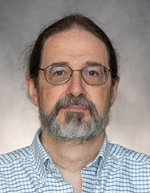 Roy A. Briere合作论文数Department of Physics, Mellon College of Science, Carnegie Mellon University699
 Diego Bettoni合作论文数Laboratori Nazionali di Legnar, INFN698Marc Pelizäus合作论文数University of Hawaii698
 Kenkichi Miyabayashi (宮林謙吉)合作论文数Faculty Division of Natural Sciences, Nara Women's University;Institute of Particle and Nuclear Studies, High Energy Accelerator Research Organization;Department of Physics, Nara Women's University691Bračko M.合作论文数690R. E. Mitchell合作论文数Indiana University690
 Ichiro Adachi (足立一郎)合作论文数Institute of Particle and Nuclear Studies, High Energy Accelerator Research Organization688
 Katsumi Senyo (千代勝実)合作论文数Institute of Arts and Sciences, Yamagata University681Wei Shan合作论文数680Dmitri Liventsev合作论文数Department of Physics and Astronomy, College of Liberal Arts and Sciences, Wayne State University680stefano spataro合作论文数678
 Leo Piilonen合作论文数Department of Physics, College of Science, Virginia Polytechnic Institute and State University678Pavel Krokovny合作论文数Novosibirsk State University675
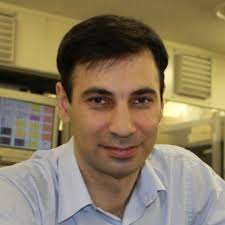 Tagir Aushev合作论文数Moscow Institute of Physics and Technology675
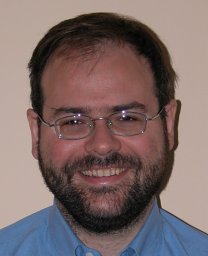 Marina Maggiora合作论文数Turin U673Andrzej Bożek合作论文数Department of Leptonic Interactions, Institute of Nuclear Physics672K. Chilikin合作论文数667S. Marcello合作论文数666
 Vladimir Savinov合作论文数Department of Physics & Astronomy, University of Pittsburgh;The Department of Quantum Reality, University of Pittsburgh666
 Sathyakama Sandilya合作论文数Tata Institute of Fundamental Research, Tata Institute of Fundamental Research665
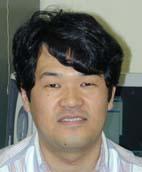 Ryosuke Itoh (伊藤領介)合作论文数Institute of Particle and Nuclear Studies, High Energy Accelerator Research Organization664




