Using data samples of 983.0 fb−1 and 427.9 fb−1 accumulated with the Belle and Belle II detectors operating at the KEKB and SuperKEKB asymmetric-energy e+e− colliders, singly Cabibbo-suppressed decays Ξ_c^+→ pK_S^0 , Ξ_c^+→Λπ^+ , and Ξ_c^+→Σ^0π^+ are observed for the first time. The ratios of branching fractions of Ξ_c^+→ pK_S^0 , Ξ_c^+→Λπ^+ , and Ξ_c^+→Σ^0π^+ relative to that of Ξ_c^+→Ξ^-π^+π^+ are measured to be [ ℬ(Ξ_c^+→ pK_S^0)/ℬ(Ξ_c^+→Ξ^-π^+π^+)=(2.47± 0.16± 0.07)%,; ℬ(Ξ_c^+→Λπ^+)/ℬ(Ξ_c^+→Ξ^-π^+π^+)=(1.56± 0.14± 0.09)%,; ℬ(Ξ_c^+→Σ^0π^+)/ℬ(Ξ_c^+→Ξ^-π^+π^+)=(4.13± 0.26± 0.22)%. ] Multiplying these values by the branching fraction of the normalization channel, ℬ(Ξ_c^+→Ξ^-π^+π^+)=(2.9± 1.3)% , the absolute branching fractions are determined to be [ ℬ(Ξ_c^+→ pK_S^0)=(7.16± 0.46± 0.20± 3.21)×10^-4,; ℬ(Ξ_c^+→Λπ^+)=(4.52± 0.41± 0.26± 2.03)×10^-4,; ℬ(Ξ_c^+→Σ^0π^+)=(1.20± 0.08± 0.07± 0.54)×10^-3. ] The first and second uncertainties above are statistical and systematic, respectively, while the third ones arise from the uncertainty in ℬ(Ξ_c^+→Ξ^-π^+π^+) .
Using the data samples of 102 million $\Upsilon(1S)$ and 158 million $\Upsilon(2S)$ events collected by the Belle detector, we search for a pentaquark state in the $pJ/\psi$ final state from $\Upsilon(1,2S)$ inclusive decays. Here, the charge-conjugate $\bar{p}J/\psi$ is included. We observe clear $pJ/\psi$ production in $\Upsilon(1,2S)$ decays and measure the branching fractions to be $\mathcal{B}[\Upsilon(1S) \to pJ/\psi + anything] = [4.27 \pm 0.16(stat.) \pm 0.20(syst.)] \times 10^{-5}$ and $\mathcal{B}[\Upsilon(2S) \to pJ/\psi + anything] = [3.59 \pm 0.14(stat.) \pm 0.16(syst.)] \times 10^{-5}$. We also measure the cross section of inclusive $pJ/\psi$ production in $e^+e^-$ annihilation to be $\sigma(e^+e^- \to pJ/\psi + anything) = [57.5 \pm 2.1 (stat.) \pm 2.5(syst.)]$~fb at $\sqrt{s} = 10.52~\hbox{GeV}$ using an 89.5~fb$^{-1}$ continuum data sample. There is no significant $P_c(4312)^+$, $P_c(4440)^+$ or $P_c(4457)^+$ signal found in the $pJ/\psi$ final states in $\Upsilon(1,2S)$ inclusive decays. We determine the upper limits of $\mathcal{B}[\Upsilon(1,2S)\to P_c^{+} + anything] \cdot \mathcal{B}(P_c^{+}\to pJ/\psi)$ to be at the $10^{-6}$ level.
We measure the time-integrated CP asymmetry in D-0 -> (KSKS0)-K-0 decays reconstructed in e(+)e(-) -> c (c) over bar events collected by the Belle and Belle II experiments. The corresponding data samples have integrated luminosities of 980 and 428 fb(-1), respectively. The D-0 decays are required to originate from the D*(+) -> D-0 pi(+) decay, which determines the charm flavor at production time. A control sample of D-0 -> K+K- decays is used to correct for production and detection asymmetries. The result, (-1.4 +/- 1.3(stat) +/- 0.1(syst))%, is consistent with previous determinations and with CP symmetry.
We present measurements of B → K*(892)γ decays using 365 fb−1 of data collected from 2019 to 2022 by the Belle II experiment at the SuperKEKB asymmetric-energy e+e− collider. The data sample contains (387 ± 6) × 106 Υ(4S) events. We measure branching fractions ( ℬ ) and CP asymmetries ( 𝒜_CP ) for both B0 → K*0γ and B+ → K*+γ decays. The difference in CP asymmetries ( Δ𝒜_CP ) and the isospin asymmetry (∆0+) between these neutral and charged channels are also measured. We obtain the following branching fractions and CP asymmetries: ℬ(B^0→K^*0γ)=(4.14± 0.10± 0.11)×10^-5 , ℬ(B^+→K^*+γ)=(4.04±0.13_-0.15^+0.13)×10^-5 , 𝒜_CP(B^0→K^*0γ)=(-3.3± 2.3± 0.4)% , and Δ𝒜_CP(B^+→K^*+γ)=(-0.7± 2.9± 0.5)% . The measured difference in CP asymmetries is Δ𝒜_CP=(+2.6±3.8± 0.6)% , and the measured isospin asymmetry is ∆0+ = (+4.8 ± 2.0 ± 1.8)
We perform the first search for CP violation in D_(s)^+→K_S^0K^-π^+π^+ decays. We use a combined data set from the Belle and Belle II experiments, which study e+e− collisions at center-of-mass energies at or near the Υ(4S) resonance. We use 980 fb−1 of data from Belle and 428 fb−1 of data from Belle II. We measure six CP-violating asymmetries that are based on triple products and quadruple products of the momenta of final-state particles, and also the particles’ helicity angles. We obtain a precision at the level of 0.5 D^+→K_S^0K^-π^+π^+ decays, and better than 0.3 D_s^+→K_S^0K^-π^+π^+ decays. No evidence of CP violation is found. Our results for the triple-product asymmetries are the most precise to date for singly-Cabibbo-suppressed D+ decays. Our results for the other asymmetries are the first such measurements performed for charm decays.
We present measurements of B+ -> rho(+) gamma and B-0 -> rho(0) gamma. decays using a combined data sample of 772 x 10(6) B (B) over bar pairs collected by the Belle experiment and 387 x 10(6) B (B) over bar pairs collected by the Belle II experiment in e(+) e(-) collisions at the Upsilon(4S) resonance. After an optimized selection, a simultaneous fit to the Belle and Belle II datasets yields 114 +/- 12 B+ -> rho(+) gamma. and 99 +/- 12 B-0 -> rho(0) gamma decays. The measured branching fractions are (13.1(-1.9-1.2)(+2.0+1.3)) x 10(-7) and (7.6 +/- 1.3(-0.8)(+1.0)) x 10(-7) for B+ -> rho(+) gamma. and B-0 -> rho(0) gamma. decays, respectively, where the first uncertainty is statistical and the second is systematic. We also measure the isospin asymmetry A(I)(B -> rho gamma) = (10.9(-11.7-7.3)(+11.2+7.8))% and the direct CP asymmetry A(CP)(B+ -> rho(+) gamma) = (-8.2 +/- 15.2(-1.3)(+2.0))%.
We present a measurement of the ratio of partial branching fractions of the semileptonic inclusive decays, B-* Xul nu to B-* Xcl nu, where l 1/4 (e; mu), using the full Belle sample of 772 x 106 BB pairs collected at the Y(4S) resonance. The identification of inclusive B-* Xul nu decays is difficult due to the abundance of Cabibbo-Kobayashi-Maskawa-favored B-* Xcl nu events, which share a similar event topology. To minimize dependence on the modeling of these channels, a data-driven description of B-* Xcl nu is employed. The ratio is measured via a two-dimensional fit to the squared four-momentum transfer to the lepton pair, and the charged lepton energy in the B meson rest frame, where the latter must be larger than 1 GeV, covering approximately 86% and 78% of the B-* Xul nu and B-* Xcl nu phase space, respectively. We find oB(B-* Xul nu)/oB(B-* Xcl nu) 1/4 (1.99 +/- 0.17stat +/- 0.16syst) x 10-2, where the uncertainties are statistical and systematic, respectively. We extract jVubj/jVcbj using two theoretical calculations for the partial decay rate of B-* Xul nu, finding (jVubj/jVcbj)BLNP 1/4 (9.81 +/- 0.42stat +/- 0.38syst +/- 0.51or(B-*Xul nu) +/- 0.20or(B-*Xcl nu)) x 10-2 and (jVubj/jVcbj)GGOU 1/4 (10.06 +/- 0.43stat +/- 0.39syst +/- 0.23or(B-*Xul nu) +/- 0.20or(B-*Xcl nu)) x 10-2, where the third and fourth uncertainties are from the partial decay rates of B-* Xul nu and B-* Xcl nu, respectively. In addition, we report the partial branching fractions separately for charged and neutral B meson decays, and for electron and muon decay channels. We place a limit on isospin breaking in B-* Xul nu decays, and find no indication of lepton flavor universality violation in either the charmed or charmless mode. Furthermore, we unfold the B-* Xul nu and B-* Xcl nu yields and report the differential ratio in lepton energy and four-momentum transfer squared.
We present a measurement of the branching fraction and time-dependent charge-parity (CP) decay-rate asymmetries in B0→J/ψπ0 decays. The data sample was collected with the Belle II detector at the SuperKEKB asymmetric e+e− collider in 2019–2022 and contains (387±6)×106 BB¯ meson pairs from ϒ(4S) decays. We reconstruct 392±24 signal decays and fit the CP parameters from the distribution of the proper-decay-time difference of the two B mesons. We measure the branching fraction to be (B0→J/ψπ0)=(2.00±0.12±0.09)×10−5 and the direct and mixing-induced CP asymmetries to be CCP=0.13±0.12±0.03 and SCP=−0.88±0.17±0.03, respectively, where the first uncertainties are statistical and the second are systematic. We observe mixing-induced CP violation with a significance of 5.0 standard deviations for the first time in this mode. Published by the American Physical Society 2025
We report measurements of time-dependent CP asymmetries in B^{0}→K_{S}^{0}π^{0}γ decays based on a data sample of (388±6)×10^{6} BB[over ¯] events collected at the ϒ(4S) resonance with the Belle II detector. The Belle II experiment operates at the SuperKEKB asymmetric-energy e^{+}e^{-} collider. We measure decay-time distributions to determine CP -violating parameters S and C. We determine these parameters for two ranges of K_{S}^{0}π^{0} invariant mass: m(K_{S}^{0}π^{0})∈(0.8,1.0) GeV/c^{2}, which is dominated by B^{0}→K^{*0}(→K_{S}^{0}π^{0})γ decays, and a complementary region m(K_{S}^{0}π^{0})∈(0.6,0.8)∪(1.0,1.8) GeV/c^{2}. Our results have improved precision as compared to previous measurements and are consistent with theory predictions.
We have designed and commissioned a new readout board to detect photosensor signals from gas-bubbler panels to continuously monitor the gas flow through the resistive plate chambers of the K_L^0 and muon detector of Belle II. The gas flow measurements have been integrated into Belle II's alarm system. The bubbler-monitoring system was first employed during the February 2024 to July 2024 Belle II data-taking period.
We present measurements of the branching fractions of eight B^0→ D^(*)+ K^- K^(*)0_(S), B^-→ D^(*)0 K^- K^(*)0_(S) decay channels. The results are based on data from SuperKEKB electron-positron collisions at the Υ(4S) resonance collected with the Belle II detector, corresponding to an integrated luminosity of 362 fb^-1. The event yields are extracted from fits to the distributions of the difference between expected and observed B meson energy, and are efficiency-corrected as a function of m(K^-K^(*)0_(S)) and m(D^(*)K^(*)0_(S)) in order to avoid dependence on the decay model. These results include the first observation of B^0→ D^+K^-K_S^0, B^-→ D^*0K^-K_S^0, and B^0→ D^*+K^-K_S^0 decays and a significant improvement in the precision of the other channels compared to previous measurements. The helicity-angle distributions and the invariant mass distributions of the K^- K^(*)0_(S) systems are compatible with quasi-two-body decays via a resonant transition with spin-parity J^P=1^- for the K^-K_S^0 systems and J^P= 1^+ for the K^-K^*0 systems. We also present measurements of the branching fractions of four B^0→ D^(*)+ D_s^-, B^-→ D^(*)0 D_s^- decay channels with a precision compatible to the current world averages.
We report on a search for a resonance X decaying to a pair of muons in e+e−→μ+μ−X events in the 0.212–9.000 GeV/c2 mass range, using 178 fb−1 of data collected by the Belle II experiment at the SuperKEKB collider at a center of mass energy of 10.58 GeV. The analysis probes two different models of X beyond the standard model: a Z′ vector boson in the Lμ−Lτ model and a muonphilic scalar. We observe no evidence for a signal and set exclusion limits at the 90% confidence level on the products of cross section and branching fraction for these processes, ranging from 0.046 fb to 0.97 fb for the Lμ−Lτ model and from 0.055 fb to 1.3 fb for the muonphilic scalar model. For masses below 6 GeV/c2, the corresponding constraints on the couplings of these processes to the standard model range from 0.0008 to 0.039 for the Lμ−Lτ model and from 0.0018 to 0.040 for the muonphilic scalar model. These are the first constraints on the muonphilic scalar from a dedicated search. Published by the American Physical Society 2024
We search for the e(+) e(-) -> eta(b)(1S)omega and e(+) e(-) -> chi(b0)(1P)omega processes at a center-of-mass energy of 10.745 GeV, which is close to the peak of the Upsilon(10753) state. We use data collected by the Belle II experiment during a special run, corresponding to an integrated luminosity of 9.8 fb(-1). We reconstruct omega -> pi(+) pi(-) pi(0) decays and use the. meson's recoil mass to search for the signals. We do not find evidence for either process, and set upper limits on the corresponding Born-level cross sections of 2.5 pb and 7.8 pb, respectively, at the 90% confidence level. The chi(b0)(1P)omega limit is the result of a combination of this analysis and a previous search using full reconstruction.
We measure the tau-to-light-lepton ratio of inclusive B-meson branching fractions R ( X tau= l ) equivalent to B ( B-* X tau nu ) = B ( B-* X l nu ) , where l indicates an electron or muon, and thereby test the universality of charged-current weak interactions. We select events that have one fully reconstructed B meson and a charged lepton candidate from 189 fb-1 - 1 of electron-positron collision data collected with the Belle II detector. We find R ( X tau= l ) = 0.228 + 0.016(stat) ( stat ) + 0.036(syst), ( syst ) , in agreement with standard-model expectations. This is the first direct measurement of R ( X tau= l ) .
Abstract We report results from a study of B±→ DK± decays followed by D decaying to the CP-even final state K+K− and CP-odd final state $$ {K}_S^0{\pi}^0 $$ K S 0 π 0 , where D is an admixture of D0 and $$ {\overline{D}}^0 $$ D ¯ 0 states. These decays are sensitive to the Cabibbo-Kobayashi-Maskawa unitarity-triangle angle ϕ3. The results are based on a combined analysis of the final data set of 772 × 106$$ B\overline{B} $$ B B ¯ pairs collected by the Belle experiment and a data set of 198 × 106$$ B\overline{B} $$ B B ¯ pairs collected by the Belle II experiment, both in electron-positron collisions at the Υ(4S) resonance. We measure the CP asymmetries to be $$ \mathcal{A} $$ A CP+ = (+12.5 ± 5.8 ± 1.4)% and $$ \mathcal{A} $$ A CP− = (−16.7 ± 5.7 ± 0.6)%, and the ratios of branching fractions to be $$ \mathcal{R} $$ R CP+ = 1.164 ± 0.081 ± 0.036 and $$ \mathcal{R} $$ R CP− = 1.151 ± 0.074 ± 0.019. The first contribution to the uncertainties is statistical, and the second is systematic. The asymmetries $$ \mathcal{A} $$ A CP+ and $$ \mathcal{A} $$ A CP− have similar magnitudes and opposite signs; their difference corresponds to 3.5 standard deviations. From these values we calculate 68.3% confidence intervals of (8.5° < ϕ3 < 16.5°) or (84.5° < ϕ3 < 95.5°) or (163.3° < ϕ3 < 171.5°) and 0.321 < rB < 0.465.
We report the first evidence for the h_b(2P) →Υ(1S)η transition with a significance of 3.5 standard deviations. The decay branching fraction is measured to be ℬ[h_b(2P) →Υ(1S)η]=(7.1 ^+3.7 _-3.2± 0.8)×10^-3, which is noticeably smaller than expected. We also set upper limits on π^0 transitions of ℬ[h_b(2P) →Υ(1S)π^0] < 1.8×10^-3, and ℬ[h_b(1P)→Υ(1S)π^0] < 1.8×10^-3, at the 90% confidence level. These results are obtained with a 131.4 fb^-1 data sample collected near the Υ(5S) resonance with the Belle detector at the KEKB asymmetric-energy e^+e^- collider.
Using the full data sample of 980 fb−1 collected with the Belle detector at the KEKB asymmetric energy electron-positron collider, we report the results of the first search for the rare semileptonic decays Ξc0→Ξ0ℓ+ℓ− (ℓ=e or μ). No significant signals are observed in the Ξ0ℓ+ℓ− invariant-mass distributions. Taking the decay Ξc0→Ξ−π+ as the normalization mode, we report 90% credibility upper limits on the branching fraction ratios B(Ξc0→Ξ0e+e−)/B(Ξc0→Ξ−π+)<6.7×10−3 and B(Ξc0→Ξ0μ+μ−)/B(Ξc0→Ξ−π+)<4.3×10−3 based on the phase-space assumption for signal decays. The 90% credibility upper limits on the absolute branching fractions of B(Ξc0→Ξ0e+e−) and B(Ξc0→Ξ0μ+μ−) are found to be 9.9×10⁻⁵ and 6.5×10⁻⁵, respectively. Published by the American Physical Society 2024
We report measurements of the e+e− → BB , BB^∗ , and B^∗B^∗ cross sections at four energies, 10653, 10701, 10746 and 10805 MeV, using data collected by the Belle II experiment. We reconstruct one B meson in a large number of hadronic final states and use its momentum to identify the production process. In the first 2 – 5 MeV above B^∗B^∗ threshold, the e+e− → B^∗B^∗ cross section increases rapidly. This may indicate the presence of a pole close to the threshold.
We present GFlaT, a new algorithm that uses a graph-neural-network to determine the flavor of neutral $B$ mesons produced in $\Upsilon(4S)$ decays. It improves previous algorithms by using the information from all charged final-state particles and the relations between them. We evaluate its performance using $B$ decays to flavor-specific hadronic final states reconstructed in a 362 $\text{fb}^{-1}$ sample of electron-positron collisions collected at the $\Upsilon(4S)$ resonance with the Belle II detector at the SuperKEKB collider. We achieve an effective tagging efficiency of $(37.40 \pm 0.43 \pm 0.36) \%$, where the first uncertainty is statistical and the second systematic, which is $18\%$ better than the previous Belle II algorithm. Demonstrating the algorithm, we use $B^{0}\to J/\psi K^0_\text{S}$ decays to measure the mixing-induced and direct $CP$ violation parameters, $S = (0.724 \pm 0.035 \pm 0.009)$ and $C = (-0.035 \pm 0.026 \pm 0.029)$.
We report a measurement of decay-time-dependent charge-parity (CP) asymmetries in B0→KS0KS0KS0 decays. We use 387×106 BB¯ pairs collected at the ϒ(4S) resonance with the Belle II detector at the SuperKEKB asymmetric-energy electron-positron collider. We reconstruct 220 signal events and extract the CP-violating parameters S and C from a fit to the distribution of the decay-time difference between the two B mesons. The resulting confidence region is consistent with previous measurements in B0→KS0KS0KS0 and B0→(cc¯)K0 decays and with predictions based on the standard model. Published by the American Physical Society 2024
 Hiroaki Aihara (相原博昭)合作论文数Kavli Institute for The Physics and Mathematics of the Universe, Department of Physics, School of Science, The University of Tokyo1235
 Thomas E. Browder合作论文数University of Hawaii1215
 Byung Gu Cheon合作论文数Department of Physics, College of Natural Sciences, Hanyang University1160
 Hisaki Hayashii合作论文数Department of Physics, Nara Women's University;Faculty of Science, Nara Women's University1153
 Dmitri Liventsev合作论文数Department of Physics and Astronomy, College of Liberal Arts and Sciences, Wayne State University1105
 Katsumi Senyo (千代勝実)合作论文数Institute of Arts and Sciences, Yamagata University1096Y.-J. Kwon合作论文数1089Andrzej Bożek合作论文数Department of Leptonic Interactions, Institute of Nuclear Physics1081
 Ryosuke Itoh (伊藤領介)合作论文数Institute of Particle and Nuclear Studies, High Energy Accelerator Research Organization1081
 Kenji Inami (居波賢二)合作论文数Department of Physics, Graduate School of Science, Nagoya University;High Energy Accelerator Research Organization1076Shoji Uno (宇野彰二)合作论文数Institute of Particle and Nuclear Studies, High Energy Accelerator Research Organization1076
 Tagir Aushev合作论文数Moscow Institute of Physics and Technology1073
 Martin Sevior合作论文数School of Physics, Faculty of Science, The University of Melbourne1068
 Eunil Won合作论文数Department of Physics, Korea University1061Bračko M.合作论文数1049
 Ichiro Adachi (足立一郎)合作论文数Institute of Particle and Nuclear Studies, High Energy Accelerator Research Organization1049
 Kenkichi Miyabayashi (宮林謙吉)合作论文数Faculty Division of Natural Sciences, Nara Women's University;Institute of Particle and Nuclear Studies, High Energy Accelerator Research Organization;Department of Physics, Nara Women's University1047Starič M.合作论文数1043
 Ishikawa Akira (石川朗)合作论文数Kobe University1042S. Nishida合作论文数1035Victor Zhilich合作论文数Budker Institute of Nuclear Physics1021Y. Sakai合作论文数1009
 Mikihiko Nakao (中尾幹彦)合作论文数Institute of Particle and Nuclear Studies, High Energy Accelerator Research Organization1004Pavel Krokovny合作论文数Novosibirsk State University998
 Pavel Pakhlov合作论文数Department of Physics of Elemental Particles, Moscow Institute of Physics and Technology;Department of Experimental Nuclear Physics and Cosmophysics, MEPhI;Department of Discrete Mathematics, MIEM HSE;School of Electronic Engineering, HSE Tikhonov Moscow Institute of Electronics and Mathematics991
 Kay Kinoshita合作论文数Department of Physics, University of Cincinnati989T. Sumiyoshi合作论文数Tokyo Metropolitan University963H. Miyata合作论文数963A. Kuzmin合作论文数Numerical simulations of multiphase flows in microchannels943Unno Y.合作论文数936
 Olivier Schneider合作论文数High Energy Physics Laboratory, Institute of Physics, School of Basic Sciences, Ecole Polytechnique Fédérale De Lausanne935
 Toru Iijima (飯嶋徹)合作论文数Tau-Lepton Data Analytics Laboratory, Kobayashi-Maskawa Institute, Nagoya University;Division of Experimental Studies, Kobayashi-Maskawa Institute, Nagoya University933
 Satoru Ogawa (小川了)合作论文数Department of Physics, Faculty of Science, Toho University928Timofey Uglov合作论文数National Research University Higher School of Economics922Nikolay I. Gabyshev合作论文数Budker Institute of Nuclear Physics909J. G. Shiu合作论文数906
 Gary Varner合作论文数University of Hawaii898C. H. Wang合作论文数890Roman Mizuk合作论文数Tel Aviv University875Y. Choi合作论文数870
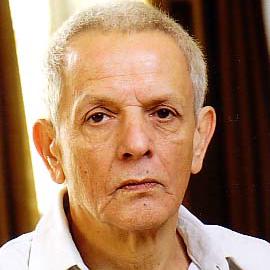 Andrew Bakich合作论文数School of Physics, University of Sydney854G. Pakhlova合作论文数847Samo Korpar合作论文数829K. Trabelsi合作论文数823Z. Natkaniec合作论文数822Iwasaki Y.合作论文数804A. M. Chen合作论文数797Js Lange合作论文数793S. Okuno合作论文数779




