Deploying LLM agents at scale typically requires choosing between quality and cost. Existing cost-reduction approaches fail to preserve agility: the ability to iterate rapidly without human time bottlenecks. Prompt engineering is brittle and slows iteration, while fine-tuning requires multi-day training and commitment to fixed designs; both are impractical for iterative workflows and time-sensitive batch jobs. We demonstrate that established inference-time techniques–dynamic in-context learning and self-consistency cascades–can be leveraged to shift the cost-accuracy Pareto frontier while preserving agility. Practitioners run the teacher on a small task subset to collect demonstrations, then immediately deploy a cheaper student on the remainder. At each step, the system retrieves relevant teacher demonstrations as in-context examples. When multiple student samples agree, we proceed; when they diverge, we fall back to the teacher. This requires no prompt engineering or training. On ALFWorld, we match teacher accuracy at 2.5x lower cost (0.059 to 0.024 per episode). On AppWorld, we achieve 3.5x cost reduction while recovering 79
How to frame (or crop) a photo often depends on the image subject and its context; e.g., a human portrait. Recent works have defined the subject-aware image cropping task as a nuanced and practical version of image cropping. We propose a weakly-supervised approach (GenCrop) to learn what makes a high-quality, subject-aware crop from professional stock images. Unlike supervised prior work, GenCrop requires no new manual annotations beyond the existing stock image collection. The key challenge in learning from this data, however, is that the images are already cropped and we do not know what regions were removed. Our insight is to combine a library of stock images with a modern, pre-trained text-to-image diffusion model. The stock image collection provides diversity, and its images serve as pseudo-labels for a good crop. The text-image diffusion model is used to out-paint (i.e., outward inpainting) realistic uncropped images. Using this procedure, we are able to automatically generate a large dataset of cropped-uncropped training pairs to train a cropping model. Despite being weakly-supervised, GenCrop is competitive with state-of-the-art supervised methods and significantly better than comparable weakly-supervised baselines on quantitative and qualitative evaluation metrics.
We introduce the task of spotting temporally precise, fine-grained events in video (detecting the precise moment in time events occur). Precise spotting requires models to reason globally about the full-time scale of actions and locally to identify subtle frame-to-frame appearance and motion differences that identify events during these actions. Surprisingly, we find that top performing solutions to prior video understanding tasks such as action detection and segmentation do not simultaneously meet both requirements. In response, we propose E2E-Spot, a compact, end-to-end model that performs well on the precise spotting task and can be trained quickly on a single GPU. We demonstrate that E2E-Spot significantly outperforms recent baselines adapted from the video action detection, segmentation, and spotting literature to the precise spotting task. Finally, we contribute new annotations and splits to several fine-grained sports action datasets to make these datasets suitable for future work on precise spotting.
Cable (TV) news reaches millions of US households each day. News stakeholders such as communications researchers, journalists, and media monitoring organizations are interested in the visual content of cable news, especially who is on-screen. Manual analysis, however, is labor intensive and limits the size of prior studies. We conduct a large-scale, quantitative analysis of the faces in a decade of cable news video from the top three US cable news networks (CNN, FOX, and MSNBC), totaling 244,038 hours between January 2010 and July 2019. Our work uses technologies such as automatic face and gender recognition to measure the "screen time" of faces and to enable visual analysis and exploration at scale. Our analysis method gives insight into a broad set of socially relevant topics. For instance, male-presenting faces receive much more screen time than female-presenting faces (2.4x in 2010, 1.9x in 2019). To make our dataset and annotations accessible, we release a public interface at https://tvnews.stanford.edu that allows the general public to write queries and to perform their own analyses.
Human pose is a useful feature for fine-grained sports action understanding. However, pose estimators are often unreliable when run on sports video due to domain shift and factors such as motion blur and occlusions. This leads to poor accuracy when downstream tasks, such as action recognition, depend on pose. End-to-end learning circumvents pose, but requires more labels to generalize.We introduce Video Pose Distillation (VPD), a weakly-supervised technique to learn features for new video domains, such as individual sports that challenge pose estimation. Under VPD, a student network learns to extract robust pose features from RGB frames in the sports video, such that, whenever pose is considered reliable, the features match the output of a pretrained teacher pose detector. Our strategy retains the best of both pose and end-to-end worlds, exploiting the rich visual patterns in raw video frames, while learning features that agree with the athletes’ pose and motion in the target video domain to avoid over-fitting to patterns unrelated to athletes’ motion.VPD features improve performance on few-shot, fine-grained action recognition, retrieval, and detection tasks in four real-world sports video datasets, without requiring additional ground-truth pose annotations.
Cable TV news reaches millions of U.S. households each day, meaning that decisions about who appears on the news and what stories get covered can profoundly influence public opinion and discourse. We analyze a data set of nearly 24/7 video, audio, and text captions from three U.S. cable TV networks (CNN, FOX, and MSNBC) from January 2010 to July 2019. Using machine learning tools, we detect faces in 244,038 hours of video, label each face's presented gender, identify prominent public figures, and align text captions to audio. We use these labels to perform screen time and word frequency analyses. For example, we find that overall, much more screen time is given to male-presenting individuals than to female-presenting individuals (2.4x in 2010 and 1.9x in 2019). We present an interactive web-based tool, accessible at https://tvnews.stanford.edu, that allows the general public to perform their own analyses on the full cable TV news data set.
Many real-world video analysis applications require the ability to identify domain-speciic events, such as interviews and commercials in TV news broadcasts, or action sequences in ilm. Unfortunately, pre-trained models to detect all the events of interest in video may not exist, and training new models from scratch can be costly and labor-intensive. In this paper, we explore the utility of specifying new events in video in a more traditional manner: by writing queries that compose the outputs of existing, pre-trained models. To write these queries, we have developed Rekall, a library that exposes a data model and programming model for compositional video event speciication. Rekall represents video annotations from diferent sources (object detectors, transcripts, etc.) as spatiotemporal labels associated with continuous volumes of spacetime in a video, and provides operators for composing labels into queries that model new video events. We demonstrate the use of Rekall in analyzing video from cable TV news broadcasts and ilms. In these eforts, analysts were able to quickly (in a few hours to a day) author queries to detect new events. These queries were often on par with or more accurate than learned approaches (6.5 F1 points more accurate on average).
Many real-world video analysis applications require the ability to identify domain-specific events in video, such as interviews and commercials in TV news broadcasts, or action sequences in film. Unfortunately, pre-trained models to detect all the events of interest in video may not exist, and training new models from scratch can be costly and labor-intensive. In this paper, we explore the utility of specifying new events in video in a more traditional manner: by writing queries that compose outputs of existing, pre-trained models. To write these queries, we have developed Rekall, a library that exposes a data model and programming model for compositional video event specification. Rekall represents video annotations from different sources (object detectors, transcripts, etc.) as spatiotemporal labels associated with continuous volumes of spacetime in a video, and provides operators for composing labels into queries that model new video events. We demonstrate the use of Rekall in analyzing video from cable TV news broadcasts, films, static-camera vehicular video streams, and commercial autonomous vehicle logs. In these efforts, domain experts were able to quickly (in a few hours to a day) author queries that enabled the accurate detection of new events (on par with, and in some cases much more accurate than, learned approaches) and to rapidly retrieve video clips for human-in-the-loop tasks such as video content curation and training data curation. Finally, in a user study, novice users of Rekall were able to author queries to retrieve new events in video given just one hour of query development time.
Careful resource monitoring is necessary to understand usage patterns and set conservation goals in an institutional setting. Sensor systems provide data to measure consumption and evaluate the effectiveness of active interventions. However, deploying sensing systems can be difficult when infrastructure support is limited. This paper describes the process of designing Tethys, a wireless water flow sensor that collects data at per-fixture granularity without dependence on existing infrastructure and trusted gateways. Rather than rely on electrical infrastructure, Tethys implements energy harvesting to allow for long term deployment. To avoid dependence on existing network infrastructure, Tethys crowdsources the data collection process to residents' smartphones acting as gateways. These gateways are untrusted and unreliable, so Tethys implements end-to-end reliability and security between the sensing device and a cloud backend. We present initial findings from a deployment in undergraduate residential halls. Our results demonstrate that Tethys can capture meaningful patterns in shower use. For instance, visible water conservation signs are statistically correlated with shorter mean shower length (p <; 0:05) and are a potential area for future studies.
The next generation of computing peripherals will be low-power ubiquitous computing devices such as door locks, smart watches, and heart rate monitors. Bluetooth Low Energy is a primary protocol for connecting such peripherals to mobile and gateway devices. Current operating system support for Bluetooth Low Energy forces peripherals into vertical application silos. As a result, simple, intuitive applications such as opening a door with a smart watch or simultaneously logging and viewing heart rate data are impossible. We present Beetle, a new hardware interface that virtualizes peripherals at the application layer, allowing safe access by multiple programs without requiring the operating system to understand hardware functionality, fine-grained access control to peripheral device resources, and transparent access to peripherals connected over the network. We describe a series of novel applications that are impossible with existing abstractions but simple to implement with Beetle.
Bluetooth Low Energy (BLE) powers a wide range of devices and peripherals including personal fitness trackers, smart clothing, locks, ovens, light bulbs, toys, etc. Today, these peripherals interact with a limited set of applications running on smartphones and gateways, in a one-to-one manner. Beetle, however, demonstrates the viability of BLE and Generic Attribute Profile (GATT) to support more sophisticated communication between networks of applications and peripherals. Using Beetle, we present a new data-plane for the home and personal Internet of Things (IoT); a policy language and enforcement layer in Beetle to showcase fine-grained and user understandable access control; and several distributed IoT configurations built from existing and prototype BLE peripherals and applications.
We describe Tethys, an energy-harvesting wireless water flow sensor that can monitor water use at a per-fixture level with the intention of associating water use with specific individuals. Tethys was motivated by recent efforts at Stanford University to reduce water use due to the California drought. Understanding how the university population uses water at per-person level can greatly influence policies and conservation approaches. Tethys uses Bluetooth Smart to both identify individuals as well as asynchronously upload data to the cloud for later analysis. We describe two challenges encountered in deploying Tethys: energy harvesting design and the mechanical considerations for high-pressure water at high temperatures.
We describe Tethys, an energy-harvesting wireless water flow sensor that can monitor water use at a per-fixture level with the intention of associating water use with specific individuals. Tethys was motivated by recent efforts at Stanford University to reduce water use due to the California drought. Understanding how the university population uses water at per-person level can greatly influence policies and conservation approaches. Tethys uses Bluetooth Smart to both identify individuals as well as asynchronously upload data to the cloud for later analysis. We describe two challenges encountered in deploying Tethys: energy harvesting design and the mechanical considerations for high-pressure water at high temperatures.
 Kayvon Fatahalian合作论文数Computer Science Department, Stanford University8
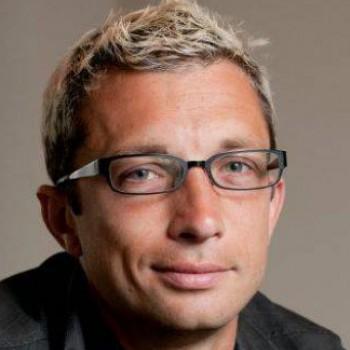 Philip Levis合作论文数Department of Electrical Engineering, Stanford University;Department of Computer Science, Stanford University;Kumu Networks5
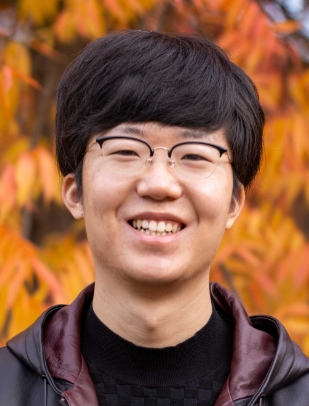 Haotian Zhang合作论文数Toronto AI Lab, NVIDIA5
 Dan Fu合作论文数Department of Computer Science, Stanford University4
 Will Crichton合作论文数Stanford University4
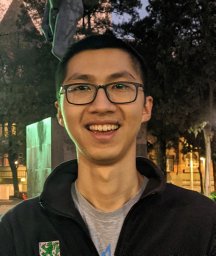 Xinwei Yao合作论文数Zhejiang University of Technology, Zhejiang University of Technology4
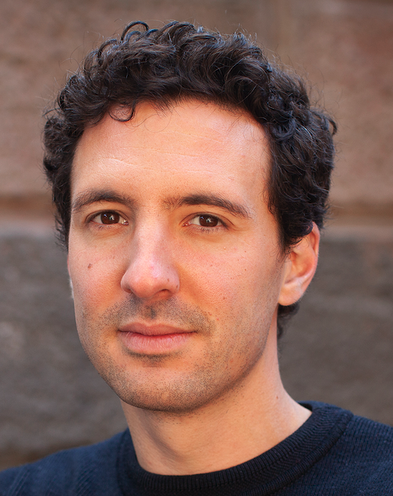 Michaël Gharbi合作论文数Reve4
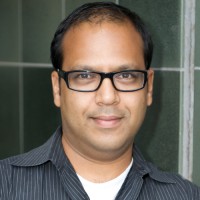 Maneesh Agrawala合作论文数Computer Science Department, Stanford University;Department of Electrical Engineering, Stanford University4
 Laurynas Riliskis合作论文数Department of Computer Science Electrical and Space Engineering, Luleå University of Technology4
 Holly Chiang合作论文数3
 Kevin Kiningham合作论文数Department of Electrical Engineering, Stanford University3
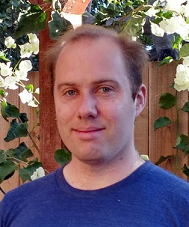 Matt Fisher合作论文数Adobe Research3
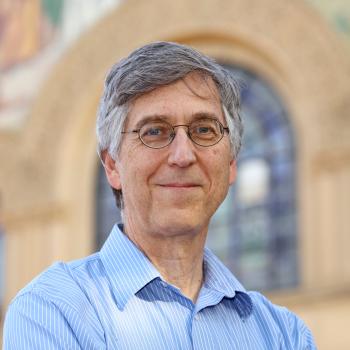 Mark Horowitz合作论文数Department of Electrical Engineering, Stanford University;Department of Computer Science, School of Engineering, Stanford University3Jiaqi Xue合作论文数2Geraldine Moriba合作论文数Brown Institute for Media Innovation2Ben Hannel合作论文数Stanford University2Jeremy Barenholtz合作论文数Stanford University2
 Jacob Ritchie合作论文数Stanford University2Michaela Murray合作论文数2
 Anh Truong合作论文数LAAS-CNRS, Université de Toulouse2
 Christopher Ré合作论文数Department of Computer Science, School of Engineering, Stanford University;Stanford Artificial Intelligence Laboratory, Stanford University2
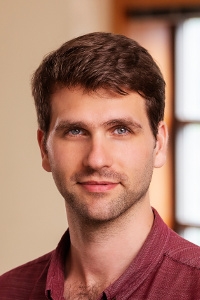 Amit Levy合作论文数Department of Computer Science, Princeton University;Memcachier2
 Avanika Narayan合作论文数Department of Computer Science, School of Engineering, Stanford University;Rox1
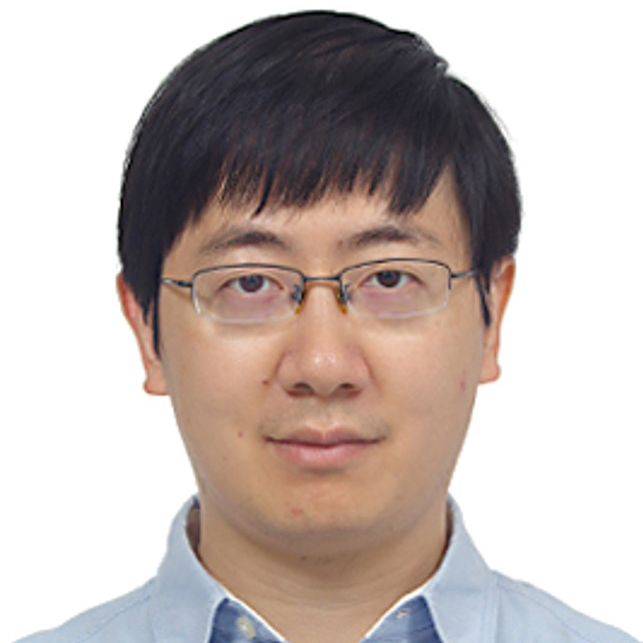 Lu Yuan合作论文数Meta1
 Keith Winstein合作论文数Department of Computer Science, School of Engineering, Stanford University;Department of Electrical Engineering, Stanford University1




