Flow matching models (FMs) have revolutionized text-to-image (T2I) generation, with reinforcement learning (RL) serving as a critical post-training strategy for alignment with reward objectives. In this research, we show that current RL pipelines for FMs suffer from two underappreciated yet important limitations: sample inefficiency due to insufficient generation diversity, and pronounced prompt overfitting, where models memorize specific training formulations and exhibit dramatic performance collapse when evaluated on semantically equivalent but stylistically varied prompts. We present PromptRL (Prompt Matters in RL for Flow-Based Image Generation), a framework that incorporates language models (LMs) as trainable prompt refinement agents directly within the flow-based RL optimization loop. This design yields two complementary benefits: rapid development of sophisticated prompt rewriting capabilities and, critically, a synergistic training regime that reshapes the optimization dynamics. PromptRL achieves state-of-the-art performance across multiple benchmarks, obtaining scores of 0.97 on GenEval, 0.98 on OCR accuracy, and 24.05 on PickScore. Furthermore, we validate the effectiveness of our RL approach on large-scale image editing models, improving the EditReward of FLUX.1-Kontext from 1.19 to 1.43 with only 0.06 million rollouts, surpassing Gemini 2.5 Flash Image (also known as Nano Banana), which scores 1.37, and achieving comparable performance with ReasonNet (1.44), which relied on fine-grained data annotations along with a complex multi-stage training. Our extensive experiments empirically demonstrate that PromptRL consistently achieves higher performance ceilings while requiring over 2$\times$ fewer rollouts compared to naive flow-only RL. Our code is available at https://github.com/G-U-N/UniRL.
Diffusion Transformers achieve strong image generation performance, but most operate in compressed latent spaces. Pixel-space diffusion avoids this information loss, yet existing approaches map each raw image patch to a single token, forcing one representation to handle both global communication and fine-grained details. We address this issue by proposing a new architecture, DuSPiT, a Dual-branch SubPatch Pixel Transformer. This model separates global structural reasoning from local appearance modeling. DuSPiT uses a compact base branch for efficient global reasoning and a parallel, high-capacity pixel branch, organized into subpatch groups, to preserve detailed appearance, with the two branches interacting through cross-attention. Our results show that DuSPiT generates images with richer details and stronger fine-grained structures, while also achieving a better quality–efficiency trade-off than prior pixel-space diffusion transformers.
Instruction-based video editing is commonly built on video-pretrained generative backbones: a video diffusion transformer is adapted, at considerable cost, to condition on a source video and an editing instruction. In this report we explore a different route and show that a strong instruction-based image editing model can edit videos by operating directly on video-VAE latents. Starting from Qwen-Image-Edit, we arrange the latent frames of a Wan 2.1 video VAE as tiles of one large virtual image, reuse the editor's image positional encoding for every tile, and bridge the two latent spaces with a pair of lightweight input/output projections warm-started from the editor's own patchify and unpatchify layers, so that at initialization a (static) video is embedded exactly as an image the model already understands. The whole system is then fine-tuned on the public Ditto-1M editing triplets, and a few denoising steps of Wan 2.2 serve as an optional temporal enhancer. We motivate the design with a chain of zero-training observations: the stock image editor already edits a video presented as a contact sheet; it is indifferent to whether the sheet's tokens come from one joint encode or from per-frame encodes stitched in latent space; and it even edits genuine video latents zero-shot to a clearly recognizable degree, leaving fine-tuning only a fidelity gap to close. Our results suggest that, despite the large investment in training video latent spaces, per-frame video latents remain close enough to the image domain that mature image editing priors transfer with minimal adaptation. Project Page: https://yunpeng1998.github.io/Qwen-Video-Edit-Page Code: https://github.com/yunpeng1998/Qwen-Video-Edit Model: https://huggingface.co/yunpeng1998/Qwen-Video-Edit
We present a novel method to differentiate integrals of discontinuous functions, which are common in inverse graphics, computer vision, and machine learning applications. Previous methods either require specialized routines to sample the discontinuous boundaries of predetermined primitives, or use reparameterization techniques that suffer from high variance. In contrast, our method handles general discontinuous functions, expressed as shader programs, without requiring manually specified boundary sampling routines. We achieve this through a program transformation that converts discontinuous functions into piecewise constant ones, enabling efficient boundary sampling through a novel segment snapping technique, and accurate derivatives at the boundary by simply comparing values on both sides of the discontinuity. Our method handles both explicit boundaries (polygons, ellipses, Bézier curves) and implicit ones (neural networks, noise-based functions, swept surfaces). We demonstrate that our system supports a wide range of applications, including painterly rendering, raster image fitting, constructive solid geometry, swept surfaces, mosaicing, and ray marching.
Deploying LLM agents at scale typically requires choosing between quality and cost. Existing cost-reduction approaches fail to preserve agility: the ability to iterate rapidly without human time bottlenecks. Prompt engineering is brittle and slows iteration, while fine-tuning requires multi-day training and commitment to fixed designs; both are impractical for iterative workflows and time-sensitive batch jobs. We demonstrate that established inference-time techniques–dynamic in-context learning and self-consistency cascades–can be leveraged to shift the cost-accuracy Pareto frontier while preserving agility. Practitioners run the teacher on a small task subset to collect demonstrations, then immediately deploy a cheaper student on the remainder. At each step, the system retrieves relevant teacher demonstrations as in-context examples. When multiple student samples agree, we proceed; when they diverge, we fall back to the teacher. This requires no prompt engineering or training. On ALFWorld, we match teacher accuracy at 2.5x lower cost (0.059 to 0.024 per episode). On AppWorld, we achieve 3.5x cost reduction while recovering 79
We propose a generative model that, given a coarsely edited image, synthesizes a photorealistic output that follows the prescribed layout. Our method transfers fine details from the original image and preserve the identity of its parts. Yet, it adapts it to the lighting and context defined by the new layout. Our key insight is that videos are a powerful source of supervision for this task: objects and camera motions provide many observations of how the world changes with viewpoint, lighting, and physical interactions. We construct an image dataset in which each sample is a pair of source and target frames extracted from the same video at randomly chosen time intervals. We warp the source frame toward the target using two motion models that mimic the expected test-time user edits. We supervise our model to translate the warped image into the ground truth, starting from a pretrained diffusion model. Our model design explicitly enables fine detail transfer from the source frame to the generated image, while closely following the user-specified layout. We show that by using simple segmentations and coarse 2D manipulations, we can synthesize a photorealistic edit faithful to the user’s input while addressing second-order effects like harmonizing the lighting and physical interactions between edited objects. Project page and code can be found at https://magic-fixup.github.io
We present UniRL-Zero, a unified reinforcement learning (RL) framework that boosts, multimodal language model understanding and reasoning, diffusion model multimedia generation, and their beneficial interaction capabilities within a unified model. Our work defines six scenarios for unified model reinforcement learning, providing systematic baselines for reinforcement learning of unified understanding and generation model. Our code is available at https://github.com/G-U-N/UniRL.
Recent approaches have shown promises distilling expensive diffusion models into efficient one-step generators. Amongst them, Distribution Matching Distillation (DMD) produces one-step generators that match their teacher in distribution, i.e., the distillation process does not enforce a one-to-one correspondence with the sampling trajectories of their teachers. However, to ensure stable training in practice, DMD requires an additional regression loss computed using a large set of noise--image pairs, generated by the teacher with many steps of a deterministic sampler. This is not only computationally expensive for large-scale text-to-image synthesis, but it also limits the student's quality, tying it too closely to the teacher's original sampling paths. We introduce DMD2, a set of techniques that lift this limitation and improve DMD training. First, we eliminate the regression loss and the need for expensive dataset construction. We show that the resulting instability is due to the "fake" critic not estimating the distribution of generated samples with sufficient accuracy and propose a two time-scale update rule as a remedy. Second, we integrate a GAN loss into the distillation procedure, discriminating between generated samples and real images. This lets us train the student model on real data, thus mitigating the imperfect "real" score estimation from the teacher model, and thereby enhancing quality. Third, we introduce a new training procedure that enables multi-step sampling in the student, and addresses the training--inference input mismatch of previous work, by simulating inference-time generator samples during training. Taken together, our improvements set new benchmarks in one-step image generation, with FID scores of 1.28 on ImageNet-64×64 and 8.35 on zero-shot COCO 2014, surpassing the original teacher despite a 500X reduction in inference cost. Further, we show our approach can generate megapixel images by distilling SDXL, demonstrating exceptional visual quality among few-step methods, and surpassing the teacher. We release our code and pretrained models.
Diffusion models have shown an impressive ability to model complex data distributions, with several key advantages over GANs, such as stable training, better coverage of the training distribution's modes, and the ability to solve inverse problems without extra training. However, most diffusion models learn the distribution of fixed-resolution images. We propose to learn the distribution of continuous images by training diffusion models on image neural fields, which can be rendered at any resolution, and show its advantages over fixed-resolution models. To achieve this, a key challenge is to obtain a latent space that represents photorealistic image neural fields. We propose a simple and effective method, inspired by several recent techniques but with key changes to make the image neural fields photorealistic. Our method can be used to convert existing latent diffusion autoencoders into image neural field autoencoders. We show that image neural field diffusion models can be trained using mixed-resolution image datasets, outperform fixed-resolution diffusion models followed by super-resolution models, and can solve inverse problems with conditions applied at different scales efficiently.
We introduce a novel diffusion transformer, LazyDiffusion, that generates partial image updates efficiently. Our approach targets interactive image editing applications in which, starting from a blank canvas or an image, a user specifies a sequence of localized image modifications using binary masks and text prompts. Our generator operates in two phases. First, a context encoder processes the current canvas and user mask to produce a compact global context tailored to the region to generate. Second, conditioned on this context, a diffusion-based transformer decoder synthesizes the masked pixels in a "lazy" fashion, i.e., it only generates the masked region. This contrasts with previous works that either regenerate the full canvas, wasting time and computation, or confine processing to a tight rectangular crop around the mask, ignoring the global image context altogether. Our decoder's runtime scales with the mask size, which is typically small, while our encoder introduces negligible overhead. We demonstrate that our approach is competitive with state-of-the-art inpainting methods in terms of quality and fidelity while providing a 10x speedup for typical user interactions, where the editing mask represents 10% of the image.
Diffusion models generate high-quality images but require dozens of forward passes. We introduce Distribution Matching Distillation (DMD), a procedure to transform a diffusion model into a one-step image generator with minimal impact on image quality. We enforce the one-step image generator match the diffusion model at distribution level, by minimizing an approximate KL divergence whose gradient can be expressed as the difference between 2 score functions, one of the target distribution and the other of the synthetic distribution being produced by our one-step generator. The score functions are parameterized as two diffusion models trained separately on each distribution. Combined with a simple regression loss matching the large-scale structure of the multi-step diffusion outputs, our method outperforms all published few-step diffusion approaches, reaching 2.62 FID on ImageNet 64x64 and 11.49 FID on zero-shot COCO-30k, comparable to Stable Diffusion but orders of magnitude faster. Utilizing FP16 inference, our model generates images at 20 FPS on modern hardware.
We present VecFusion, a new neural architecture that can generate vector fonts with varying topological structures and precise control point positions. Our approach is a cascaded diffusion model which consists of a raster diffusion model followed by a vector diffusion model. The raster model generates low-resolution, rasterized fonts with auxiliary control point information, capturing the global style and shape of the font, while the vector model synthesizes vector fonts conditioned on the low-resolution raster fonts from the first stage. To synthesize long and complex curves, our vector diffusion model uses a transformer architecture and a novel vector representation that enables the modeling of diverse vector geometry and the precise prediction of control points. Our experiments show that, in contrast to previous generative models for vector graphics, our new cascaded vector diffusion model generates higher quality vector fonts, with complex structures and diverse styles.
How to frame (or crop) a photo often depends on the image subject and its context; e.g., a human portrait. Recent works have defined the subject-aware image cropping task as a nuanced and practical version of image cropping. We propose a weakly-supervised approach (GenCrop) to learn what makes a high-quality, subject-aware crop from professional stock images. Unlike supervised prior work, GenCrop requires no new manual annotations beyond the existing stock image collection. The key challenge in learning from this data, however, is that the images are already cropped and we do not know what regions were removed. Our insight is to combine a library of stock images with a modern, pre-trained text-to-image diffusion model. The stock image collection provides diversity, and its images serve as pseudo-labels for a good crop. The text-image diffusion model is used to out-paint (i.e., outward inpainting) realistic uncropped images. Using this procedure, we are able to automatically generate a large dataset of cropped-uncropped training pairs to train a cropping model. Despite being weakly-supervised, GenCrop is competitive with state-of-the-art supervised methods and significantly better than comparable weakly-supervised baselines on quantitative and qualitative evaluation metrics.
Diffusion models have made significant advances in text-guided synthesis tasks. However, editing user-provided images remains challenging, as the high dimensional noise input space of diffusion models is not naturally suited for image inversion or spatial editing. In this work, we propose an image representation that promotes spatial editing of input images using a diffusion model. Concretely, we learn to encode an input into image elements that can faithfully reconstruct an input image. These elements can be intuitively edited by a user, and are decoded by a diffusion model into realistic images. We show the effectiveness of our representation on various image editing tasks, such as object resizing, rearrangement, dragging, de-occlusion, removal, variation, and image composition.
We introduce a self-supervised training strategy for burst super-resolution that only uses noisy low-resolution bursts during training. Our approach eliminates the need to carefully tune synthetic data simulation pipelines, which often do not match real-world image statistics. Compared to weakly-paired training strategies, which require noisy smartphone burst photos of static scenes, paired with a clean reference obtained from a tripod-mounted DSLR camera, our approach is more scalable, and avoids the color mismatch between the smartphone and DSLR. To achieve this, we propose a new self-supervised objective that uses a forward imaging model to recover a high-resolution image from aliased high frequencies in the burst. Our approach does not require any manual tuning of the forward model's parameters; we learn them from data. Furthermore, we show our training strategy is robust to dynamic scene motion in the burst, which enables training burst super-resolution models using in-the-wild data. Extensive experiments on real and synthetic data show that, despite only using noisy bursts during training, models trained with our self-supervised strategy match, and sometimes surpass, the quality of fully-supervised baselines trained with synthetic data or weakly-paired ground-truth. Finally, we show our training strategy is general using four different burst super-resolution architectures.
Can one inject new concepts into an already trained generative model, while respecting its existing structure and knowledge? We propose a new task - domain expansion - to address this. Given a pretrained generator and novel (but related) domains, we expand the generator to jointly model all domains, old and new, harmoniously. First, we note the generator contains a meaningful, pretrained latent space. Is it possible to minimally perturb this hard-earned representation, while maximally representing the new domains? Interestingly, we find that the latent space offers unused, "dormant" directions, which do not affect the output. This provides an opportunity: By "repurposing" these directions, we can represent new domains without perturbing the original representation. In fact, we find that pretrained generators have the capacity to add several - even hundreds - of new domains! Using our expansion method, one "expanded" model can supersede numerous domain-specific models, without expanding the model size. Additionally, a single expanded generator natively supports smooth transitions between domains, as well as composition of domains. Code and project page available here.
Learning-based image harmonization techniques are usually trained to undo synthetic random global transformations applied to a masked foreground in a single ground truth photo. This simulated data does not model many of the important appearance mismatches (illumination, object boundaries, etc.) between foreground and background in real composites, leading to models that do not generalize well and cannot model complex local changes. We propose a new semi-supervised training strategy that addresses this problem and lets us learn complex local appearance harmonization from unpaired real composites, where foreground and background come from different images. Our model is fully parametric. It uses RGB curves to correct the global colors and tone and a shading map to model local variations. Our method outperforms previous work on established benchmarks and real composites, as shown in a user study, and processes high-resolution images interactively. Code, and project page available at: https://kewang0622.github.io/sprih/
Compositing virtual objects into real background images requires one to carefully match the scene's camera parameters, surface geometry, textures, and lighting to obtain plausible renderings. Recent learning approaches have shown many scene properties can be estimated from images, resulting in robust automatic single-image compositing systems, but many challenges remain. In particular, interactions between real and synthetic shadows are not handled gracefully by existing methods, which typically assume a shadow-free background. As a result, they tend to generate double shadows when the synthetic object's cast shadow overlaps a background shadow, and ignore shadows from the background that should be cast onto the synthetic object. In this paper, we present a compositing method for outdoor scenes that addresses these issues and produces realistic cast shadows. This requires identifying existing shadows, including soft shadow boundaries, then reasoning about the ambiguity of unknown ground albedo and scene lighting to match the color and intensity of shaded areas. Using supervision from shadow removal and detection datasets, we propose a generative adversarial pipeline and improved composition equations that simultaneously handle both shadow interaction scenarios. We evaluate our method on challenging, real outdoor images from multiple distributions and datasets. Quantitative and qualitative comparisons show our approach produces more realistic results than existing alternatives. Our code, datasets, and trained models are publicly available at https://lvsn.github.io/shadowcompositing.
Method. We start with an unconditional pretrained generator, specifically StyleGAN [13]. We then make the generator condition on a one-hot vector, using the architecture proposed by Karras et al. [11]. This change involves adding a single MLP layer, whose input is the one-hot vector. Its output is concatenated to the random latent code and then fed to the generator. The class-conditioned generator is trained in a similar protocol to our method. The source domain uses class c = 0, which is analogous to the base subspace. Whenever the 0th class is sampled, we apply the original loss Lsrc and the memory replay regularization (See Sec. 3.3). Formally, the loss describing this training is
Separating an image into meaningful underlying components is a crucial first step for both editing and understanding images. We present a method capable of selecting the regions of a photograph exhibiting the same material as an artist-chosen area. Our proposed approach is robust to shading, specular highlights, and cast shadows, enabling selection in real images. As we do not rely on semantic segmentation (different woods or metal should not be selected together), we formulate the problem as a similarity-based grouping problem based on a user-provided image location. In particular, we propose to leverage the unsupervised DINO [Caron et al. 2021] features coupled with a proposed Cross-Similarity Feature Weighting module and an MLP head to extract material similarities in an image. We train our model on a new synthetic image dataset, that we release. We show that our method generalizes well to real-world images. We carefully analyze our model's behavior on varying material properties and lighting. Additionally, we evaluate it against a hand-annotated benchmark of 50 real photographs. We further demonstrate our model on a set of applications, including material editing, in-video selection, and retrieval of object photographs with similar materials.
 Eli Shechtman合作论文数Imaging Lab, Adobe Research12
 Frédo Durand合作论文数Computer Science & Artificial Intelligence Laboratory, Electrical Engineering & Computer Science Department, Schwarzman College of Computing, Massachusetts Institute of Technology12
 Richard Zhang (章睿嘉)合作论文数Adobe Research9
 Taesung Park合作论文数Adobe8
 Tzu-Mao Li (李子懋)合作论文数Department of Computer Science and Engineering, Jacobs School of Engineering, University of California, San Diego;Center for Visual Computing, Jacobs School of Engineering, University of California, San Diego8
 Matt Fisher合作论文数Adobe Research7
 Jonathan Ragan-Kelley合作论文数Computer Science & Artificial Intelligence Lab, Schwarzman College of Computing, Massachusetts Institute of Technology;Department of Electrical Engineering & Computer Science, Massachusetts Institute of Technology5
 Zhihao (Zach) Xia合作论文数Adobe5
 Kayvon Fatahalian合作论文数Computer Science Department, Stanford University5
 James Hong合作论文数Graphics Lab, Stanford University4
 Kalyan Sunkavalli合作论文数Adobe Research4
 Julien Philip合作论文数Netflix Eyeline Studios3
 William T. Freeman合作论文数Department of Electrical Engineering and Computer Science, Massachusetts Institute of Technology;Computer Science & Artificial Intelligence Laboratory, Massachusetts Institute of Technology;Google Research3
 Yotam Nitzan合作论文数Tel-Aviv Univeristy3
 Marine Denolle合作论文数Department of Earth and Planetary Sciences, Harvard University3
 Ayan Chakrabarti合作论文数Google Research3
 Thibaut Perol合作论文数Ecole Normale Supérieure de Paris, CNRS3
 Andrew Adams合作论文数Adobe Research3
 Federico Perazzi合作论文数Bending Spoons3
 Ravi Ramamoorthi合作论文数Center for Visual Computing, Jacobs School of Engineering, University of California, San Diego3
 Sylvain Paris合作论文数Cambridge Innovation Center, Adobe Systems Inc.3
 Karima Ma合作论文数2
 Han Zhang合作论文数Reve AI2
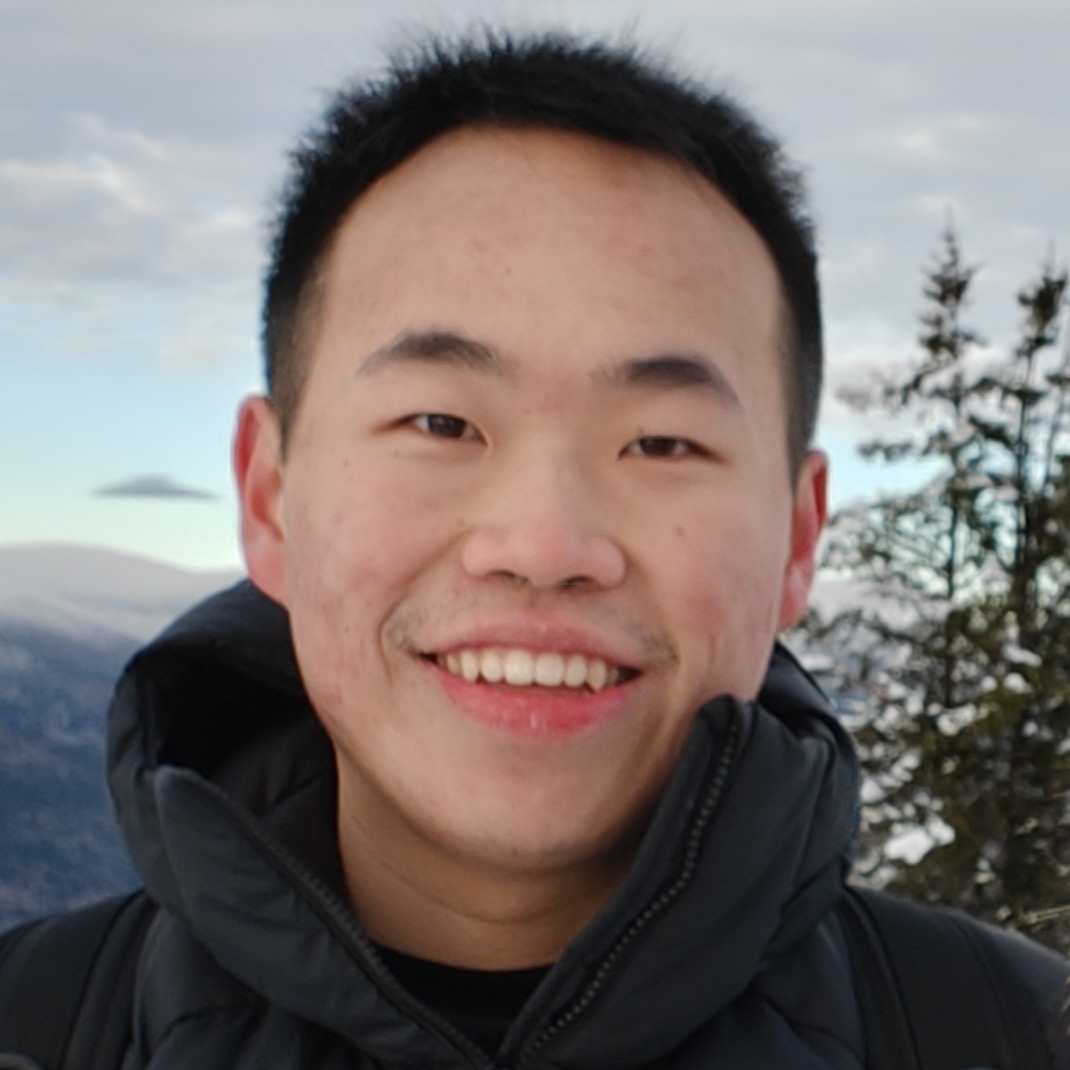 Tianwei Yin (尹天为)合作论文数Reve Image;Adobe;Massachusetts Institute of Technology2
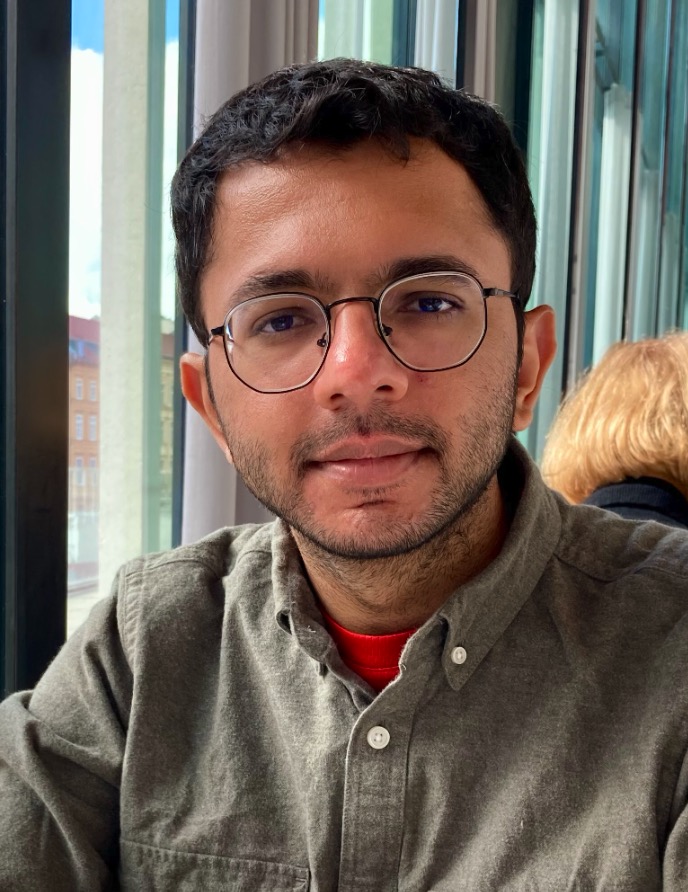 Ishit Mehta合作论文数University of California San Diego2
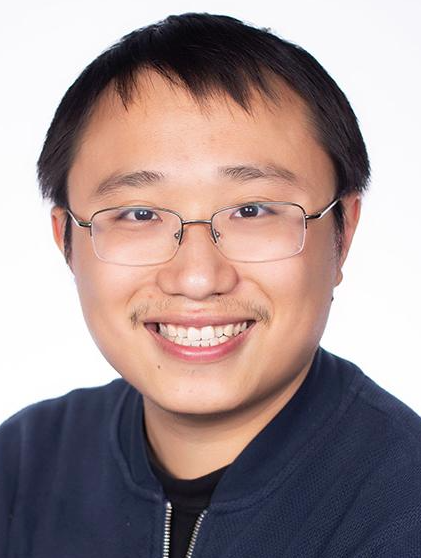 Xiaolong Wang (王小龙)合作论文数Department of Electrical and Computer Engineering, Jacobs School of Engineering, University of California, San Diego;Assured Robot Intelligence2
 Michal Lukac合作论文数Adobe2
 Alexei (Alyosha) Efros合作论文数Department of Electrical Engineering and Computer Sciences, University of California, Berkeley;Berkeley Artificial Intelligence Research Lab, University of California, Berkeley2
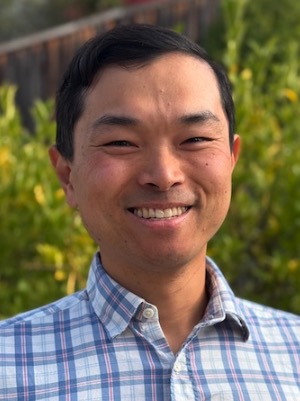 Jiawen Chen合作论文数Waabi2
 George Drettakis合作论文数INRIA2
 Miika Aittala合作论文数NVIDIA Corporation2
 Hongsheng Li (李鴻升)合作论文数Department of Electronic Engineering, The Chinese University of Hong Kong;Multimedia Laboratory, The Chinese University of Hong Kong2
 Fu-Yun Wang (汪福运)合作论文数Multimedia Laboratory, The Chinese University of Hong Kong;ByteDance Seed2
 Jun-Yan Zhu合作论文数Robotics Institute, School of Computer Science, Carnegie Mellon University2
 Gaurav Chaurasia合作论文数Oculus2
 Connelly Barnes合作论文数Adobe Research2
 Iliyan Georgiev合作论文数Adobe Research2
 Oliver Wang合作论文数Google2Wesley Chang合作论文数1Steven Johnson合作论文数1Danny Cohen-Or合作论文数1
 Tamar Rott Shaham合作论文数CSAIL, MIT1
 Vikas Thamizharasan合作论文数Visual Computing Lab, University of Massachusetts Amherst1
 Sai Praveen Bangaru合作论文数1
 Yash Belhe合作论文数1
 Ke Wang (王可)合作论文数Pika1
 Hadi Alzayer合作论文数University of Maryland1
 Lucas Valenca合作论文数Université Laval1