Malaria, caused by mosquito-transmitted Plasmodium parasites, remains a major global health challenge. While P. falciparum accounts for most malaria deaths, the lesser-studied P. ovale spp. and P. malariae also contribute to disease burden across many endemic regions, typically causing milder but chronic infections. Here, we generated high-quality, chromosome-level reference genomes for P. ovale wallikeri , P. malariae , and P. falciparum directly from blood samples taken from natural infections. Using PacBio Ultra-Low-Input HiFi long-read sequencing and Hi-C chromatin conformation capture, we overcome limitations posed by low parasite biomass and the absence of in vitro culture for P. ovale wallikeri and P. malariae . These high quality reference genomes resolve previously inaccessible subtelomeric regions that include expanded gene families likely involved in host-parasite interactions, and they enhance our understanding of parasite persistence, transmission, immune evasion and comparative evolutionary studies. This work provides a critical foundation for including these neglected species in global malaria elimination efforts.
We present a genome assembly from an individual female Culex pipiens sensu stricto (the northern house mosquito; Arthropoda; Insecta; Diptera; Culicidae), from a wild population in Sweden. The genome sequence is 533 megabases in span. Most of the assembly is scaffolded into three chromosomal pseudomolecules. The complete mitochondrial genome was also assembled and is 15.6 kilobases in length.
The Danioninae subfamily of teleost fishes boasts up to four hundred distinct species that have evolved to display a stunning diversity of morphological forms. Here we use newly assembled genome sequences of four laboratory and wild zebrafish strains as well as eleven species of the Danio and Danionella genera to explore their phylogenetic history and the genetic basis of pigment pattern diversification. Phylogenomic analyses uncover extensive introgression and incomplete lineage sorting that have obscured phylogenetic relationships within Danio and corroborate an ancient hybrid origin of zebrafish. Whereas D. rerio inherited ancestral horizontal stripes, relatives repeatedly evolved spots and vertical bars. Interspecific complementation tests reveal functional divergence of the adhesion molecule gene igsf11 and the gap junction gene gja5b between the striped zebrafish and Danio species with divergent patterns. Comparative genomic and transcriptomic analyses suggest that protein and regulatory evolution have accompanied pigment pattern diversification. Our analyses elucidate complex genetic changes underlying the phylogenetic history and morphological diversification in the Danio genus. Resolved phylogenetic relationships, available genome assemblies, transcriptomes, and genetic tractability establish Danio fish species as excellent models for biomedical research in vertebrates.
We present a genome assembly from an individual female Culex pipiens sensu stricto (the northern house mosquito; Arthropoda; Insecta; Diptera; Culicidae), from a wild population in Sweden. The genome sequence is 533 megabases in span. Most of the assembly is scaffolded into three chromosomal pseudomolecules. The complete mitochondrial genome was also assembled and is 15.6 kilobases in length.
We present genome assembly from individual female An. coustani (African malaria mosquito; Arthropoda; Insecta; Diptera; Culicidae) from Lopé, Gabon. The genome sequence is 270 megabases in span. Most of the assembly is scaffolded into three chromosomal pseudomolecules with the X sex chromosome assembled for both species. The complete mitochondrial genome was also assembled and is 15.4 kilobases in length.
We present a genome assembly from an individual female Anopheles marshallii (the malaria mosquito; Arthropoda; Insecta; Diptera; Culicidae) from Lopé, Gabon. The genome sequence is 225.7 megabases in span. Most of the assembly is scaffolded into three chromosomal pseudomolecules with the X sex chromosome assembled. The complete mitochondrial genome was also assembled and is 15.4 kilobases in length.
Oxford ragwort (Senecio squalidus) is one of only two homoploid hybrid species known to have originated very recently, so it is a unique model for determining genomic changes and stabilization following homoploid hybrid speciation. Here, we provide a chromosome-level genome assembly of S. squalidus with 95% of the assembly contained in the 10 longest scaffolds, corresponding to its haploid chromosome number. We annotated 30,249 protein-coding genes and estimated that ∼62% of the genome consists of repetitive elements. We then characterized genome-wide patterns of linkage disequilibrium, polymorphism, and divergence in S. squalidus and its two parental species, finding that (1) linkage disequilibrium is highly heterogeneous, with a region on chromosome 4 showing increased values across all three species but especially in S. squalidus; (2) regions harboring genetic incompatibilities between the two parental species tend to be large, show reduced recombination, and have lower polymorphism in S. squalidus; (3) the two parental species have an unequal contribution (70:30) to the genome of S. squalidus, with long blocks of parent-specific ancestry supporting a very rapid stabilization of the hybrid lineage after hybrid formation; and (4) genomic regions with major parent ancestry exhibit an overrepresentation of loci with evidence for divergent selection occurring between the two parental species on Mount Etna. Our results show that both genetic incompatibilities and natural selection play a role in determining genome-wide reorganization following hybrid speciation and that patterns associated with homoploid hybrid speciation—typically seen in much older systems—can evolve very quickly following hybridization.
We present a genome assembly from an individual female Anopheles gambiae (the malaria mosquito; Arthropoda; Insecta; Diptera; Culicidae), Ifakara strain. The genome sequence is 264 megabases in span. Most of the assembly is scaffolded into three chromosomal pseudomolecules with the X sex chromosome assembled. The complete mitochondrial genome was also assembled and is 15.4 kilobases in length.
We present a genome assembly from an individual female Anopheles gambiae (the malaria mosquito; Arthropoda; Insecta; Diptera; Culicidae), Ifakara strain. The genome sequence is 264 megabases in span. Most of the assembly is scaffolded into three chromosomal pseudomolecules with the X sex chromosome assembled. The complete mitochondrial genome was also assembled and is 15.4 kilobases in length.
We present a genome assembly from an individual female Anopheles marshallii (the malaria mosquito; Arthropoda; Insecta; Diptera; Culicidae) from Lopé, Gabon. The genome sequence is 225.7 megabases in span. Most of the assembly is scaffolded into three chromosomal pseudomolecules with the X sex chromosome assembled. The complete mitochondrial genome was also assembled and is 15.4 kilobases in length.
We present a genome assembly from an individual male Anopheles nili (the malaria mosquito; Arthropoda; Insecta; Diptera; Culicidae), from a wild population in Cameroon. The genome sequence is 195 megabases in span. Most of the assembly is scaffolded into three chromosomal pseudomolecules with the X sex chromosome assembled. The complete mitochondrial genome was also assembled and is 15.4 kilobases in length.
We present a genome assembly from an individual female Anopheles maculipalpis (the malaria mosquito; Arthropoda; Insecta; Diptera; Culicidae). The genome sequence is 224 megabases in span. Most of the assembly is scaffolded into three chromosomal pseudomolecules with the X sex chromosome assembled. The complete mitochondrial genome was also assembled and is 15.4 kilobases in length.
We present genome assembly from individual female An. coustani (African malaria mosquito; Arthropoda; Insecta; Diptera; Culicidae) from Lopé, Gabon. The genome sequence is 270 megabases in span. Most of the assembly is scaffolded into three chromosomal pseudomolecules with the X sex chromosome assembled for both species. The complete mitochondrial genome was also assembled and is 15.4 kilobases in length.
Cartilaginous fishes (chondrichthyans: chimeras and elasmobranchs -sharks, skates, and rays) hold a key phylogenetic position to explore the origin and diversifications of jawed vertebrates. Here, we report and integrate reference genomic, transcriptomic, and morphological data in the small-spotted catshark Scyliorhinus canicula to shed light on the evolution of sensory organs. We first characterize general aspects of the catshark genome, confirming the high conservation of genome organization across cartilaginous fishes, and investigate population genomic signatures. Taking advantage of a dense sampling of transcriptomic data, we also identify gene signatures for all major organs, including chondrichthyan specializations, and evaluate expression diversifications between paralogs within major gene families involved in sensory functions. Finally, we combine these data with 3D synchrotron imaging and in situ gene expression analyses to explore chondrichthyan-specific traits and more general evolutionary trends of sensory systems. This approach brings to light, among others, novel markers of the ampullae of Lorenzini electrosensory cells, a duplication hotspot for crystallin genes conserved in jawed vertebrates, and a new metazoan clade of the transient-receptor potential (TRP) family. These resources and results, obtained in an experimentally tractable chondrichthyan model, open new avenues to integrate multiomics analyses for the study of elasmobranchs and jawed vertebrates.
Numerous novel adaptations characterise the radiation of notothenioids, the dominant fish group in the freezing seas of the Southern Ocean. To improve understanding of the evolution of this iconic fish group, here we generate and analyse new genome assemblies for 24 species covering all major subgroups of the radiation, including five long-read assemblies. We present a new estimate for the onset of the radiation at 10.7 million years ago, based on a time-calibrated phylogeny derived from genome-wide sequence data. We identify a two-fold variation in genome size, driven by expansion of multiple transposable element families, and use the long-read data to reconstruct two evolutionarily important, highly repetitive gene family loci. First, we present the most complete reconstruction to date of the antifreeze glycoprotein gene family, whose emergence enabled survival in sub-zero temperatures, showing the expansion of the antifreeze gene locus from the ancestral to the derived state. Second, we trace the loss of haemoglobin genes in icefishes, the only vertebrates lacking functional haemoglobins, through complete reconstruction of the two haemoglobin gene clusters across notothenioid families. Both the haemoglobin and antifreeze genomic loci are characterised by multiple transposon expansions that may have driven the evolutionary history of these genes.
Insights into the evolution of non-model organisms are limited by the lack of reference genomes of high accuracy, completeness, and contiguity. Here, we present a chromosome-level, karyotype-validated reference genome and pangenome for the barn swallow (Hirundo rustica). We complement these resources with a reference-free multialignment of the reference genome with other bird genomes and with the most comprehensive catalog of genetic markers for the barn swallow. We identify potentially conserved and accelerated genes using the multialignment and estimate genome-wide linkage disequilibrium using the catalog. We use the pangenome to infer core and accessory genes and to detect variants using it as a reference. Overall, these resources will foster population genomics studies in the barn swallow, enable detection of candidate genes in comparative genomics studies, and help reduce bias toward a single reference genome.
We present a genome assembly from an individual female Anopheles funestus (the malaria mosquito; Arthropoda; Insecta; Diptera; Culicidae). The genome sequence is 251 megabases in span. The majority of the assembly is scaffolded into three chromosomal pseudomolecules with the X sex chromosome assembled. The complete mitochondrial genome was also assembled and is 15.4 kilobases in length.
We present a genome assembly from an individual male Anopheles moucheti (the malaria mosquito; Arthropoda; Insecta; Diptera; Culicidae), from a wild population in Cameroon. The genome sequence is 271 megabases in span. The majority of the assembly is scaffolded into three chromosomal pseudomolecules with the X sex chromosome assembled. The complete mitochondrial genome was also assembled and is 15.5 kilobases in length.
We present a genome assembly from an individual male Anopheles moucheti (the malaria mosquito; Arthropoda; Insecta; Diptera; Culicidae), from a wild population in Cameroon. The genome sequence is 271 megabases in span. The majority of the assembly is scaffolded into three chromosomal pseudomolecules with the X sex chromosome assembled. The complete mitochondrial genome was also assembled and is 15.5 kilobases in length.
We present a genome assembly from an individual female Anopheles funestus (the malaria mosquito; Arthropoda; Insecta; Diptera; Culicidae). The genome sequence is 251 megabases in span. The majority of the assembly is scaffolded into three chromosomal pseudomolecules with the X sex chromosome assembled. The complete mitochondrial genome was also assembled and is 15.4 kilobases in length.
 Kerstin Howe合作论文数Wellcome Trust Sanger Inst, Cambridge CB10 1SA, England49
 Shane McCarthy合作论文数Department of Genetics, University of Cambridge49
 Ying Sims合作论文数Wellcome Sanger Institute, Wellcome Genome Campus, Hinxton, Cambridge, CB10 1SA, UK.46
 Jonathan Wood合作论文数39
 Alan Tracey合作论文数Wellcome Trust Sanger Institute;Wellcome Trust Genome Campus;Wellcome Trust Genome Campus, Wellcome Trust Sanger Institute37
 Michelle Smith合作论文数35
 Karen L Oliver合作论文数Dept Med, Univ Melbourne30Sarah Pelan合作论文数29Emma Betteridge合作论文数Wellcome Sanger Institute, Wellcome Genome Campus, Hinxton, Cambridge, CB10 1SA, UK.29Craig Corton合作论文数Wellcome Trust Sanger Inst, Cambridge, England29Joanna Collins合作论文数28William Chow合作论文数Department of Molecular Biology and Biochemistry, Simon Fraser University28
 Richard Durbin合作论文数Wellcome Sanger Institute;Department of Genetics, University of Cambridge25
 Richard J. Challis合作论文数School of Biological Sciences, University of Edinburgh23
 Mark Blaxter合作论文数Wellcome Sanger Institute22Jason Skelton合作论文数22
 Uliano-Silva Marcela合作论文数Carlos Chagas Filho Biophysics Institute, UFRJ19
 Michael Andrew Quail合作论文数Wellcome Sanger Institute18Erich D. Jarvis合作论文数14Ksenia Krasheninnikova合作论文数13
 Harriet Johnson合作论文数12Damon-Lee Pointon合作论文数12Katharina von Wyschetzki合作论文数12
 Jacquelyn Mountcastle合作论文数Vertebrate Genome Lab, The Rockefeller University12
 Olivier Fedrigo合作论文数The Rockefeller University12Jale Doulcan合作论文数11Jonathan Threlfall合作论文数11
 Makunin Alexey合作论文数Theodosius Dobzhansky Center for Genome Bioinformatics, St. Petersburg State University11
 Daniel Edward Neafsey合作论文数Immunology and Infectious Diseases Department, Harvard T.H. Chan School of Public Health, Harvard University11Jale Dolucan合作论文数10Martin G. Wagah合作论文数10
 Haynes Heaton合作论文数CSSE, Auburn University10
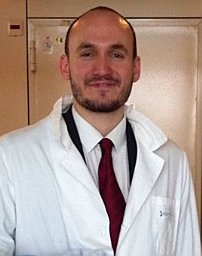 Giulio Formenti合作论文数Laboratory of Neurogenetics of Language, The Rockefeller University10
 Daniel Mead合作论文数10
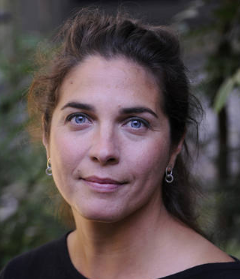 Mara Lawniczak合作论文数Wellcome Sanger Institute10
 Arang Rhie合作论文数National Human Genome Research Institute9
 Bettina Haase合作论文数Rockefeller Univ, Vertebrate Genome Lab, 1230 York Ave, New York, NY 10021 USA8David Weisz合作论文数8Omer Arina D合作论文数8
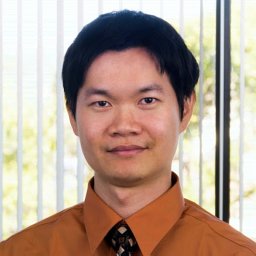 Fungtammasan Arkarachai合作论文数Integrative Biosciences, Bioinformatics and Genomics Option, Pennsylvania State University;Department of Biology, Pennsylvania State University;Center for Medical Genomics, Pennsylvania State University;The Genome Science Institute at the Huck Institutes of Life Sciences, Pennsylvania State University;Pennsylvania State University, Pennsylvania State University8
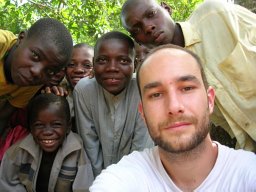 Diego Ayala合作论文数Laboratory of Entomology, Wageningen University8
 Olga Dudchenko合作论文数Center for Theoretical Biological Physics, Rice University;Mol. & Human Genetics/Aiden Lab, Baylor College of Medicine8
 Adam M. Phillippy合作论文数Genome Informatics Section, National Human Genome Research Institute, National Institutes of Health;Center for Genomics and Data Science Research, National Institutes of Health7Marcela Uliano Da Silva合作论文数6Glen Threadgold合作论文数6
 Erez Lieberman Aiden合作论文数Baylor College of Medicine;Department of Biochemistry and Molecular Biology, The University of Texas Medical Branch;Department of Biosciences, Rice University6
 Roberto Portela Miguez合作论文数6
 Janet Thornton合作论文数European Bioinformatics Institute, European Molecular Biology Laboratory6
 Sergey Koren合作论文数National Human Genome Research Institute6




