Malaria, caused by mosquito-transmitted Plasmodium parasites, remains a major global health challenge. While P. falciparum accounts for most malaria deaths, the lesser-studied P. ovale spp. and P. malariae also contribute to disease burden across many endemic regions, typically causing milder but chronic infections. Here, we generated high-quality, chromosome-level reference genomes for P. ovale wallikeri , P. malariae , and P. falciparum directly from blood samples taken from natural infections. Using PacBio Ultra-Low-Input HiFi long-read sequencing and Hi-C chromatin conformation capture, we overcome limitations posed by low parasite biomass and the absence of in vitro culture for P. ovale wallikeri and P. malariae . These high quality reference genomes resolve previously inaccessible subtelomeric regions that include expanded gene families likely involved in host-parasite interactions, and they enhance our understanding of parasite persistence, transmission, immune evasion and comparative evolutionary studies. This work provides a critical foundation for including these neglected species in global malaria elimination efforts.
The European leaf-toed gecko ( Euleptes europaea ) is a small, nocturnal gecko endemic to the western Mediterranean. As a phylogenetically distinctive member of the Gondwanan family Sphaerodactylidae, it represents an important species for studying Mediterranean island biogeography, adaptation, and reptile genome evolution. The species also occupies a key position for investigating the evolution of sex chromosomes, as geckos exhibit remarkable diversity and frequent transitions in sex-determination systems. We present a chromosome-level genome assembly of Euleptes europaea generated as part of the Vertebrate Genomes Project. The 1.8 Gb assembly has a scaffold N50 of 102.3 Mb (contig N50 27 Mb), with 21 chromosome-scale scaffolds corresponding to the known karyotype (2n = 42). The primary assembly has a BUSCO completeness of 97.80% (95.60% as single-copy), a k-mer completeness of 96.00%, and a k-mer quality value (QV) of 61.20. Repetitive elements account for 53.20% of the genome and genome annotation identified 18,633 protein-coding genes. This high-quality reference genome will facilitate studies of genome evolution, island adaptation, and sex chromosome evolution across geckos and other reptiles.
Sorex araneus, the Eurasian common shrew, has seasonal brain size plasticity (Dehnel's phenomenon) and many intraspecific chromosomal rearrangements. Genomic contributions to these traits, however, remain unknown. We couple a chromosome-scale genome assembly with seasonal brain transcriptomes to discover relationships between molecular evolution and both traits. While Positively Selected Genes (PSGs) enriched the Fanconi anemia DNA repair pathway (FANCI, FAAP100), which is likely involved in chromosomal rearrangements by preventing the accumulation of chromosomal aberrations, genes under positive selection or showing seasonal differential expression in the brain implicate neurogenesis (PCDHA6, SOX9, Notch signaling) and metabolic regulation (VEGFA, SPHK2) as key mechanisms underlying Dehnel's phenomenon. We also find that both positively selected and differentially expressed genes in the hippocampus are overrepresented near S. araneus evolutionary breakpoints. This relates both positive selection and differential expression to accessible chromatin configuration, suggesting that chromosomal rearrangements are integral to adaptive evolution and the regulation of brain size plasticity.
Integrating in-situ (wild) and ex-situ (captive) conservation efforts can mitigate genetic diversity loss and help prevent extinction of endangered wild populations. The whooping crane (Grus americana) experienced severe population declines in the 18th century, culminating in a collapse to ~20 individuals by 1944. Legal protections and conservation actions have since increased the census population from a stock of 16 individuals to approximately 840 individuals, yet the impact on genomic diversity remains unclear. We analysed the temporal dynamics of genomic erosion by sequencing a high-quality reference genome, and re-sequencing 16 historical (years 1867-1893) and 37 modern (2007-2020) genomes, including wild individuals and four generations of captive-bred individuals. Genomic demographic reconstructions reveal a steady decline, accelerating over the past 300 years with the European settlement of North America. Temporal genomic analyses show that despite demographic recovery, the species has lost 70% of its historical genetic diversity and has increased its inbreeding. Although the modern population bottleneck reduced the ancestral genetic load, modern populations possess more realised load than masked load, possibly resulting in a chronic loss of fitness. Integrating pedigree and genomic data, we underscore the role of breeding management in reducing recent inbreeding. Yet ongoing heterozygosity loss, load accumulation, and persistent effects of historical inbreeding (i.e., background inbreeding) argue against the species' downlisting from its current Endangered status on the IUCN Red List and the Endangered Species Act. The presence of private genetic variation in wild and captive populations suggests that wild-captive crosses could enhance genetic diversity and reduce the realised load. Our findings emphasise the role of genomics in informing conservation management and policy.
The Danioninae subfamily of teleost fishes boasts up to four hundred distinct species that have evolved to display a stunning diversity of morphological forms. Here we use newly assembled genome sequences of four laboratory and wild zebrafish strains as well as eleven species of the Danio and Danionella genera to explore their phylogenetic history and the genetic basis of pigment pattern diversification. Phylogenomic analyses uncover extensive introgression and incomplete lineage sorting that have obscured phylogenetic relationships within Danio and corroborate an ancient hybrid origin of zebrafish. Whereas D. rerio inherited ancestral horizontal stripes, relatives repeatedly evolved spots and vertical bars. Interspecific complementation tests reveal functional divergence of the adhesion molecule gene igsf11 and the gap junction gene gja5b between the striped zebrafish and Danio species with divergent patterns. Comparative genomic and transcriptomic analyses suggest that protein and regulatory evolution have accompanied pigment pattern diversification. Our analyses elucidate complex genetic changes underlying the phylogenetic history and morphological diversification in the Danio genus. Resolved phylogenetic relationships, available genome assemblies, transcriptomes, and genetic tractability establish Danio fish species as excellent models for biomedical research in vertebrates.
The taxonomic classification of a falcon population found in the Mongolian Altai region in Asia has been heavily debated for two centuries and previous studies have been inconclusive, hindering a more informed conservation approach. Here, we generated a chromosome-level gyrfalcon reference genome using the Vertebrate Genomes Project (VGP) assembly pipeline. Using whole genome sequences of 49 falcons from different species and populations, including “Altai” falcons, we analyzed their population structure, admixture patterns, and demographic history. We find that the Altai falcons are genomic mosaics of saker and gyrfalcon ancestries, and carry distinct W and mitochondrial haplotypes that cluster with the lanner falcon. The Altai maternally-inherited haplotypes diverged 422,000 years before present (290,000–550,000 YBP) from the ancestor of sakers and gyrfalcons, both of which, in turn, split 109,000 YBP (70,000–150,000 YBP). The Altai W chromosome has 31 coding variants in 29 genes that may possibly influence important structural, behavioral, and reproductive traits. These findings provide insights into the question of Altai falcons as a candidate distinct species.
Reference genomes from representative species across families provide the critical infrastructure for research and conservation. The Cetacean Genomes Project (CGP) began in early 2020 to facilitate the generation of near error-free, chromosome-resolved reference genomes for all cetacean species. Towards that goal, and using the methods, goals and genome assembly quality standards of the Vertebrate Genomes Project (VGP), we generated 13 new reference genomes across eight of the 14 cetacean families. Additionally, we summarize the genome assembly characteristics for 18 species, including these newly-generated and five published genome assemblies that meet the completeness and quality standards. We infer ancestral linkage groups (ALG) for cetaceans, showing that the ancestral karyotype of 22 ALGs is largely conserved in extant species, except for Ziphiidae, and for Balaenidae and Kogiidae, which exhibit similar independent fusions. Gene annotation, characterization of historical demography, heterozygosity and runs of homozygosity (ROH) reveal important information for conservation applications. By comparing the new reference genomes to previous draft assemblies, we show that the reference genomes have enhanced characteristics that will support and promote scientific research. Specifically, the genomes improve resolution and characterization of repetitive elements, provide validation (or exclusion) of genes linked to complex traits, and allow more complete characterization of gene regions such as the highly complex Major Histocompatibility Complex (MHC) Class I and II gene clusters that are important for population health.
Transitions across ecological boundaries, such as those separating freshwater from the sea, are major drivers of phenotypic innovation and biodiversity. Despite their importance to evolutionary history, we know little about the mechanisms by which such transitions are accomplished. To help shed light on these mechanisms, we generated the first high-quality, near-complete assembly and annotation of the genome of the American shad (Alosa sapidissima), an ancestrally diadromous (migratory between salinities) fish in the order Clupeiformes of major cultural and historical significance. Among the Clupeiformes, there is a large amount of variation in salinity habitat and many independent instances of salinity boundary crossing, making this taxon well-suited for studies of mechanisms underlying ecological transitions. Our initial analysis of the American shad genome reveals several unique insights for future study including: (i) that genomic repeat content is among the highest of any fish studied to date; (ii) that genome-wide heterozygosity is low and may be associated with range-wide population collapses since the 19th century; and (iii) that natural selection has acted on the branch leading to the diadromous genus Alosa. Our analysis suggests that functional targets of natural selection may include diet, particularly lipid metabolism, as well as cytoskeletal remodeling and sensing of salinity changes. Natural selection on these functions is expected in the transition from a marine to diadromous life history, particularly in the tolerance of nutrient- and ion-devoid freshwater. We anticipate that our assembly of the American shad genome will be used to test future hypotheses on adaptation to novel environments, the origins of diadromy, and adaptive variation in life history strategies, among others.
Microsporidia are single-celled, obligately intracellular parasites with growing public health, agricultural, and economic importance. Despite this, Microsporidia remain relatively enigmatic, with many aspects of their biology and evolution unexplored. Key questions include whether Microsporidia undergo sexual reproduction, and the nature of the relationship between tetraploid and diploid lineages. While few high-quality microsporidian genomes currently exist to help answer such questions, large-scale biodiversity genomics initiatives, such as the Darwin Tree of Life project, can generate high-quality genome assemblies for microsporidian parasites when sequencing infected host species. Here, we present 40 new microsporidian genome assemblies from infected arthropod hosts that were sequenced to create reference genomes. Out of the 40, 32 are complete genomes, eight of which are chromosome-level, and eight are partial microsporidian genomes. We characterized 14 of these as polyploid and five as diploid. We found that tetraploid genome haplotypes are consistent with autopolyploidy, in that they coalesce more recently than species, and that they likely recombine. Within some genomes, we found large-scale rearrangements between the homeologous genomes. We also observed a high rate of rearrangement between genomes from different microsporidian groups, and a striking tolerance for segmental duplications. Analysis of chromatin conformation capture (Hi-C) data indicated that tetraploid genomes are likely organized into two diploid units, similar to dikaryotic cells in fungi, with evidence of recombination within and between units. Together, our results provide evidence for the existence of a sexual cycle in Microsporidia, and suggest a model for the microsporidian lifecycle that mirrors fungal reproduction.
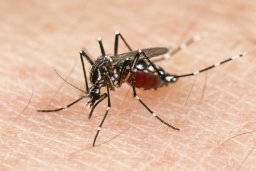
We present genome assembly from individual female An. coustani (African malaria mosquito; Arthropoda; Insecta; Diptera; Culicidae) from Lopé, Gabon. The genome sequence is 270 megabases in span. Most of the assembly is scaffolded into three chromosomal pseudomolecules with the X sex chromosome assembled for both species. The complete mitochondrial genome was also assembled and is 15.4 kilobases in length.
We present a genome assembly from an individual female Anopheles marshallii (the malaria mosquito; Arthropoda; Insecta; Diptera; Culicidae) from Lopé, Gabon. The genome sequence is 225.7 megabases in span. Most of the assembly is scaffolded into three chromosomal pseudomolecules with the X sex chromosome assembled. The complete mitochondrial genome was also assembled and is 15.4 kilobases in length.
Animals living in caves are of broad relevance to evolutionary biologists interested in understanding the mechanisms underpinning convergent evolution. In the Eastern Andes of Colombia, populations from at least two distinct clades of Trichomycterus catfishes (Siluriformes) independently colonized cave environments and converged in phenotype by losing their eyes and pigmentation. We are pursuing several research questions using genomics to understand the evolutionary forces and molecular mechanisms responsible for repeated morphological changes in this system. As a foundation for such studies, here we describe a diploid, chromosome-scale, long-read reference genome for Trichomycterus rosablanca, a blind, depigmented species endemic to the karstic system of the department of Santander. The nuclear genome comprises 1 Gb in 27 chromosomes, with a 40.0× HiFi long-read genome coverage having an N50 scaffold of 40.4 Mb and N50 contig of 13.1 Mb, with 96.9% (Eukaryota) and 95.4% (Actinopterygii) universal single-copy orthologs (BUSCO). This assembly provides the first reference genome for the speciose genus Trichomycterus, serving as a key resource for research on the genomics of phenotypic evolution.
The dugong (Dugong dugon) is a marine mammal widely distributed throughout the Indo-Pacific and the Red Sea, with a Vulnerable conservation status, and little is known about many of the more peripheral populations, some of which are thought to be close to extinction. We present a de novo high-quality genome assembly for the dugong from an individual belonging to the well-monitored Moreton Bay population in Queensland, Australia. Our assembly uses long-read PacBio HiFi sequencing and Omni-C data following the Vertebrate Genome Project pipeline to reach chromosome-level contiguity (24 chromosome-level scaffolds; 3.16 Gbp) and high completeness (97.9% complete BUSCOs). We observed relatively high genome-wide heterozygosity, which likely reflects historical population abundance before the last interglacial period, approximately 125,000 yr ago. Demographic inference suggests that dugong populations began declining as sea levels fell after the last interglacial period, likely a result of population fragmentation and habitat loss due to the exposure of seagrass meadows. We find no evidence for ongoing recent inbreeding in this individual. However, runs of homozygosity indicate some past inbreeding. Our draft genome assembly will enable range-wide assessments of genetic diversity and adaptation, facilitate effective management of dugong populations, and allow comparative genomics analyses including with other sirenians, the oldest marine mammal lineage.
Oxford ragwort (Senecio squalidus) is one of only two homoploid hybrid species known to have originated very recently, so it is a unique model for determining genomic changes and stabilization following homoploid hybrid speciation. Here, we provide a chromosome-level genome assembly of S. squalidus with 95% of the assembly contained in the 10 longest scaffolds, corresponding to its haploid chromosome number. We annotated 30,249 protein-coding genes and estimated that ∼62% of the genome consists of repetitive elements. We then characterized genome-wide patterns of linkage disequilibrium, polymorphism, and divergence in S. squalidus and its two parental species, finding that (1) linkage disequilibrium is highly heterogeneous, with a region on chromosome 4 showing increased values across all three species but especially in S. squalidus; (2) regions harboring genetic incompatibilities between the two parental species tend to be large, show reduced recombination, and have lower polymorphism in S. squalidus; (3) the two parental species have an unequal contribution (70:30) to the genome of S. squalidus, with long blocks of parent-specific ancestry supporting a very rapid stabilization of the hybrid lineage after hybrid formation; and (4) genomic regions with major parent ancestry exhibit an overrepresentation of loci with evidence for divergent selection occurring between the two parental species on Mount Etna. Our results show that both genetic incompatibilities and natural selection play a role in determining genome-wide reorganization following hybrid speciation and that patterns associated with homoploid hybrid speciation—typically seen in much older systems—can evolve very quickly following hybridization.
We present a genome assembly from an individual female Anopheles gambiae (the malaria mosquito; Arthropoda; Insecta; Diptera; Culicidae), Ifakara strain. The genome sequence is 264 megabases in span. Most of the assembly is scaffolded into three chromosomal pseudomolecules with the X sex chromosome assembled. The complete mitochondrial genome was also assembled and is 15.4 kilobases in length.
We present a genome assembly from an individual female Anopheles gambiae (the malaria mosquito; Arthropoda; Insecta; Diptera; Culicidae), Ifakara strain. The genome sequence is 264 megabases in span. Most of the assembly is scaffolded into three chromosomal pseudomolecules with the X sex chromosome assembled. The complete mitochondrial genome was also assembled and is 15.4 kilobases in length.
We present a genome assembly from an individual female Anopheles marshallii (the malaria mosquito; Arthropoda; Insecta; Diptera; Culicidae) from Lopé, Gabon. The genome sequence is 225.7 megabases in span. Most of the assembly is scaffolded into three chromosomal pseudomolecules with the X sex chromosome assembled. The complete mitochondrial genome was also assembled and is 15.4 kilobases in length.
The intertidal gastropod Littorina saxatilis is a model system to study speciation and local adaptation. The repeated occurrence of distinct ecotypes showing different levels of genetic divergence makes L. saxatilis particularly suited to study different stages of the speciation continuum in the same lineage. A major finding is the presence of several large chromosomal inversions associated with the divergence of ecotypes and, specifically, the species offers a system to study the role of inversions in this divergence. The genome of L. saxatilis is 1.35 Gb and composed of 17 chromosomes. The first reference genome of the species was assembled using Illumina data, was highly fragmented (N50 of 44 kb), and was quite incomplete, with a BUSCO completeness of 80.1% on the Metazoan dataset. A linkage map of one full-sibling family enabled the placement of 587 Mbp of the genome into 17 linkage groups corresponding to the haploid number of chromosomes, but the fragmented nature of this reference genome limited the understanding of the interplay between divergent selection and gene flow during ecotype formation. Here, we present a newly generated reference genome that is highly contiguous, with a N50 of 67 Mb and 90.4% of the total assembly length placed in 17 super-scaffolds. It is also highly complete with a BUSCO completeness of 94.1% of the Metazoa dataset. This new reference will allow for investigations into the genomic regions implicated in ecotype formation as well as better characterization of the inversions and their role in speciation.
We present a genome assembly from an individual male Anopheles nili (the malaria mosquito; Arthropoda; Insecta; Diptera; Culicidae), from a wild population in Cameroon. The genome sequence is 195 megabases in span. Most of the assembly is scaffolded into three chromosomal pseudomolecules with the X sex chromosome assembled. The complete mitochondrial genome was also assembled and is 15.4 kilobases in length.
The Harpy Eagle (Harpia harpyja) is an iconic species that inhabits forested landscapes in Neotropical regions, with decreasing population trends mainly due to habitat loss, and currently classified as vulnerable. Here, we report on a chromosome-scale genome assembly for a female individual combining long reads, optical mapping, and chromatin conformation capture reads. The final assembly spans 1.35 Gb, with N50scaffold equal to 58.1 Mb and BUSCO completeness of 99.7%. We built the first extensive transposable element (TE) library for the Accipitridae to date and identified 7,228 intact TEs. We found a burst of an unknown TE similar to 13-22 million years ago (MYA), coincident with the split of the Harpy Eagle from other Harpiinae eagles. We also report a burst of solo-LTRs and CR1 retrotransposons similar to 31-33 MYA, overlapping with the split of the ancestor to all Harpiinae from other Accipitridae subfamilies. Comparative genomics with other Accipitridae, the closely related Cathartidae and Galloanserae revealed major chromosome-level rearrangements at the basal Accipitriformes genome, in contrast to a conserved ancient genome architecture for the latter two groups. A historical demography reconstruction showed a rapid decline in effective population size over the last 20,000 years. This reference genome serves as a crucial resource for future conservation efforts towards the Harpy Eagle.
 James Torrance合作论文数46
 Kerstin Howe合作论文数Wellcome Trust Sanger Inst, Cambridge CB10 1SA, England39
 Shane McCarthy合作论文数Department of Genetics, University of Cambridge39
 Alan Tracey合作论文数Wellcome Trust Sanger Institute;Wellcome Trust Genome Campus;Wellcome Trust Genome Campus, Wellcome Trust Sanger Institute39
 Jonathan Wood合作论文数37Sarah Pelan合作论文数26
 Michelle Smith合作论文数24Erich D. Jarvis合作论文数23
 Olivier Fedrigo合作论文数The Rockefeller University22Joanna Collins合作论文数21Emma Betteridge合作论文数Wellcome Sanger Institute, Wellcome Genome Campus, Hinxton, Cambridge, CB10 1SA, UK.21Craig Corton合作论文数Wellcome Trust Sanger Inst, Cambridge, England21
 Karen L Oliver合作论文数Dept Med, Univ Melbourne20
 Uliano-Silva Marcela合作论文数Carlos Chagas Filho Biophysics Institute, UFRJ20
 Giulio Formenti合作论文数Laboratory of Neurogenetics of Language, The Rockefeller University19
 Mark Blaxter合作论文数Wellcome Sanger Institute18
 Richard J. Challis合作论文数School of Biological Sciences, University of Edinburgh18Jason Skelton合作论文数16
 Jacquelyn Mountcastle合作论文数Vertebrate Genome Lab, The Rockefeller University15
 Makunin Alexey合作论文数Theodosius Dobzhansky Center for Genome Bioinformatics, St. Petersburg State University15Ksenia Krasheninnikova合作论文数14
 Mara Lawniczak合作论文数Wellcome Sanger Institute14Damon-Lee Pointon合作论文数13Katharina von Wyschetzki合作论文数13
 Haynes Heaton合作论文数CSSE, Auburn University13
 Michael Andrew Quail合作论文数Wellcome Sanger Institute13William Chow合作论文数Department of Molecular Biology and Biochemistry, Simon Fraser University13
 Daniel Edward Neafsey合作论文数Immunology and Infectious Diseases Department, Harvard T.H. Chan School of Public Health, Harvard University13
 Richard Durbin合作论文数Wellcome Sanger Institute;Department of Genetics, University of Cambridge13
 Harriet Johnson合作论文数12
 Daniel Mead合作论文数11
 Diego Ayala合作论文数Laboratory of Entomology, Wageningen University11Martin G. Wagah合作论文数10Jonathan Threlfall合作论文数10Jale Doulcan合作论文数8Jale Dolucan合作论文数7
 Jennifer Balacco合作论文数7David Weisz合作论文数6
 Erez Lieberman Aiden合作论文数Baylor College of Medicine;Department of Biochemistry and Molecular Biology, The University of Texas Medical Branch;Department of Biosciences, Rice University6Omer Arina D合作论文数6
 Roberto Portela Miguez合作论文数6
 Olga Dudchenko合作论文数Center for Theoretical Biological Physics, Rice University;Mol. & Human Genetics/Aiden Lab, Baylor College of Medicine6Dan Mead合作论文数5Marcela Uliano Da Silva合作论文数5
 Linelle Abueg合作论文数5Lemonde Bouafou合作论文数5
 Bettina Haase合作论文数Rockefeller Univ, Vertebrate Genome Lab, 1230 York Ave, New York, NY 10021 USA5Boris Makanga合作论文数Centre International de Recherches Médicales de Franceville;Institut de Recherche en Ecologie Tropicale, BP 13354, Libreville, Gabon5
 Nil Rahola合作论文数UMR 224-5290 CNRS-IRD-UM1-UM2, Centre IRD de Montpellier;Centre International de Recherches Médicales de Franceville (CIRMF), BP 769, Franceville, Gabon.;Centre International de Recherches Médicales de Franceville (CIRMF),, Centre IRD de Montpellier5




