Background Typologies have been defined previously for pedestrian-vehicle interactions and are primarily based on retrospective analysis of crash data. The naturalistic driving study currently underway in Australia makes it possible to study pedestrian-vehicle interaction events that would not otherwise be identified in the crash data. This work evaluates the feasibility of using automated, manual, and semi-automated methods to identify pedestrian-vehicle interaction events. Methods Sensors and cameras were installed on the vehicles of volunteers in and around two major Australian cities which recorded their natural driving behaviour for 4 months. Forward video from select vehicles was reviewed independently by two reviewers to identify potential pedestrian-vehicle interaction events from which a typology of behaviours was formulated. These events served as the gold standard against which select automated and semi-automated methods of identification were assessed. Results A prototype typology of pedestrian-vehicle interaction events was formulated using naturalistic driving data and categorised in terms of risk of being struck. Some case scenarios will be discussed. The feasibility of using select automated, semi-automated, and manual methods to identify these events was also evaluated. Conclusions This work provides a first look at using Australian naturalistic driving data to study the interactions between vehicles and pedestrians. These findings will assist in the development of methods that can be used to most effectively answer research questions pertaining to interactions between vehicles and pedestrians as well as other vulnerable road users in the future.
The Australian Naturalistic Driving Study (ANDS), a ground-breaking study of Australian driver behaviour and performance, was officially launched on April 21st, 2015 at UNSW. The ANDS project will provide a realistic perspective on the causes of vehicle crashes and near miss crash events, along with the roles speeding, distraction and other factors have on such events. A total of 360 volunteer drivers across NSW and Victoria - 180 in NSW and 180 in Victoria - will be monitored by a Data Acquisition System (DAS) recording continuously for 4 months their driving behaviour using a suite of cameras and sensors. Participants’ driving behaviour (e.g. gaze), the behaviour of their vehicle (e.g. speed, lane position) and the behaviour of other road users with whom they interact in normal and safety-critical situations will be recorded. Planning of the ANDS commenced over two years ago in June 2013 when the Multi-Institutional Agreement for a grant supporting the equipment purchase and assembly phase was signed by parties involved in this large scale $4 million study (5 university accident research centres, 3 government regulators, 2 third party insurers and 2 industry partners). The program’s second development phase commenced a year later in June 2014 after a second grant was awarded. This paper presents an insider's view into that two year process leading up to the launch, and outlines issues that arose in the set-up phase of the study and how these were addressed. This information will be useful to other organisations considering setting up an NDS.
 Teresa Senserrick合作论文数Ctr Accid Res & Rd Safety Queensland CARRS Q, Queensland Univ Technol QUT3
 Jeremy Woolley合作论文数3
 Kristie L. Young合作论文数Monash University;Accident Research Centre;Accident Research Centre, Monash University3
 Raphael Grzebieta合作论文数Transport and Road Safety Research, School of Aviation, University of New South Wales;Victorian Institute of Forensic Medicine, Department of Forensic Medicine, Monash University3
 Narelle L. Haworth合作论文数Human Factors Group;Department of Psychology;Monash University;Human Factors Group, Monash University3
 Ann Williamson合作论文数School of Aviation, University of New South Wales3jack haley合作论文数2Marilyn Di Stefano合作论文数2
 Jake Olivier合作论文数School of Mathematics and Statistics, Faculty of Science, The University of New South Wales2
 Wu Yi Zheng合作论文数38 Elizabeth Street, Campsie, NSW 2194, Australia2
 A. Rakotonirainy合作论文数Faculty of Health;CARRS-Q;School of Psychology and Counselling;Queensland University of Technology2Kristie L. Johnson合作论文数1Antonietta Cavallo合作论文数1Jude Charlton合作论文数1Jeffrey P Michael合作论文数1Hodaya Levy合作论文数1Rosa Surinach合作论文数1
 Cristiano Martins Monteiro合作论文数1Sonali Nandavar合作论文数1
 Filip Fors Connolly合作论文数Dept Sociol, Umea Univ1Cláudia A. Soares Machado合作论文数Polytech Sch, Univ Sao Paulo1
 An-Magritt Kummeneje合作论文数Department of Psychology, Norwegian University of Science and Technology1
 Paul Boase合作论文数1Soheil Sohrabi合作论文数1
 David Rodwell合作论文数Centre for Accident Research & Road Safety-Queensland (CARRS-Q),, Queensland University of Technology (QUT),1Paweł Gołda合作论文数Air Force Inst Technol1
 Haneen Khreis合作论文数School of Clinical Medicine, University of Cambridge1
 Milad Mehdizadeh合作论文数NTNU, Norwegian University of Science and Technology1
 Hanne Sundfør合作论文数1Mariusz Izdebski合作论文数Fac Transport, Warsaw Univ Technol1John Wall合作论文数1
 Ilona Jacyna-Gołda合作论文数Faculty of Production Engineering, Warsaw University of Technology1
 Mohsen Fallah Zavareh合作论文数Dept Civil Engn, Kharazmi Univ1
 Fernando Tobal Berssaneti合作论文数Polytech Sch, Univ Sao Paulo1
 Emilian Szczepański合作论文数Fac Transport, Warsaw Univ Technol1
 Johnathon P. Ehsani合作论文数Health Policy and Management, Bloomberg School of Public Health, Johns Hopkins University1
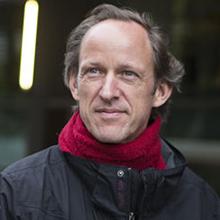 Mark J Nieuwenhuijsen合作论文数Instituto de Salud Global de Barcelona1
 Turker Ozkan合作论文数1
 Katherine White合作论文数Marketing and Behavioural Science Division, Sauder School of Business, University of British Columbia1
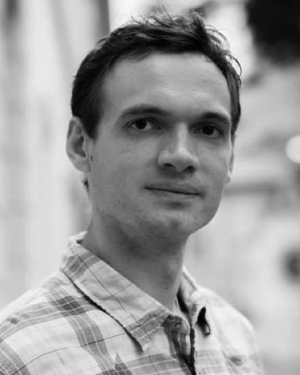 Gregoire S Larue合作论文数Centre for Accident Res. & Road Safety - Queensland (CARRS-Q),, Queensland Univ. of Technol. (QUT),;c;Centre for Accident Res. & Road Safety - Queensland (CARRS-Q),, Queensland Univ. of Technol. (QUT),1
 Payam Dadvand合作论文数Barcelona Institute for Global Health;London School of Hygiene and Tropical Medicine1
 Emanuel Sousa合作论文数1
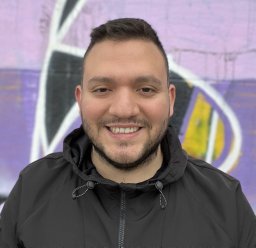 Oscar Oviedo-Trespalacios合作论文数Institute of Health and Biomedical Innovation (IHBI),, Queensland University of Technology (QUT),1
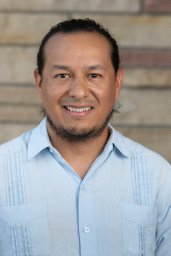 Rojas-Rueda David合作论文数Centre for Research in Environmental Epidemiology (CREAL), C/Dr. Aiguader 88, 08003 Barcelona, Spain;Universitat Pompeu Fabra (UPF),;CIBER Epidemiología y Salud Pública (CIBERESP), C/Monforte de Lemos 3-5, 28029 Madrid, Spain.;Centre for Research in Environmental Epidemiology (CREAL),, Universitat Pompeu Fabra (UPF),1
 Tova Rosenbloon合作论文数Department of Management, Faculty of Social Sciences, Bar-Ilan University1
 Stephens Amanda N合作论文数Accident Research Centre, Monash University1
 Garrett A Mattos合作论文数1
 Eva Merico合作论文数1
 Sherrie-Anne Kaye合作论文数Centre for Accident Research & Road Safety – Queensland, Faculty of Health, Queensland University of Technology1




