Este informe resume los resultados y recomendaciones de la Encuesta Nacional de Funcionarios y Funcionarias Públicos en Chile en 2023. Destaca áreas de mejora en la gestión de personas en el sector público, incluyendo el fortalecimiento del liderazgo, la promoción de la meritocracia, la mejora de la inclusión y diversidad y la institucionalización de prácticas de inducción y evaluación del desempeño. Se enfatiza la importancia de vincular la formación con las necesidades reales y de institucionalizar la encuesta para medir el progreso en el tiempo. El informe sirve como guía para instituciones públicas y líderes en la implementación de políticas efectivas de gestión de personas, con el objetivo de fomentar una administración pública más eficiente, inclusiva y orientada al desarrollo de su personal. Revisa el informe completo para obtener detalles sobre los desafíos y oportunidades identificados.
High-quality official statistics--from inflation to poverty rates--are essential for effective policymaking. Yet, little is known about the statistics officials who produce this statistical data. How competent are they at statistics? How motivated and ethical are they when producing statistics? And do National Statistical Offices (NSOs) manage them effectively? The answers are central to improving statistical capacity. Nonetheless, NSOs have not developed systematic measurement instruments to identify them. This pioneering publication addresses this gap. It presents the results of a survey of 13,300 NSO Employees in 14 Countries in Latin America and the Caribbean. Findings show that statistics officials and their characteristics matter. For instance, greater competence of statistics officials correlates with greater statistical performance of an NSO. Findings also show that most statistics officials are motivated in their jobs and committed to their NSO yet many struggle with basic statistical competencies and are not satisfied with their remunerations. Beneath the surface of average findings, however, lies a landscape of substantial variation among NSOs and within different departments inside the same NSO. These disparities are driven in part by differences in human resources management practices. Certain practices, for instance related to merit recruitment, adequate pay and performance feedback, are associated with greater staff motivation, integrity and competence. The report thus provides a data-informed roadmap to manage NSOs better and a survey instrument to help NSOs around the world measure their own management and staff.
How do civil service management practices differ within and across governments? How do core attitudes of public servants—such as their motivation or satisfaction—differ within and across governments? Understanding how public administrations around the world function and differ is crucial for strengthening their effectiveness. Most comparative measures of bureaucracy rely on surveys of experts, households, or firms, rather than directly questioning bureaucrats. Direct surveys of public officials enable governments to benchmark themselves and scholars to study comparative public administration and the state differently, based on micro-data from actors who experience government first-hand. This paper introduces the Global Survey of Public Servants, a global initiative to collect and harmonize large-scale, comparable survey data on public servants. The Global Survey of Public Servants can help scholars compare public administrations around the world and understand the internal dynamics of governments, with the published Global Survey of Public Servants data freely available online.
Responding to COVID-19 presents unprecedented challenges for public sector practitioners. Addressing those challenges requires knowledge about the problems that public sector workers face. This Viewpoint essay argues that timely, up-to-date surveys of public sector workers are essential tools for identifying problems, resolving bottlenecks, and enabling public sector workers to operate effectively during and in response to the challenges posed by the pandemic. This essay presents the COVID-19 Survey of Public Servants, which is currently being rolled out in several countries by the Global Survey of Public Servants Consortium to assist governments in strategically compiling evidence to operate effectively during the COVID-19 pandemic.
How can governments manage civil servants to enhance public service motivation (PSM)? Despite the centrality of PSM in public administration research, the effects of management practices on PSM remain understudied. We address this gap through a conjoint experiment with 7,300 public servants in five countries in Africa, Latin America and Eastern Europe. Our experiment assesses two practices: merit-based competitions for recruitment versus discretionary appointments; and permanent tenure versus temporary job contracts. We find that merit competitions are associated with greater PSM by respondents in four countries, yet have no significant effect in a fifth. Permanent contracts are associated with greater PSM (two countries), lower PSM (one country) and have no significant effect (two countries). The effects of personnel management practices thus appear to vary across contexts. A common practice in public administration research – generalizations about the effects of management practices from single-country studies or cross-country averages – requires rethinking.
"Enlarging the Euro Area: External Empowerment and Domestic Transformation in East Central Europe." West European Politics, 31(3), pp. 634–635
 Kim Sass Mikkelsen合作论文数7
 Christian Schuster合作论文数Department of Political Science, Faculty of Social & Historical Sciences, University College London5Mariano Lafuente合作论文数2Kerenssa Kay合作论文数2
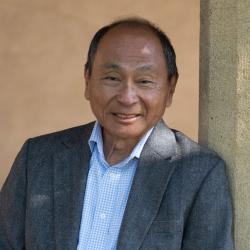 Francis Fukuyama合作论文数Freeman Spogli Institute for International Studies, Stanford University;Center on Democracy, Development and the Rule of Law, Stanford University;Aarhus University2
 Daniel Rogger合作论文数Department of Economics, University College London2
 Katherine Bersch合作论文数Department of Government, University of Texas at Austin2
 Dinsha Mistree合作论文数Science Department, Political2Patricia Paskov合作论文数1
 Javier Fuenzalida合作论文数Inst Publ Affairs, Univ Chile1
 Rachel Sigman合作论文数Naval Postgrad Sch, 1411 Cunningham Rd, Monterey, CA 93943 USA1
 Adam Harris合作论文数Division of Psychology and Language Sciences, Faculty of Brain Sciences, University College London1Zahid Hasnain合作论文数1




