In recent years, interest in the therapeutic potential of yoga for people recovering from trauma has flourished. To date, much of this research on yoga for trauma adopts a quantitative methodology that positions yoga as a medicalised intervention to understand if yoga is ‘effective’ for trauma recovery for adults. This paper seeks to contribute to an emerging body of qualitative literature by drawing on the voices of eight Iyengar yoga teachers with experience teaching adult students with trauma. It reveals that the teachers do not hold themselves out to be specialists in trauma, nor do they rely on formulistic principles or knowing a person’s trauma narrative. Rather, they draw on the pedagogic skills they have developed more generally through their considerable experience of teaching yoga as an embodied practice to tailor their approach for their students. Of central interest is the way the teachers use their own bodies, particularly their sensory perceptions, to ‘read’ the bodies and emotional capacities of their students within each teaching session. The teachers also reflect on the way they use adjustments as part of their embodied pedagogic skills in nuanced ways that challenge the dominant no-touch discourse on teaching students with trauma. These pedagogic approaches offer important insights for movement teachers more generally, particularly those teaching vulnerable students.
This paper mobilises Dillard and Vinnari’s (2019) proposals for critical dialogic accountability practices that address the concerns of marginalised and under-represented groups, rather than privileging finance capital. We approach this through participatory fieldwork with(in) an NGO that provides development programs, including microfinance, intended to empower poor women in Bangladesh. We engage with microfinance representatives, women borrowers, their husbands, program volunteers and gender change activists on the problems and conditions of possibility associated with microfinance and women’s empowerment programs. By engaging competing discourses and constructing counter-narratives, based on poor women’s lived experiences with neoliberal microfinance programs, we demonstrate the potential of critical dialogic praxis to support marginalised groups’ struggles to hold powerholders accountable for their (in)actions and to promote more enabling development approaches.
While research in Vietnam, like in many Asian countries, points to cultural constraints and testing systems as barriers to English language education, increasing attention has been given to the influence of teachers' beliefs and practices on learners' communicative second language (L2) development.This paper extends this research by reporting on a study which investigated the influence of contextual factors on the cognition and decision-making of five Vietnamese novice EFL teachers in using the national English language textbook series.This textbook series, in line with Vietnam's language policy, is underpinned by Communicative Language Teaching (CLT) principles.Data were collected through interviews, classroom observations and stimulated recall interviews with teachers from two high schools in Vietnam.The results indicate that the teachers modified the textbook activities in ways that limited opportunities for student oral interactions in English.The teachers explained their more conservative practices as a response to their perceptions of their students' limited motivations and capacities.As an area of research that has received little investigation in the EFL literature, the teachers' prioritization of their students' capacities and motivations beyond other considerations, despite their own enthusiasm for a more communicative approach, is an important finding.
This chapter offers new and much-needed insights from children and parents about the effects of contemporary policy approaches to schooling food in Victoria, Australia. And even though we were fully expecting some policy and program messiness, we were surprised by what we found. The chapter begins by providing a brief overview of the role that school food programs are expected to play within public health agendas via a review of the critical scholarship that has emerged over time. We then provide an overview of our project and findings about school food programs and practices. We conclude by suggesting that we need to take stock of the current state of school food policy and programs before amplifying further efforts. We also suggest that critical scholars may need to develop some new engagement tactics in order to ensure that we are (more) welcome at the policy table.
ABSTRACT There has been a recent surge in the popularity of school gardening programmes with different models claiming to address learning outcomes within the curriculum. For example, the 'kitchen garden' concept has had a rapid uptake across many Australian schools, promoted by both government curriculum support documents, and private organisations. Research points to the 'use' of school gardens as an initiative that predominantly draws on discourses of health, wellbeing and sustainability - sometimes together but also often quite separately. Despite the rapid uptake of gardening initiatives in schools, and the explicit mention of 'gardening' in State based variations of the Australian National Curriculum, we know very little about how school gardens are being conceptualised by Health and Physical Education (HPE) teachers as part of their teaching - either in primary or secondary contexts. This paper utilises data from a larger study which investigated how 24 generalist primary and secondary specialist HPE teachers talked about 'environmental health' within Health and Physical Education. The purpose of this paper is twofold: first it examines the range of discourses, that is, the different meanings and values, the teachers in the study associated with gardening as a practice expected of environmentally healthy citizens. Second, we draw on material and embodied knowledge to demonstrate how the very diverse ways the teachers talked about gardening, provide 'conditions of possibility' for thinking critically about gardening, and how school gardens might be positioned within the context of HPE.
In her book Cruel Optimism, Lauren Berlant (2011) states that "long term problems of embodiment within capitalism, in the zoning of the everyday, the work of getting through it, and the obstacles to mental and physical flourishing are less successfully addressed in the temporalities of crisis and require other frames for elaborating context of doing, being and thriving" (p. 105). Berlant's quote, and indeed her whole book, has much to offer those of us who are interested in trying to make sense of health education and its various ambitions and tactics. For the purposes of our present discussion though, her point about the necessity for other frames for elaborating is significant. Whilst theory has been a mainstay of health education over time, following Berlant, we want to suggest that there is a pressing need to turn to other frames to help us think differently about the project of health education and ask new questions about how it is imagined, assembled and enacted in the everyday.
This article explores the complicated place of sugar in the display of family connectedness and health in a white, middle class Australian family. In the context of heightened anxiety about childhood obesity, we present the Baker family as a case study to explore the pleasures and tensions that sugar consumption produces in families. On their birthdays, each child has a luxurious “Hammer Cake” coated in chocolate studded with sweets; simultaneously the family members have also been influenced by the documentary That Sugar Film and check the sugar contents on packages as they shop. We analyze how these pleasures and pressures are balanced: how anxieties about sugar are negotiated and managed in food practices and in the making of family through rituals of celebration. We argue that the concept of “contradictory pleasures,” where certain foods are seen as “excess,” but mobilized for celebration, offers a nuanced and valuable framework to illuminate simultaneously negative and positive attitudes toward certain foods in family food practices and how families navigate multiple influences on these practices, including popular culture and public health discourses.
There is widespread concern in all English speaking countries at the rapid decline in study of languages. The promise of ‘languages for all’ in the UK and North America in the 1970s marked a shift from languages as élite subjects for the privileged few, but this promise has not been fulfilled. This book explores the reasons for and solutions to this decline. More importantly, it looks at how these trends have been reversed in successful school programs and the implications of this for language education policy makers. The study draws on an analysis of data from 600 primary, secondary and community languages schools over six years and from detailed case studies in a representative sample of 45 successful schools. The book proposes a range of strategies to address the decline: from engaging classroom learning, assessment outcomes and embedding languages as central in school curriculum on the one level, to a mix of incentives and mandation for language study, especially at upper secondary school level. The authors explore the impact of learning languages on the thinking, educational experiences and outcomes of young people across a range of ethnic backgrounds and socioeconomic statuses. They show the importance of having equal access to languages study in a world where young people will have increasingly more diverse working lives and argue that the gap in languages between policy and uptake is really a gap in the thinking of policy makers and government.
This paper draws on a multi-method study with 50 families in Victoria, Australia. Primary school children were asked about food knowledge from school and whether they felt motivated to bring knowledge home. Generally, children and parents felt school food messages are unclear, contradictory and not relevant to them and this reduced the likelihood of messages coming home from school. We identify a critical difference in how families thought about healthy eating and food practices at home and the framework of school messages. Families focused on children's eating in a pragmatic way, infused with nurturance as well as concern. We argue their practices can be viewed as a form of relational consumption (Lindsay and Maher 2013. Consuming Families: Buying, Making, Producing Family Life in the Twenty-First Century. New York: Routledge.) where food is part of the everyday exchange of love and care. A disjunction exists between familial relational approaches and the regulatory framework of school food messages that impacts how messages move between these spaces. Attention to relational aspects of food consumption at school might allow for a more valuable exchange between family and schools that supports family endeavours to feed children well.
Socially critical scholars in Health and Physical Education (HPE) have been raising questions about the ethical, moral and social consequences of charging schools with the burden of ameliorating an 'obesity' problem for years, yet there is little sign of any substantial shift in the thinking that drives obesity strategies and policies in and around schools. Drawing on exemplars from our own and others' practice, we interrogate the extent to which socially critical obesity work, and post-structural work, in particular, can contribute to new understandings of the 'obesity assemblage'. Can our own repetitive aspirations to disrupt dominant discourses be regarded as yet another exemplar of 'cruel optimism' or can a flourishing body of critical enquiry actually do something both for young people in the context of health and physical education and for cultural understandings more widely?
At a time of increasing diversity in family forms and family practices the evening family meal is promoted as an imperative; a straightforward solution to complex social problems such as childhood obesity, family breakdown and depression. In this paper we discuss the challenges faced by families in achieving this imperative on an everyday basis drawing on visual data generated by children from a qualitative research project with 50 diverse families in Victoria, Australia. We demonstrate the complex and messy realities of everyday family food consumption which is shaped by social structures such as gender, work and care interacting with micro level elements such as food preferences and child agency. We argue the family meals imperative is a biopedagogy that should be decentred. We suggest that recognising and supporting diverse modes of family interaction and belonging beyond the shared table may be a more fruitful strategy for promoting public health.
This paper addresses health messages that are carried home from school - a space where childhood obesity prevention measures are being transmitted to families, and mothers in particular. We consider what emotions are being produced for mothers and children in the enactment of current school health initiatives, especially those aimed at 'improving' family food practices. Our analysis draws on interviews with parents and primary-school-aged children (n = 50) in Australia collected as part of a project on children's role as health advocates in family contexts. Using Sara Ahmed's work on emotions and John Law's concept of 'collateral realities', we consider how clashes and confrontations in 'healthy' food practices between home and school are producing negative emotions for mothers and children. We argue that rigid school rules and their policing at school, while aimed at promoting health, are producing unintended negative affects for families and children. We conclude by offering some recommendations on how more inclusive school health promotion practices can enable and support, rather than harm, the emotional well-being of mothers and children.
There is currently considerable sociological research on women's experiences in sport, the social construction of gender in women's sport and inequalities between women and men. However, research is yet to examine how inequalities and gender construction occur in and through the hierarchies within women's sports. Track and Field, with its differentiated events is a sport characterised by hierarchies, with Track events at the top and Field events at the bottom. Inherent in this differential valuing of the events is a hierarchy of bodily expressions of femininity. This article reports on a study which explored how fifteen elite female athletes in Track and Field negotiated the cultural and historical hierarchies between events, how these hierarchies shaped the women's experiences and the ways they embodied gender. The study drew on Bourdieu's notion of the cultural field', and his concept of symbolic violence' [Bourdieu, P. (1993). The field of cultural production: Essays on art and literature, edited and introduced by Randal Johnson. Cambridge: Polity Press] to explore how the women negotiated the hierarchical structuring between events. Semi-structured interviews were conducted with the athletes across the disciplines of running, jumping and throwing. Results demonstrate how the hierarchies between women's events were structurally maintained through practices such as the privileging of bodies conforming to traditional norms of femininity; and how the women themselves were implicated in maintaining these hierarchies through their language, practices and gendered embodiment. Hierarchies within women's Track and Field are likely to impact aspiring athletes and shape their understandings of themselves as athletes and young women. Making visible such processes presents possibilities for discussions around gender and power in coaching and school contexts.
Despite the importance of interactions with natural environments for personal and social well-being, there is only limited evidence of the relationship between the environment and health as an idea or area of study in school education in Australia. Logically, the place for such a study, at least in Australia, would be within the Health & Physical Education (HPE) key learning area. However, in HPE, alternative ways of considering health beyond the dominant ?healthism? discourses which privilege physical activity, fitness, food and nutrition struggle for any kind of existence. Gruenewald (2004. A Foucauldian analysis of environmental education: Toward the socioecological challenge of the earth charter. Curriculum Inquiry, 34(1), 71?107) suggests looking to the margins of a field to see what knowledge is silenced or subjugated in order to open up new conditions of possibility. This challenged us to look beyond taken for granted ways of thinking about health to identify other resources, perhaps unrecognised as yet, that teachers might draw on to constitute their knowledge of health. To do this, we look to interview data collected when teachers were asked to talk about their personal experiences of the relationship between the environment and health. The analysis of the interviews demonstrated how the teachers conceptualised the relationship between the environment and health by drawing on embodied experiences and affective encounters with more-than-human nature. By theorising these encounters through a post-human, new-materialist lens, we demonstrate how their corporeal knowledge, developed through embodied experiences, has the potential to assist teachers in formulating less institutionalised health understandings. We argue that these encounters with more-than-human nature can serve as alternatives to those dominant healthism discourses that invoke problematic risk, fear and crisis responses.
Much of the literature on social class and language study in schools argues that for middle-class parents and their children, languages are chosen for their capacity to offer forms of distinction that provide an edge in the global labour market. In this paper, we draw on data collected from interviews with parents and children in middle-class schools in Australia to demonstrate how a complex amalgam of elite, cultural identity and/or trade language discourses came into play to explain the choice (or not) to study a language and the choice of specific languages. For many of the parents languages provided a limited form of 'civic multiculturalism', as a means of better understanding and respecting the 'other'. We argue that the value attributed to high status languages via this discourse, means their continued presence in schools hoping to attract middle-class parents, but their relative absence in schools with largely working-class populations, where more 'practical' concerns dominate.
Purpose Health education still tends to be dominated by an approach designed to achieve individual behaviour change through the provision of knowledge to avoid risk. In contrast, a critical inquiry approach educates children and young people to develop their capacity to engage critically with knowledge, through reasoning, problem solving and challenging taken for granted assumptions, including the socially critical approach which investigates the impact of social and economic inequalities on, for example, health status and cultural understandings. The purpose of this paper is to explore the conditions of possibility for a socially critical approach to health education in schools. It examines the ways in which preservice health and physical education (HPE) teachers talked about their experiences of health education during their school-based practicum. Design/methodology/approach In total, 13 preservice HPE teachers who were about to graduate with a Bachelor of Health and Physical Education from a university in New South Wales, Australia were interviewed for the study. Five group interviews and one individual interview were conducted. The interviews were coded for themes and interpreted drawing on a biopedagogical theoretical framework as a way of understanding the salience of particular forms of knowledge in health education, how these are promoted and with what effects for how living healthily is understood. Findings The HPETE students talked with some certainty about the purpose of health education as a means to improve the health of young people – a certainty afforded by a medico-scientific view of health imbued with individualised, risk discourses. This purpose was seen as being achieved through using pedagogies, particularly those involving technology, that produced learning activities that were “engaging” and “relevant” for young people. Largely absent from their talk was evidence that they valued or practiced a socially critical approach to health education. Practical implications This paper has practical implications for designing health education teacher programmes that are responsive to expectations that contemporary school health education curricula employ a critical inquiry approach. Originality/value This paper addresses an empirical gap in the literature on the conditions of possibility for a socially critical approach to health education. It is proposed that rather than challenging HPE preservice teachers’ desires to improve the lives of young people, teacher educators need to work more explicitly within an educative approach that considers social contexts, health inequalities and the limitations of a behaviour change model.
This special issue has been conceived to acknowledge the advances in inquiry and understandings that political and critical scholarship has facilitated. Perhaps more importantly, it seeks to reveal the limits of contemporary ‘political’ and/or ‘critical’ research in the field and encourage fresh thinking about a number of issues, including not least, the relationship between political and critical research. In our editorial we highlight a number of key questions that have guided our thinking about the state of critical scholarship and ways of working to continue to engage with critical questions.
 Deana Leahy合作论文数School of Education, Culture and Society, Faculty of Education, Monash University24
 Lisette Burrows合作论文数Sch Phys Educ, Univ Otago23
 Dawn Penney合作论文数School of Curriculum, Teaching and Inclusive Education, Faculty of Education, Monash University12
 Gabrielle O'Flynn合作论文数12
 Louise Mccuaig合作论文数Sch Human Movement Studies, Univ Queensland12
 Doune Macdonald合作论文数The University of Queensland12
 Valerie Harwood合作论文数Sydney School of Education and Social Work, Faculty of Arts and Social Sciences, The University of Sydney10Anthony D Okely合作论文数10
 JaneMaree Maher合作论文数School of Social Sciences, Faculty of Arts, Monash University10Claire Tanner合作论文数School of Social Sciences, Faculty of Arts, Monash University6
 Christine Halse合作论文数Sch Educ, Deakin Univ6
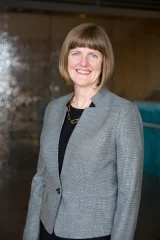 Jo Lindsay合作论文数School of Social Sciences, Faculty of Arts, Monash University5Sian Supski合作论文数Australia Research Institute;Curtin University of Technology;Australia Research Institute, Curtin University of Technology5
 Nicole Taylor合作论文数School of Health Sciences, Western Sydney University4
 Samantha McMahon合作论文数Sydney School of Education and Social Work, Faculty of Arts and Social Sciences, The University of Sydney4
 Rosie Welch合作论文数School of Curriculum, Teaching and Inclusive Education, Faculty of Education, Monash University4
 Gary Levy合作论文数3Erika Björklund合作论文数3
 Stephen Richard Black合作论文数Fac Arts & Social Sci, Univ Technol Sydney3
 Catherine Hartung合作论文数Coll Educ, Educ Studies, Univ Otago3
 Matthew Atencio合作论文数Dept Kinesiol, Calif State Univ East Bay3Suzanne Fraser合作论文数National Centre in HIV Social Research, University of New South Wales3
 Ken Cruickshank合作论文数3
 Deslea Konza合作论文数3Michael L. Booth合作论文数3Kenneth Cruickshank合作论文数2Douglas Hearne合作论文数2Lauren M. Puglisi合作论文数2Lyndall McLellan合作论文数2gary wilsmore合作论文数2judith laverty合作论文数2
 Jonnell Uptin合作论文数Sch Educ & Social Work, Univ Sydney2
 Philayrath Phongsavan合作论文数School of Public Health, Faculty of Medicine and Health, The University of Sydney2
 Louisa Peralta合作论文数Sydney School of Education and Social Work, Faculty of Arts and Social Sciences, The University of Sydney2
 Wayne Cotton合作论文数Sydney School of Education and Social Work, Faculty of Arts and Social Sciences, The University of Sydney2
 Lee Jessica合作论文数2
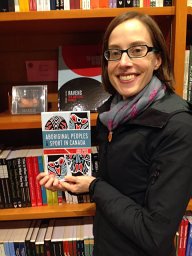 Giles Audrey R合作论文数University of Ottawa2
 Petra Macaskill合作论文数Department of Biostatistics, School of Public Health, Faculty of Medicine and Health, University of Sydney2
 Katie Fitzpatrick合作论文数School of Curriculum and Pedagogy, Faculty of Education and Social Work, The University of Auckland2John Patterson合作论文数School of Civil Engineering, The University of Sydney2
 Adrian Bauman合作论文数Department of Public Health, Faculty of Medicine and Health, University of Sydney;WHO Collaborating Centre on Physical Activity, Nutrition and Obesity, Sydney University2
 David Lubans合作论文数School of Education, College of Human and Social Futures, University of Newcastle2
 Johanna Wyn合作论文数Melbourne Graduate School of Education, University of Melbourne2
 Lyndsay Hayhurst合作论文数2
 Jillian Blackmore合作论文数School of Education, Faculty of Arts and Education, Deakin University2Wilma Vialle合作论文数University of Wollongong2
 Marijka Batterham合作论文数Smart Foods Centre, University of Wollongong2Ken Cliff合作论文数2
 Lisa Kervin合作论文数University of Wollongong2




