The current study sought to investigate the extent to which early childhood educators’ confidence in knowledge, attitudes and self-efficacy for supporting early self-regulation predicted educator behavior and children’s self-regulation outcomes. Data from a diverse sample of 165 early childhood educators participating in a cluster Randomized Control Trial evaluation of a self-regulation intervention were utilized to evaluate the construct validity, reliability and predictive properties of the Self-Regulation Knowledge, Attitudes and Self-Efficacy scale. Evaluation via traditional (EFA, Cronbach’s Alpha) and modern approaches (Rasch Analysis) yielded a valid and reliable 25-item scale, comprising three distinct yet related subscales (i.e., confidence in knowledge, attitudes, self-efficacy). For educators assigned to the intervention group, self-efficacy significantly predicted educators perceived competency to implement the self-regulation intervention as well as their perceptions around the effectiveness of the intervention to enhance children’s self-regulation. For educators assigned to the control group (i.e., practice as usual), educator attitudes longitudinally predicted children’s end-of-year status and change in self-regulation (over 6 months later). Findings from this study suggest the importance of pre-school educators’ beliefs for fostering early self-regulation and highlight a need to further explore the impact of these beliefs with regard to educator engagement with intervention.
BACKGROUND:For children with low self-regulation in the preschool years, the likelihood of poorer intellectual, health, wealth and anti-social outcomes in adulthood is overwhelming. Yet this knowledge has not yielded a framework for understanding self-regulatory change, nor generated particularly successful methods for enacting this change. Reconciling insights from cross-disciplinary theory, research and practice, this study seeks to implement a newly developed program of low-cost and routine practices and activities for supporting early self-regulatory development within preschool contexts and to evaluate its effect on children's self-regulation, executive function and school readiness; and educator perceived knowledge, attitudes and self-efficacy related to self-regulation.METHODS/DESIGN:The Early Start to Self-Regulation study is a cluster randomized, controlled trial for evaluating benefits of the Preschool Situational Self-Regulation Toolkit (PRSIST) program, when implemented by early childhood educators, compared with routine practice. The PRSIST program combines professional learning, adult practices, child activities and connections to the home to support children's self-regulation development. Fifty preschool centers in New South Wales, Australia, will be selected to ensure a range of characteristics, namely: National Quality Standards (NQS) ratings, geographic location and socioeconomic status. After collection of baseline child and educator data, participating centers will then be randomly allocated to one of two groups, stratified by NQS rating: (1) an intervention group (25 centers) that will implement the PRSIST program; or (2) a control group (25 centers) that will continue to engage in practice as usual. Primary outcomes at the child level will be two measures of self-regulation: Head-Toes-Knees-Shoulders task and the PRSIST observational assessment. Secondary outcomes at the child level will be adult-reported measures of child self-regulation, executive function and school readiness. Outcomes at the educator level will involve a survey of their perceived knowledge, attitudes and self-efficacy for supporting children's self-regulatory development. In all cases, data collectors will be blinded to group allocation.DISCUSSION:This is the first randomized controlled trial of a new program to foster early self-regulation, using low-cost practices and activities that are aligned with early-years contexts, routines and practices. Results will provide important information about the efficacy of this approach and evaluate its underlying model of self-regulatory change.TRIAL REGISTRATION:Australian New Zealand Clinical Trials Registry, ACTRN12617001568303 . Registered on 21 November 2017.
In2Uni's Year 12 University Preparation Program (UPP), which commenced in 2014, is an innovative program for students in their HSC year working towards an ATAR. It targets schools in UOW catchment areas, and particularly those identified as being from the 39 low-ICSEA (Index of Community and SocioEducational Advantage) areas. Students must meet eligibility criteria, one being that their academic performance is not currently on the trajectory to meet university entry requirements (In2Uni, My Way, 2016). Once accepted into UPP, students attend on-campus study sessions for two hours per week over a 20week period from April to September. The general aims of UPP are that students (a) receive tips and advice in their chosen HSC subject from undergraduate mentors who excelled in these subjects areas at HSC level; (b) glean information pertaining to successful HSC study; and (c) are provided with a 'taste' of university life as a transitioning strategy. At the culmination of UPP, students who meet requirements of attendance (80%) and task completion are guaranteed an Early Entry Admissions interview at UOW. From this point however, these students are subject to the same entry requirements as all nonUPP UOW applicants. The success of UPP may be reflected in increased enrolments from 268 in 2014 to 337 in 2015; however an 18% decrease in Early Admission offers in 2015 confirmed the timeliness of this program evaluation. The evaluation project was commissioned by In2Uni to explore the effectiveness of the program, based on data from key stakeholders: current and past students, parents, and In2Uni mentors. In consultation with UPP program coordinators, the evaluation sought to achieve the objectives of: identifying, describing and explaining the impact of UPP on the student experience; and providing In2Uni with an evidence-based understanding of the impact to enable targeted improvements.
BACKGROUND The aim of this study was to assess the beliefs and attitudes of preservice health and physical education (HPE) specialist and nonspecialist schoolteachers toward obese children. METHODS A total of 177 nonspecialist and 62 HPE specialist trainee teachers completed a series of pen-and-paper validated measures of attitudes and beliefs toward obese children. RESULTS Both groups of preservice teachers reported strong implicit and moderate explicit anti-fat bias. Enrollment in the HPE specialist degree was found to be a significant predictor of both implicit bad/good anti-fat bias (β = 3.97, p = .002) and implicit bias on the stupid/smart scale (β = 2.983, p = .016) of the IAT. Beliefs that obese children were less healthy, more self-conscious, and less satisfied with themselves were strongly endorsed by the majority of participants. HPE specialists were found to have significantly lower expectations for obese children in regard to "reasoning" (mean difference = 0.21, p = .0107) and "cooperation" skills (mean difference = 0.25, p = .0354) compared to nonspecialist trainees. CONCLUSIONS This study is the first to document the strong anti-fat bias of both preservice nonspecialist and HPE specialist teachers. It is also the first to find that preservice HPE specialist teachers have stronger anti-fat biases and differential expectations regarding particular abilities of obese children, compared to nonspecialists.
In this paper we study the effects of power in a bathroom, which is a rarely analysed space in preschools, using empirical examples from a semi-ethnographic study conducted in New South Wales, Australia. We demonstrate that educators' understanding and practices mostly consider their own positioning in discourses and come short in accounting for children's practices in and expressed views on the bathroom. Educators also remain distant from children's bodily experiences. The interplay of the open architectural design of the bathroom space and dominant discourses operating in the preschool constitute some children as 'problem bodies' apparently requiring (and justifying) direct intervention. Following this reasoning we argue that the surveillance, regularisation and normalisation in the bathroom is far from total, which leads us to question the adequacy of understanding the bathroom as forming a part of a modern (disciplinary) institution.
This report is an evaluation of the University of Wollongong's In2Uni outreach program. The In2Uni Program, delivered at the University of Wollongong, is an outreach program that works with primary and secondary students from low socioeconomic (SES) backgrounds on the NSW South Coast. These programs take the form of student academic mentoring, parent/caregiver/community and teacher engagement seminars, and university transition workshops. In2Uni's focus is on building the skills and aspirations required to enter Higher Education.
Movement skill competence is important to organised youth physical activity participation, but it is unclear how adolescents view this relationship. The primary aim of this study was to explore adolescents’ perception of the relationship between movement skills, physical activity and sport, and whether their perceptions differed according to extent of participation in organised physical activities. We recruited 33 (17 male) Grade 11 and 12 students (aged 16 to 18) from two secondary schools in Australia. Focus groups were allocated according to whether or not students participated in organised physical activity, where ‘organised activity’ was defined as activity which involved regular classes, training or competition, was reasonably structured or formal, or had a teacher, instructor or coach. There were three all-male ‘organised’ groups, one mixed-gender ‘organised’ group and one all-female ‘not-organised’ group. Students were asked about their attitudes towards physical activity and sport, the relationship between childhood skill proficiency and later physical activity and their perceptions of the appropriate time taken to learn movement skills. Group discussions lasted for approximately 50 minutes, were recorded and were then transcribed verbatim. Transcripts were read using a constant comparison method, in which quotes were continually compared to other quotes. A thematic analysis was conducted in which the transcripts were analysed inductively. Participation in organised sport had no bearing on opinions regarding whether lack of childhood skill development would negatively impact latter participation. It did, however, subtly influence opinions regarding whether skill could be successfully acquired later in life. When asked whether not having well-developed skills as a child would negatively impact on participation in sport/physical activity later in life, the response was mixed, but this was not related to their involvement in organised sport or activities. Students who believed early skill proficiency related to subsequent activity thought this was due to skill ability and motivation. An alternate view was that subsequent activity did not need to be based on skill proficiency; also, one’s environment might change, resulting in differing opportunities/constraints. Students felt skills could be learnt at any time in life (dependent on motivation), but that learning skills at a younger age would be easier and that skills learnt later would not be as developed. Fear of failure was identified as a barrier to learning when older. We conclude that motivation towards participation in sport and physical activity is affected by adolescents’ perception of their own movement skill ability. Therefore, developing children’s actual and perceived movement skills may help to increase adolescent physical activity. Since those with intrinsic achievement orientations were not as inclined towards organised activity, we may also need to provide physical activity options that resonate with intrinsic achievement motivations.
As a lens through which to read and understand a subject area and its curriculum content and issues, a sociocultural perspective is a recent and arguably significant change for the Health and Physical Education (HPE) Key Learning Area (KLA) in Australia. Its significance lies, first, in the fact that it seems to represent a notable departure from the predominantly medico-scientific, bio-physical and even psychological foundations of the learning area as it stood throughout the second half of the twentieth century, and second, because its attention to social and cultural influences on health put it in direct opposition to notions which locate health almost solely in the individual and his or her decisions. Despite the potential ramifications of these shifts for practitioners, to date there has been little research that has examined this change within the context of the classroom. This paper reports on a research project conducted in two classrooms in the Australian state of New South Wales, which began with the question ‘what happens when you introduce a unit of work planned with the aim of developing a sociocultural perspective into the HPE classroom?’ I respond to this question by drawing on teacher and student interviews, planning sessions, and classroom observations and recordings to discuss the most prominent discursive tensions and organisational constraints that stand as impediments to a sociocultural perspective as a practiced curriculum change.
International Social Science JournalVolume 62, Issue 205-206 p. 351-362 2nd dossier: Biopolitical Control, Bodily Resistance Biopower and the "civilisation" of children's bodies in a preschool bathroom: An Australian case study Ken Cliff, Ken CliffSearch for more papers by this authorZsuzsa Millei, Zsuzsa MilleiSearch for more papers by this author Ken Cliff, Ken CliffSearch for more papers by this authorZsuzsa Millei, Zsuzsa MilleiSearch for more papers by this author First published: 16 April 2013 https://doi.org/10.1111/issj.12005Citations: 6Read the full textAboutPDF ToolsRequest permissionExport citationAdd to favoritesTrack citation ShareShare Give accessShare full text accessShare full-text accessPlease review our Terms and Conditions of Use and check box below to share full-text version of article.I have read and accept the Wiley Online Library Terms and Conditions of UseShareable LinkUse the link below to share a full-text version of this article with your friends and colleagues. Learn more.Copy URL Share a linkShare onFacebookTwitterLinked InRedditWechat Citing Literature Volume62, Issue205-206September–December 2011Pages 351-362 RelatedInformation
We suggest that recent concerns about young people's excess body weight have generally been treated quite separately to longer standing concerns about young people (particularly, young women) and eating disorders. The few papers that have addressed this connection directly have focused on how practices motivated by the obesity discourse have had damaging consequences for the ways young women have come to understand and act on their bodies. The research described in this paper, however, makes a different point. It demonstrates how one teacher struggles to negotiate the different and often contradictory meanings about the body and young women's health, in a context where explicit teaching about eating disorders and body image is formally endorsed and legislated through the State health and physical education (HPE) syllabus. The interview material and classroom exchanges described in the paper are from a project that examined the implementation of a sociocultural perspective as a curriculum change in HPE. The case presented here took place in a girls' private school, where an accomplished female HPE head teacher developed and taught a unit of work focused on food and nutrition to a class of 15- and 16-year-old female students. Our analysis suggests that, within this particular gendered and classed setting, the teacher understood the students in her class as being at greater risk of developing eating disorders than of becoming obese. However, despite the apparent ‘risk’ presented by eating disorders, the investments both students and the teacher had in their own bodies as the slim ideal, meant that learning and teaching about how to avoid being fat continued to be paramount. We suggest further research is required to understand how teachers negotiate the intersection of obesity and eating disorders in the formal curriculum and across different social and cultural contexts, and to draw on this in advising teachers in relation to future practice.
 Elena Vasseleu合作论文数2
 Sarah O’Shea合作论文数National Centre for Student Equity in Higher Education, Curtin University Australia2
 Cathrine Neilsen-Hewett合作论文数Sch Educ, Univ Wollongong2
 Valerie Harwood合作论文数Sydney School of Education and Social Work, Faculty of Arts and Social Sciences, The University of Sydney2
 Philip Morgan合作论文数Division of Pharmacy and Optometry, The University of Manchester2
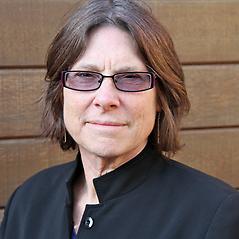 Jan E. Wright合作论文数Faculty of the Arts, Social Sciences and Humanities, University of Wollongong2
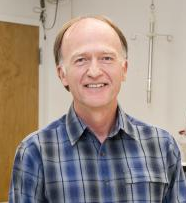 Steven K. Howard合作论文数Department of Anesthesiology, Perioperative and Pain Medicine, School of Medicine, Stanford University2
 Zsuzsa Millei合作论文数2
 deborah k clarke合作论文数1
 Janine Delahunty合作论文数Fac Arts Humanities & Social Sci, Univ Wollongong1
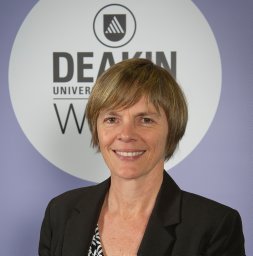 Lisa Michele Barnett合作论文数NYU School of Law1
 Marita C Lynagh合作论文数School of Medicine & Public Health, University of Newcastle1
 John Ehrich合作论文数Edith Cowan University, Edith Cowan University1
 Eric van Beurden合作论文数1




