3D shape completion is traditionally solved using supervised training or by distribution learning on complete shape examples. Recently self-supervised learning approaches that do not require any complete 3D shape examples have gained more interests. In this paper, we propose a non-adversarial self-supervised approach for the shape completion task. Our first finding is that completion problems can be formulated as an involutory function trivially, which implies a special constraint on the completion function G, such that G(G(X)) = X. Our second constraint on self-supervised shape completion relies on the fact that shape completion becomes easier to solve with correspondences and similarly, completion can simplify the correspondences problem. We formulate a consistency measure in the canonical space in order to supervise the completion function. We efficiently optimize the completion and correspondence modules using "freeze and alternate" strategy. The overall approach performs well for rigid shapes in a category as well as dynamic non-rigid shapes. We ablate our design choices and compare our solution against state-of-the-art methods, showing remarkable accuracy approaching supervised accuracy in some cases.
Unsupervised template discovery via implicit representation in a category of shapes has recently shown strong performance. At the core, such methods deform input shapes to a common template space which allows establishing correspondences as well as implicit representation of the shapes. In this work we investigate the inherent assumption that the implicit neural field optimization naturally leads to consistently warped shapes, thus providing both good shape reconstruction and correspondences. Contrary to this convenient assumption, in practice we observe that such is not the case, consequently resulting in sub-optimal point correspondences. In order to solve the problem, we re-visit the warp design and more importantly introduce explicit constraints using unsupervised sparse point predictions, directly encouraging consistency of the warped shapes. We use the unsupervised sparse keypoints in order to further condition the deformation warp and enforce the consistency of the deformation warp. Experiments in dynamic non-rigid DFaust and ShapeNet categories show that our problem identification and solution provide the new state-of-the-art in unsupervised dense correspondences.
Neural Fields (NFs) have gained momentum as a tool for compressing various data modalities - e.g. images and videos. This work leverages previous advances and proposes a novel NF-based compression algorithm for 3D data. We derive two versions of our approach - one tailored to watertight shapes based on Signed Distance Fields (SDFs) and, more generally, one for arbitrary non-watertight shapes using Unsigned Distance Fields (UDFs). We demonstrate that our method excels at geometry compression on 3D point clouds as well as meshes. Moreover, we show that, due to the NF formulation, it is straightforward to extend our compression algorithm to compress both geometry and attribute (e.g. color) of 3D data.
Implicit Neural Representations (INRs) gained attention as a novel and effective representation for various data types. Recently, prior work applied INRs to image compressing. Such compression algorithms are promising candidates as a general purpose approach for any coordinate-based data modality. However, in order to live up to this promise current INR-based compression algorithms need to improve their rate-distortion performance by a large margin. This work progresses on this problem. First, we propose meta-learned initializations for INR-based compression which improves rate-distortion performance. As a side effect it also leads to leads to faster convergence speed. Secondly, we introduce a simple yet highly effective change to the network architecture compared to prior work on INR-based compression. Namely, we combine SIREN networks with positional encodings which improves rate distortion performance. Our contributions to source compression with INRs vastly outperform prior work. We show that our INR-based compression algorithm, meta-learning combined with SIREN and positional encodings, outperforms JPEG2000 and Rate-Distortion Autoencoders on Kodak with 2x reduced dimensionality for the first time and closes the gap on full resolution images. To underline the generality of INR-based source compression, we further perform experiments on 3D shape compression where our method greatly outperforms Draco - a traditional compression algorithm.
Adapting to a continuously evolving environment is a safety-critical challenge inevitably faced by all autonomous-driving systems. Existing image- and video-based driving datasets, however, fall short of capturing the mutable nature of the real world. In this paper, we introduce the largest multi-task synthetic dataset for autonomous driving, SHIFT. It presents discrete and continuous shifts in cloudiness, rain and fog intensity, time of day, and vehicle and pedestrian density. Featuring a comprehensive sensor suite and annotations for several mainstream perception tasks, SHIFT allows to investigate how a perception systems' performance degrades at increasing levels of domain shift, fostering the development of continuous adaptation strategies to mitigate this problem and assessing the robustness and generality of a model. Our dataset and benchmark toolkit are publicly available at www.vis.xyz/shift.
Normalizing Flows (NFs) are flexible explicit generative models that have been shown to accurately model complex real-world data distributions. However, their invertibility constraint imposes limitations on data distributions that reside on lower dimensional manifolds embedded in higher dimensional space. Practically, this shortcoming is often bypassed by adding noise to the data which impacts the quality of the generated samples. In contrast to prior work, we approach this problem by generating samples from the original data distribution given full knowledge about the perturbed distribution and the noise model. To this end, we establish that NFs trained on perturbed data implicitly represent the manifold in regions of maximum likelihood. Then, we propose an optimization objective that recovers the most likely point on the manifold given a sample from the perturbed distribution. Finally, we focus on 3D point clouds for which we utilize the explicit nature of NFs, i.e. surface normals extracted from the gradient of the log-likelihood and the log-likelihood itself, to apply Poisson surface reconstruction to refine generated point sets.
A set of novel approaches for estimating epistemic uncertainty in deep neural networks with a single forward pass has recently emerged as a valid alternative to Bayesian Neural Networks. On the premise of informative representations, these deterministic uncertainty methods (DUMs) achieve strong performance on detecting out-of-distribution (OOD) data while adding negligible computational costs at inference time. However, it remains unclear whether DUMs are well calibrated and can seamlessly scale to real-world applications - both prerequisites for their practical deployment. To this end, we first provide a taxonomy of DUMs, and evaluate their calibration under continuous distributional shifts. Then, we extend them to semantic segmentation. We find that, while DUMs scale to realistic vision tasks and perform well on OOD detection, the practicality of current methods is undermined by poor calibration under distributional shifts.
Deep unsupervised generative models are regarded as a promising alternative to supervised counterparts in the field of MRI-based lesion detection. They denote a principled approach for detecting unseen types of anomalies without relying on large amounts of expensive ground truth annotations. To this end, deep generative models are trained exclusively on data from healthy patients and detect lesions as Out-of-Distribution (OOD) data at test time (i.e. low likelihood). While this is a promising way of bypassing the need for costly annotations, this work demonstrates that it also renders this widely used unsupervised anomaly detection approach particularly vulnerable to non-lesion-based OOD data (e.g. data from different sensors). Since models are likely to be exposed to such OOD data in production, it is crucial to employ safety mechanisms to filter for such samples and run inference only on input for which the model is able to provide reliable results. We first show extensively that conventional, unsupervised anomaly detection mechanisms fail when being presented with true OOD data. Secondly, we apply prior knowledge to disentangle lesion-based OOD from their non-lesion-based counterparts.
Recently Normalizing Flows (NFs) have demonstrated state-of-the-art performance on modeling 3D point clouds while allowing sampling with arbitrary resolution at inference time. However, these flow-based models still have fundamental limitations on complicated geometries. This work generalizes prior work by introducing additional discrete latent variable, i.e. mixture model. This circumvents limitations of prior approaches, leads to more parameter efficient models and reduces the inference runtime. Moreover, in this more general framework each component learns to specialize in a particular subregion of an object in a completely unsupervised fashion yielding promising clustering properties. We further demonstrate that by adding data augmentation, individual mixture components can learn to specialize in a semantically meaningful manner. We evaluate mixtures of NFs on generation, autoencoding and single-view reconstruction based on the ShapeNet dataset.
Generative models able to synthesize layouts of different kinds (e.g. documents, user interfaces or furniture arrangements) are a useful tool to aid design processes and as a first step in the generation of synthetic data, among other tasks. We exploit the properties of self-attention layers to capture high level relationships between elements in a layout, and use these as the building blocks of the well-known Variational Autoencoder (VAE) formulation. Our proposed Variational Transformer Network (VTN) is capable of learning margins, alignments and other global design rules without explicit supervision. Layouts sampled from our model have a high degree of resemblance to the training data, while demonstrating appealing diversity. In an extensive evaluation on publicly available benchmarks for different layout types VTNs achieve state-of-the-art diversity and perceptual quality. Additionally, we show the capabilities of this method as part of a document layout detection pipeline.
The distribution of a neural network's latent representations has been successfully used to detect Out-of-Distribution (OOD) data. Since OOD detection denotes a popular benchmark for epistemic uncertainty estimates, this raises the question of a deeper correlation. This work investigates whether the distribution of latent representations indeed contains information about the uncertainty associated with the predictions of a neural network. Prior work identifies epistemic uncertainty with the surprise, thus the negative log-likelihood, of observing a particular latent representation, which we verify empirically. Moreover, we demonstrate that the output-conditional distribution of hidden representations allows quantifying aleatoric uncertainty via the entropy of the predictive distribution. We analyze epistemic and aleatoric uncertainty inferred from the representations of different layers and conclude with the exciting finding that the hidden repesentations of a deterministic neural network indeed contain information about its uncertainty. We verify our findings on both classification and regression models.
The distribution of a neural network's latent representations has been successfully used to detect out-of-distribution (OOD) data. This work investigates whether this distribution moreover correlates with a model's epistemic uncertainty, thus indicates its ability to generalise to novel inputs. We first empirically verify that epistemic uncertainty can be identified with the surprise, thus the negative log-likelihood, of observing a particular latent representation. Moreover, we demonstrate that the output-conditional distribution of hidden representations also allows quantifying aleatoric uncertainty via the entropy of the predictive distribution. We analyse epistemic and aleatoric uncertainty inferred from the representations of different layers and conclude that deeper layers lead to uncertainty with similar behaviour as established - but computationally more expensive - methods (e.g. deep ensembles). While our approach does not require modifying the training process, we follow prior work and experiment with an additional regularising loss that increases the information in the latent representations. We find that this leads to improved OOD detection of epistemic uncertainty at the cost of ambiguous calibration close to the data distribution. We verify our findings on both classification and regression models.
We present a sampling-free approach for computing the epistemic uncertainty of a neural network. Epistemic uncertainty is an important quantity for the deployment of deep neural networks in safety-critical applications, since it represents how much one can trust predictions on new data. Recently promising works were proposed using noise injection combined with Monte-Carlo sampling at inference time to estimate this quantity (e.g. Monte-Carlo dropout). Our main contribution is an approximation of the epistemic uncertainty estimated by these methods that does not require sampling, thus notably reducing the computational overhead. We apply our approach to large-scale visual tasks (i.e., semantic segmentation and depth regression) to demonstrate the advantages of our method compared to sampling-based approaches in terms of quality of the uncertainty estimates as well as of computational overhead.
Unsupervised anomaly detection holds great promise for automatically detecting medical conditions (e.g. brain lesions) in image data since it alleviates the need for costly annotations [5]. Typically, one trains a generative model, e.g. a Variational Autoencoder (VAE), on data (e.g. brain scans) of healthy patients and detects pathological conditions at test time as out-of-distribution (OOD) data. This detection is commonly performed using the reconstruction [1] or restoration loss [2]. A comparative study of all these methods can be found in [6]. However, it was previously established that these unsupervised anomaly detection approaches are fundamentally unable to differentiate between real OOD data (e.g., healthy with domain shift) and medical anomalies [3]. Therefore, in this work we are trying to develop an approach that bypasses this shortcoming. We will start with a model trained on unsupervised anomaly detection following the common procedure [1-3, 6, 9]. Subsequently, the goal is to gain additional information about the target domain where the model is destined to be deployed. Therefore, we envision two potential strategies: 1) Apply few-shot domain adaptation strategies to our model (e.g. [4], [8]) such that healthy/non-anomalous samples are not wrongly detected or/and 2) use techniques from online learning to understand which reconstruction error patterns belong to “real” anomalies at inference time.
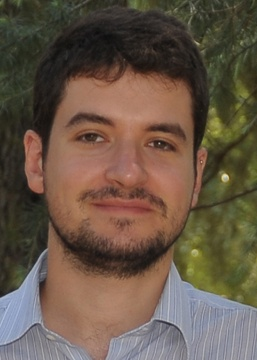 Federico Tombari合作论文数Google;Faculty of Computer Science, Technical University Munich;Open Perception11
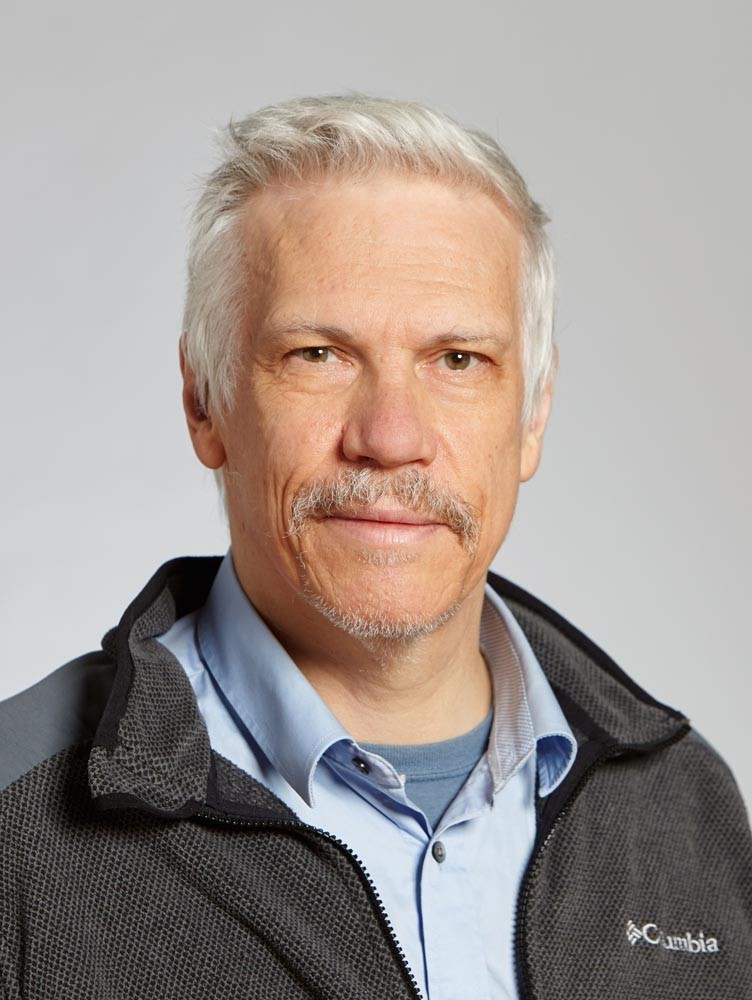 Luc Van Gool合作论文数Computer Vision Lab, Department of Information Technology and Electrical Engineering, ETH Zurich;Institute for Computer Science, Artificial Intelligence and Technology10
 Yannick Strümpler合作论文数3
 Mattia Segu合作论文数Computer Vision Lab, Department of Information Technology and Electrical Engineering, Eidgenössische Technische Hochschule Zürich2
 Hermann Blum合作论文数Autonomous Systems Lab, ETH Zurich2
 Shadi Albarqouni合作论文数Klinik für Diagnostische und Interventionelle Radiologie, University of Bonn;Helmholtz AI;Technical University of Munich2
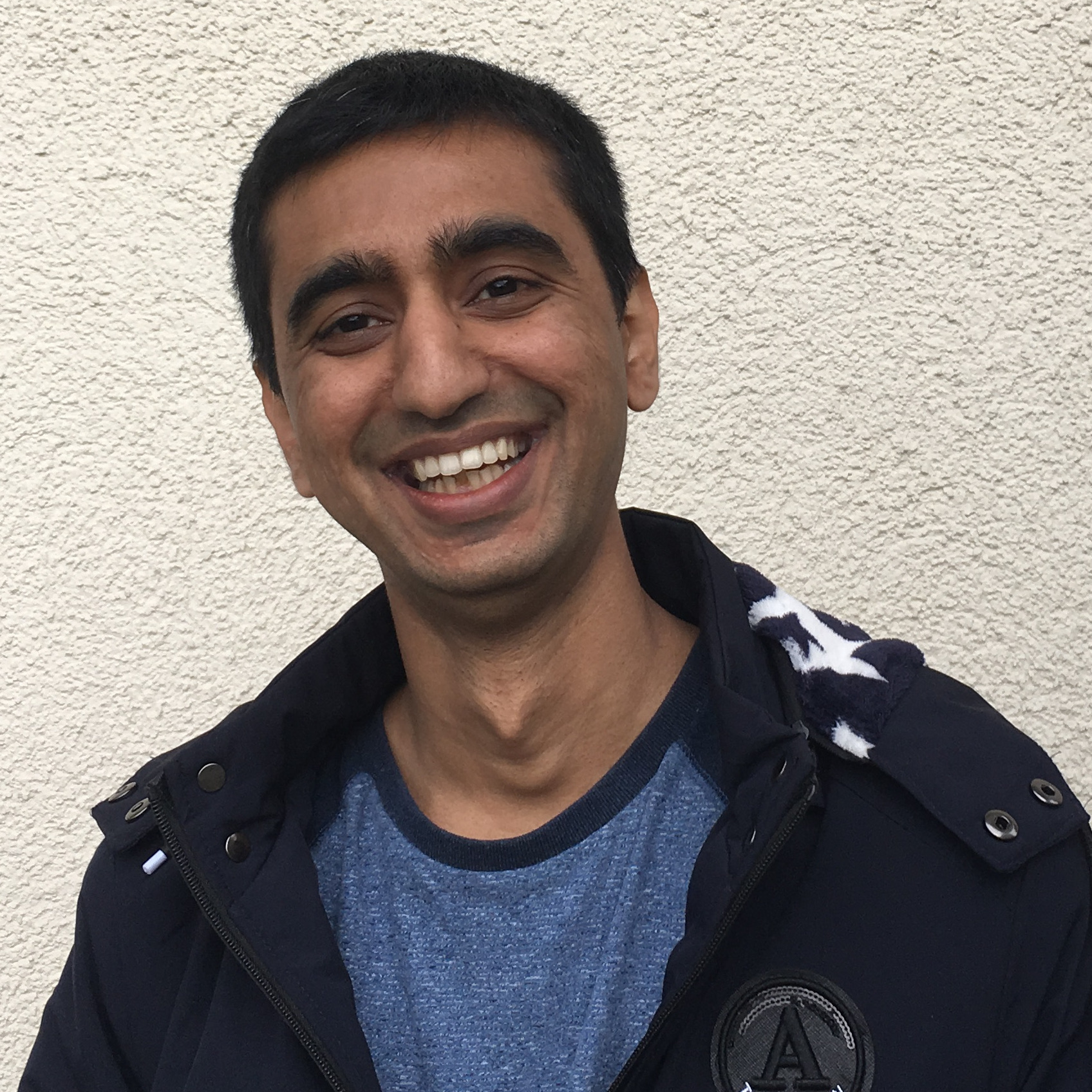 Ajad Chhatkuli合作论文数Computer Vision Lab, ETH Zurich;Dept. of Information Technology and Electrical Engineering, ETH Zurich2
 Tao Sun合作论文数Gradient Spaces Research Group, Civil and Environmental Engineering Department, School of Engineering, Stanford University;NVIDIA2
 Roland Siegwart合作论文数Autonomous Systems Lab, ETH Zurich;Department of Mechanical and Process Engineering, ETH Zurich2
 Xiaoran Chen合作论文数Computer Vision Laboratory, ETH Zurich2
 Ender Konukoglu合作论文数Department of Information Technology and Electrical Engineering, ETH Zurich2
 Cesar Cadena合作论文数Department of Mechanical and Process Engineering, ETH Zurich;Robotics Systems Lab, Institute of Robotics and Intelligent Systems, ETH Zurich2
 Fisher Yu合作论文数Huawei Technologies Ltd.2Luca Sieber合作论文数1Mengya Liu合作论文数1Diego Martín Arroyo合作论文数Tech Univ Munich, Munich, Germany1Huseyin Coskun合作论文数1
 Yuxuan Wang合作论文数1
 Martin Danelljan合作论文数Apple1Francesco Ferroni合作论文数1
 Riccardo Spezialetti合作论文数Eyecan.AI1
 Nassir Navab合作论文数School of Computation, Information and Technology, Technische Universitat Munchen;Department of Computer Science, Technical University of Munich1
 Bernt Schiele合作论文数Max Planck Institute for Informatics;Saarland University1
 Ren Yang合作论文数Microsoft Research Asia1




