Background: Burst suppression occurs in the EEG during coma and under general anaesthesia. It has been assumed that burst suppression represents a deeper state of anaesthesia from which it is more difficult to recover. This has not been directly demonstrated, however. Here, we test this hypothesis directly by assessing relationships between EEG suppression in human volunteers and recovery of consciousness. Methods: We recorded the EEG of 27 healthy humans (nine women/18 men) anaesthetised with isoflurane 1.3 minimum alveolar concentration (MAC) for 3 h. Periods of EEG suppression and non-suppression were separated using principal component analysis of the spectrogram. After emergence, participants completed the digit symbol substitution test and the psychomotor vigilance test. Results: Volunteers demonstrated marked variability in multiple features of the suppressed EEG. In order to test the hypothesis that, for an individual subject, inclusion of features of suppression would improve accuracy of a model built to predict time of emergence, two types of models were constructed: one with a suppression-related feature included and one without. Contrary to our hypothesis, Akaike information criterion demonstrated that the addition of a suppression-related feature did not improve the ability of the model to predict time to emergence. Furthermore, the amounts of EEG suppression and decrements in cognitive task performance relative to pre-anaesthesia baseline were not significantly correlated. Conclusions: These findings suggest that, in contrast to current assumptions, EEG suppression in and of itself is not an important determinant of recovery time or the degree of cognitive impairment upon emergence from anaesthesia in healthy adults.
Background: Despite its designation as a 'dissociative anaesthetic,' the dissociative and psychoactive effects of ketamine remain incompletely understood. The goal of this study was to characterise the subjective experiences and accompanying EEG changes with subanaesthetic doses of ketamine. Methods: High-density EEG was recorded in 15 human volunteers before, during, and after subanaesthetic ketamine infusion (0.5 mg kg(-1) over 40 min), with self-reported measures of altered states of consciousness obtained after ketamine exposure. Sensor- and source-level EEG changes were analysed with a focus on spectral power and regional changes. Results: Ketamine-induced altered states were characterised predominantly by dissociative experiences such as disembodiment and ego transcendence; sensory disturbances were also common. Ketamine broadly decreased low-frequency power, with mean reductions largest at alpha (8-12 Hz) in parietal ( 0.94 dB, P<0.001) and occipital ( 1.8 dB, P<0.001) channel clusters. Significant decreases in alpha were identified in the precuneus and temporal-parietal junction. Conclusions: Ketamine induces altered states of consciousness during periods of reduced alpha power in the precuneus and temporal-parietal junction. Modulation of these temporal-parietal loci are candidate mechanisms of the psychoactive effects of ketamine, given that this region is involved in multisensory integration, body representation, and consciousness.
We have compared the Thermomat electric undermattress (JMW Systems, Edinburgh, UK) and the Bair Hugger (Augustine Medical, Courtelary, Switzerland) forced-air warming blanket in 30 adult patients after cardiac surgery. All patients were warmed to an oesophageal temperature of 38 degrees C before termination of cardiopulmonary bypass (CPB); those with oesophageal temperatures < 35.5 degrees C at skin closure were allocated randomly to be rewarmed in the intensive care unit either on the Thermomat (n = 15) or under the Bair Hugger blanket (n = 15), at their highest settings. Oesophageal and lateral thigh skin temperatures were recorded every 15 min for 4 h. There was a significantly faster increase in core temperature (0.5 vs 0.75 degrees C h-1; P < 0.0002) and skin temperature (0.86 vs 1.3 degrees C h-1; P < 0.001) in the Bair Hugger group. However, there was no difference in the number of patients who reached a core temperature of 36 degrees C (15 Bair Hugger, 14 Thermomat) or 37 degrees C (11 Bair Hugger, seven Thermomat), or in the number of patients who reached a skin temperature of 37 degrees C in 4 h (four Bair Hugger, one Thermomat). Twelve patients in the Bair Hugger group reached a skin temperature of 36 degrees C compared with two in the Thermomat group (P < 0.001). The Bair Hugger warmed faster than the Thermomat both centrally and peripherally, and warmed more patients to a core temperature of 37 degrees C in 4 h, but did not reduce the time to tracheal extubation or alter important clinical aspects of postoperative course.
 Sn Pilkington合作论文数2
 George A. Mashour合作论文数Michigan Neuroscience Institute, University of Michigan2
 Vijay Tarnal合作论文数Department of Anesthesiology, Medical School, University of Michigan2Paul Picton合作论文数2M R Muench合作论文数1Pef Daubeney合作论文数1Dc Smith合作论文数1Sa Livesey合作论文数1
 L Brian Hickman合作论文数David Geffen School of Medicine, UCLA1A Nelson合作论文数Dept Philosophy, Western Michigan Univ1
 Connor Brennan合作论文数Ego1Wei Wang合作论文数1Sa Webber合作论文数1Vt Tsang合作论文数1Tarik Bel-Bahar合作论文数Department of Psychiatry, Icahn School of Medicine at Mount Sinai1
 Phillip Eleas Vlisides合作论文数Department of Anesthesiology, Medical School, University of Michigan1
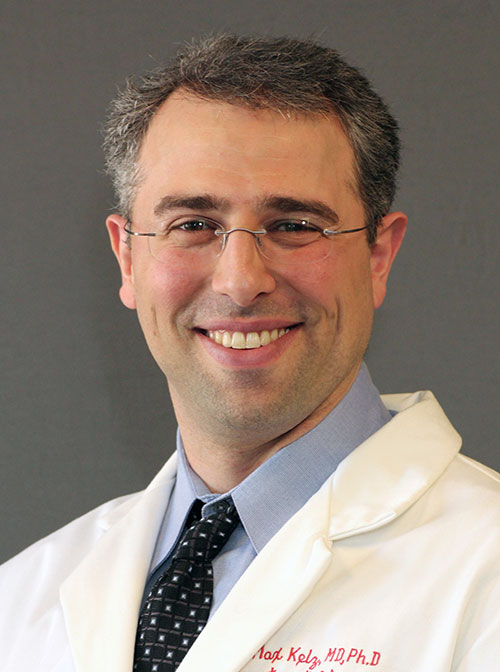 Max B. Kelz合作论文数Department of Anesthesiology and Critical Care, Perelman School of Medicine, University of Pennsylvania1Shortal Brenna合作论文数1
 Hannah R Maybrier合作论文数Department of Anesthesiology, Washington University School of Medicine1
 Ezra E Smith合作论文数Department of Psychology, University of Arizona1
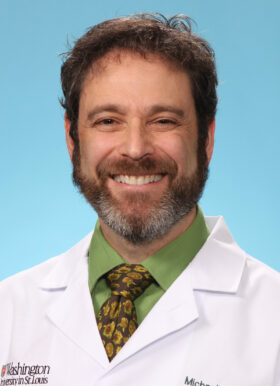 Michael Avidan合作论文数Division of Education, Department of Anesthesiology, School of Medicine, Washington University in St. Louis;Institute of Clinical and Translational Sciences, School of Medicine, Washington University in St. Louis;Roy and Diana Vagelos Division of Biology & Biomedical Sciences, School of Medicine, Washington University in St. Louis1D Hett合作论文数1
 Alexander Proekt合作论文数Fishberg Department of Neuroscience;Mount Sinai School of Medicine;Fishberg Department of Neuroscience, Mount Sinai School of Medicine1C.P. Shearman合作论文数1
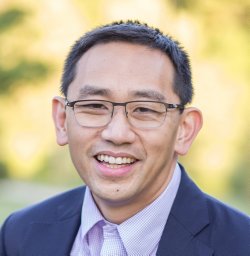 Ben Julian Agustin Palanca合作论文数Sleepy Brain Lab, Department of Anesthesiology, School of Medicine, Washington University1
 Hoameng Ung合作论文数Stanford University1
 B Litt合作论文数1Nan Lin合作论文数Regeneron Genetic Center1




