Cross-species pathway transplantation enables insight into a biological process not possible through traditional approaches. We replaced the enzymes catalyzing the entire Saccharomyces cerevisiae adenine de novo biosynthesis pathway with the human pathway. While the 'humanized' yeast grew in the absence of adenine, it did so poorly. Dissection of the phenotype revealed that PPAT, the human ortholog of ADE4, showed only partial function whereas all other genes complemented fully. Suppressor analysis revealed other pathways that play a role in adenine de-novo pathway regulation. Phylogenetic analysis pointed to adaptations of enzyme regulation to endogenous metabolite level 'setpoints' in diverse organisms. Using DNA shuffling, we isolated specific amino acids combinations that stabilize the human protein in yeast. Thus, using adenine de novo biosynthesis as a proof of concept, we suggest that the engineering methods used in this study as well as the debugging strategies can be utilized to transplant metabolic pathway from any origin into yeast.
The original version of this Article omitted a declaration from the Competing Interests statement, which should have included the following: ‘J.D.B. is a founder and Director of the following: Neochromosome, Inc., the Center of Excellence for Engineering Biology, and CDI Labs, Inc. and serves on the Scientific Advisory Board of the following: Modern Meadow, Inc., Recombinetics, Inc., and Sample6, Inc.’. This has now been corrected in both the PDF and HTML versions of the Article.
Engineering multicellularity is one of the next breakthroughs for Synthetic Biology. A key bottleneck to building multicellular systems is the lack of a scalable signaling language with a large number of interfaces that can be used simultaneously. Here, we present a modular, scalable, intercellular signaling language in yeast based on fungal mating peptide/G-protein-coupled receptor (GPCR) pairs harnessed from nature. First, through genome-mining, we assemble 32 functional peptide-GPCR signaling interfaces with a range of dose-response characteristics. Next, we demonstrate that these interfaces can be combined into two-cell communication links, which serve as assembly units for higher-order communication topologies. Finally, we show 56 functional, two-cell links, which we use to assemble three-to six-member communication topologies and a three-member interdependent community. Importantly, our peptide-GPCR language is scalable and tunable by genetic encoding, requires minimal component engineering, and should be massively scalable by further application of our genome mining pipeline or directed evolution.
Pathway transplantation from one organism to another represents a means to a more complete understanding of a biochemical or regulatory process. The purine biosynthesis pathway, a core metabolic function, was transplanted from human to yeast. We replaced the entire Saccharomyces cerevisiae adenine de novo pathway with the cognate human pathway components. A yeast strain was “humanized” for the full pathway by deleting all relevant yeast genes completely and then providing the human pathway in trans using a neochromosome expressing the human protein coding regions under the transcriptional control of their cognate yeast promoters and terminators. The “humanized” yeast strain grows in the absence of adenine, indicating complementation of the yeast pathway by the full set of human proteins. While the strain with the neochromosome is indeed prototrophic, it grows slowly in the absence of adenine. Dissection of the phenotype revealed that the human ortholog of ADE4, PPAT , shows only partial complementation. We have used several strategies to understand this phenotype, that point to PPAT/ADE4 as the central regulatory node. Pathway metabolites are responsible for regulating PPAT’s protein abundance through transcription and proteolysis as well as its enzymatic activity by allosteric regulation in these yeast cells. Extensive phylogenetic analysis of PPATs from diverse organisms hints at adaptations of the enzyme-level regulation to the metabolite levels in the organism. Finally, we isolated specific mutations in PPAT as well as in other genes involved in the purine metabolic network that alleviate incomplete complementation by PPAT and provide further insight into the complex regulation of this critical metabolic pathway.
 Jef D. Boeke合作论文数Department of Biochemistry and Molecular Pharmacology, Grossman School of Medicine, New York University;School of Medicine, Johns Hopkins University;CDI Labs, Inc.5
 Neta Agmon合作论文数Inst Syst Genet, NYU Langone Hlth5
 Miguel Jimenez合作论文数3
 James Brisbois合作论文数3
 Virginia W. Cornish合作论文数Department of Chemistry, Columbia University;Department of Systems Biology, Columbia University3Michael M. Shen合作论文数3
 Sonja Billerbeck合作论文数Department für Biosysteme, ETH Zürich3James A. Martin合作论文数2
 Tobias Schraink合作论文数2
 Maayan Baron合作论文数NYU Langone Health2Jun Chen合作论文数2Benjamin P Tu合作论文数Univ Texas SW Med Ctr Dallas, Dept Biochem, Dallas, TX 75390 USA2
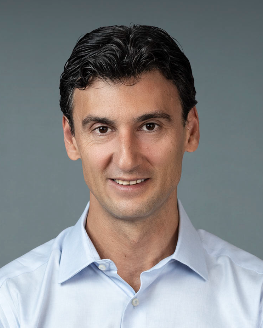 Itai Yanai合作论文数Department of Biochemistry and Molecular Pharmacology, Grossman School of Medicine, New York University;Institute for Systems Genetics, Grossman School of Medicine, New York University2
 David Fenyo合作论文数Department of Biochemistry and Molecular Pharmacology, Grossman School of Medicine, New York University2
 Paolo Mita合作论文数Department of Urology, New York University School of Medicine2Zuojian Tang合作论文数Center for Genomics and Bioinformatics;Indiana University;Center for Genomics and Bioinformatics, Indiana University2




