Maintaining performant code in a world of fast-evolving computer architectures and programming models poses a significant challenge to scientists. Typically, benchmark codes are used to model some aspects of a large application code’s performance, and are easier to build and run. Such benchmarks can help assess the effects of code or algorithm changes, system updates, and new hardware. However, most performance benchmarks are not written using a wide range of GPU programming models. The RAJA Performance Suite provides a comprehensive set of computational kernels implemented in a variety of programming models. We integrated the performance measurement and analysis tools Caliper and Thicket into the RAJA Performance Suite to facilitate performance comparison across kernel implementations and architectures. This paper describes the RAJA Performance Suite, performance metrics that can be collected, and experimental analysis with case studies. The RAJA Performance Suite and integration of Caliper and Thicket enabled us to effectively measure the variety of implementations on the variety of hardware, and automatically characterize subsets of kernels which exhibit similar bottlenecks—and therefore perform similarly on new architectures which provide a different balance between resources such as FLOPS and memory bandwidth. We definitively demonstrate that the most memory bound kernels show the most performance gains on architectures with high-bandwidth memory (HBM), and that the kernels that have other bottleneck may, to a lesser extent, benefit from the higher-FLOPS GPUs.
GPUs are increasingly popular in HPC systems, and more applications are adopting GPUs each day. However, the control synchronization of GPUs with CPUs is suboptimal and only possible after GPU kernel termination points, resulting in serialized host and device tasks. In this paper, we propose a novel CPU-GPU notification method that enables non-blocking in-kernel control synchronization of device and host tasks in combination with persistent GPU kernels. Using this notification method, we increase the overlap of CPU and GPU execution and with that parallelism. We present the concept and structure of the proposed notification mechanism together with in-kernel GPU-CPU control synchronization, using halo-exchange as an example. We analyze the performance of the halo-exchange pattern using our new notification method, as well as the interference between CPU and GPU operations due to the execution overlap. Finally, we verify our results using a performance model covering the halo-exchange pattern with the new notification method.
The US Department of Energy deployed the Summit and Sierra supercomputers with the latest state-of-the-art network interconnect technology in 2018 and both systems entered production in 2019. In this paper, we provide an in-depth assessment of the systems' network interconnects that are based on Enhanced Data Rate (EDR) 100 Gb/s Mellanox InfiniBand. Both systems use second-generation EDR Host Channel Adapters (HCAs) and switches with several new features such as Adaptive Routing (AR), switch-based collectives, and HCA-based tag matching. Although based on the same components, Summit's network is "non-blocking" (i.e., a fully provisioned Clos network) and Sierra's network has a 2:1 taper between the racks and aggregation switches. We evaluate the two systems' interconnects using traditional communication benchmarks as well as production applications. We find that the new Adaptive Routing dramatically improves performance but the other new features still need improvement.
Modern high-performance computing systems are diverse, with hardware designs ranging from homogeneous multi- core CPUs to GPU or FPGA accelerated systems. Achieving desir- able application performance often requires choosing a program- ming model best suited to a particular platform. For large codes used daily in production that are under continual development, architecture-specific ports are untenable. Maintainability re- quires single-source application code that is performance portable across a range of architectures and programming models. In this paper we describe RAJA, a portability layer that enables C++ applications to leverage various programming models, and thus architectures, with a single-source codebase. We describe preliminary results using RAJA in three large production codes at Lawrence Livermore National Laboratory, observing 17×, 13× and 12× speedup on GPU-only over CPU- only nodes with single-source application code in each case.
 Brian S. Ryujin合作论文数4
 Olga Pearce合作论文数Texas A&M University4Adam Kunen合作论文数2Brian Pudliner合作论文数2Rich Hornung合作论文数2
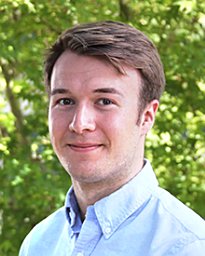 David Beckingsale合作论文数Department of Computer Science, University of Warwick2
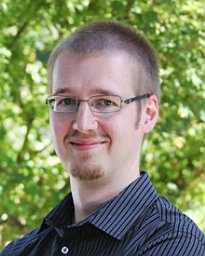 David Bohme合作论文数2Shawn Dawson合作论文数1Larry Fried合作论文数1
 William Killian合作论文数1Scott McKinley合作论文数1Bret Beck合作论文数1Ian Lumsden合作论文数1Godfree Gert合作论文数1Peter Robinson合作论文数1Marty McFadden合作论文数1Adam Bertsch合作论文数Lawrence Livermore National Laboratory1
 Bengisu Elis合作论文数1
 Stephanie Brink合作论文数Lawrence Livermore National Laboratory1
 Tom Scogland合作论文数Lawrence Livermore Natl Lab, Livermore, CA 94550 USA1Robert Carson合作论文数1Ramesh Pankajakshan合作论文数Lawrence Livermore Natl Lab, Livermore Comp, Livermore, CA 94550 USA1c m mattoon合作论文数1Blake R合作论文数1John Loffeld合作论文数1
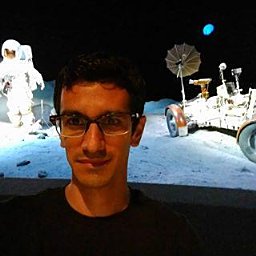 Arturo Vargas合作论文数1
 Morgan Brandon E合作论文数Lawrence Livermore National Laboratory1Holger Jones合作论文数1
 Martin Schulz合作论文数School of Computation, Information and Technology, Technische Universitat Munchen1
 M. A. Clark合作论文数1
 Michela Taufer合作论文数Global Computing Laboratory, Min H. Kao Department of Electrical Engineering and Computer Science, University of Tennessee, Knoxville1
 Brian Stephen Smith合作论文数The, Pennsylvania State University1Christopher Zimmer合作论文数Otsuka Maryland Research Institute1Matthew L. Leininger合作论文数1Ian Karlin合作论文数University of Colorado1Scott Atchley合作论文数Oak Ridge National Laboratory, Oak Ridge, TN1Hai P. Le合作论文数1Sorin Bastea合作论文数1Peter N. Brown合作论文数Center for Applied Scientiflc Computing;Lawrence Livermore National Laboratory;Center for Applied Scientiflc Computing, Lawrence Livermore National Laboratory1
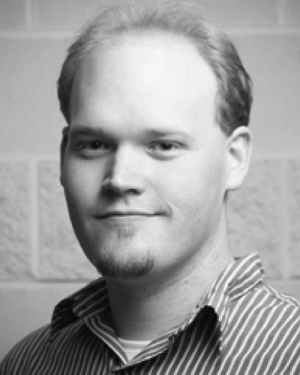 Thomas R. W. Scogland合作论文数1
 André Walker-Loud合作论文数Nuclear Science Division, Lawrence Berkeley National Laboratory1
 Phil Sterne合作论文数Lawrence Livermore National Laboratory1
 Kenneth Weiss合作论文数University of Maryland, College Park1
 Nathan R. Barton合作论文数the Mechanical and Aerospace Engineering Department, Cornell University1Russell Whitesides合作论文数Environmental Energy Technologies Division, Lawrence Berkeley National Laboratory1M. Aaron Skinner合作论文数1
 Cyrus Harrison合作论文数College of Engineering, University of Florida1Riyaz Haque合作论文数1




