Reviewed by: Climate and Literature ed. by Adeline Johns-Putra Jay Labinger (bio) Adeline Johns-Putra, ed., Climate and Literature. Cambridge: Cambridge University Press, 2019, 346 pp. $120 hardback. One might expect a new book sporting this title to be mainly about literary responses to anthropogenic climate change, which has played such a large role in public discourse over the last few decades. While that certainly is one focus of this collection of essays by a number of (primarily American and English) scholars, the scope of the work is much broader, tracing connections between climate and literature all the way back to the beginnings of the latter—and the former as well: climate and literature have always been inextricably linked, in an important sense, as editor Adeline Johns-Putra proposes in her introduction: "climate emerges discursively… [it] necessarily possesses an intimate relationship with language, and through language, to literature" (pp. 1–2). The work consists of seventeen chapters (besides the introduction), grouped into three sections. Part I, "Origins," opens with Robert Markley's "Literature, Climate, and Time," which considers in some detail several works from the nineteenth and twentieth centuries, but also exposes more general issues that reappear frequently in subsequent chapters: turning points in the historical representation of climate in literature; the potential utility of literary treatment of climate; the association of climate literature with science fiction; and the relationship between religious belief and climate thinking. (I will defer discussion of these common themes until all the essays [End Page 235] have been introduced.) Chapter 2, by Jesse Oak Taylor, concentrates on atmosphere as both literal and figurative component of the novel, taking Wuthering Heights as the prime exemplar; it is followed by Tess Somerwell's account of how the cycle of seasons figures in (European) literature as a link between nature and culture. The remainder of part I, and the book as a whole, follows a mostly chronological arc. In "Climatic Agency in the Classical Age," Daryn Leboux notes that someone (possibly Hippocrates, but that is not definitively known) claimed "one can attribute the characteristics of individual cities, of whole nations, and even whole regions, to their climates" (p. 72). P. S. Langeslag moves ahead to the medieval period, addressing two aspects: the prominent setting of borderline-habitable climates in Norse literature, and the part played by climate in "end-time" writings in the medieval church. The section closes with an essay on Shakespearean climate by Lowell Duckert, who—citing a pair of climate scientists who place the start of the Anthropocene in 1610—argues for its relevance to our own climate thinking. Part II is labeled "Evolution;" its first chapter, by historian of science Jan Golinski, suggests that the Enlightenment brought about a major alteration of our conceptions of weather and climate. Particularly in Britain, increased attention to the measurement and recording of data led people "to conceive of weather as a constant—and not merely occasional—presence in human lives" (p. 111). The perception of extreme weather events as manifestations of divine intervention gave way to a more stable view of climate, and even to early belief that climate could be altered—improved, specifically—by human activity, thus ameliorating the inhospitable North American environment towards one more like Europe, better fit for civilized people. The next two chapters amplify those themes: David Higgins's "British Romanticism and the Global Climate" explores literary responses to the climatic effects of two immense volcanic eruptions around the turn of the nineteenth century, while Morgan Vanek looks into how transatlantic climate differences influenced political developments of the period. Jessica Howell shows how the theme of climate as cultural determinant informed thinking about race and empire in writers such as Burton, Conrad, and Kipling. The last three chapters in this section take us into the 1900s. Justine Pizzo's "Ethereal Women: Climate and Gender from Realism to the Modernist Novel" harnesses the multivalent word "ethereal" to relate climate and feminine spirituality in works from the Victorian era through the first half of the twentieth century, followed by Chris Pak's examination of the theme of terraforming in several classic twentieth-century science fiction novels (Arthur C. Clarke's The Sands of...
We are greatly pleased to participate in this special issue of Inorganica Chimica Acta celebrating Malcolm Green. Having no new science worthy of the occasion to report (and feeling no great urge to recycle older work yet one more time), we offer instead a brief appreciation of Malcolm’s contributions to inorganic chemistry, as well as what he has meant to us throughout our careers, both personally and professionally. Malcolm was one of the earliest products of the Geoffrey Wilkinson school of organotransition metal chemistry, a group which, as one of us has documented [1], was a major factor in the mid-20th century “renaissance” of inorganic chemistry, in which Malcolm himself played no small part. Many of his early studies, both during his graduate student days and in his independent career at Oxford (following a brief sojourn at Cambridge), were focused on bent metallocenes and transition metal hydride complexes (often both): papers that had a significant influence on our own research programs. But even more importantly, his special ability to identify and delineate patterns of structure and reactivity was central to the transformation of organotransition metal chemistry, from a collection of interesting but poorly understood observations to the systematic and powerfully unified field it is today.
The existence of the then-so-called inert gases was discovered over a short period of time in the 1890s; the demonstration that they were in fact not inert took place during an even shorter period of time, in 1962. This paper surveys the key events, as well as some of the earlier work that led up to them, of those two crucial episodes in the history of chemistry.
An appreciation of John Bercaw from two of his long-time colleagues and friends.
The dehydrogenation of alkanes offers potentially attractive routes for more effective utilization of relatively low-value feedstocks as well as functionalization of more complex molecules. While such transformations are currently carried out primarily as heterogeneously catalyzed nonoxidative processes, other catalytic modes – heterogeneous oxidative, homogeneous nonoxidative, or homogeneous oxidative – are also under investigation. This chapter compares and contrasts these various approaches, including consideration of their relative advantages and disadvantages.
The selectivity-determining mechanistic steps of ethylene tetramerization and trimerization are evaluated in light of isotopic labeling experiments. A mechanism based upon a shared chromacycloheptane intermediate rather than the C-C coupling of chromacyclopentanes or Cr speciation into independent trimerization and tetramerization catalysts is consistent with the data, including observed upper limits on 1-octene selectivity.
It was an Australian/British chemist, Sir Ronald Nyholm, who first spoke of a "renaissance" of inorganic chemistry; but its emergence as a newly dynamic subfield, beginning in the 1950s, can be seen even more clearly in the US. While John Bailar is often credited as the "Father of American Inorganic Chemistry," it is arguable that Fred Basolo, Bailar's student at Illinois, has had the most lasting impact on the dramatic growth of the field in American academia. Justification for that assertion includes the remarkable representation of his academic descendants among inorganic faculty members of American universities; comments and reminiscences from the students he trained; and an examination of his seminal contributions in the form of both original research and textbooks, particularly the groundbreaking 1958 work Mechanisms of Inorganic Reactions, written with his Northwestern colleague Ralph Pearson, which played a central role in raising the intellectual stature of inorganic chemistry by bringing the study of mechanism to the forefront.
Homogeneous catalysis of CO hydrogenation has long been a topic of interest in the organometallic community. In this review article I discuss a variety of approaches to the problem that have been a significant component of my research program for over 40 years.
Widespread interest in mechanistic work among Inorg. chemists did not really appear until the 1950s, considerably later than for their org. colleagues. Ronald Nyholm and others have identified a mid-century "renaissance" of inorg. chem., and the turn towards mechanism played a major part in that development. I will discuss the central role of Fred Basolo and Ralph Pearson's 1958 monograph "Mechanisms of Inorg. Reactions" in influencing that turn, based upon a combined horizontal and vertical sampling of inorg. textbooks around that period.
The selective trimerization of ethylene constitutes a useful source of 1-hexene, an important co-monomer for the prodn. of linear low-d. polyethylene (LLDPE), while selective trimerization of α-olefins could lead to new methodol. for upgrading light hydrocarbons to more valuable fuels and lubricants. I will discuss several aspects of Cr- and Ti-catalyzed trimerization studied by our group, including: 1) a diagnostic test for the metallacyclebased mechanism proposed to account for selectivity; 2) spectroscopic evidence that a very small fraction of total species is responsible for activity with a Cr-based catalyst; 3) a stoichiometrically activated, homogeneous Ti-based catalyst that both permits detailed mechanistic study for ethylene trimerization and is active for α- olefin trimerization; 4) a supported version of the Ti catalyst that gives significantly improved performance; and 5) a co-supported tandem catalyst for LLDPE prodn. using ethylene as the sole feed.
The supported titanium catalyst s(FI)Ti, generated by adding (FI)TiCl3 to MAO-treated SiO2 (FI = (N-(5methyl-3-(1-adamantyl)salicylidene)-2'(2 ''-methoxyphenyl)anilinato), effects the selective trimerization of the linear alpha-olefins (LAOS) propene, 1-pentene, 1-hexene, and 1-decene, with >95% selectivity for trimers and similar to 85% selectivity to a single isomer thereof (2,3,5-trialkyl-1-hexene). Mechanistic interpretations are offered for the high regioselectivity as well as for some unusual kinetics behavior, including third-order dependence on LAO concentration and nearly identical initial rates at 0 and 25 degrees C.
A phenoxy-imine titanium trimerization catalyst and a silylene linked cyclopentadienyl-amido titanium polymn. catalyst are co-immobilized on methylaluminoxane/silica particles to create a tandem catalytic system to generate linear low d. polyethylene (LLDPE) from an ethylene only feed. The 1-hexene incorporation into the polymer can be controlled by varying the ethylene pressure.
Light alkanes and alkenes are abundant but under-utilized energy carriers due to their high volatility and low energy d. A tandem catalytic approach for the coupling of alkanes and alkenes has been developed in order to upgrade these light hydrocarbons into heavier fuel mols. This process involves alkane dehydrogenation by pincer- ligated iridium complexes, and alkene dimerization by a Cp*TaCl_2(alkene) catalyst. These two homogeneous catalysts operate with up to 60 /30 cooperative turnovers (Ir/Ta) in the dimerization of 1- hexene /n- heptane, giving C_(13)/C_(14) products in 40 % yield. Because there is no kinetically relevant interaction between the two catalysts, the tandem mechanism can be entirely described using the two independent catalytic cycles. A nickel dimerization catalyst produces largely linear dimers, unlike the tantalum dimerization catalyst that produces gem- substituted dimers. Attempts to realize a truly catalytic Ni/Ir version that produces only a C_(2n) alkane from a C_n olefin and C_n alkane feed will be described.
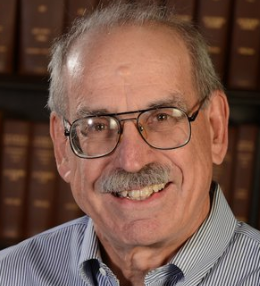 John E. Bercaw合作论文数Division of Chemistry and Chemical Engineering, California Institute of Technology188
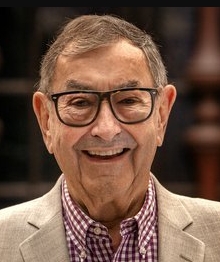 Harry B. Gray合作论文数Department of Applied Physics and Materials Science, Division of Engineering and Applied Science, California Institute of Technology;Beckman Institute Laser Resource Center, California Institute of Technology26
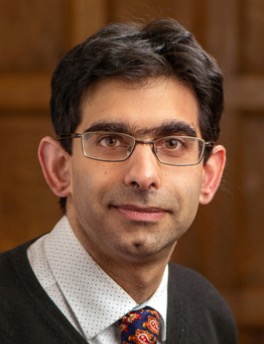 Nilay Hazari合作论文数Department of Chemistry, Yale Faculty of Arts and Sciences, Yale University;Yale School of Medicine, Yale University22
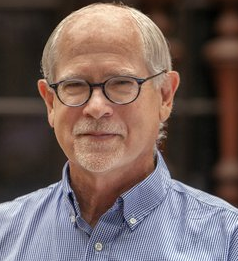 Mark E. Davis合作论文数Division of Chemistry and Chemical Engineering, California Institute of Technology17
 Michael W. Day合作论文数12
 Shannon S. Stahl合作论文数Department of Chemistry, College of Letters & Science, University of Wisconsin-Madison12
 Jeffrey Schwartz合作论文数Princeton Materials Institute11Lawrence M. Henling合作论文数11Aaron Sattler合作论文数11
 Mark W. Grinstaff合作论文数Chobanian & Avedisian School of Medicine, Boston University;Department of Biomedical Engineering, College of Engineering, Boston University;Nanotechnology Innovation Center, Boston University10Edward R. Birnbaum合作论文数10Emmanuelle Despagnet-Ayoub合作论文数10
 W. Robert Scheidt合作论文数Department of Chemistry and Biochemistry, University of Notre Dame8
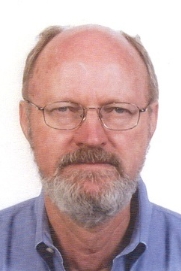 Robert H. Grubbs (罗伯特·格拉布斯)合作论文数Division of Chemistry and Chemical Engineering, California Institute of Technology8Paul F. Oblad合作论文数8Wp Schaefer合作论文数7
 Parisa Mehrkhodavandi合作论文数Department of Chemistry, Faculty of Science, The University of British Columbia7
 Alexander Miller合作论文数Department of Chemistry, College of Arts and Sciences, The University of North Carolina at Chapel Hill7
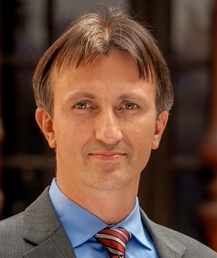 Theodor Agapie合作论文数Division of Chemistry and Chemical Engineering, California Institute of Technology7john glenn sunley合作论文数6George Chen合作论文数6Alan F. Heyduk合作论文数6
 Aluthge Dinesh C合作论文数Department of Chemistry, University of British Columbia6
 Christopher Dillon合作论文数6
 Joseph Holles合作论文数Michigan Technological University6
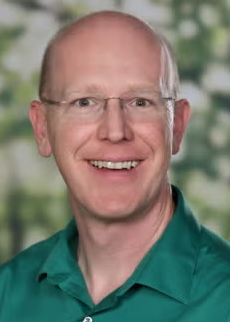 Travis J. Williams合作论文数Department of Chemistry, Dana and David Dornsife College of Letters, Arts and Sciences, University of Southern California;Catapower Inc6
 Valerie J. Scott合作论文数6Kwai Sam Wong合作论文数6Mw Holtcamp合作论文数5Ks Wong合作论文数5
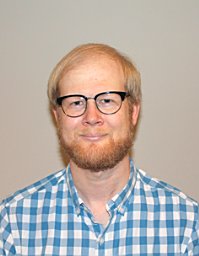 David C. Leitch合作论文数Dept Chem, Univ Victoria5
 Tom G. Driver合作论文数Department of Chemistry, University of Illinois at Chicago5
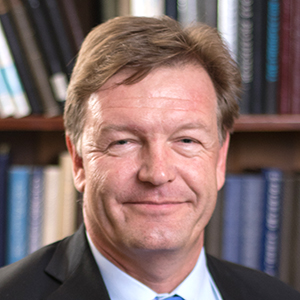 Andrew Herring合作论文数Colorado School of Mines;Collaborative Energy Solutions5
 Nathan M. West合作论文数Arnold and Mabel Beckman Laboratories of Chemical Synthesis, California Institute of Technology5John D. Scollard合作论文数5
 Suzanne R. Golisz合作论文数Department of Chemistry, University of Virginia5
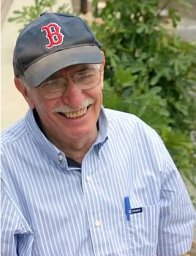 Stephen J. Weininger合作论文数Department of Chemistry, Worcester Polytechnic Institute Worcester5
 Rachel C. Klet合作论文数Department of Molecular Physiology and Biological Physics, University of Virginia5susan schofer合作论文数4David R Weinberg合作论文数4Vv Rostovtsev合作论文数4Lm Henling合作论文数4Pl Diaconescu合作论文数4Je Bercaw合作论文数4S. Baral合作论文数4
 David Lyon合作论文数Lonza, R&D4John N. Bonfiglio合作论文数4L. Henling合作论文数4David L. Grimmett合作论文数4




