J. David Singer, a globally recognized scholar of international politics, died Monday, December 28, 2009, in Ann Arbor, Michigan. He was involved in an auto accident on September 22 and had been hospitalized since. At the time of his death, Singer was Professor Emeritus at the University of Michigan, where he'd been on the faculty from 1958 until retiring in 2002. He was 84 years old.
Drugi tom antologii tekstów źródłowych zawiera starannie wybrane i po raz pierwszy przetłumaczone na język polski fragmenty 40 prac naukowych, po 1989 roku kształtujących naukę o stosunkach międzynarodowych. Zbiór otwiera fragment słynnej książki Cynthii
States negotiate over the specific terms of multilateral treaties because those terms determine states' willingness to ratify the treaty. In some cases, a state might decline to ratify a treaty it otherwise supports because specific terms are too far from those it prefers. States and inter-governmental organizations negotiating treaties would like to uncover the minimal terms needed to secure the ratification of key states, but under what circumstances will those states candidly reveal those terms? Using a spatial representation of the issues in a treaty negotiation, we use mechanism design to determine what information states will reveal in a treaty negotiation. We find that states are willing to reveal how they would like tradeoffs between different issues to be resolved but not the minimal terms they require for ratification. Further, negotiations cannot always separate types that need concessions to ratify from other types that would like concessions but would ratify the treaty even if they do not receive them. These findings provide insight into how treaty negotiations can succeed or fail, and they lay the theoretical groundwork for a new line of empirical research on how multilateral treaties are negotiated.
This chapter analyzes a specific possible proliferant, Taiwan, using a general predictive model of foreign policy. It focuses on bureaucratic infighting or on structural models of the international system. The chapter presents an approach that combines elements of each, taking seriously international constraints and domestic politics. Nuclear proliferation is one area of foreign policy to which this model can be applied. Taiwan’s nuclear research program is monitored closely by the United Nations and the United States. The objective behind the close monitoring is to prevent the development of nuclear weapons. The monotonicity theorem provides a basis for predicting when policy debates are expected to produce negotiated settlements or are expected to lead to an escalation of friction between competing interests. Nuclear proliferation poses a complex nexus of issues. Most immediate is whether a country will develop a nuclear weapons capability.
The complexity of cross-domain deterrence is a major barrier to establishing coordinated expectations about violations and consequences. For a system of cross-domain deterrence to work, actors must understand what actions will trigger a response, what the response is likely to be, and how willing the respondent is to act. Any such system is likely to be less robust than Cold War nuclear deterrence because of the number of domains involved, constraints on revealing secret capabilities or even the identity of the challenger, and a propensity for provocations that fall below the established threshold of response. This chapter recommends using an analogy to the law of war rather than to nuclear deterrence to understand the possibilities of setting up a workable regime of cross-domain deterrence, even as the author is pessimistic about the ability of any collective regime to adequately manage the complexity of cross-domain deterrence.
Abstract Theory shapes how data is collected and analyzed in at least three ways. Theoretical concepts inform how we collect data because data attempt to capture and reflect those concepts. Theory provides testable hypotheses that direct our research. Theory also helps us draw conclusions from the results of empirical research. Meanwhile, research using quantitative methods seeks to be rigorous and reproducible. Mathematical models develop the logic of a theory carefully, while statistical methods help us judge whether the evidence matches the expectations of our theories. Quantitative scholars tend to specialize in one approach or the other. The interaction of theory and data for them thus concerns how models and statistical analysis draw on and respond to one another. In the abstract, they work together seamlessly to advance scientific understanding. In practice, however, there are many places and ways this abstract process can stumble. These difficulties are not unique to rigorous methods; they confront any attempt to reconcile causal arguments with reality. Rigorous methods help by making the issues clear and forcing us to confront them. Furthermore, these methods do not ensure arguments or empirical judgments are correct; they only make it easier for us to agree among ourselves when they do.
Kenwick, Vasquez, and Powers contend that defensive alliances provoke conflict; Leeds and Johnson argue that they deter conflict. I use a formal model to deduce conditions under which alliances provoke and those under which they deter, allowing us to distinguish the two effects. The model shows that both sets of analyses include cases that should be left out of an analysis of whether alliances are more likely to provoke or deter. I re-analyze both sides’ data and find evidence suggestive that alliances provoke only when the two sides do not have a recent history of conflict or alliances but deter when they do.
The revolution in information technology and the new global economic linkages have lifted parts of the Indian population to levels of living and lifestyles comparable to those of the affluent West. However vast sections of the population are still mired in poverty and insecurity, struggling with poor infrastructure. Despite the modern lifestyles and consumption that one notices in the middle and upper middle classes, large sections of the Indian population remain steeped in traditional ways. The economic and political institutions of India are often anchored in vernacular categories and local contexts, notwithstanding their modern veneer. To Western students of India’s economics and politics, specific features of Indian politics such as the hiatus between modernity and tradition and the sporadic outbreak of Maoist violence (long extinct in China, its country of origin) might appear exotic or archaic. Some of these themes …
The laws of war are effective to the extent that they change how states and their soldiers fight. How the law plays out in practice – that is, how warring parties and their soldiers observe or violate the abstract principles in combat – hinge on the marriage of the abstract principles of the law to the practical situations faced on the battlefield. The practical implications of the abstract principles of that law aid the formation of expectations of conduct on the battlefield. These strategic expectations of how the other side will act shape calculations to observe or violate the law. These shared expectations can create either a battlefield limited by the restrictions of the law or one governed solely by the logic of kill-or-be-killed. Public acceptance of treaties by both sides creates expectations that the limits of the law will be observed by both sides to the best of their abilities. Such expectations may not be realized in practice because of the difficulties of limiting violence during war.
 Randolph M. Siverson合作论文数Department of Political Science, University of California, Davis34
 Alastair Smith合作论文数Department of Politics, New York University31
 Bruce Bueno De Mesquita合作论文数Department of Politics, Ares & Science, New York University29Bb Demesquita合作论文数7
 James A. Robinson合作论文数Harris School of Public Policy, University of Chicago;Pearson Institute for the Study and Resolution of Global Conflicts2
 Paul F. Diehl合作论文数university of illinois at urbana champaign2ER Zorick合作论文数2mridula mukherjee合作论文数1Granville Austin合作论文数1Bidyut Chakrabarty合作论文数1Peter Berger合作论文数1Meredith Reid Sarkees合作论文数1Seema Gahlaut合作论文数1GA Almond合作论文数1Reinhard Bendix合作论文数1Alexander Wendt合作论文数1BR Ambedkar合作论文数1tressa e tabares合作论文数1Jessica S. Sun合作论文数1Katharine Adeney合作论文数1
 Sanjib Baruah合作论文数Bodoland University1
 Harihar Bhattacharyya合作论文数University of Burdwan1
 Kevin L. Cope合作论文数Law & Publ Policy, Univ Virginia1
 Jean-Laurent Rosenthal合作论文数Department of Humanities and Social Sciences, California Institute of Technology1
 Peter Rosendorff合作论文数Program in International Relations, College of Arts & Science, New York University1
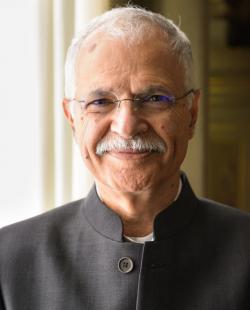 Pradeep K Chhibber合作论文数Department of Political Science, University of California, Berkeley1
 Rajesh Basrur合作论文数S. Rajaratnam School of International Studies, Nanyang Technological University1Paul Poast合作论文数Committee on International Relations, The University of Chicago1
 Rochona Majumdar合作论文数Department of Cinema and Media Studies, The University of Chicago1Robert Axelrod合作论文数1
 Tariq Ali合作论文数College of Veterinary Medicine, China Agricultural University1Von Hagen-Jamar Alexander合作论文数1
 Avner Greif合作论文数Institute for Economic Policy Research, Stanford University;Department of Economics, School of Hmanities and Sciences, Stanford University1Sudha Pai合作论文数1
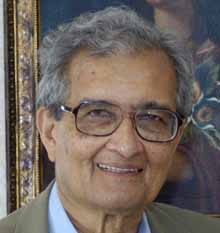 Amartya Sen合作论文数Department of Economics, Faculty of Arts and Sciences, Harvard University1
 Pranab Bardhan合作论文数Department of Economics, University of California, Berkeley;Graduate School, University of California, Berkeley1
 Michael Brecher合作论文数Department of Political Science, McGill University1
 Douglas C. North合作论文数Department of Economics, College of Arts & Sciences, Washington University in St. Louis1
 Dani Rodrik合作论文数John F. Kennedy School of Government, Harvard Kennedy School, Harvard University1
 Steven Brams合作论文数Department of Politics, College of Arts & Science, New York University1Brigitte Berger合作论文数1
 Daron Acemoglu合作论文数Department of Economics, Massachusetts Institute of Technology1Bipan Chandra合作论文数1
 Kenneth A. Shepsle合作论文数Department of Government, Harvard University;Institute for Quantitative Social Science, Harvard University1Ronald B. Mitchell合作论文数Department of Political Science, University of Oregon1Sean M. Lynn-Jones合作论文数1Kanchan Chandra合作论文数1
 Thomas H. Oatley合作论文数1




