This report was prepared as an account of work sponsored by an agency of the United States Government. Neither the United States Government nor any agency thereof, nor any of their employees, makes any warranty, express or implied, or assumes any legal liability or responsibility for the accuracy, completeness, or usefulness of any information, apparatus, product, or process disclosed, or represents that its use would not infringe privately owned rights. Reference herein to any specific commercial product, process, or service by trade name, trademark, manufacturer, or otherwise does not necessarily constitute or imply its endorsement, recommendation, or favoring by the United States Government or any agency thereof. The views and opinions of authors expressed herein do not necessarily state or reflect those of the United States Government or any agency thereof. MASTER
This paper reports on a mass and energy balance model that has been developed to evaluate the overall system efficiencies of a thermal reformer-heat exchanger system capable of delivering hydrogen to the air intake of a gasoline engine. The mass and energy balance model is utilized to evaluate the conditions where energy losses associated with fuel reformation may be offset by increases in engine efficiencies.
Onboard hydrogen generation using compact plasmatron devices could provide important new possibilities for reducing pollution from motor vehicles, making use of alternative fuels, and increasing engine efficiency. These improvements would involve the use of the plasmatron as a very small, rugged, rapid response and highly flexible means of electrical heating of gases. Plasmatron heating could be used to facilitate conversion of a wide range of hydrocarbon fuels into hydrogen-rich gas onboard a vehicle. Use of combinations of fuels is possible through potential transformation of a variety of fuels into hydrogen-rich gas. Another advantage of use of onboard plasmatron generation of hydrogen is that it could be used only when required and could be readily turned on and off. Preliminary experimental studies of plasmatron conversion of difficult-to-use alternative fuels (biofuels), iso-octane (representative of gasoline), and diesel fuel are described. Concepts for application to trucks and other heavy duty vehicles, sport utility vehicles and automobiles are discussed.
Electrochemical elution was investigated as an alternative method to acid elution for the desorption of cesium from loaded ion exchange resins. The approach was found to have several potential advantages over existing technologies, in particular, electrochemical elution eliminates the need for addition of chemicals to elute cesium from the ion exchange resin. Also, since, in the electrochemical elution process the eluting solution is not in direct contact with the ion exchange material, very small volumes of the eluting solution can be used in a complete recycle mode in order to minimize the total volume of the cesium elute. In addition, the cesium is eluted as an alkaline solution that does not require neutralization with caustic to meet the tank farm specifications. Other advantages include easy incorporation of the electrochemical elution process into the present cesium recovery schemes.
A microwave plasma continuous emissions monitor has been successfully demonstrated for sensitive (<1 ppb), real time measurements of trace metals in furnace exhaust. The instrument uses a robust, up to 1.5 kW, 2.45 GHz microwave plasma sustained in a portion of the undiluted furnace exhaust flow for atomic emission spectroscopy. The waveguide device is constructed of refractory materials compatible with high-temperature environments (≳500 °C) and is flange mountable into the inside of the furnace exhaust duct. Fused quartz fiber optics in close proximity to the plasma flame transmit the UV through visible emission (190–690 nm) to three spectrometers for simultaneous monitoring of several metals. This instrument has been used for continuous monitoring for a 49 h period with 0.5 s time resolution on a dc graphite electrode arc furnace during a soil vitrification test. Results are presented for chromium, manganese, and iron emissions during soil loading operations.
A 135 GHz heterodyne receiver with a rotatable graphite waveguide/mirror system has been implemented on a waste remediation direct-current arc furnace for internal surface temperature measurements. The linear temperature measurement range extends from <1° to approximately 15,000 °C relative to ambient with a simultaneous capability to monitor surface reflectivity with the local oscillator leakage. Reliable and robust operation on a continuous 24 h basis in a smoky, dirty furnace environment is demonstrated for a total of five furnace runs reaching a maximum temperature of 2200 °C. Complete temperature profile measurements with approximately 5 cm spatial resolution clearly documented thermal gradients on the slag melt surface and refractory walls and ceiling for all operating regimes of the furnace. The unique active probing capability of this instrument provided additional real-time information on melt surface turbulence, changing furnace wall emissivity, and millimeter-wave optic losses inside the furnace.
The first successful detection of plutonium with a continuous microwave plasma emissions monitor has been demonstrated. Seven plutonium emission peaks in the 362 - 366 nm and 449 - 454 nm ranges were clearly observed. The strongest peak was at 453.62 nm. This peak and five of the other plutonium peaks were easily distinguishable from possible interference from iron emission peaks with a spectrometer resolution of 0.1 nm. 2 refs., 3 figs.
The US Department of Energy`s Hanford Site in Richland, Washington, has 177 underground storage tanks that contain approximately 61 million gallons of radioactive waste. The current cleanup strategy is to retrieve the waste and separate components into high-level and low-level waste. However, many of the tanks contain organic compounds that create concerns associated with tank safety and efficiency of anticipated separation processes. Therefore, a need exists for technologies that can safely and efficiently destroy organic compounds. Laboratory-scale studies conducted during FY 93 have shown proof-of-principle for electrochemical destruction of organics. Electrochemical oxidation is an inherently safe technology and shows promise for treating Hanford complexant concentrate aqueous/ slurry waste. Therefore, in support of Hanford tank waste pretreatment needs, the development of electrochemical organic destruction (ECOD) technology has been undertaken. The primary objective of this work is to develop an electrochemical treatment process for destroying organic compounds, including tank waste complexants. Electroanalytical analyses and bench-scale flow cell testing will be conducted to evaluate the effect of anode material and process operating conditions on the rate of organic destruction. Cyclic voltammetry will be used to identify oxygen overpotentials for the anode materials and provide insight into reaction steps for the electrochemical oxidation of complexants. In addition, a bench-scale flow cell evaluation will be conducted to evaluate the influence of process operating conditions and anode materials on the rate and efficiency of organic destruction using the nonradioactive a Hanford tank waste simulant.
The need for systems to treat waste materials in a new manner has prompted the formation of an ''Industry-National Laboratory-University'' consortium to address the issue. The partners include Electro Pyrolysis, Inc. (EPI), Massachusetts Institute of Technology (MIT), and Pacific Northwest Laboratory (PNL). The program includes technology transfer from industry to the national laboratory and university technology transfer to the national laboratory. The national laboratory provides the problem and funding while transferring technology to industry and the university. The goal of the program is to apply EPI's Arc Furnace to the processing of Subsurface Disposal Area (SDA) waste from Idaho National Engineering Laboratory (INEL). This is being facilitated through the Department of Energy's Buried Waste Integrated Demonstration (BWID) program. A second objective is to apply the diagnostics capability of MIT's Plasma Fusion Center to the understanding of the high temperature processes taking place in the furnace. This diagnostics technology has promise for being applicable in other thermal treatment processes. The program has two parts, a test series in an engineering-scale DC arc furnace which was conducted in an EPI furnace installed at the Plasma Fusion Center and a pilot-scale unit which is under construction at MIT. This pilot-scale furnace will be capable of operating in a continuous feed and continuous tap mode. Included in this work is the development and implementation of diagnostics to evaluate high temperature processes such as DC arc technology. Results of the testing during the engineering test phase of the program are discussed. These results include a discussion of the superior product stability to leaching of the reduced glass products.
A ``National Laboratory-University-Industrial`` three-way partnership has been established between the Pacific Northwest Laboratory (PNL), Massachusetts Institute of Technology (MIT), and Electro-Pyrolysis, Inc. (EPI) to develop graphite electrode DC arc technology for the treatment of buried wastes. This paper outlines the PNL-MIT-EPI program describing a series of engineering-scale DC arc furnace tests conducted in an EPI furnace at the Plasma Fusion Center at MIT, and a description of the second phase of this program involving the design, fabrication, and testing of a pilot-scale DC arc furnace. Included in this work is the development and implementation of diagnostics to evaluate and optimize high temperature thermal processes such as the DC arc technology.
The past practices of DOE and its predecessor agencies in burying radioactive and hazardous wastes have left DOE with the responsibility of remediating large volumes of buried wastes and contaminated soils. The Buried Waste Integrated Demonstration (BWID), has chosen to evaluate treatment of buried wastes at the Idaho National Engineering Laboratory (INEL). Because of the characteristics of the buried wastes, the potential for using high-temperature thermal treatment technologies is being evaluated. The soil-waste mixture at INEL, when melted or vitrified, produces a glass/ceramic referred to as iron-enriched basalt (IEB). One potential problem with producing the IEB material is the high melting temperature of the waste and soil (1,400-1,600{degrees}C). One technology that has demonstrated capabilities to process high melting point materials is the plasma arc heated furnace. A three-party program was initiated and the program involved testing an engineering-scale DC arc furnace to gain preliminary operational and waste processibility information. It also included the design, fabrication, and evaluation of a second-generation, pilot-scale graphite electrode DC arc furnace. Widely ranging simulants of INEL buried waste were prepared and processed in the Mark I furnace. The tests included melting of soils with metals, sludges, combustibles, and simulated drums. Very promising results in terms of waste product quality, volume reduction, heating efficiency, and operational reliability and versatility were obtained. The results indicate that the graphite electrode DC arc technology would be very well suited for treating high melting point wastes such as those found at INEL. The graphite electrode DC arc furnace has been demonstrated to be very simple, yet effective, with excellent prospects for remote or semi-remote operation.
 Paul Woskov合作论文数Plasma Science and Fusion Center, Massachusetts Institute of Technology6
 Daniel R. Cohn合作论文数6
 Jud Virden合作论文数National Renewable Energy Laboratory4Mf Buehler合作论文数4d y rhee合作论文数3Jk Wittle合作论文数3D. Smatlak合作论文数3
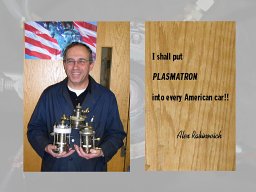 Alexander Rabinovich合作论文数drexel university2
 Lev Bromberg合作论文数Department of Chemical Engineering, Massachusetts Institute of Technology2Paul Thomas合作论文数2charles h titus合作论文数1M.F. Buehler合作论文数1richard a hamilton合作论文数1r a hamilton合作论文数1prentice m thomas合作论文数1J. S. Armfield合作论文数1DR COHN合作论文数1Freeman Charles合作论文数1Charles H Titus合作论文数1Dean E Kurath合作论文数1




