Anisotropic simplicial meshes are triangulations with elements elongated along prescribed directions. Anisotropic meshes have been shown well suited for interpolation of functions or solving PDEs. They can also significantly enhance the accuracy of a surface representation. Given a surface S endowed with a metric tensor field, we propose a new approach to generate an anisotropic mesh that approximates S with elements shaped according to the metric field. The algorithm relies on the well-established concepts of restricted Delaunay triangulation and Delaunay refinement and comes with theoretical guarantees. The star of each vertex in the output mesh is Delaunay for the metric attached to this vertex. Each facet has a good aspect ratio with respect to the metric specified at any of its vertices. The algorithm is easy to implement. It can mesh various types of surfaces like implicit surfaces, polyhedra, or isosurfaces in 3D images. It can handle complicated geometries and topologies, and very anisotropic metric fields.
We give a provably correct algorithm to reconstruct a k-dimensional smooth manifold embedded in d-dimensional Euclidean space. The input to our algorithm is a point sample coming from an unknown manifold. Our approach is based on two main ideas: the notion of tangential Delaunay complex defined in Boissonnat and Flötotto (Comput. Aided Des. 36:161–174, 2004), Flötotto (A coordinate system associated to a point cloud issued from a manifold: definition, properties and applications. Ph.D. thesis, 2003), Freedman (IEEE Trans. Pattern Anal. Mach. Intell. 24(10), 2002), and the technique of sliver removal by weighting the sample points (Cheng et al. in J. ACM 47:883–904, 2000). Differently from previous methods, we do not construct any subdivision of the d-dimensional ambient space. As a result, the running time of our algorithm depends only linearly on the extrinsic dimension d while it depends quadratically on the size of the input sample, and exponentially on the intrinsic dimension k. To the best of our knowledge, this is the first certified algorithm for manifold reconstruction whose complexity depends linearly on the ambient dimension. We also prove that for a dense enough sample the output of our algorithm is isotopic to the manifold and a close geometric approximation of the manifold.
We consider the problem of reconstructing a compact 3-manifold (with boundary) embedded in $\mathbb{R}^3$ from its cross-sections $\mathcal S$ with a given set of cutting planes $\mathcal P$ having arbitrary orientations. Using the obvious fact that a point $x \in \mathcal P$ belongs to the original object if and only if it belongs to $\mathcal S$, we follow a very natural reconstruction strategy: we say that a point $x \in \mathbb{R}^3$ belongs to the reconstructed object if (at least one of) its nearest point(s) in $\mathcal P$ belongs to $\mathcal S$. This coincides with the algorithm presented by Liu et al. in \cite{LB+08}. In the present paper, we prove that under appropriate sampling conditions, the output of this algorithm preserves the homotopy type of the original object. Using the homotopy equivalence, we also show that the reconstructed object is homeomorphic (and isotopic) to the original object. This is the first time that 3-dimensional shape reconstruction from cross-sections comes with theoretical guarantees.
The Voronoi diagram of a finite set of objects is a fundamental geometric structure that subdivides the embedding space into regions, each region consisting of the points that are closer to a given object than to the others. We may define various variants of Voronoi diagrams depending on the class of objects, the distance function and the embedding space. In this paper, we investigate a framework for defining and building Voronoi diagrams for a broad class of distance functions called Bregman divergences. Bregman divergences include not only the traditional (squared) Euclidean distance but also various divergence measures based on entropic functions. Accordingly, Bregman Voronoi diagrams allow one to define information-theoretic Voronoi diagrams in statistical parametric spaces based on the relative entropy of distributions. We define several types of Bregman diagrams, establish correspondences between those diagrams (using the Legendre transformation), and show how to compute them efficiently. We also introduce extensions of these diagrams, e.g., k-order and k-bag Bregman Voronoi diagrams, and introduce Bregman triangulations of a set of points and their connection with Bregman Voronoi diagrams. We show that these triangulations capture many of the properties of the celebrated Delaunay triangulation.
The medial axis of a geometric shape captures its connectivity. In spite of its inherent instability, it has found applications in a number of areas that deal with shapes. In this survey paper, we focus on results that shed light on this instability and use the flew insights to generate simplified and stable modifications of the medial axis.
We describe a new implementation of the well-known incremental algorithm for constructing Delaunay triangulations in any dimension. Our implementation follows the exact computing paradigm and is fully robust. Extensive comparisons show that our implementation outperforms the best currently available codes for exact convex hulls and Delaunay triangulations, compares very well to the fast non-exact QHull implementation and can be used for quite big input sets in spaces of dimensions up to 6. To circumvent prohibitive memory usage, we also propose a modification of the algorithm that uses and stores only the Delaunay graph (the edges of the full triangulation). We show that a careful implementation of the modified algorithm performs only 6 to 8 times slower than the original algorithm while drastically reducing memory usage in dimension 4 or above.
This paper addresses the problem of piecewise linear approximation of implicit surfaces. We first give a criterion ensuring that the zero-set of a smooth function and the one of a piecewise linear approximation of it are isotopic. Then, we deduce from this criterion an implicit surface meshing algorithm certifying that the output mesh is isotopic to the actual implicit surface. This is the first algorithm achieving this goal in a provably correct way.
In this paper, we extend some recent provably correct Delaunay-based meshing algorithms to the case of multi-label partitions, so that they can be applied to the generation of high-quality geometric models from labeled medical datasets. Our approach enforces watertight surface meshes free of self-intersections, and outputs surface and volume meshes of the different tissues which are consistent with each other, including at multiple junctions. Moreover, the abstraction of the tissue partition into an oracle that, given a point in space, answers which tissue it belongs to, makes our approach applicable to virtually any combination of data sources. Finally, our approach offers extensive control over the size and shape of mesh elements, through customizable quality criteria on triangular facets and on tetrahedra, which can be tuned independently for the different anatomical structures. Our numerical experiments demonstrate the effectiveness and flexibility of our approach for generating high-quality surface and volume meshes from real multi-label medical datasets.
In this paper, we consider the problem of reconstructing a shape from unorganized cross-sections. The main motivation for this problem comes from medical imaging applications where cross-sections of human organs are obtained by means of a free hand ultrasound apparatus. The position and orientation of the cutting planes may be freely chosen which makes the problem substantially more difficult than in the case of parallel cross-sections, for which a rich literature exists. The input data consist of the cutting planes and (an approximation of) their intersection with the object. Our approach consists of two main steps. First, we compute the arrangement of the cutting planes. Then, in each cell of the arrangement, we reconstruct an approximation of the object from its intersection with the boundary of the cell. Lastly, we glue the various pieces together. The method makes use of the Delaunay triangulation and generalizes the reconstruction method of Boissonnat and Geiger [BG93] for the case of parallel planes. The analysis provides a neat characterization of the topological properties of the result and, in particular, shows an interesting application of Moebius diagrams to compute the locus of the branching points. We have implemented our algorithm in C++, using the [CGAL] library. Experimental results show that the algorithm performs well and can handle complicated branching configurations.
Voronoi diagrams are fundamental data structures that have been extensively studied in Computational Geometry. A Voronoi diagram can be defined as the minimization diagram of a finite set of continuous functions. Usually, each of those functions is interpreted as the distance function to an object. The associated Voronoi diagram subdivides the embedding space into regions, each region consisting of the points that are closer to a given object than to the others. We may define many variants of Voronoi diagrams depending on the class of objects, the distance functions and the embedding space. Affine diagrams, i.e. diagrams whose cells are convex polytopes, are well understood. Their properties can be deduced from the properties of polytopes and they can be constructed efficiently. The situation is very different for Voronoi diagrams with curved regions. Curved Voronoi diagrams arise in various contexts where the objects are not punctual or the distance is not the Euclidean distance. We survey the main results on curved Voronoi diagrams. We describe in some detail two general mechanisms to obtain effective algorithms for some classes of curved Voronoi diagrams. The first one consists in linearizing the diagram and applies, in particular, to diagrams whose bisectors are algebraic hypersurfaces. The second one is a randomized incremental paradigm that can construct affine and several planar non-affine diagrams. We finally introduce the concept of Medial Axis which generalizes the concept of Voronoi diagram to infinite sets. Interestingly, it is possible to efficiently construct a certified approximation of the medial axis of a bounded set from the Voronoi diagram of a sample of points on the boundary of the set.
 M. Yvinec合作论文数Unit?? de Sophia Antipolis,
Projet GEOMETRICA29
M. Yvinec合作论文数Unit?? de Sophia Antipolis,
Projet GEOMETRICA29 herve bronniman合作论文数14
 O. Devillers合作论文数INRIA12Monique Teillaud合作论文数INRIA - Sophia Antipolis7Frederic Cazals合作论文数INRIA Sophia-Antipolis6
 Pierre Alliez合作论文数Inria4Samuel Hornus合作论文数GRAVIR, IMAG-INRIA4
 Sylvain Pion合作论文数INRIA Sophia Antipolis4Jane Tournois合作论文数INRIA Sophia-Antipolis3Camille Wormser合作论文数Geometrica, INRIA3eelco de lange合作论文数2F Avnaim合作论文数2
 Grégoire Malandain合作论文数INRIA2
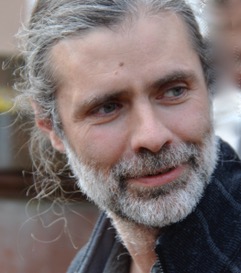 Sylvain Lazard合作论文数INRIA Nancy;LORIA laboratory2David Cohen-Steiner合作论文数INRIA2
 Herbert Edelsbrunner合作论文数Institute of Science and Technology Austria2
 Joel W. Burdick合作论文数Division of Engineering and Applied Science, California Institute of Technology2
 Frank Nielsen (弗兰克·尼尔森)合作论文数Sony Computer Science Laboratories Inc2
 Laurent Rineau合作论文数INRIA2
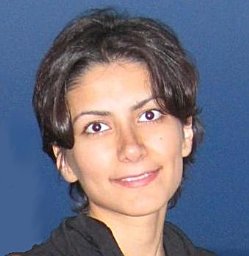 Pooran Memari合作论文数Laboratoire d'Informatique de l'Ecole Polytechnique (LIX)2
 Seth Hutchinson合作论文数University of Illinois Urbana-Champaign;Khoury College of Computer Sciences, Northeastern University2Manuel Caroli合作论文数2Menelaos I. Karavelas合作论文数Department of Applied Mathematics, University of Crete.2Steve Sullivan合作论文数Rhythm and Hues Studios, Los Angeles, CA2Franco P. Preparata合作论文数Computer Science ;Brown University;Department of 2
 Richard Nock合作论文数Google Research2Panagiotis D Alevizos合作论文数Department of Mathematics, University of Patras2
 Pedro Machado Manhaes de Castro合作论文数2
 Jack Scott Snoeyink合作论文数Stanford University Dept. of Computer Science USA USA2Julia Flötotto合作论文数2Steve Oudot合作论文数Dept . Computer Science2J Ponce合作论文数1OD FAUGERAS合作论文数1E. Thomas合作论文数1Trung Nguyen合作论文数1R. Chaine合作论文数1F. Falzon合作论文数1dobrina boltcheva合作论文数1Frank Da合作论文数1dominique amar合作论文数1J-P Merlet合作论文数1
 Philippe Blanc合作论文数Department of Energy and Processes, Mines Paris - PSL;Paris Elite Institute of Technology, Shanghai Jiao Tong University1Geiger, B.合作论文数1
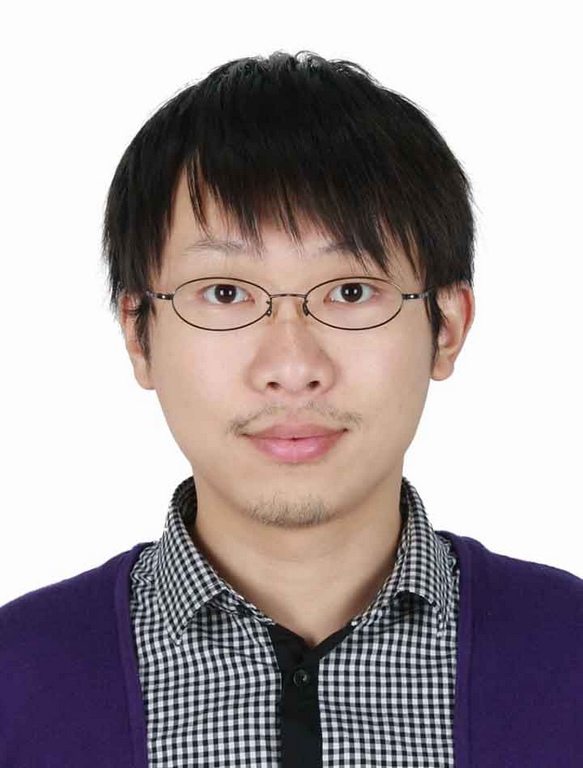 Kanle Shi (施侃乐)合作论文数Kuaishou Technology1
 Gunnar E Carlsson合作论文数Institute of Odontology, University of Gothenburg1
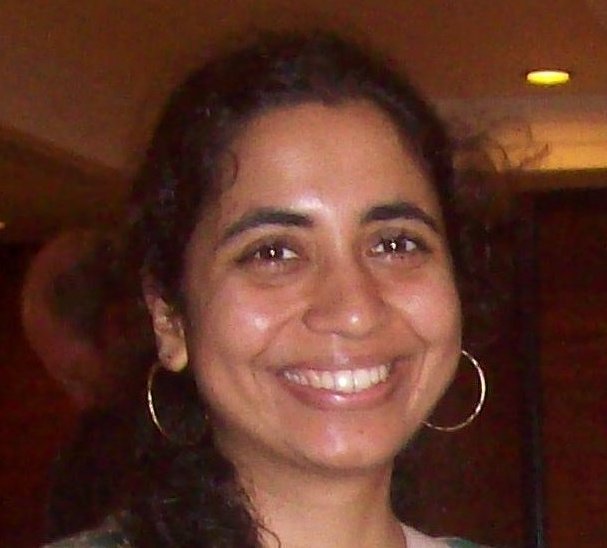 Kavitha Telikepalli合作论文数School of Technology & Computer Science, Tata Institute of Fundamental Research1Jean-Philippe Pons合作论文数AKERYS1
 Konrad Polthier合作论文数Department of Computer Science and Mathematics, Freie University1Marc Thiriet合作论文数1




