In this paper, we focus on a new type of non-linear kinetic Fokker-Planck equation where the non-linearity comes from a non-linear diffusion in the velocity variable. The existence of solutions in suitable Lebesgue spaces is proved, together with important entropy estimates on these solutions. We then study the diffusive limit of such equation.
We investigate the monotonicity of the minimal period of the periodic solutions of some quasilinear differential equations involving the $p$-Laplace operator. The monotonicity is obtained as a function of a Hamiltonian energy in two cases. We first extend to the case $p\ge2$ classical results for $p=2$ due to Chow and Wang, and Chicone. Then we consider a differential equation associated with a fundamental interpolation inequality in Sobolev spaces. In that case, we generalize to $p\ge2$ a recent result due to Benguria, Depassier and~Loss when $p=2$.
Obtaining explicit stability estimates in classical functional inequalities like the Sobolev inequality has been an essentially open question for 30 years, after the celebrated but non-constructive result of Bianchi and Egnell (J. Funct. Anal. 100(1):18–24, 1991, [4]). Recently, new methods have emerged which provide some clues on these fascinating questions. The goal of the course is to give an introduction to the topic for some fundamental functional inequalities and present several methods that can be used to obtain explicit estimates.
In this paper, we review recent results on stability and instability in logarithmic Sobolev inequalities, with a particular emphasis on strong norms. We consider several versions of these inequalities on the Euclidean space, for the Lebesgue and the Gaussian measures, and discuss their differences in terms of moments and stability. We give new and direct proofs, as well as examples and discuss the stability of a logarithmic uncertainty principle. Although we do not cover all aspects of the topic, we hope to contribute to establishing the state of the art.
We study the long-time behaviour of solutions to kinetic Fokker-Planck equations with power law confinement potentials and local equilibria with fat tails. Without relying on a priori moment bounds or perturbative regimes, we establish global estimates on weighted norms (main result) using two methods: a coupling of the weighted norms with entropy dissipation (DMS method) and a Foster-Lyapunov condition approach. As a consequence, we establish an entropy - entropy production inequality and the convergence rates to equilibrium in terms of the exponents associated to the growth of the spatial confinement and the tail decay of local equilibria. For sake of simplicity, we assume that stationary states are factorized.
This paper is devoted to Sobolev interpolation inequalities for spinors, with weights of Caffarelli-Kohn-Nirenberg (CKN) type. In view of the corresponding results for scalar functions, a natural question is to determine whether optimal spinors have symmetry properties, or whether spinors with symmetry properties are linearly unstable, in which case we shall say that symmetry breaking occurs. What symmetry means has to be carefully defined and the overall picture turns out to be richer than in the scalar case. So far, no symmetrization technique is available in the spinorial case. We can however determine a range of the parameters for which symmetry holds using a detailed analysis based mostly on spectral methods.
This paper is devoted to a fundamental solution of a nonlinear kinetic equation involving a porous medium or fast diffusion operator acting on velocities. Such a nonlinearity has interesting scaling properties, which result in a self-similar behaviour of the fundamental solution. Here fundamental solution means a Dirac distribution initial datum which moreover governs the large time asymptotics of a large class of solutions. Using a self-similar change of variables, the equation becomes a nonlinear kinetic Fokker-Planck equation with harmonic confinement and the intermediate asymptotics regime is transformed into a stability property of a special stationary solution, which attracts the solutions for large times. In the homogeneous case (pure nonlinear diffusion), the problem is reduced to a classical nonlinear diffusion equation with Barenblatt-Pattle self-similar profiles. Unexpectedly, this beautiful structure is preserved at kinetic level, with remarkable consequences for relative entropy estimates, detailed intermediate asymptotics and nonlinear diffusion limits in adapted functional spaces.
We consider nonhomogeneous kinetic equations that involve a free transport operator and a diffusion of porous medium type acting on velocities. The main novelty is a gradient flow interpretation of dynamics driven by an interplay of conservative and dissipative effects. We rely on a notion of discrepancy adapted to a phase space of positions and velocities, built upon second-order characteristics obeying Newton's laws. The equation appears as the steepest descent of the free energy functional. We also prove that approximate solutions constructed with an implicit Euler scheme converge to a solution of the kinetic equation. Thus, we generalise to a family of nonlinear kinetic equations the celebrated JKO scheme in mass transport theory. Most of our results are new even in the case of the linear Vlasov-Fokker-Planck equation.
We prove a sharp quantitative version for the stability of the Sobolev inequality with explicit constants. Moreover, the constants have the correct behavior in the limit of large dimensions, which allows us to deduce an optimal quantitative stability estimate for the Gaussian log-Sobolev inequality with an explicit dimension-free constant. Our proofs rely on several ingredients such as competing symmetries, a flow based on continuous Steiner symmetrization that interpolates continuously between a function and its symmetric decreasing rearrangement, and refined estimates on the Sobolev functional in the neighborhood of the optimal Aubin--Talenti functions.
On the two-dimensional Euclidean space, we study a spinorial analogue of the Caffarelli-Kohn-Nirenberg inequality involving weighted gradient norms. This (SCKN) inequality is equivalent to a spinorial Gagliardo-Nirenberg type interpolation inequality on a cylinder as well as to an interpolation inequality involving Aharonov-Bohm magnetic fields, which was analyzed in a paper of 2020. We examine the symmetry properties of optimal functions by linearizing the associated functional around radial minimizers. We prove that the stability of the linearized problem is equivalent to the positivity of a 2×2 matrix-valued differential operator. We study the positivity issue via a combination of analytical arguments and numerical computations. In particular, our results provide numerical evidence that the region of symmetry breaking extends beyond what was previously known, while the threshold of the known symmetry region is linearly stable. Altogether, we obtain refined estimates of the phase transition between symmetry and symmetry breaking. Our results also put in evidence striking differences with the three-dimensional (SCKN) inequality that was recently investigated.
In this paper, we present recent stability results with explicit and dimensionally sharp constants and optimal norms for the Sobolev inequality and for the Gaussian logarithmic Sobolev inequality obtained by the authors in Dolbeault et al. (Sharp stability for Sobolev and log-Sobolev inequalities, with optimal dimensional dependence, Camb. J. Math., 2025). The stability for the Gaussian logarithmic Sobolev inequality was obtained as a byproduct of the stability for the Sobolev inequality. Here we give a new, direct, alternative proof. We also discuss improved versions of interpolation inequalities based on the carré du champ method.
We start by discussing stability results in Gagliardo-Nirenberg-Sobolev inequalities from a variational point of view. Using a non scale invariant form of the inequalities, which is equivalent to entropy-entropy production inequalities arising in the study of large time asymptotics of solutions to fast diffusion equations, we first establish non constructive estimates where the distance to the manifold of optimal functions is measured by a relative Fisher information. When the tails of the initial data have a certain decay, solutions to the fast diffusion equation converge to self-similar Barenblatt functions in the strong topology of uniform convergence in relative error after some finite time. This threshold time plays a fundamental role in obtaining a constructive stability result. Up to the threshold time, that is, in the initial time layer, the carr & eacute; du champ method provides improved decay rates of the relative entropy. After the threshold time, in the asymptotic time layer, improved rates of decay can be deduced from improved spectral gap estimates in the linearized problem, under appropriate orthogonality conditions. In the sub critical regime, these orthogonality conditions follow from an appropriate choice of the coordinates which amount to fix the center of mass at the origin. In the critical case, that is for Sobolev's inequality, scale invariance has to be taken into account. This can be rephrased as a strategy for computing the relative entropy with respect to a notion of best matching self-similar Barenblatt functions in place of the standard approach where entropy is defined relatively to a fixed family of self-similar solutions. Best matching is adapted to nonlinear evolution equations and degenerates in the asymptotic regime into more standard orthogonality conditions. With this method, we provide fully constructive stability estimates, to the price of a small restriction of the functional space which is inherent to the method.
This paper is devoted to Gaussian interpolation inequalities with endpoint cases corresponding to the Gaussian Poincaré and the logarithmic Sobolev inequalities, seen as limits in large dimensions of Gagliardo–Nirenberg–Sobolev inequalities on spheres. Entropy methods are investigated using not only heat flow techniques but also nonlinear diffusion equations as on spheres. A new stability result is established for the Gaussian measure, which is directly inspired by recent results for spheres.
We consider Gagliardo-Nirenberg inequalities on the sphere which interpolate between the Poincaré inequality and the Sobolev inequality, and include the logarithmic Sobolev inequality as a special case. We establish explicit stability results in the subcritical regime using spectral decomposition techniques, and entropy and carré du champ methods applied to nonlinear diffusion flows.
This paper is devoted to stability results for the Gaussian logarithmic Sobolev inequality, with explicit stability constants.
This contribution deals with L^2 hypocoercivity methods for kinetic Fokker-Planck equations with integrable local equilibria and a factorisation property that relates the Fokker-Planck and the transport operators. Rates of convergence in presence of a global equilibrium, or decay rates otherwise, are estimated either by the corresponding rates in the diffusion limit, or by the rates of convergence to local equilibria, under moment conditions. On the basis of the underlying functional inequalities, we establish a classification of decay and convergence rates for large times, which includes for instance sub-exponential local equilibria and sub-exponential potentials.
We estimate the lowest eigenvalue in the gap of the essential spectrum of a Dirac operator with mass in terms of a Lebesgue norm of the potential. Such a bound is the counterpart for Dirac operators of the Keller estimates for the Schr\"odinger operator, which are equivalent to Gagliardo-Nirenberg-Sobolev interpolation inequalities. Domain, self-adjointness, optimality and critical values of the norms are addressed, while the optimal potential is given by a Dirac equation with a Kerr nonlinearity. A new critical bound appears, which is the smallest value of the norm of the potential for which eigenvalues may reach the bottom of the gap in the essential spectrum. The Keller estimate is then extended to a Lieb-Thirring inequality for the eigenvalues in the gap. Most of our result are established in the Birman-Schwinger reformulation.
The simplest version of the parabolic-elliptic Patlak-Keller-Segel system in the two-dimensional Euclidean space has an 8π critical mass which corresponds to the exact threshold between finite-time blow-up and self-similar diffusion towards zero. Among functions with mass 8π, we find a neighborhood of a radial function such that any solution with initial condition in this neighborhood is globally defined and blows-up in infinite time with an explicit scaling involving the square root of the logarithm of the time.
We study linear inhomogeneous kinetic equations with an external confining potential and a collision operator admitting several local conservation laws (local density, momentum and energy). We classify all special macroscopic modes (stationary solutions and time-periodic solutions). We also prove the convergence of all solutions of the evolution equation to such non-trivial modes, with a quantitative exponential rate. This is the first hypocoercivity result with multiple special macroscopic modes with constructive estimates depending on the geometry of the potential.
In this corrigendum, we address some closability issues that were ignored in [1].
 Maria J. Esteban合作论文数Universit e de Paris-Dauphine;CNRS57
 Michael Loss合作论文数School of Mathematics, College of Sciences, Georgia Institute of Technology31
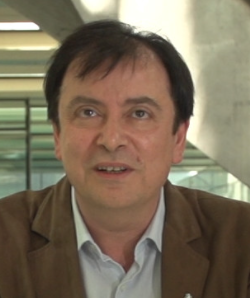 Manuel Del Pino合作论文数Department of Mathematics, University of Bath23
 Christian Schmeiser合作论文数Fac Math, Univ Vienna15
 Adrien Blanchet合作论文数GREMAQ11
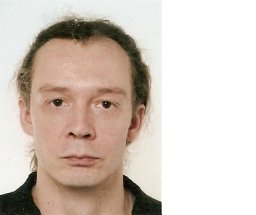 Bruno Nazaret合作论文数CEREMADE11
 Matteo Bonforte合作论文数Departamento de Matemáticas, Universidad Autónoma de Madrid11
 Regis Monneau合作论文数9
 Peter Markowich合作论文数Applied Mathematics and Computational Science Department, Computer, Electrical and Mathematical Sciences and Engineering Division, King Abdullah University of Science and Technology;Faculty of Mathematics, University of Vienna8Jean-Philippe Bartier合作论文数8
 Patricio Felmer Aichele合作论文数Departamento de Ingeniería Matemática, Facultad de Ciencias Físicas y Matemáticas, Universidad de Chile8Michał Kowalczyk合作论文数8
 Ari Laptev合作论文数Department of Mathematics, Faculty of Natural Sciences, Imperial College London;Sirius Mathematical Centre8
 Monica Musso合作论文数Dept Matemat, Pontificia Univ Catolica Chile8Emeric Bouin合作论文数8
 Ivan Gentil合作论文数CEREMADE8
 Nikita Simonov合作论文数Université Paris-Saclay, Univ Evry7
 Rupert L. Frank合作论文数Division of Physics, Mathematics and Astronomy, California Institute of Technology7
 Clement Mouhot合作论文数Department of Pure Mathematics and Mathematical Statistics, University of Cambridge7
 Giuseppe Toscani合作论文数Department of Mathematics, Faculty of Sciences, University of Pavia7
 Piotr Biler合作论文数Instytut Matematyczny, Wydział Matematyki i Informatyki, Uniwersytet Wrocławski7Eric Séré合作论文数CEREMADE7
 Jose Antonio Carrillo合作论文数Mathematical Institute, University of Oxford;The Queen’s College, University of Oxford6
 Gabriella Tarantello合作论文数Department of Mathematics, University of Rome Tor Vergata6Raúl Manásevich合作论文数Departamento de Ingeniería Matemática, Universidad de Chile6
 Marta Garcia-Huidobro合作论文数6E. Séré合作论文数5Xingyu Li合作论文数5
 Gaspard Jankowiak合作论文数Radon Institute for Computational and Applied Mathematics, Austrian Academy of Sciences5Reinhard Illner合作论文数University of Kaiserslautern5
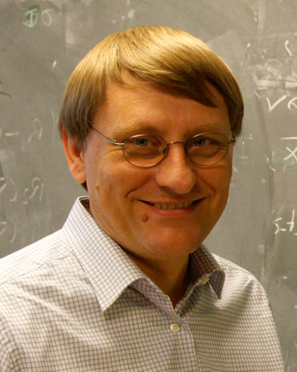 Benoit Perthame合作论文数Sorbonne Université4
 Matteo Muratori合作论文数National Renewable Energy Laboratory4
 David Kinderlehrer合作论文数Department of Mathematical Sciences, Mellon College of Science, Carnegie Mellon University4
 Stéphane Mischler合作论文数Université Paris Dauphine4
 Gabriele Grillo合作论文数Dipartimento di Matematica, Politecnico di Torino4
 Anton Arnold合作论文数Institut für Analysis und Scientific Computing, TU-Wien4
 Rafael Benguria合作论文数Department of Physics Casilla 306, Universidad Católica de Chile4
 An Zhang合作论文数3Kleber Carrapatoso合作论文数3
 Giovanni Brigati合作论文数PSL Univ, Univ Paris Dauphine3
 Giuseppe Savaré合作论文数Department of Decision Sciences, Bocconi University3
 Alessio Figalli合作论文数Department of Mathematics, ETH Zurich3
 Oscar Sanchez合作论文数3
 Juan Luis Vazquez合作论文数Departamento de Matemáticas, Universidad Autnoma de Madrid3Miguel Escobedo合作论文数3Naoufel Ben Abdallah合作论文数3
 Mathieu Lewin合作论文数AGM3Christof Sparber合作论文数DAMTP3
 Ansgar Jüngel合作论文数Institute for Analysis and Scientific Computing, Technische Universitat Wien3




