We study a system formed by M particles moving in 3 dimension and interacting with 2 heat reservoirs with N>>M particles each. The system and the reservoirs evolve and interact via random collision described by a Kac-type master equation. The initial state of the reservoirs is given by 2 Maxwellian distributions at temperature T_+ and T_- . We show that, for times much shorter than √(N)/M the interaction with the reservoirs is well approximated by the interaction with 2 Maxwellian thermostats, that is, heat reservoirs with N=∞ . As a byproduct, if T_+=T_- we extend the results in [3] to particles in 3 dimension.
We compute the spectrum for a class of quantum Markov semigroups describing systems of N particle interacting through a binary collision mechanism. These quantum Markov semigroups are associated to a novel kind of quantum random walk on a graph, with the graph structure arising naturally in the quantization of the classical Kac model, and we show that the spectrum of the generator of the quantum Markov semigroup is closely related to the spectrum of the Laplacian on the corresponding graph. For the direct analog of the original classical Kac model, we determine the exact spectral gap for the quantum generator. We also give a new and simple method for studying the spectrum of certain graph Laplacians.
This paper is devoted to Sobolev interpolation inequalities for spinors, with weights of Caffarelli-Kohn-Nirenberg (CKN) type. In view of the corresponding results for scalar functions, a natural question is to determine whether optimal spinors have symmetry properties, or whether spinors with symmetry properties are linearly unstable, in which case we shall say that symmetry breaking occurs. What symmetry means has to be carefully defined and the overall picture turns out to be richer than in the scalar case. So far, no symmetrization technique is available in the spinorial case. We can however determine a range of the parameters for which symmetry holds using a detailed analysis based mostly on spectral methods.
We prove a sharp quantitative version for the stability of the Sobolev inequality with explicit constants. Moreover, the constants have the correct behavior in the limit of large dimensions, which allows us to deduce an optimal quantitative stability estimate for the Gaussian log-Sobolev inequality with an explicit dimension-free constant. Our proofs rely on several ingredients such as competing symmetries, a flow based on continuous Steiner symmetrization that interpolates continuously between a function and its symmetric decreasing rearrangement, and refined estimates on the Sobolev functional in the neighborhood of the optimal Aubin--Talenti functions.
In this paper, we present recent stability results with explicit and dimensionally sharp constants and optimal norms for the Sobolev inequality and for the Gaussian logarithmic Sobolev inequality obtained by the authors in Dolbeault et al. (Sharp stability for Sobolev and log-Sobolev inequalities, with optimal dimensional dependence, Camb. J. Math., 2025). The stability for the Gaussian logarithmic Sobolev inequality was obtained as a byproduct of the stability for the Sobolev inequality. Here we give a new, direct, alternative proof. We also discuss improved versions of interpolation inequalities based on the carré du champ method.
We give an elementary proof of an inequality of Lin, Kim and Hsieh that implies strong subadditivity of the von Neumann entropy.
This is a review on the Kac Master Equation. Various issues will be presented such as the resolution of Kac's conjecture about the gap for the three dimensional hard sphere gas, entropic propagation of chaos and other topics such as systems coupled to reservoirs and thermostats. The discussion is informal with few proofs and those who are presented are only sketched.
It is shown that parallel to A parallel to(2)(Ld)>= d/d-2S(d )is a necessary condition for the existence of a nontrivial solution psi of the Dirac equation gamma & sdot;(-i del-A)psi=0 in d dimensions. Here, S-d is the sharp Sobolev constant. If d is odd and parallel to A parallel to(2)(Ld)=d/d-2S(d), then there exist vector potentials that allow for zero modes. A complete classification of these vector potentials and their corresponding zero modes is given.
The Kac master equation provides a simple framework to understand systems of particles that interact through pairwise collisions. This article is a short review of results, chief among them is the approach to equilibrium for a gas of particles that undergo energy and momentum preserving collisions, as well as results on the entropy and information decay for a one-dimensional Kac system coupled to a reservoir. The principles underlying the Kac master equation can be extended to a Quantum Master Equation (QME) where the time evolution acts on density matrices and is a completely positive trace-preserving map. There is a rich set of equilibrium states and there is also a notion of propagation of chaos that leads to the Quantum Kac–Boltzmann equation. Likewise, the gap of the generator of the QME can be computed in certain special cases.
Abstract This paper presents some results concerning the size of magnetic fields that support zero modes for the three-dimensional Dirac equation and related problems for spinor equations. It is a well-known fact that for the Schrödinger equation in three dimensions to have a negative energy bound state, the 3/2{3/2} norm of the potential has to be greater than the Sobolev constant. We prove an analogous result for the existence of zero modes, namely that the 3/2{3/2} norm of the magnetic field has to greater than twice the Sobolev constant. The novel point here is that the spinorial nature of the wave function is crucial. It leads to an improved diamagnetic inequality from which the bound is derived. While the results are probably not sharp, other equations are analyzed where the results are indeed optimal.
The main result of this paper is a complete proof of a new Lieb–Thirring-type inequality for Jacobi matrices originally conjectured by Hundertmark and Simon. In particular, it is proved that the estimate on the sum of eigenvalues does not depend on the off-diagonal terms as long as they are smaller than their asymptotic value. An interesting feature of the proof is that it employs a technique originally used by Hundertmark–Laptev–Weidl concerning sums of singular values for compact operators. This technique seems to be novel in the context of Jacobi matrices.
. A quantitative version of the Bianchi–Egnell inequality concerning the stability of the Sobolev inequality is proved with explicit constants. For the proof we study a flow that interpolates continuously between a function and its symmetric decreasing rearrangement.
Elliott Lieb's work on Stability of Matter is reviewed with a few representative examples. Starting with the classical work with Thirring, his work on relativistic Stability of Matter as well as systems interacting with magnetic fields are explained in an informal fashion.
. A quantitative version of the Bianchi–Egnell inequality concerning the stability of the Sobolev inequality is proved for non-negative functions. For the proof we study a flow that interpolates continuously between a function and its symmetric decreasing rearrangement.
This paper is devoted to a collection of results on nonlinear interpolation inequalities associated with Schrodinger operators involving Aharonov-Bohm magnetic potentials, and to some consequences. As symmetry plays an important role for establishing optimality results, we shall consider various cases corresponding to a circle, a two-dimensional sphere or a two-dimensional torus, and also the Euclidean spaces of dimensions 2 and 3. Most of the results are new and we put the emphasis on the methods, as very little is known on symmetry, rigidity and optimality in the presence of a magnetic field. The most spectacular applications are new magnetic Hardy inequalities in dimensions 2 and 3.
We consider the inequality $f \geqslant f\star f$ for real integrable functions on $d$ dimensional Euclidean space where $f\star f$ denotes the convolution of $f$ with itself. We show that all such functions $f$ are non-negative, which is not the case for the same inequality in $L^p$ for any $1 0$, $\int e^{\epsilon|x|}f(x){\rm d}x < \infty$.
This paper is devoted to the study of the two-dimensional Dirac-Coulomb operator in presence of an Aharonov-Bohm external magnetic potential. We characterize the highest intensity of the magnetic field for which a two-dimensional magnetic Hardy inequality holds. Up to this critical magnetic field, the operator admits a distinguished self-adjoint extension and there is a notion of ground state energy, defined as the lowest eigenvalue in the gap of the continuous spectrum.
We consider a system of M particles in contact with a heat reservoir of $$N\gg M$$ particles. The evolution in the system and the reservoir, together with their interaction, is modeled via the Kac’s master equation. We chose the initial distribution with total energy $$N+M$$ and show that if the reservoir is initially in equilibrium, that is, if the initial distribution depends only on the energy of the particle in the reservoir, then the entropy of the system decays exponentially to a very small value. We base our proof on a similar property for the Information. A similar argument allows us to greatly simplify the proof of the main result in Bonetto et al. (Commun Math Phys 363(3):847–875, 2018).
The aim of this paper is to study, in dimensions 2 and 3, the pure-power non-linear Schr\"odinger equation with an external uniform magnetic field included. In particular, we derive a general criteria on the initial data and the power of the non-linearity so that the corresponding solution blows up in finite time, and we show that the time for blow up to occur decreases as the strength of the magnetic field increases. In addition, we also discuss some observations about Strichartz estimates in 2 dimensions for the Mehler kernel, as well as similar blow-up results for the non-linear Pauli equation.
We consider the minimization problem corresponding to a Sobolev inequality for vector fields and show that minimizing sequences are relatively compact up to the symmetries of the problem. In particular, there is a minimizer. An ingredient in our proof is a version of the Rellich–Kondrachov compactness theorem for sequences satisfying a nonlinear constraint.
 Elliott H. Lieb合作论文数Princeton University32
 Jean Dolbeault合作论文数Université Paris-Dauphine31
 Eric A. Carlen合作论文数Department of Mathematics, Rutgers University31
 Maria J. Esteban合作论文数Universit e de Paris-Dauphine;CNRS28
 Rafael Benguria合作论文数Department of Physics Casilla 306, Universidad Católica de Chile12
 Rupert L. Frank合作论文数Division of Physics, Mathematics and Astronomy, California Institute of Technology10
 Ari Laptev合作论文数Department of Mathematics, Faculty of Natural Sciences, Imperial College London;Sirius Mathematical Centre10
 Federico Bonetto合作论文数School of Mathematics, College of Sciences, Georgia Institute of Technology9
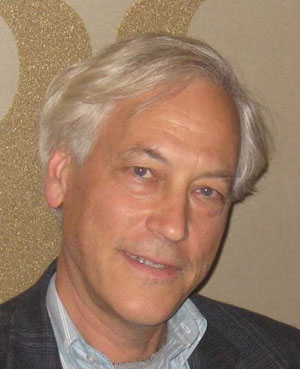 Evans Harrell合作论文数School of Mathematics, Georgia Institute of Technology8
 Maria C Carvalho合作论文数Department of Mathematics;University of Lisbon;Department of Mathematics, University of Lisbon8M Cristina Depassier合作论文数6Bernd Thaller合作论文数Universitat Graz5
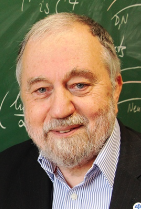 Pavel Exner合作论文数Department of Theoretical Physics, Nuclear Physics Institute, Czech Academy of Sciences;Doppler Institute for Mathematical Physics and Applied Mathematics, Faculty of Nuclear Sciences and Physical Engineering, Czech Technical University4
 Herbert Spohn合作论文数Department of Mathematics, School of Computation, Information and Technology, Technical University of Munich;Zentrum Mathematik and Physik Department, Technische Universitat Munchen4
 Günter Stolz合作论文数Fachbereich Mathematik, Johann Wolfgang Goethe-Universität4
 Jeffrey S. Geronimo合作论文数3
 Heinz Siedentop合作论文数Mathematisches Institut3
 Alessio Figalli合作论文数Department of Mathematics, ETH Zurich3Tadahiro Miyao合作论文数3Alissa Geisinger合作论文数2
 Lukas Schimmer合作论文数The Royal Swedish Academy of Sciences2Jeff Baker合作论文数2Shu Nakamura合作论文数2
 Bernard Helffer合作论文数Département de Mathématiques, Université Paris Sud/Laboratoire de Mathématiques Jean Leray, Université de Nantes2
 Gabriella Tarantello合作论文数Department of Mathematics, University of Rome Tor Vergata2Albert Baernstein合作论文数2Michał Kowalczyk合作论文数2
 Christian Hainzl合作论文数Institut fur Theoretische;Universitat Wien Boltzmanngasse;Institut fur Theoretische, Universitat Wien Boltzmanngasse2
 Frederic Klopp合作论文数2Mary Beth Ruskai合作论文数University of Massachusetts2
 Horng-Tzer Yau (姚鸿泽)合作论文数Department of Mathematics, Harvard University2
 Denis Bonheure合作论文数institut de mathématique pure et appliquée, Université catholique de Louvain2Timo Weidl合作论文数2Marcel Griesemer合作论文数Universitat Stuttgart2GA Hagedorn合作论文数1Michiel van den Berg合作论文数1
 Jose Antonio Carrillo合作论文数Mathematical Institute, University of Oxford;The Queen’s College, University of Oxford1T. Hoffmann-Ostenhof合作论文数1Hagop Tossounian合作论文数1elias m smoller合作论文数1T. Forrest Kieffer合作论文数1ranjini vaidyanathan合作论文数1Amit Einav合作论文数1Gonzalo A. Bley合作论文数Dept Math, Aarhus Univ1Ian Jauslin合作论文数1
 Loic Le Treust合作论文数Institut de Mathématiques de Marseille1
 Tobias Ried合作论文数Max Planck Inst Math Nat Wissensch, Inselstr 22, D-04103 Leipzig, Germany1
 Andreas Deuchert合作论文数Institute of Mathematics, University of Zurich1Thomas Kappeler合作论文数1




