Most academic research is ultimately disseminated through documents in the PDF format. This format has advantages in flexibility and portability, but presents challenges for accessibility that have stubbornly resisted solutions despite decades of attempts. Tagging PDFs is hard to automate because tags are currently generated visually, not semantically, which makes the output cluttered and manual correction tedious and error-prone. Ironically, this semantic structure already exists during authoring but is discarded during PDF rendering. This raises an obvious question, can we use this lost semantic information to better automate tagging in PDFs? In this paper, we develop iTagPDF, a system that refines generated metadata using the semantics in the source documents of research papers. We demonstrate that the metadata generated by iTagPDF already surpasses what authors currently submit to ACM conferences on many criteria. Our approach represents a concrete step toward finally automating accessibility remediation in research paper PDFs.
Generative user interfaces (UIs) create new opportunities to adapt interfaces to individual users on demand, but personalization remains difficult because desirable UI properties are subjective, hard to articulate, and costly to infer from sparse feedback. We study this problem through a new dataset in which 20 trained designers each provide pairwise judgments over the same 600 generated UIs, enabling direct analysis of preference divergence. We find substantial disagreement across designers (average kappa = 0.25), and written rationales reveal that even when designers appeal to similar concepts such as hierarchy or cleanliness, designers differ in how they define, prioritize, and apply those concepts. Motivated by these findings, we develop a sample-efficient personalization method that represents a new user in terms of prior designers rather than a fixed rubric of design concepts. In a technical evaluation, our preference model outperforms both a pretrained UI evaluator and a larger multimodal model, and scales better with additional feedback. When used to personalize generation, it also produces interfaces preferred by 12 new designers over baseline approaches, including direct user prompting. Our findings suggest that lightweight preference elicitation can serve as a practical foundation for personalized generative UI systems.
Ableist microaggressions remain pervasive in everyday interactions, yet interventions to help people recognize them are limited. We present an experiment testing how AI-mediated dialogue influences recognition of ableism. 160 participants completed a pre-test, intervention, and a post-test across four conditions: AI nudges toward bias (Bias-Directed), inclusion (Neutral-Directed), unguided dialogue (Self-Directed), and a text-only non-dialogue (Reading). Participants rated scenarios on standardness of social experience and emotional impact; those in dialogue-based conditions also provided qualitative reflections. Quantitative results showed dialogue-based conditions produced stronger recognition than Reading, though trajectories diverged: biased nudges improved differentiation of bias from neutrality but increased overall negativity. Inclusive or no nudges remained more balanced, while Reading participants showed weaker gains and even declines. Qualitative findings revealed biased nudges were often rejected, while inclusive nudges were adopted as scaffolding. We contribute a validated vignette corpus, an AI-mediated intervention platform, and design implications highlighting trade-offs conversational systems face when integrating bias-related nudges.
Despite rapid progress in autonomous web agents, human involvement remains essential for shaping preferences and correcting agent behavior as tasks unfold. However, current agentic systems lack a principled understanding of when and why humans intervene, often proceeding autonomously past critical decision points or requesting unnecessary confirmation. In this work, we introduce the task of modeling human intervention to support collaborative web task execution. We collect CowCorpus, a dataset of 400 real-user web navigation trajectories containing over 4,200 interleaved human and agent actions. We identify four distinct patterns of user interaction with agents – hands-off supervision, hands-on oversight, collaborative task-solving, and full user takeover. Leveraging these insights, we train language models (LMs) to anticipate when users are likely to intervene based on their interaction styles, yielding a 61.4-63.4
Autoraters, also referred to as LLM-as-judges, are increasingly used for evaluation and automated content moderation. However, there is limited statistical analysis of how modifications in a rubric presented to both humans and autoraters affect their score agreement. Rubrics that ask for an overall or \emph{holistic} judgment - for example, rating the ``quality'' of an essay - may be inconsistently interpreted due to the complexity or subjectivity of the criteria. Conversely, rubrics can ask for \emph{analytic} judgments, which decompose assessment criteria - for example, ``quality'' into ``fluency'' and ``organization''. While these rubrics can be edited to improve the individual accuracy of both human and automated scoring, this approach may result in disagreement between the two scores, or with the associated holistic judgment. Designing and deploying reliable autoraters requires understanding not just the relationship between human and autorater annotations but how that relationship changes as holistic or analytic judgments are elicited. The results indicate that rubric edits providing representative examples and additional context, and reducing positional bias in the rubric increased human-autorater agreement, while higher rubric complexity and conservative aggregation methods tended to decrease it. The findings from the automatic essay scoring and instruction-following evaluation domains suggest that practitioners should carefully analyze domain- and rubric-specific performance to move towards higher human-autorater agreement.
UI Agents powered by increasingly performant AI promise to eventually use computers the way that people do - by visually interpreting UIs on screen and issuing appropriate actions to control them (e.g., mouse clicks and keyboard entry). While significant progress has been made on interpreting visual UIs computationally, and in sequencing together steps to complete tasks, controlling UIs is still done with system-specific APIs or VNC connections, which limits the platforms and use cases that can be explored. This paper introduces HIDAgent, an open-source hardware/software toolkit enabling UI agents to operate HID-compatible computing systems by emulating the physical keyboard and mouse. HIDAgent is built using three off-the-shelf components costing less than $30 and a Python library supporting flexible integration. We validated the HIDAgent toolkit by building five diverse use case prototypes across mobile and desktop platforms. As a hardware device, HIDAgent supports research into new interaction scenarios where the agents are separated from the devices they control.
Designing and developing user-friendly interfaces has long been a cornerstone of HCI research, yet today we are at a turning point where UIs are no longer designed solely for humans but also for intelligent agents that act on users’ behalf, while UIs are also expanding beyond 2D screens into extended reality environments with inherently multimodal characteristics, together challenging us to rethink the role of the UI as a mediator of human–AI interaction. This workshop will explore how UI agents bridge human intent and system behavior by interpreting multimodal inputs and generating adaptive outputs across surfaces from screens to extended reality (XR), and we will examine not only their technical capabilities but also their broader impact, including how agents reshape daily workflows, how bidirectional alignment between human and AI activity can be achieved, and how generative models may transform UI creation. XR provides a compelling testbed for these questions and highlights challenges around accuracy, efficiency, transparency, accessibility, and user agency, setting the stage for the next generation of intelligent and adaptive UIs.
Generative models, such as large language models and text-to-image diffusion models, are increasingly used to create visual designs like user interfaces (UIs) and presentation slides. Finetuning and benchmarking these generative models have often relied on datasets of human-annotated design preferences. Yet, due to the subjective and highly personalized nature of visual design, preference varies widely among individuals. In this paper, we study this problem by introducing DesignPref, a dataset of 12k pairwise comparisons of UI design generation annotated by 20 professional designers with multi-level preference ratings. We found that among trained designers, substantial levels of disagreement exist (Krippendorff's alpha = 0.25 for binary preferences). Natural language rationales provided by these designers indicate that disagreements stem from differing perceptions of various design aspect importance and individual preferences. With DesignPref, we demonstrate that traditional majority-voting methods for training aggregated judge models often do not accurately reflect individual preferences. To address this challenge, we investigate multiple personalization strategies, particularly fine-tuning or incorporating designer-specific annotations into RAG pipelines. Our results show that personalized models consistently outperform aggregated baseline models in predicting individual designers' preferences, even when using 20 times fewer examples. Our work provides the first dataset to study personalized visual design evaluation and support future research into modeling individual design taste.
People frequently use speech-to-text systems to compose short texts with voice. However, current voice-based interfaces struggle to support composing more detailed, contextually complex texts, especially in scenarios where users are on the move and cannot visually track progress. Longer-form communication, such as composing structured emails or thoughtful responses, requires persistent context tracking, structured guidance, and adaptability to evolving user intentions—capabilities that conventional dictation tools and voice assistants do not support. We introduce StepWrite, a large language model-driven voice-based interaction system that augments human writing ability by enabling structured, hands-free and eyes-free composition of longer-form texts while on the move. StepWrite decomposes the writing process into manageable subtasks and sequentially guides users with contextually-aware non-visual audio prompts. StepWrite reduces cognitive load by offloading the context-tracking and adaptive planning tasks to the models. Unlike baseline methods like standard dictation features (e.g., Microsoft Word) and conversational voice assistants (e.g., ChatGPT Advanced Voice Mode), StepWrite dynamically adapts its prompts based on the evolving context and user intent, and provides coherent guidance without compromising user autonomy. An empirical evaluation with 25 participants engaging in mobile or stationary hands-occupied activities demonstrated that StepWrite significantly reduces cognitive load, improves usability and user satisfaction compared to baseline methods. Technical evaluations further confirmed StepWrite’s capability in dynamic contextual prompt generation, accurate tone alignment, and effective fact checking. This work highlights the potential of structured, context-aware voice interactions in enhancing hands-free and eye-free communication in everyday multitasking scenarios.
A persistent challenge in accessible computing is ensuring developers produce web UI code that supports assistive technologies. Despite numerous specialized accessibility tools, novice developers often remain unaware of them, leading to ~96% of web pages that contain accessibility violations. AI coding assistants, such as GitHub Copilot, could offer potential by generating accessibility-compliant code, but their impact remains uncertain [52]. Our formative study with 16 developers without accessibility training revealed three key issues in AI-assisted coding: failure to prompt AI for accessibility, omitting crucial manual steps like replacing placeholder attributes, and the inability to verify compliance. To address these issues, we developed CodeA11y, a GitHub Copilot Extension, that suggests accessibility-compliant code and displays manual validation reminders. We evaluated it through a controlled study with another 20 novice developers. Our findings demonstrate its effectiveness in guiding novice developers by reinforcing accessibility practices throughout interactions, representing a significant step towards integrating accessibility into AI coding assistants.
Taking notes quickly while effectively capturing key information can be challenging, especially when watching videos that present simultaneous visual and auditory streams. Manually taken notes often miss crucial details due to the fast-paced nature of the content, while automatically generated notes fail to incorporate user preferences and discourage active engagement with the content. To address this, we propose an interactive system, NoTeeline, for supporting real-time, personalized notetaking. Given 'micronotes', NoTeeline automatically expands them into full-fledged notes using a Large Language Model (LLM). The generated notes build on the content of micronotes by adding relevant details while maintaining consistency with the user's writing style. In a within-subjects study (n=12), we found that NoTeeline creates high-quality notes that capture the essence of participant micronotes with 93.2% factual correctness and accurately align with participant writing style (8.33% improvement). Using NoTeeline, participants could capture their desired notes with significantly reduced mental effort, writing 47.0% less text and completing their notes in 43.9% less time compared to a manual notetaking baseline. Our results suggest that NoTeeline enables users to integrate LLM assistance in a familiar notetaking workflow while ensuring consistency with their preferences-providing an example of how to address broader challenges in designing AI-assisted tools to augment human capabilities without compromising user autonomy and personalization.
While much work on web agents emphasizes the promise of autonomously performing tasks on behalf of users, in reality, agents often fall short on complex tasks in real-world contexts and modeling user preference. This presents an opportunity for humans to collaborate with the agent and leverage the agent's capabilities effectively. We propose COWPILOT, a framework supporting autonomous as well as human-agent collaborative web navigation, and evaluation across task success and task efficiency. COWPILOT reduces the number of steps humans need to perform by allowing agents to propose next steps, while users are able to pause, reject, or take alternative actions. During execution, users can interleave their actions with the agent's by overriding suggestions or resuming agent control when needed. We conducted case studies on five common websites and found that the human-agent collaborative mode achieves the highest success rate of 95% while requiring humans to perform only 15.2% of the total steps. Even with human interventions during task execution, the agent successfully drives up to half of task success on its own. COWPILOT can serve as a useful tool for data collection and agent evaluation across websites, which we believe will enable research in how users and agents can work together. Video demonstrations are available at https: //oaishi.github.io/cowpilot.html
User interface (UI) agents promise to make inaccessible or complex UIs easier to access for blind and low-vision (BLV) users. However, current UI agents typically perform tasks end-to-end without involving users in critical choices or making them aware of important contextual information, thus reducing user agency. For example, in our field study, a BLV participant asked to buy the cheapest available sparkling water, and the agent automatically chose one from several equally priced options, without mentioning alternative products with different flavors or better ratings. To address this problem, we introduce Morae, a UI agent that automatically identifies decision points during task execution and pauses so that users can make choices. Morae uses large multimodal models to interpret user queries alongside UI code and screenshots, and prompt users for clarification when there is a choice to be made. In a study over real-world web tasks with BLV participants, Morae helped users complete more tasks and select options that better matched their preferences, as compared to baseline agents, including OpenAI Operator. More broadly, this work exemplifies a mixed-initiative approach in which users benefit from the automation of UI agents while being able to express their preferences.
This paper presents an analytic autoethnography of three accessibility research projects, MouseClicker, Virtual Steps, and Simulated Conversations, led by the first author, a disabled researcher with Spinal Muscular Atrophy. Each project emerged from personal need and embodied experience, and together they explore new possibilities in accessible interaction, sensation, and social engagement. Drawing from feminist HCI, crip technoscience, and design justice, we argue that designing through disability is not simply a methodological stance but a form of epistemic resistance. We show how emotional labor, insider knowledge, and lived specificity can generate design insights that challenge normative assumptions about simplicity, generalizability, and what disabled users should want. Our contributions include: (1) documenting three disabilitycentered design interventions; (2) surfacing cross-cutting themes of agency, emotional labor, and epistemic friction; and (3) offering implications for reframing accessibility research as an inclusive, reflexive, and justice-oriented practice. This report invites the HCI community to recognize lived experience not as anecdotal, but as rigorous situated knowledge essential to equitable design.
AI policy sets boundaries on acceptable behavior for AI models, but this is challenging in the context of large language models (LLMs): how do you ensure coverage over a vast behavior space? We introduce policy maps, an approach to AI policy design inspired by the practice of physical mapmaking. Instead of aiming for full coverage, policy maps aid effective navigation through intentional design choices about which aspects to capture and which to abstract away. With Policy Projector, an interactive tool for designing LLM policy maps, an AI practitioner can survey the landscape of model input-output pairs, define custom regions (e.g., "violence"), and navigate these regions with if-then policy rules that can act on LLM outputs (e.g., if output contains "violence" and "graphic details," then rewrite without "graphic details"). Policy Projector supports interactive policy authoring using LLM classification and steering and a map visualization reflecting the AI practitioner's work. In an evaluation with 12 AI safety experts, our system helps policy designers craft policies around problematic model behaviors such as incorrect gender assumptions and handling of immediate physical safety threats.
Enabling machines to understand structured visuals like slides and user interfaces is essential for making them accessible to people with disabilities. However, achieving such understanding computationally has required manual data collection and annotation, which is time-consuming and labor-intensive. To overcome this challenge, we present a method to generate synthetic, structured visuals with target labels using code generation. Our method allows people to create datasets with built-in labels and train models with a small number of human-annotated examples. We demonstrate performance improvements in three tasks for understanding slides and UIs: recognizing visual elements, describing visual content, and classifying visual content types.
On-device machine learning (ML) moves computation from the cloud to personal devices, protecting user privacy and enabling intelligent user experiences. However, fitting models on devices with limited resources presents a major technical challenge: practitioners need to optimize models and balance hardware metrics such as model size, latency, and power. To help practitioners create efficient ML models, we designed and developed Talaria : a model visualization and optimization system. Talaria enables practitioners to compile models to hardware, interactively visualize model statistics, and simulate optimizations to test the impact on inference metrics. Since its internal deployment two years ago, we have evaluated Talaria using three methodologies: (1) a log analysis highlighting its growth of 800+ practitioners submitting 3,600+ models; (2) a usability survey with 26 users assessing the utility of 20 Talaria features; and (3) a qualitative interview with the 7 most active users about their experience using Talaria.
Purpose: The Speech Accessibility Project (SAP) intends to facilitate research and development in automatic speech recognition (ASR) and other machine learning tasks for people with speech disabilities. The purpose of this article is to introduce this project as a resource for researchers, including baseline analysis of the first released data package. Method: The project aims to facilitate ASR research by collecting, curating, and distributing transcribed U.S. English speech from people with speech and/or language disabilities. Participants record speech from their place of residence by connecting their personal computer, cell phone, and assistive devices, if needed, to the SAP web portal. All samples are manually transcribed, and 30 per participant are annotated using differential diagnostic pattern dimensions. For purposes of ASR experiments, the participants have been randomly assigned to a training set, a development set for controlled testing of a trained ASR, and a test set to evaluate ASR error rate. Results: The SAP 2023-10-05 Data Package contains the speech of 211 people with dysarthria as a correlate of Parkinson's disease, and the associated test set contains 42 additional speakers. A baseline ASR, with a word error rate of 3.4% for typical speakers, transcribes test speech with a word error rate of 36.3%. Fine-tuning reduces the word error rate to 23.7%. Conclusions: Preliminary findings suggest that a large corpus of dysarthric and dysphonic speech has the potential to significantly improve speech technology for people with disabilities. By providing these data to researchers, the SAP intends to significantly accelerate research into accessible speech technology. Supplemental Material: https://doi.org/10.23641/asha.27078079
 Walter S. Lasecki合作论文数University of Rochester44
 Jason Wu合作论文数Computational Interaction Design Engineering and Research Lab, Department of Computer Science, Purdue University25
 Walter Lasecki合作论文数Department of Electrical Engineering and Computer Science at the University of Michigan25
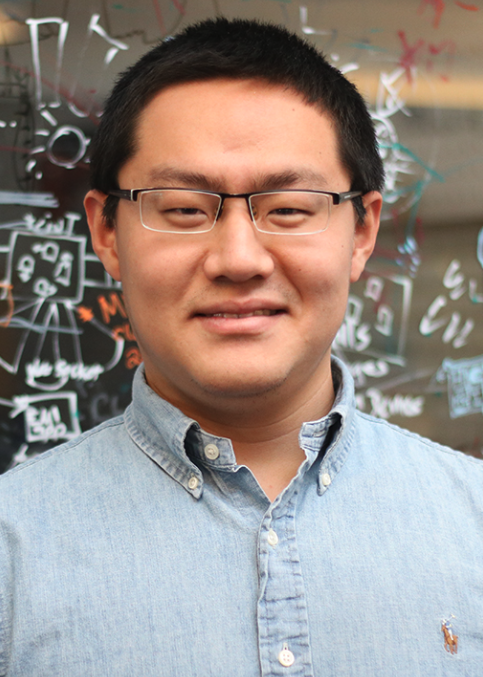 Anhong Guo (郭安鸿)合作论文数Division of Computer Science and Engineering, Department of Electrical Engineering and Computer Science, College of Engineering, University of Michigan;School of Information, University of Michigan22
 Richard E. Ladner合作论文数Paul G. Allen School of Computer Science & Engineering, University of Washington21
 Amy Pavel合作论文数Department of Computer Science, University of Texas at Austin21
 Luz Rello合作论文数Department of Information Systems and Technology, IE Business School;Google;Change Dyslexia16
 Cole Gleason合作论文数Carnegie Mellon University14
 Xiaoyi Zhang (张骁懿)合作论文数Apple14
 Samuel White合作论文数14
 Erin L. Brady合作论文数University of Rochester14
 Saiph Savage合作论文数Northeastern Civic A.I. Lab, Khoury College of Computer Science, Northeastern University13
 Meredith Ringel Morris合作论文数Google DeepMind;The Paul G. Allen School of Computer Science & Engineering, University of Washington12Yu Zhong合作论文数University of Rochester, Rochester, New York, USA11
 Raja S. Kushalnagar合作论文数School of Science, Technology, Accessibility, Mathematics and Public Health, Gallaudet University11
 Gabriel Reyes合作论文数Apple11
 Jeffrey Nichols合作论文数Google10
 Patrick A. Carrington合作论文数AXLE Lab, Human-Computer Interaction Institute, School of Computer Science, Carnegie Mellon University10
 Mitchell Gordon合作论文数University of Rochester10
 Shaun Kane合作论文数Superhuman Computing Lab, Department of Computer Science, University of Colorado Boulder;Google9
 Kyle Murray合作论文数Department of Computer Science, University of Rochester9Sam C. White合作论文数8
 Yi-Hao Peng合作论文数Human-Computer Interaction Institute, Carnegie Mellon University;School of Computer Science, Carnegie Mellon University8
 Stephanie Valencia Valencia合作论文数College of Information, University of Maryland8
 Kundan Krishna合作论文数Language Technologies Institute, Carnegie Mellon University;Abridge8
 Yevgen Borodin合作论文数Department of Computer Science, Stony Brook University;Charmtech Labs LLC8
 Michael Bernstein合作论文数Simile;Department of Computer Science, Stanford University8
 Aisling Ann O'Kane合作论文数Interaction Centre, University College London8
 Kristin Williams合作论文数University of Maryland7
 Zachary Lipton合作论文数Software and Societal Systems Department, School of Computer Science, Carnegie Mellon University;Abridge7
 Prakhar Gupta合作论文数Google7
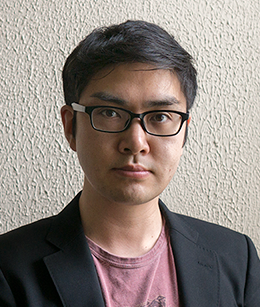 Kotaro Hara合作论文数School of Computing and Information Systems, Singapore Management University7
 Cynthia Bennett合作论文数Google Research7
 Christopher D. Miller合作论文数University of Rochester7
 Steven Dow合作论文数Cognitive Science Department, University of California San Diego7Faria Huq合作论文数6
 Colin Lea合作论文数Apple6
 Susumu Saito合作论文数6
 Rob Miller合作论文数Department of Electrical Engineering & Computer Science, Massachusetts Institute of Technology;Computer Science and Artificial Intelligence Laboratory, Massachusetts Institute of Technology6
 Chieko Asakawa合作论文数T. J. Watson Research Center, IBM Research;Carnegie Mellon University;Japanese National Museum of Emerging Science and Innovation6
 Kris Kitani合作论文数Robotics Institute, School of Computer Science, Carnegie Mellon University6
 Tom Yeh合作论文数Department of Computer Science, College of Engineering & Applied Science, University of Colorado Boulder6
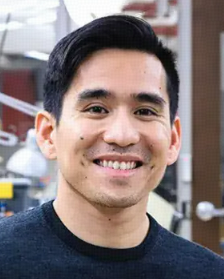 Gierad Laput合作论文数Apple6Jeremy T. Brudvik合作论文数6Hanjie Ji合作论文数5Abdullah Ali合作论文数The Information School |DUB Group, University of Washington5
 Henry Kautz合作论文数Department of Computer Science, Hajim School of Engineering & Applied Sciences, University of Rochester;Department of Computer Science, School of Engineering and Applied Science, University of Virginia;AIM Intelligent Machines5
 Jaime Teevan合作论文数Microsoft5
 Chandrika Jayant合作论文数5