W tekście przedstawiono problemy edukacyjne związane z potrzebą wyrażania świadomego i odpowiedzialnego posłuszeństwa, nieposłuszeństwa i nadposłuszeństwa tożsamościowego w warunkach wielokulturowego świata. Przyjęto, że esencją tożsamości są wartości dane w postaci dziedzictwa kulturowego grupy rodzimej, co stanowi podstawę kształtującej się ustawicznie tożsamości. Wskazano, że nieposłuszeństwo tożsamościowe może przejawiać się jako najwyższy stopień posłuszeństwa i nadposłuszeństwa wobec wartości odziedziczonych, prymarnych, niezbywalnych. Zwrócono uwagę, że szczególnym problemem jest siła bycia Innym kulturowo, co wzmaga potrzebę formułowania ważnych obecnie pytań egzystencjalnych dotyczących jednowymiarowości i pograniczności tożsamości, potrzebę potwierdzania tożsamościowego wobec realizowania się w wielu tożsamościach. Dokonano analizy problemów edukacyjnych związanych z aktywnym i odpowiedzialnym wyrażaniem posłuszeństwa, nieposłuszeństwa i nadposłuszeństwa, sformułowano wiele pytań, wskazano na wiele wyzwań i zadań, które winniśmy podejmować jako autonomiczne podmioty, członkowie grup społeczno-kulturowych, wspólnot politycznych, ponadnarodowych, kontynentalnych i wspólnoty globalnej. Podkreślono problem lęku o uznanie, lęku antycypacyjnego, potrzeby myślenia i działania pogranicznego w tym procesie. Wskazano na znaczenie literatury faktu, autobiografii i reportaży w procesie negocjowania i wyrażania posłuszeństwa, nieposłuszeństwa i nadposłuszeństwa tożsamościowego.
The author assumes that in a multicultural world, which is not an episode but a constant value, we experience constant identity changes. He treats identity as a phenomenon open to constant creation and becoming, emphasising the value of the cultural heritage of the native culture as the basis and core of identity. In this context, he points to the ideas of axiocentrism and paidocentrism, analyses culture and education, and identity as a negotiator between the principles and actions of axiocentrism and paidocentrism. He draws attention to the integration of these processes. He presents distortions in the implementation of the ideas and principles of axiocentrism and paidocentrism. He formulates numerous questions in the context of a creative subject, emphasising the importance of awareness and responsibility in educational activities.
The war in Ukraine initiated by the Russians makes one aware every day of the destruction of ideas and principles of peaceful problem solving developed over the years, and of the paradigm of cultural coexistence created in intercultural education. The aim of the article is to point out the need to undertake new tasks through intercultural education in the face of the ongoing war in Ukraine. Shaping a culture of peace, “making peace” has now become the leading task of intercultural education. The text points to the task of building on “good memory” as an opportunity and possibility of dealing with “bad memory”, the emancipation of national memories, the revitalization of heterology – the science of the Other, intercultural competences, the elimination of stereotypes and prejudices, one-sided negative and aggressive propaganda, etc. The article emphasizes the responsibility of intercultural education for creating the principles of democracy, revitalizing values symbolizing the common history with Ukraine, cooperation and collaboration in the process of functioning in European culture.
The author takes into consideration an important problem of social pedagogy and ethno-pedagogy which is the awareness of a common cultural heritage between Polish and Belarusian nations, second of with is now experiencing a regime and dictatorship. The author draws attention to the tasks of those subdisciplines in the context of history and the fate of the inhabitants of the First Commonwealth of Poland as well as the process of shaping a common cultural heritage. Need to create a new collective memory and conditions for dialogue now and in the future are also highlighted. The author presents, among the others, the history of the Skirmunt family as an example of intercultural functioning. One emphasizes the value of acquiring intercultural competences in the context of complex and tragic fates of individuals, families, ethnicities, religions. Those competences should be introducing and promoted at various stages of education.
The problem of identity forming is presented in the article on selected examples of creative biographies. The author points out how important in this process is the inherited culture, shaped in the family home and in the local environment. He also indicates how difficult the process of integration with the culture is when this culture is acquired in state educational institutions, conducting an internal dialogue to create an individual culture of being, achieving goals and values in positive freedom and civil disobedience. In the presented creative biographies, the author draws attention to the awareness of experiences and experiences in each of the cultures, to the ability and skill to resolve conflicts, negotiate, reconcile values, patterns, norms in the constant process of identity forming. The author draws attention to the development of a reflective identity project, conscious and responsible choices of content from each culture, the existential theme of the joy of living, being in harmony with oneself, which is particularly important in intercultural education.
The aim of the article is to draw attention to the new challenges and tasks of the two sub-disciplines of education (comparative and cross-cultural education) in the face of widespread cultural diversity, growing nationalisms and the ongoing war in Ukraine. The author assumes that cultural diversity is the civilisational wealth of mankind, therefore these sub-disciplines are confronted with the challenge of conducting, in a conscious and responsible manner, the educational activities that provide knowledge about their own culture and other cultures and their representatives. The author presents numerous problems that these subdisciplines have to address, ranging from the awareness of the value of inherited culture to the need and necessity to transcend one's own ethnocent3rism and sociocentrism. He poses numerous questions, refers to historical facts, points to the need for the emancipation of national memories, etc. What is seen as the fundamental challenge for comparative and cross-cultural education is the one of liberating oneself from hyper-subordination and the ability to engage in a dialogue free from propaganda that intends to dominate the thinking and attitudes oriented towards cognition, understanding, cooperation, collaboration.
The ongoing barbaric war in Ukraine has undermined the paradigm of the coexistence of nations. The author poses numerous questions about the ideologization of the nation, the reasons for Russia’s attack on Ukraine, identity awareness, etc. He justifies the necessity of shaping the culture of peace, education for peace, in accordance with the indications of Professor Irena Wojnar. Referring to the Theory of Multidimensional Identity (TWiWT) of his own authorship, he points to the need to balance three scopes and multiple dimensions of identity. He treats these educational tasks as an imperative to shaping a culture of peace.
In addition to the positive borderline effect, which is often presented in the literature, this text presents the dilemmas and tragedies of the individual, family and community, taking place on the border of cultures, religions and ethnicities. The methodological basis is the concept of the interpretation of the borderland and multi-range identity, through which I read and describe the fate of Emilia Moszczańska Kosiur Niewęgłowska presented by Grzegorz Dżus in the book “Banderowka”, published in 2020. The narration of the book’s main character allowed for presenting the process of shaping the family, individual and social identity. In this process, in the face of experiencing suspicion, helplessness, fear and humiliation, such questions dominate as: Who am I? Who am I to be? How am I to be? The author draws attention to the problem of the narrator’s internal dialogue, points to its value in the educational and humanistic context. He emphasizes how difficult but important, in the process of shaping identity, is the mediation of three areas of identity and the liberating oneself from the stigma of alienation experienced from all sides.
The author assumes that modern man is constantly mobilized to cross the frames of their own culture and to shape a multicultural identity. The author’s thesis about crossing inherited culture, getting to know, and using other cultures in the process of identity formation was based on constructivism and personalism. The author also refers to the transcultural concept of Wolfgang Welsch. He points out that a hybrid identity, on the one hand, can lead to isolation and be a psychological and cultural anguish, and on the other hand, it can be an added value of the developing identity. In the text, the author presents examples of hybrid identity, noting that it is currently difficult to develop a seamless identity. He draws attention to the need to conduct a dialogue with oneself and with others, to better understand oneself in the context of understanding and taking responsibility for the Other.
The leitmotif of the text is the problem of a child renouncing freedom and responsibility. The author asks after JJ. Rousseau – in the name of what would the child do this? This is because different ideologies enter the dynamic and complex process of shaping the identity of a child, interacting with different forces and causing different effects. The text shows the effects of harmful ideologies and positive actions supporting the child’s identity in the past and today. The author points to the need to create an ideology of negotiation and to balance internal and external dialogue in three areas of shaping identity (inherited, individually shaped and socially conditioned) and within them in many dimensions. In the text, he presents and analyzes examples, mainly from diaries, interpreting them in the context of the Multiband and Multidimensional Identity Theory.
Streszczenie: Artykuł jest próbą ukazania zakresu znaczeniowego pojęć: wie
The author assumes that the problem of migration is inscribed in the de velopment of man and cultures.Treating inherited culture as an inalien able value, the basis for awareness and creation of the paradigm of the coexistence of cultures.Author points to the currently dominant principles of global politics.Points out that people belonging to the same global civilization should actively participate in the process of creating a global paradigm of the co existence of cultures by planning and undertaking educational activities supporting the adaptation processes, shaping awareness of borderland func tioning and related intercultural competences.The final effect in the proposed model is a balanced identity system that the Author perceives and analyzes in three areas (inherited, individually shaped and socially realized), in three time periods (past, present, anticipated future) and many dimensions of in dividual identity (biological, psychological, economic, cultural, intellectual, existential, etc.) and also many dimensions of sociocultural identity (family, parish, local,
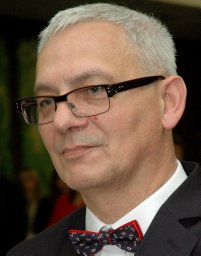 Bogusław Śliwerski合作论文数University of Łódź2
 Emilia Zyłkiewicz-Płonska合作论文数Katedra Edukacji Międzykulturowej, Uniwersytet w Białymstoku2
 Zdzisław Wołk合作论文数1elzbieta kolodziejska合作论文数1Andrzej Radziewicz-Winnicki合作论文数1Inetta Nowosad合作论文数1bozena muchacka合作论文数1
 Edyta Mianowska合作论文数1Marta Guziuk-Tkacz合作论文数1
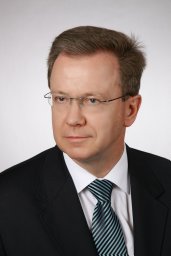 Janusz Morbitzer合作论文数1
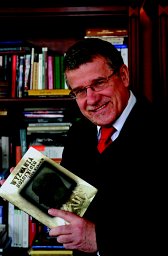 Lech Witkowski合作论文数1
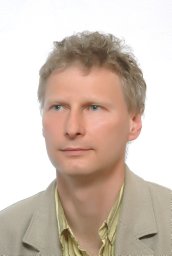 Zenon Gajdzica合作论文数Instytut Nauk o Edukacji, Uniwersytet Śląski w Katowicach1
 Maria Dudzikowa合作论文数Uniwersytetu im. Adama Mickiewicza#R##N#w Poznaniu1
 Sławomir Śliwa合作论文数Opole The Academy of Management and Administration.1Mirosława Nowak-Dziemianowicz合作论文数1Arkadiusz Żukiewicz合作论文数Inst Pedag Sci, Univ Opole1
 Jolanta Szempruch合作论文数1
 Krzysztof Sawicki合作论文数Faculty of Pedagogy and Psychology, University of Bialystok1
 Kwieciński Zbigniew合作论文数Zoological Garden Poznań1Tadeusz Lewowicki合作论文数1
 Stefan Kwiatkowski合作论文数Faculty of Chemistry Technical University1




