Cicadidae is one of the most species-rich insect families today. However, compared to the number of extant species, fossil records of Cicadidae are extremely limited. Among singing cicadas, the tribe Platypleurini within the Cicadinae subfamily is notable for its broad geographic distribution, high species diversity, and distinctive features, but no reliable fossil records have been discovered to date. In this study, we report the first fossil record of the Platypleurini from the Eocene Messel Pit: a new genus and species, Eoplatypleura messelensis. This species not only represents one of the earliest known fossil crown-group Cicadidae from the Eurasian continent but also the oldest confirmed record of the subfamily Cicadinae worldwide to date. As the first described fossil singing cicada from the Eocene Messel Pit, this discovery enriches the species diversity of the Messel biota and fills a significant gap in the Eocene cicada fossil record. The discovery of E. messelensis gen. et sp. nov. will serve as a fossil calibration point for future molecular phylogenetic studies and provides new insights into the origins and dispersal patterns of Platypleurini. Based on the analysis of existing records, Cicadidae was once widely distributed in Germany and across Europe during the Cenozoic.
Taphonomy, a subdiscipline of paleontology, is generally concerned with everything that happens from the death of an organism through to the discovery of its fossil. Here we propose the concept of fossilisation ecology, which extends taphonomy by formalising the idea that the ecology of an organism may affect its fossilisation.
Calcium biomineralization in plants occurs in a variety of patterns such as calcium carbonate cystoliths and calcium oxalate (CaOx) crystals and agglomerates in different forms. CaOx druses and prismatic crystals with sizes between 20-100 µm are found in large amounts in the leaves of many extant plants, in angiosperms particularly in dicotyledons. In gymnosperms, large CaOx druses are often found in Cycadales and Ginkgo along the leaf veins, while most conifers contain microcrystals of <10 µm size in the parenchyma. In plant fossils, patterns of calcium biominerals are rarely reported because they usually disappear during fossilization. Traces of CaOx druses have been reported recently in fossils of dicotyledon plant leaves from Oligocene; here the CaOx was replaced by organic or mineral compounds. But there is still no certain report of CaOx druses traces in Paleozoic or Mesozoic fossils. In the study presented here, granular structures in fossil leaves from different sites across the Devonian to the Neogene were investigated and compared with biomineral patterns in extant leaves of gymnosperm and angiosperm trees. These granular structures resembled patterns of CaOx druses in extant leaves in morphology and distribution and were interpreted as probable casts of CaOx druses. Well-preserved angiosperm fossils from various sites such as seed ferns since Devonian, and Ginkgophytae since Carboniferous all showed such granular traces. The diverse chemical composition of these casts of CaOx druses (e.g., pyrite, iron oxide, organic material, SiO2) depends on fossilization conditions and the chemistry of the surrounding matrix. Good knowledge of the morphology and distribution patterns of biominerals in all relevant plant groups is a basic prerequisite for recognizing their traces in plant fossils. This first extensive study of previously overlooked traces of CaOx druses in plant fossils is a promising step toward a more detailed identification of these fossil microstructures.
The whitish layer on fossil leaves from various Cenozoic localities has aroused the interest of paleobotanists due to its similarity to the white wax layers on many extant plants. The lack of detailed studies demonstrating the nature of whitish layers on fossils was our motivation to investigate their composition. In the present study, samples of whitish and yellowish fossil leaves representing three genera, from four different stratigraphic levels of lignitic deposits, were investigated. For comparison, extant leaves of the assumed nearest living relatives to the fossil species were also investigated. Initial tests were conducted to ascertain the presence of wax: a melting temperature below 80 degrees C; solubility in chloroform; and a hydrophobic character. Analyses were performed on whitish coatings of fossil leaves and surrounding coaly sediment. Gas chromatography results demonstrated that all fossil leaves contained the typical aliphatic wax components. Furthermore, high-resolution scanning electron microscopy and EDX element analysis illustrated similarities between the morphology of the carbon-dominated whitish layers on fossil leaves and epicuticular wax on extant leaves. This study demonstrated well-preserved wax biomarkers on Cenozoic fossils but revealed certain differences between the wax compositions of fossil and fresh leaves of extant species, in particular greater heterogeneity in the composition of fossil waxes.
Extant cicada (Hemiptera: Cicadoidea) includes widely distributed Cicadidae and relictual Tettigarctidae, with fossils ascribed to these two groups based on several distinct, minimally varying morphological differences that define their extant counterparts. However, directly assigning Mesozoic fossils to modern taxa may overlook the role of unique and transitional features provided by fossils in tracking their early evolutionary paths. Here, based on adult and nymphal fossils from mid-Cretaceous Kachin amber of Myanmar, we explore the phylogenetic relationships and morphological disparities of fossil and extant cicadoids. Our results suggest that Cicadidae and Tettigarctidae might have diverged at or by the Middle Jurassic, with morphological evolution possibly shaped by host plant changes. The discovery of tymbal structures and anatomical analysis of adult fossils indicate that mid-Cretaceous cicadas were silent as modern Tettigarctidae or could have produced faint tymbal-related sounds. The discovery of final-instar nymphal and exuviae cicadoid fossils with fossorial forelegs and piercing-sucking mouthparts indicates that they had most likely adopted a subterranean lifestyle by the mid-Cretaceous, occupying the ecological niche of underground feeding on root. Our study traces the morphological, behavioral, and ecological evolution of Cicadoidea from the Mesozoic, emphasizing their adaptive traits and interactions with their living environments.
The platy limestone deposit of Vallecillo in northeastern Mexico is dated to the early-middle Turonian (Late Cretaceous) and known to contain a variety of well-preserved vertebrate fossils. One of the most common fish species is the teleost Tselfatia formosa. A review of 149 individuals reveals the presence of two types of body shapes (diamond-shaped and torpedo-shaped individuals) which is interpreted as sexual shape dimorphism (SSD). A unimodal size distribution illustrates a dominance of diamond-shaped specimens, but both body shape types are present in small (young) and big sized (old) individuals. The abundance of well-articulated and complete specimens suggests that T. formosa populated deep levels of the water column, which excluded buoyancy and flotation as well as carcass disintegration near the surface. The reconstruction of the dorsal and anal fins suggests the presence of a membrane between each fin ray and allows for ecological comparison of T. formosa with modern fan fishes.
Fossilization processes and especially the role of bacterial activity during the preservation of organic material has not yet been well understood. Here, we report the results of controlled taphonomic experiments with crayfish in freshwater and sediment. 16S rRNA amplicon analyzes showed that the development of the bacterial community composition over time was correlated with different stages of decay and preservation. Three dominating genera, Aeromonas , Clostridium and Acetobacteroides were identified as the main drivers in the decomposition of crayfish in freshwater. Using micro-computed tomography (µ-CT), scanning electron microscopy (SEM) and confocal Raman spectroscopy (CRS), calcite clusters were detected after 3–4 days inside crayfish carcasses during their decomposition in freshwater at 24 °C. The precipitation of calcite clusters during the decomposition process was increased in the presence of the bacterial genus Proteocatella . Consequently, Proteocatella might be one of the bacterial genera responsible for fossilization.
Leaves of the majority of plants contain calcium oxalate (CaOx) crystals or druses which often occur in spectacular distribution patterns. Numerous studies on CaOx in plant tissues across many different plant groups have been published, since it can be visualised readily under a light microscope (LM). However, there is surprisingly limited knowledge on the actual, precise distribution of CaOx in the leaves of quite ordinary plants such as common native and exotic trees. Traditional sample preparation for the documentation of the distribution of CaOx crystals in a given sample - including overall distribution - requires time-consuming clearing procedures. Here we present a refined fast preparation method to visualise the overall CaOx complement in a sample: The plant material is ashed and the ash viewed under the polarising microscope. This is a rapid method which overcomes many shortcomings of other methods and permits the visualisation of the entire CaOx content in most leaf samples. Pros and cons in comparison with the conventional clearing technique are discussed. Further aspects for CaOx investigations by micro-CT and scanning electron microscopy are discussed.
Epizoans on fossils of orthoconic cephalopods from the Lower Devonian Hunsriick Slate have been examined to provide an insight into the palaeocommunity of the former ecosystem to obtain a better understanding of the interactions between these organisms and their taphonomic history. The most common epizoan appears to be a Favosites-like tabulate coral on 51 % of the orthoconic cephalopod specimens that encrusted the entire shells; here, a post-mortem settlement while the conch was lying on the seafloor seems most likely. Other tabulate corals, such as auloporids, rarely occur. Crinoids which complete adults, juveniles, and attachment structures are situated on the shells using it as an anchoring substrate. Also, `fenestellid bryozoans' show a post-mortem encrustation. Dacryoconarids appear numerous on the examined bedding surfaces, but a fixed settlement cannot be identified. These organisms are interpreted as scavengers feeding on organic material during decay or randomly transporting it to these sites. Lingulate brachiopods and spiral tube worms rarely settled on the cephalopods of which the latter show gregarious settlement of different growth stages. Furthermore, paired pits on internal moulds resemble "Opitzian Pits" known from the ammonoid Ivoites in the Hunsriick Slate and are interpreted as endoparasites.
The preservation of soft tissue in the fossil record is mostly due to the replacement of organic structures by minerals (e.g. calcite, aragonite or apatite) called pseudomorphs. In rare cases soft tissues were preserved by pyrite. We assume that adipocere, as the shaping component, might be a preliminary stage in the pyritisation of soft tissues under anaerobic conditions. Using high-performance liquid chromatography coupled to ultraviolet and mass spectrometric detection (HPLC–UV/MS) and confocal Raman spectroscopy (CRS) we were able to demonstrate the transformation of the hepatopancreas (digestive gland) of the crayfish Cambarellus diminutus [Hobbs 1945] into adipocere within only 9 days, just inside a biofilm. Microorganisms (bacteria and fungi) which were responsible for the biofilm ( Sphaerotilus [Kutzig 1833] and Pluteus [Fries 1857]) and maybe the adipocere formation ( Clostridium [Prazmowski 1880]) were detected by 16S rRNA gene amplicon sequencing. Furthermore, micro-computed tomography (µ-CT) analyses revealed a precipitation of calcite and further showed that in animals with biofilm formation calcite precipitates in finer grained crystals than in individuals without biofilm formation, and that the precipitates were denser and replicated the structures of the cuticles better than the coarse precipitates.
Calcium oxalate (CaOx) is one of the most common bio-mineral in extant plants and is believed to serve a variety of functions such as calcium storage and herbivore defense. However, traces of CaOx crystals have rarely been identified in fossil plants, and they are primarily known from fossil gymnosperms, where empty cavities of former CaOx crystals or ghost crystals have been reported from leaf cuticles of some Late Cretaceous and Cenozoic conifers. Here we investigate fossil angiosperm leaves from the late Oligocene Rott Fossil Lagerstätte and report ghost crystals of various shapes, sizes and topology (distribution patterns), and cavities. These micromorphological structures of fossil leaves are compared to CaOx deposits in leaves of extant plants: globular structures in fossil leaves resemble CaOx druses (crystal aggregates) in fresh leaves in size and distribution; and angular or brick-shaped structures in the vascular system of fossil leaves closely resemble prismatic CaOx crystals in the vascular system of extant leaves in both size and topology. Chemically, CaOx druses have survived fossilization as cavities only, and were replaced by organic matter and ghost minerals containing Ca, Si, Al, S, and Fe. The identification of former CaOx remains in leaf fossils provides novel insights on the fate of plant bio-minerals during fossilization. More importantly, it provides an additional aspect of the ecophysiology of fossil plants thus improving the accuracy of palaeoecological reconstructions and can provide a broader perspective on the evolution of CaOx and their rule in plant ecology across geological timescales. Alternative interpretations of the fossil microstructures are discussed but ruled out.
Fossilized tree resin, or amber, commonly contains fossils of animals, plants and microorganisms. These inclusions have generally been interpreted as hollow moulds or mummified remains coated or filled with carbonaceous material. Here, we provide the first report of calcified and silicified insects in amber from the mid-Cretaceous Kachin (Burmese) amber. Data from light microscopy, scanning electron microscopy (SEM), energy-dispersive and wavelength-dispersive X-ray spectroscopy (EDX and WDX), X-ray micro-computed tomography (Micro-CT) and Raman spectroscopy show that these Kachin fossils owe their preservation to multiple diagenetic mineralization processes. The labile tissues (e.g. eyes, wings and trachea) mainly consist of calcite, chalcedony and quartz with minor amounts of carbonaceous material, pyrite, iron oxide and phyllosilicate minerals. Calcite, quartz and chalcedony also occur in cracks as void-filling cements, indicating that the minerals formed from chemical species that entered the fossil inclusions through cracks in the resin. The results demonstrate that resin and amber are not always closed systems. Fluids (e.g. sediment pore water, diagenetic fluid and ground water) at different burial stages have chances to interact with amber throughout its geological history and affect the preservational quality and morphological fidelity of its fossil inclusions.
The platy limestone (plattenkalk) deposit of Vallecillo in northeastern Mexico is widely known for its well preserved and diverse fish and marine reptilian assemblage dated to the early-middle Turonian (Late Cretaceous). A single specimen of the pachyrhizodont G. roberti revealed the first Cretaceous isopod (Crustacea, Arthropoda) attached to a fish host. Preservation allows for the interpretation of the entire body and most appendages. A parasitic lifestyle of the isopod is inferred based on the specimen's morphology including claw-like dactyli, but is also inferred based on the anoxic bottom conditions variously interpreted for the Vallecillo plattenkalk deposit, which excluded scavengers. The individual is here referred to the family Cymothoidae and described as Mothocya vallecillae n. sp. (c) 2021 Elsevier Ltd. All rights reserved.
Dragonflies and damselflies are among the earliest flying insects with extant representatives. However, unraveling details of their long evolutionary history, such as egg laying (oviposition) strategies, is impeded by unresolved phylogenetic relationships, particularly in damselflies. Here we present a transcriptome-based phylogenetic reconstruction of Odonata, analyzing 2,980 protein-coding genes in 105 species representing nearly all the order’s families. All damselfly and most dragonfly families are recovered as monophyletic. Our data suggest a sister relationship between dragonfly families of Gomphidae and Petaluridae. According to our divergence time estimates, both crown-Zygoptera and -Anisoptera arose during the late Triassic. Egg-laying with a reduced ovipositor apparently evolved in dragonflies during the late Jurassic/early Cretaceous. Lastly, we also test the impact of fossil choice and placement, particularly, of the extinct fossil species, †Triassolestodes asiaticus, and †Proterogomphus renateae on divergence time estimates. We find placement of †Proterogomphus renateae to be much more impactful than †Triassolestodes asiaticus.
Bacteria play an important role in the fossilization of soft tissues; their metabolic activities drive the destruction of the tissues and also strongly influence mineralization. Some environmental conditions, such as anoxia, cold temperatures, and high salinity, are considered widely to promote fossilization by modulating bacterial activity. However, bacteria are extremely diverse, and have developed metabolic adaptations to a wide range of stressful conditions. Therefore, the influence of the environment on bacterial activity, and of their metabolic activity on fossilization, is complex. A number of examples illustrate that simple, general assumptions about the role of bacteria in soft tissue fossilization cannot explain all preservational pathways: (i) experimental results show that soft tissues of cnidaria decay less in oxic than anoxic conditions, and in the fossil record are found more commonly in fossil sites deposited under oxic conditions rather than anoxic environments; (ii) siderite concretions, which often entomb soft tissue fossils, precipitate due to a complex mixture of sulfate- and iron reduction by some bacterial species, running counter to original theories that iron reduction is the primary driver of siderite concretion growth; (iii) arthropod brains, now widely accepted to be preserved in many Cambrian fossil sites, are one of the first structures to decay in taphonomic experiments, indicating that their fossilization processes are complex and influenced by bacterial activity. In order to expand our understanding of the complex process of bacterially driven soft tissue fossilization, more research needs to be done, on fossils themselves and in taphonomic experiments, to determine how the complex variation in microbial metabolic activity influences decay and mineralization.
The monospecific family Mysteriomorphidae was recently described based on two fossil specimens from the Late Cretaceous Kachin amber of northern Myanmar. The family was placed in Elateriformia incertae sedis without a clear list of characters that define it either in Elateroidea or in Byrrhoidea. We report here four additional adult specimens of the same lineage, one of which was described using a successful reconstruction from a CT-scan analysis to better observe some characters. The new specimens enabled us to considerably improve the diagnosis of Mysteriomorphidae. The family is definitively placed in Elateroidea, and we hypothesize its close relationship with Elateridae. Similarly, there are other fossil families of beetles that are exclusively described from Cretaceous ambers. These lineages may have been evolutionarily replaced by the ecological revolution launched by angiosperms that introduced new co-associations with taxa. These data indicate a macroevolutionary pattern of replacement that could be extended to other insect groups.
The Cretaceous fossil record of amber provides a variety of evidence that is essential for greater understanding of early pollination strategies. Here, we describe four pieces of ca. 99-million-year-old (early Cenomanian) Myanmar amber from Kachin containing four closely related genera of short-winged flower beetles (Coleoptera: Kateretidae) associated with abundant pollen grains identified as three distinct palynomorphotypes of the gymnosperm Cycadopites and Praenymphaeapollenites cenomaniensis gen. and sp. nov., a form-taxon of pollen from a basal angiosperm lineage of water lilies (Nymphaeales: Nymphaeaceae). We demonstrate how a gymnosperm to angiosperm plant-host shift occurred during the mid-Cretaceous, from a generalist pollen-feeding family of beetles, which served as a driving mechanism for the subsequent success of flowering plants.
The fossilization of soft tissues is generally the replacement of organic structures by pseudomorphs in which muscle tissue is mostly replaced by minerals (i.e., phosphate, carbonate or pyrite). Micro-CT observations of decomposing crayfish in tank and distilled water, show a precipitation of crystal clusters over time. In addition, a mineralized muscle was found by SEM analyses. Raman spectroscopy (CRS) revealed that crystal clusters and the muscle consist of well-ordered calcite. Inductively coupled plasma mass spectrometry (ICPMS) of the distilled water showed a calcium content below the detection limit at the beginning of the experiments, which indicates that most of the calcium ions needed for the precipitation were provided by the decomposing carcasses themselves. Volume measurements of 3D-reconstructed calcite clusters and gastroliths showed a general increase of the volume of calcite clusters and simultaneously volume reduction of gastroliths with progressive decay. Specimens that were in the postmoult phase showed a smaller total volume of precipitated calcite, compared to specimens, which were in the intermoult or premoult phase. In addition, measurements of the total amount of body calcium of Cambarellus diminutus by atomic absorption spectrophotometry (AAS) revealed a higher amount of calcium in individuals without gastroliths than in individuals with gastroliths. It is assumed, that the higher the body size, the higher the volume of precipitated calcite, if the individuals were in the intermoult phase at the time of death. If the individuals were in the postmoult or premoult phase, the phase itself seems to be important.
Upper Cretaceous (Cenomanian-Santonian) platy limestone deposits in northeastern Mexico contain diverse assemblages of fossil fishes including the pachyrhizodont Goulmimichthys roberti. A review of 177 individuals from new localities in the Muzquiz area of northern Coahuila and from Vallecillo (early-middle Turonian) of Nuevo Leon reveals an unimodal size distribution of the taxon and dominance of 250 to 450 mm long individuals at Vallecillo, while smaller (younger) and larger-sized specimens are markedly rare. Size distribution is similar in the Muzquiz localities. The taxon thus migrated into pelagic environments (e.g. Vallecillo) when maturity was reached. Carcass flotation is excluded for the material due to the abundance of complete and articulated specimens. The taphonomical decay analysis of G. roberti allows for a differentiation of four preservational stages and evidences environmental differences between Vallecillo and the Muzquiz area. Goulmimichthys roberti occupied a wider stratigraphic range and ecosystem variety than previously known, including both pelagic and shallow shelf settings.
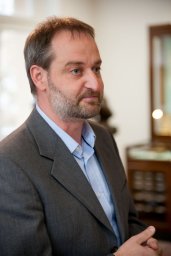 Torsten Wappler合作论文数Steinmann Institute for Geology, Mineralogy, and Paleontology, University of Bonn25
 Bo Wang (王博)合作论文数Nanjing Institute of Geology and Palaeontology, Chinese Academy of Sciences;State Key Laboratory of Palaeobiology and Stratigraphy13
 Bastian Mahler合作论文数Paleontol Sect, Rheinische Friedrich Wilhelms Univ8
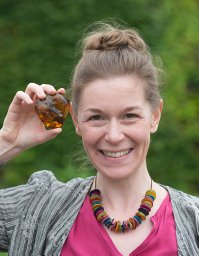 Frauke Stebner合作论文数Steinmann Institute, University of Bonn;Steinmann Institute, University of Bonn8
 Christoph Mayer合作论文数7
 André Nel合作论文数7
 Alexander Donath合作论文数Leibniz Institute for the Analysis of Biodiversity Change;Centre for Molecular Biodiversity Research, Zoologisches Forschungsmuseum Alexander Koenig7
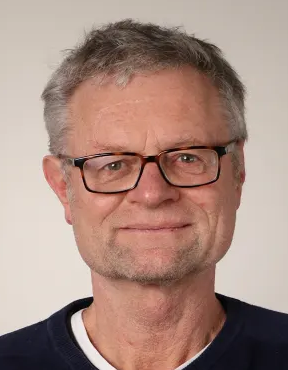 Bernhard Misof合作论文数Leibniz Institute for the Analysis of Biodiversity Change7
 Shanlin Liu (刘山林)合作论文数Institute of Zoology, Chinese Academy of Sciences7
 Oliver Niehuis合作论文数School of Life Sciences, Arizona State University7Julian F. Petrulevicius合作论文数7
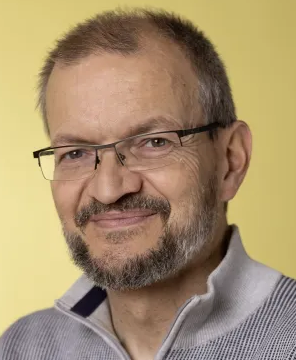 Lars Podsiadlowski合作论文数Research Museum Alexander Koenig7
 Alexandra Bergmann合作论文数6
 Michael S. Engel合作论文数Department of Geology, University of Kansas;American Museum of Natural History6
 Haichun Zhang (张海春)合作论文数Nanjing Institute of Geology and Palaeontology, Chinese Academy of Sciences6
 Xin Zhou (周欣)合作论文数Department of Entomology, College of Plant Protection, China Agricultural University6
 Gabriele Bierbaum合作论文数Institut fur Medizinische Mikrobiologie, Immunologie und Parasitologie, Universitats-Klinikum Bonn und Medizinische Fakultat6Edmund A. Jarzembowski合作论文数6Sonja Wedmann合作论文数6
 Kathrin Janssen合作论文数5
 Carola Greve合作论文数5
 Ralph S. Peters合作论文数Arthropoda Department, Leibniz Institute for the Analysis of Biodiversity Change, Museum Koenig Bonn5
 Conrad Labandeira合作论文数Smithsonian National Museum of Natural History;College of Life Sciences, Capital Normal University;Department of Entomology , University of Maryland5
 Tong Bao (包童)合作论文数School of Ecology, Sun Yat-sen University5
 Ryuichiro Machida合作论文数5
 Jessica L. Ware合作论文数Department of Entomology;State University of New Jersey;Department of Entomology, State University of New Jersey5Katarzyna S. Walczyńska合作论文数4
 David Peris合作论文数4Eva Susanne Stinnesbeck合作论文数4
 Simon Gunkel合作论文数4
 Mónica M. Solórzano Kraemer合作论文数Senckenberg Res Inst, Dept Palaeontol & Hist Geol, Senckenberganlage 25, D-60325 Frankfurt, Germany4
 Rolf Georg Beutel合作论文数Institut fur Zoologie und Evolutionsforschung, Friedrich-Schiller-Universitat Jena4Fabian Herder合作论文数Zoologisches Forschungsmuseum4
 Olivier Bethoux合作论文数CNRS, SNCI4
 Karen Meusemann合作论文数Zoologisches Forschungsinstitut4
 Harald Letsch合作论文数Division of Tropical Ecology and Animal Biodiversity, Department of Botany and Biodiversity Research, Faculty of Life Sciences, University of Vienna4
 Sven Bradler合作论文数Landcare Research;Johann-Friedrich-Blumenbach-Institut für Zoologie und Anthropologie;Landcare Research, Johann-Friedrich-Blumenbach-Institut für Zoologie und Anthropologie4
 Jacek Szwedo合作论文数Dept Invertebrate Zool & Parasitol, Univ Gdansk4
 Lars Krogmann合作论文数4
 Hukam Singh合作论文数Birbal Sahni Institute of Palaeobotany4Russell Garwood合作论文数Department of Earth and Environmental Sciences, School of Natural Sciences, Faculty of Science and Engineering, The University of Manchester3Hui Jiang (姜晖)合作论文数中国科学院青岛生物能源与过程研究所3
 Wipfler Benjamin合作论文数Phyletischem Museum, Friedrich Schiller Univ3
 Kai Schutte合作论文数3Paschalia Kapli合作论文数Department of Palaeobiology, Swedish Museum of Natural History;Department of Palaeontology, University of Vienna;Heidelberg Institute for Theoretical Studies, University of Crete;and Institute of Systematic Botany and Mycology, University of Munich;University of Vienna, University of Munich3Mari Fujita合作论文数3
 Kohli Manpreet合作论文数Department of Biology, Rutgers University;Department of Biology, Rutgers University3Daniela Bartel合作论文数3
 Gongle Shi (史恭乐)合作论文数Nanjing Institute of Geology and Palaeontology, Chinese Academy of Sciences;University of Chinese Academy of Sciences3




