Emergency myelopoiesis (EM) is essential in immune defense against pathogens for rapid replenishing of mature myeloid cells. During the EM process, a rapid cell-cycle switch from the quiescent hematopoietic stem cells (HSCs) to highly proliferative myeloid progenitors (MPs) is critical. How the rapid proliferation of MPs during EM is regulated remains poorly understood. Here, we reveal that ATG7, a critical autophagy factor, is essential for the rapid proliferation of MPs during human myelopoiesis. Peripheral blood (PB)-mobilized hematopoietic stem/progenitor cells (HSPCs) with ATG7 knockdown or HSPCs derived from ATG7-/- human embryonic stem cells (hESCs) exhibit severe defect in proliferation during fate transition from HSPCs to MPs. Mechanistically, we show that ATG7 deficiency reduces p53 localization in lysosome for a potential autophagy-mediated degradation. Together, we reveal a previously unrecognized role of autophagy to regulate p53 for a rapid proliferation of MPs in human myelopoiesis.
Human hematopoiesis starts at early yolk sac and undergoes site- and stage-specific changes over development. The intrinsic mechanism underlying property changes in hematopoiesis ontogeny remains poorly understood. Here, we analyzed single-cell transcriptome of human primary hematopoietic stem/progenitor cells (HSPCs) at different developmental stages, including yolk-sac (YS), AGM, fetal liver (FL), umbilical cord blood (UCB) and adult peripheral blood (PB) mobilized HSPCs. These stage-specific HSPCs display differential intrinsic properties, such as metabolism, self-renewal, differentiating potentialities etc. We then generated highly co-related gene regulatory network (GRNs) modules underlying the differential HSC key properties. Particularly, we identified GRNs and key regulators controlling lymphoid potentiality, self-renewal as well as aerobic respiration in human HSCs. Introducing selected regulators promotes key HSC functions in HSPCs derived from human pluripotent stem cells. Therefore, GRNs underlying key intrinsic properties of human HSCs provide a valuable guide to generate fully functional HSCs in vitro.
Obtaining functional human cells through interspecies chimerism with human pluripotent stem cells (hPSCs) remains unsuccessful due to its extremely low efficiency. Here, we show that hPSCs failed to differentiate and contribute teratoma in the presence of mouse PSCs (mPSCs), while MYCN, a pro-growth factor, dramatically promotes hPSC contributions in teratoma co-formation by hPSCs/mPSCs. MYCN combined with BCL2 (M/B) greatly enhanced conventional hPSCs to integrate into pre-implantation embryos of different species, such as mice, rabbits, and pigs, and substantially contributed to mouse post-implantation chimera in embryonic and extra-embryonic tissues. Strikingly, M/B-hPSCs injected into pre-implantation Flk-1+/- mouse embryos show further enhanced chimerism that allows for obtaining live human CD34+ blood progenitor cells from chimeras through cell sorting. The chimera-derived human CD34+ cells further gave rise to various subtype blood cells in a typical colony-forming unit (CFU) assay. Thus, we provide proof of concept to obtain functional human cells through enhanced interspecies chimerism with hPSCs.
The epigenetic treatment by 3-Deazaneplanocin A (DZNep), a histone methyltransferase inhibitor, shows great potential against acute myeloid leukemia (AML). However, the variant sensitivity and incomplete response to DZNep are commonly observed. Here, we reveal that vitamin C (Vc) dramatically promotes DZNep response against leukemic cells in different cell lines and primary AML samples. Vc enhances apoptosis and differentiation induced by DZNep in different AML cell lines in vitro and reduces leukemia progression in vivo. At the molecular level, Vc downregulates an enzyme of serine synthesis named D-3-phosphoglycerate dehydrogenase (PHGDH), as well as BCL2, an anti-apoptotic gene. Over-expression of PHGDH reverses the Vc-enhanced anti-leukemic effect of DZNep in AML cells. Therefore, our findings provide an effective approach to reduce the resistance against epigenetic treatment by Vc, which shows a potential improvement of their combination in AML patients.
Leukemia-initiating cells play critical role in relapse, resistance to therapies and metastases but the mechanism remains largely elusive. We report that β-catenin is over-expressed in almost all T-ALL patients and flow sorted β-catenin high fractions are highly resistant to therapy, leading to liver metastases in nude mice as well as dysregulated lncRNAs. Pharmacological inhibition through XAV-939 as well as si-RNA mediated inhibition of β-catenin is initially effective in re-sensitization to therapy, however, prolonged inhibition shifts dependency from β-catenin to Notch signaling, with particularly high levels of receptors Notch 1 and Notch 2. The results are verifiable in a cohort of T-ALL patients comprising of responders vs. those who have progressed, with β-catenin, Notch 1 and Notch 2 elevated in progressed patients. Further, in patients-derived cells, silencing of Notch 1 or Notch 2 does not counter resistance to β-catenin inhibition, rather pharmacological pan-Notch inhibition is needed to overcome resistance and its effect on in vitro tumor sphere formations as well as in vivo liver metastases. Thus, wnt and Notch signaling are part of a regulatory loop mutually compensating for each other in T-ALL, while ensuring the maintenance of stem cell phenotype.
Human pluripotent stem cells (hPSCs) exhibit very low efficiency in interspecies chimeras due to cell-autonomous apoptosis, but the underlying mechanism remains unclear. Here, we reveal that the cell death of hPSCs is due to a loser fate in competition with mouse PSCs (mPSCs) when they differentiate together. While, forced-expression of MYCN overcomes the competition failure of hPSCs and greatly enhances their survival rate from 0.5% to 75% in teratoma formation mixed with mPSCs in 1:1 ratio. MYCN combined with BCL2 (M/B) provokes the robust integration of primed hPSCs into pre-implantation embryos of different species such as mouse, rabbit and pig. Furthermore, M/B-hPSCs injected in pre-implantation embryos differentiate with the progress of development and generate human endothelial and blood cells in Flk-1 deficient mouse embryos through complementation. Together, our findings reveal the competition failure is an important barrier in interspecies chimerism using hPSCs and provide a way to overcome it.
Definitive hematopoiesis generates hematopoietic stem/progenitor cells (HSPCs) that give rise to all mature blood and immune cells, but remains poorly defined in human. Here, we resolve human hematopoietic populations at the earliest hematopoiesis stage by single-cell RNA-seq. We characterize the distinct molecular profiling between early primitive and definitive hematopoiesis in both human embryonic stem cell (hESC) differentiation and early embryonic development. We identify CD44 to specifically discriminate definitive hematopoiesis and generate definitive HSPCs from hESCs. The multipotency of hESCs-derived HSPCs for various blood and immune cells is validated by single-cell clonal assay. Strikingly, these hESCs-derived HSPCs give rise to blood and lymphoid lineages in vivo. Lastly, we characterize gene-expression dynamics in definitive and primitive hematopoiesis and reveal an unreported role of ROCK-inhibition in enhancing human definitive hematopoiesis. Our study provides a prospect for understanding human early hematopoiesis and a firm basis for generating blood and immune cells for clinical purposes.
Multiple myeloma (MM) accounts for 10% of all hematological malignancies. Dysregulation of microRNAs (miRNAs) or long non-coding RNAs (lncRNAs) has important impacts on progression of MM. Circular RNAs (circRNAs) are correlated with malignancy in the modulation of tumor progression. This study aims to investigate the effect of circ_0000190 on regulating the progression of MM.Microscopic examination via single molecule fluorescent in situ hybridization indicates the location of circ_0000190. qRT-PCR and Western blot were used to evaluate the expression of RNAs and proteins. Potential target of circ_0000190 was searched as miRNA, and examined by luciferase reporter assay. A computational screen was also conducted to search the potential target of miRNA. In vitro cell viability, proliferation, apoptosis assays and flow cytometric were performed to assess the effects of circ_0000190 and its target on MM. Mice model of human MM was established with subcutaneous xenograft tumor, qRT-PCR and western blot were performed to detect the underlying mechanisms of circ_0000190 on MM.Circ_0000190 was located in the cytoplasm, and down-regulated in both bone marrow tissue and peripheral blood, while the target of circ_0000190, miR-767-5p, was up-regulated, suggesting a negative correlation between them. The binding ability between circ_0000190 and miR-767-5p was confirmed by luciferase reporter assay. Moreover, circ_0000190 inhibited cell viability, proliferation and induced apoptosis of MM thus inhibiting cell progression, which is partially through the negative regulation of miR-767-5p. Mitogen-activated protein kinase 4 (MAPK4) is a direct target of miR-767-5p. In addition, over-expression of miR-767-5p promoted cell progression by directly targeting and regulating MAPK4. The MM model mice with administration of circ_0000190 suppressed tumor growth and progression.Our results revealed that the ability of circ_0000190 to protect against MM was inherited through repression of miR-767-5p, and miR-767-5p might be a tumor drive through targeting MAPK4. Therefore, a novel role of circ_0000190 on regulating the progression of MM was found, and the clinical application of circRNAs might represent a strategy in MM.
Hematopoietic stem cells (HSCs)/progenitor cells (HPCs) are generated from hemogenic endothelial cells (HECs) during the endothelial-to-hematopoietic transition (EHT); however, the underlying mechanism remains poorly understood. Here, using an array of approaches, including CRSPR/Cas9 gene knockouts, RNA-Seq, ChIP-Seq, ATAC-Seq etc., we report that vitamin C (Vc) is essential in HPC generation during human pluripotent stem cell (hPSC) differentiation in defined culture conditions. Mechanistically, we found that the endothelial cells generated in the absence of Vc fail to undergo the EHT because of an apparent failure in opening up genomic loci essential for hematopoiesis. Under Vc deficiency, these loci exhibited abnormal accumulation of histone H3 trimethylation at Lys-27 (H3K27me3), a repressive histone modification that arose because of lower activities of demethylases that target H3K27me3. Consistently, deletion of the two H3K27me3 demethylases, Jumonji domain-containing 3 (JMJD3 or KDM6B) and histone demethylase UTX (UTX or KDM6A), impaired HPC generation even in the presence of Vc. Furthermore, we noted that Vc and jmjd3 are also important for HSC generation during zebrafish development. Together, our findings reveal an essential role for Vc in the EHT for hematopoiesis, and identify KDM6-mediated chromatin demethylation as an important regulatory mechanism in hematopoietic cell differentiation.
Human pluripotent stem cells (hPSCs) exhibit very limited contribution to interspecies chimeras. One explanation is that the conventional hPSCs are in a primed state and so unable to form chimeras in pre-implantation embryos. Here, we show that the conventional hPSCs undergo rapid apoptosis when injected into mouse pre-implantation embryos. While, forced-expression of BMI1, a polycomb factor in hPSCs overcomes the apoptosis and enables hPSCs to integrate into mouse pre-implantation embryos and subsequently contribute to chimeras with both embryonic and extra-embryonic tissues. In addition, BMI1 also enables hPSCs to integrate into pre-implantation embryos of other species, such as rabbit and pig. Notably, BMI1 high expression and anti-apoptosis are also indicators for naïve hPSCs to form chimera in mouse embryos. Together, our findings reveal that the apoptosis is an initial barrier in interspecies chimerism using hPSCs and provide a rational to improve it.
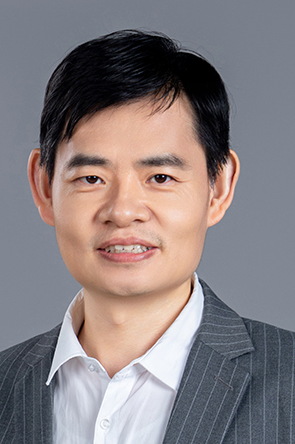 Guangjin Pan (潘光锦)合作论文数Guangdong Provincial Key Laboratory of Stem Cell and Regenerative Medicine, Guangzhou Institutes of Biomedicine and Health, Chinese Academy of Sciences10
 Yanling Zhu (朱艳玲)合作论文数Guangzhou Institutes of Biomedicine and Health, Chinese Academy of Sciences;University of Chinese Academy of Sciences8
 Yuchan Mai合作论文数Guangzhou Med Univ, Chinese Acad Sci, Guangzhou Inst Biomed & Hlth, Key Lab Regenerat Biol,Joint Sch Life Sci, Guangzhou 510530, Guangdong, Peoples R China6Baoqiang Kang合作论文数Guangzhou Med Univ, Chinese Acad Sci, Guangzhou Inst Biomed & Hlth, Key Lab Regenerat Biol,Joint Sch Life Sci, Guangzhou 510530, Guangdong, Peoples R China6Yongli Shan合作论文数6
 Ke Huang (黄科)合作论文数6Yanqi Zhang合作论文数6Qianyu Chen合作论文数Chinese Acad Sci, Guangzhou Inst Biomed & Hlth, South China Inst Stem Cell Biol & Regenerat Med, CAS Key Lab Regenerat Biol, Guangzhou 510530, Guangdong, Peoples R China5Zhishuai Zhang合作论文数5
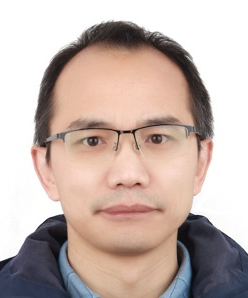 Junwei Wang (王俊伟)合作论文数School of Intelligence Science and Technology, University of Science and Technology Beijing5Jun Tang合作论文数4Bing Long合作论文数4
 Yashu Feng合作论文数4
 Yuhang Li (李宇航)合作论文数4
 Tianyu Wang (王天宇)合作论文数School of Chemistry and Biological Engineering, University of Science and Technology Beijing4Mingquan Wang合作论文数3
 Zhang Quanjun合作论文数Chinese Acad Sci, Key Lab Regenerat Biol, Guangzhou 510530, Guangdong, Peoples R China3Chengdan Lai合作论文数Guangzhou Med Univ, Chinese Acad Sci, Guangzhou Inst Biomed & Hlth, Joint Sch Life Sci,CAS Key Lab Regenerat Biol, Guangzhou 510530, Guangdong, Peoples R China3Jinbing Li合作论文数Guangzhou Med Univ, Chinese Acad Sci, Guangzhou Inst Biomed & Hlth, Key Lab Regenerat Biol,Joint Sch Life Sci, Guangzhou 510530, Guangdong, Peoples R China3Xiaofen Zhong合作论文数CAS Key Laboratory of Regenerative Biology, Guangdong Provincial Key Laboratory of Stem Cell and Regenerative Medicine, Guangzhou Institutes of Biomedicine and Health, Chinese Academy of Sciences, Guangzhou 510530, China3Minghui Gao合作论文数3
 Zhen Ouyang (欧阳臻)合作论文数School of Food and Biological Engineering, Jiangsu University3
 Jiekai Chen (陈捷凯)合作论文数Guangzhou Institutes of Biomedicine and Health, Chinese Academy of Sciences;Guangzhou Medical University3
 Duanqing Pei (裴端卿)合作论文数School of Life Sciences, Westlake University3Tiancheng Zhou合作论文数3
 Nana Fan (樊娜娜)合作论文数Guangzhou Institutes of Biomedicine and Health, Chinese Academy of Sciences;Key Laboratory of Regenerative Biology, Chinese Academy of Sciences3Jia-Jun Liu (刘加军)合作论文数3
 Liangxue Lai (赖良学)合作论文数College of Veterinary Medicine, Jilin University;Guangzhou Institutes of Biomedicine and Health, Chinese Academy of Sciences3Jiaowei Wang合作论文数2Bijay Khadka合作论文数2Yangyang Suo合作论文数2Baoqiang Tang合作论文数2Zhi-Gang Fang合作论文数2Ling Zhang合作论文数2
 Qing Wang合作论文数2Qi Xing合作论文数Guangzhou Med Univ, Chinese Acad Sci, Guangzhou Inst Biomed & Hlth, CAS Key Lab Regenerat Biol, Guangzhou 511436, Guangdong, Peoples R China2Tian Zhang合作论文数2
 Yuhua Huang合作论文数Sch Biomed Sci, Univ Hong Kong2
 wu Jieying (吴杰英)合作论文数2YaZhou Cui (崔亚洲)合作论文数2
 Jinfu Nie (聂金福)合作论文数中国科学技术大学中国科学院合肥物质科学研究院医学物理与技术中心2Li Fei合作论文数2Ruozhi Xiao合作论文数2
 Baojian Liao (廖宝剑)合作论文数The Fifth Affiliated Hospital of Guangzhou Medical University2Huaisong Lin合作论文数1Hao Li合作论文数1Shuquan Su合作论文数1Aiping Lin合作论文数1




