In recent years, Multi-View Clustering (MVC) has been significantly advanced under the influence of deep learning. By integrating heterogeneous data from multiple views, MVC enhances clustering analysis, making multi-view fusion critical toclustering performance. However, multi-view fusion remains challenged by low-quality data, primarily stemming from tworeasons: 1) Certain views are contaminated by noisy data. 2) Some views suffer from missing data. This paper proposes anovel Stochastic Generative Diffusion Fusion (SGDF) method to address this problem. SGDF leverages a multiple generative mechanism for the multi-view feature of each sample. It exhibits robustness against low-quality data. Building on SGDF, wefurther present the Generative Diffusion Contrastive Network (GDCN). Extensive experiments show that GDCN achieves the state-of-the-art results in deep MVC tasks.
Multi-talker automatic speech recognition (MT-ASR) remains challenging under overlapping speech. Hard diarization-based segmentation introduces irreversible errors, whereas serialized output training (SOT) avoids explicit segmentation but does not condition a pretrained encoder on speaker activity. We propose Soft Posterior Speaker Injection (SPSI): a lightweight head predicts frame-level speaker posteriors 𝐏̂ and injects them into Whisper through multi-layer feature-wise linear modulation (FiLM) and decoder speaker-memory prompts. On controlled two-speaker LibriSpeech overlap, SPSI reduces utterance-mean constrained permutation word error rate (cpWER) from 50.7% (SOT) to 49.6% (one-sided paired bootstrap p≈0.006), with a larger reduction in the high-overlap bin (60.4%→58.8%). Same-backbone speaker-auxiliary objectives and voice activity detection (VAD) pipelines do not outperform SOT; zero-shot (ZS) LibriCSS is comparable. Freeze-posterior adaptation with overlap-heavy (OV-heavy) continuation reduces held-out LibriCSS cpWER (sessions 8–9) to 32.4% (versus 37.5% for SOT). Ablations indicate complementary encoder FiLM and decoder prompts, and that the effective signal is a soft simplex-valued speaker share.
Trustworthy multi-modal learning reliably integrates multiple data sources. However, current methods often face a challenge, which is the inherent non-convex nature of deep neural networks. It leads to their susceptibility to local minima, ultimately resulting in a reduced capacity for generalization. To address this issue, we first create a theoretical framework, which extends the application of curriculum learning in multi-modal scenarios. Secondly, we propose a novel curriculum termed the Dynamic SRM Curriculum (DSRMC). It consists of two modules: a scoring function and a training schedule. The scoring function sorts samples from simple to complex. The training scheduler aims to manage the quantity of samples supplied at each round during training. DSRMC facilitates positioning the learned model in a flatter region of the loss landscape, thereby enhancing its overall generalization ability. Building on DSRMC, we eventually propose an innovative method termed as Curriculum Trustworthy Multi-modal Learning (CTML). It applies DSRMC in multi-modal learning application scenarios. Extensive experiments conducted on three open datasets show that the proposed CTML outperforms state-of-the-art methods, with a maximum improvement of 6.7% in macro F1 score. Our code and dataset are publicly available on https: //github.com/HackerHyper/DSRMC.git.
Multimodal learning, while contributing to numerous success stories across various fields, faces the challenge of prohibitively expensive manual annotation. To address the scarcity of annotated data, a popular solution is unsupervised domain adaptation, which has been extensively studied in unimodal settings yet remains less explored in multimodal settings. In this paper, we investigate heterogeneous multimodal domain adaptation, where the primary challenge is the varying domain shifts of different modalities from the source to the target domain. We first introduce the information bottleneck method to learn representations for each modality independently, and then match the source and target domains in the representation space with correlation alignment. To balance the domain alignment of all modalities, we formulate the problem as a multi-objective task, aiming for a Pareto optimal solution. By exploiting the properties specific to our model, the problem can be simplified to a quadratic programming problem. Further approximation yields a closed-form solution, leading to an efficient modality-balanced multimodal domain adaptation algorithm. The proposed method features Balanced multi-objective optimization for multimodal domain adaptation, termed Boomda. Extensive empirical results showcase the effectiveness of the proposed approach and demonstrate that Boomda outperforms the competing schemes.
Multi-View Clustering (MVC) aggregates heterogeneous data to create a fused representation, which allows it to divide data samples into their respective groups. In recent years, it has drawn increasing attention. However, the current methods have the problem of untrusted fusion. The reasons for this issue are as follows: 1) The existing approaches ignore the fact that the view contains noise data; 2) In deep MVC, the pattern of Contrastive Learning (CL) originates from the same sample as opposed to the identical group. It guides the data fusion process toward an incorrect path. We present a novel Trusted Mixture-of-Mambas Contrastive Network (MoMVC) to address this untrusted problem. The framework is composed of two principal components. Specifically, we develop a new Trusted Mixture-of-Mambas Fusion Network (MoM). It uses the selective mechanism of the Mamba network and the Mixture of Experts (MoE) network to implement the trusted integration of multi-source heterogeneous features. Additionally, we employ the Average-similarity Contrastive Learning (AsCL) module to coordinate the unified embedding with individual view embeddings. By encouraging similarity among view representations at the cluster level rather than solely at the sample level, the AsCL component fundamentally strengthens the reliability of multi-view fusion. Extensive experiments prove that MoMVC establishes new state-of-the-art performance on deep MVC benchmarks, surpassing existing methods by a considerable margin.
Music accompaniment generation aims to automatically produce instrumental accompaniments that are rhythmically, harmonically, and timbrally coherent with a given vocal input, with broad applications in personalized music creation, arrangement assistance, and music education. Existing approaches, primarily operating in the symbolic domain or relying on single-stage audio generation frameworks, commonly suffer from insufficient high-level semantic structure modeling, limited acoustic detail reconstruction, and weak conditional controllability. To address these limitations, this paper proposes HAFM, a Hierarchical Autoregressive Foundation Model for vocal-conditioned music accompaniment generation. The model employs a dual-rate tokenization strategy in which 50 Hz HuBERT semantic tokens capture high-level musical structure and 75 Hz EnCodec acoustic tokens encode fine-grained acoustic content, enabling explicit disentanglement of semantic and acoustic representations. Building on this foundation, a three-stage cascaded generation framework is designed to progressively generate semantic tokens, coarse acoustic tokens, and fine acoustic tokens, refining the accompaniment from global structure to local detail. . Objective evaluation on the MUSDB18 dataset demonstrates that the full three-stage model achieves a Fréchet Audio Distance (FAD) score of 1.71, representing an 18.6
Multi-view clustering can partition data samples into their categories by learning a consensus representation in an unsupervised way and has received more and more attention in recent years. However, there is an untrusted fusion problem. The reasons for this problem are as follows: 1) The current methods ignore the presence of noise or redundant information in the view; 2) The similarity of contrastive learning comes from the same sample rather than the same cluster in deep multi-view clustering. It causes multi-view fusion in the wrong direction. This paper proposes a novel multi-view clustering network to address this problem, termed as Trusted Mamba Contrastive Network (TMCN). Specifically, we present a new Trusted Mamba Fusion Network (TMFN), which achieves a trusted fusion of multi-view data through a selective mechanism. Moreover, we align the fused representation and the view-specific representation using the Average-similarity Contrastive Learning (AsCL) module. AsCL increases the similarity of view presentation from the same cluster, not merely from the same sample. Extensive experiments show that the proposed method achieves state-of-the-art results in deep multi-view clustering tasks. The source code is available at https://github.com/HackerHyper/TMCN.
Multi-View Clustering (MVC) has garnered increasing attention in recent years. It is capable of partitioning data samples into distinct groups by learning a consensus representation. However, a significant challenge remains: the problem of untrustworthy fusion. This problem primarily arises from two key factors: 1) Existing methods often ignore the presence of inherent noise within individual views; 2) In traditional MVC methods using Contrastive Learning (CL), similarity computations typically rely on different views of the same instance, while neglecting the structural information from nearest neighbors within the same cluster. Consequently, this leads to the wrong direction for multi-view fusion. To address this problem, we present a novel Trusted Hierarchical Contrastive Representation Learning (THCRL). It consists of two key modules. Specifically, we propose the Deep Symmetry Hierarchical Fusion (DSHF) module, which leverages the UNet architecture integrated with multiple denoising mechanisms to achieve trustworthy fusion of multi-view data. Furthermore, we present the Average K-Nearest Neighbors Contrastive Learning (AKCL) module to align the fused representation with the view-specific representation. Unlike conventional strategies, AKCL enhances representation similarity among samples belonging to the same cluster, rather than merely focusing on the same sample across views, thereby reinforcing the confidence of the fused representation. Extensive experiments demonstrate that THCRL achieves the state-of-the-art performance in deep MVC tasks.
Trustworthy multi-modal learning integrates multiple sources of data reliably. However, the current methods still focus on performance improvement by developing deep multi-modal networks. These approaches frequently encounter challenges due to the inherent non-convex nature of deep neural networks and their vulnerability to local minima, ultimately leading to a diminished ability for generalization. To address this problem, we present a novel curriculum termed the Dynamic SRM Curriculum (DSRMC). Within DSRMC, the deep trustworthy multi-modal networks undergo training with data provided sequentially, progressing from simple to complex samples. This training strategy mimics the human learning process, commencing with fundamental concepts and gradually advancing to tackle more complex and abstract ideas. Building upon DSRMC, we propose an innovative Curriculum Trustworthy Multi-modal Learning (CTML) method. CTML makes it easier to place the learned model in a flatter area, which improves its overall ability for generalization. Comprehensive experiments on three public datasets demonstrate that the proposed CTML performs better than state-of-the-art methods, achieving a maximum improvement of 6.7% on macroF1.
In recent years, the advancement of Graph Neural Networks (GNNs) has significantly propelled progress in Multi-View Clustering (MVC). However, existing methods face the problem of coarse-grained graph fusion. Specifically, current approaches typically generate a separate graph structure for each view and then perform weighted fusion of graph structures at the view level, which is a relatively rough strategy. To address this limitation, we present a novel Mixture of Ego-Graphs Contrastive Representation Learning (MoEGCL). It mainly consists of two modules. In particular, we propose an innovative Mixture of Ego-Graphs Fusion (MoEGF), which constructs ego graphs and utilizes a Mixture-of-Experts network to implement fine-grained fusion of ego graphs at the sample level, rather than the conventional view-level fusion. Additionally, we present the Ego Graph Contrastive Learning (EGCL) module to align the fused representation with the view-specific representation. The EGCL module enhances the representation similarity of samples from the same cluster, not merely from the same sample, further boosting fine-grained graph representation. Extensive experiments demonstrate that MoEGCL achieves state-of-the-art results in deep multi-view clustering tasks. The source code is publicly available at https://github.com/HackerHyper/MoEGCL.
Multi-modal hashing methods are widely used in multimedia retrieval, which can fuse multi-source data to generate binary hash code. However, the individual backbone networks have limited feature expression capabilities and are not jointly pre-trained on large-scale unsupervised multi-modal data, resulting in low retrieval accuracy. To address this issue, we propose a novel CLIP Multi-modal Hashing (CLIPMH) method. Our method employs the CLIP framework to extract both text and vision features and then fuses them to generate hash code. Due to enhancement on each modal feature, our method has great improvement in the retrieval performance of multi-modal hashing methods. Compared with state-of-the-art unsupervised and supervised multi-modal hashing methods, experiments reveal that the proposed CLIPMH can significantly improve performance (a maximum increase of 8.38% in mAP).
Multi-view hashing is a crucial technology for multimedia retrieval because it transforms heterogeneous data from many viewpoints into binary hash codes. However, the existing approaches focus mostly on the complementarity among multiple views while being without confidence fusion. Furthermore, redundant noise is present in the single-view data in real-world application contexts. We present an innovative Adaptive Confidence Multi-View Learning (ACMVL) method to perform confidence fusion and remove extraneous noise. Initially, a confidence network is constructed to eliminate noise data and extract useful information from various single-view features. Moreover, an adaptive confidence multi-view network is utilized to quantify the confidence of each view and further fuse multiple view features using a weighted summation. Here, we propose an Automatic View Confidence Metric (AVCM) as a score for evaluating the confidence of views. Finally, to improve the semantic representation of the fused feature, a dilation network is created. Based on ACMVL, we introduce a novel Adaptive Confidence Multi-View Hashing (ACMVH) method. To our knowledge, we are the pioneers in using confidence learning for multimedia retrieval. Comprehensive experiments on three publicly available datasets demonstrate that our ACMVH outperforms the state-of-the-art methods (maximum improvement of 3.24% on mAP).
The multi-view hash method plays a pivotal role in multimedia retrieval, transforming diverse data from multiple perspectives into binary hash codes. While existing methods primarily emphasize complementarity across multiple views, they often face challenges associated with the non-convex nature of deep neural networks, ultimately causing a decrease in generalization ability. To overcome this limitation, we propose a novel curriculum called Automatic Multiple Loss Curriculum (AMLC). In AMLC, the deep multi-view hashing network undergoes training with data presented sequentially, progressing from simple to complex samples. This training strategy mirrors the human learning process, commencing with fundamental concepts and progressively advancing to tackle more intricate and abstract ideas. Building upon AMLC, we propose the Boosted Curriculum Multi-View Hashing (BCMVH) method. BCMVH facilitates the positioning of the learned model in a more flat region, enhancing its overall generalization capability. Extensive experiments conducted on three public datasets demonstrate that the proposed BCMVH outperforms state-of-theart methods, achieving a maximum improvement of 3.17% in terms of mean Average Precision
Differentiable architecture search plays a prominent role in Neural Architecture Search (NAS) and exhibits preferable efficiency than traditional heuristic NAS methods, including those based on evolutionary algorithms (EA) and reinforcement learning (RL). However, differentiable NAS methods encounter challenges when dealing with non-differentiable objectives like energy efficiency, resource constraints, and other non-differentiable metrics, especially under multi-objective search scenarios. While the multi-objective NAS research addresses these challenges, the individual training required for each candidate architecture demands significant computational resources. To bridge this gap, this work combines the efficiency of the differentiable NAS with metrics compatibility in multi-objective NAS. The architectures are discretely sampled by the architecture parameter α within the differentiable NAS framework, and α are directly optimised by the policy gradient algorithm. This approach eliminates the need for a sampling controller to be learned and enables the encompassment of non-differentiable metrics. We provide an efficient NAS framework that can be readily customized to address real-world multi-objective NAS (MNAS) scenarios, encompassing factors such as resource limitations and platform specialization. Notably, compared with other multi-objective NAS methods, our NAS framework effectively decreases the computational burden (accounting for just 1/6 of the NSGA-Net). This search framework is also compatible with the other efficiency and performance improvement strategies under the differentiable NAS framework.
Hash representation learning of multi-view heterogeneous data is the key to improving the accuracy of multimedia retrieval. However, existing methods utilize local similarity and fall short of deeply fusing the multi-view features, resulting in poor retrieval accuracy. Current methods only use local similarity to train their model. These methods ignore global similarity. Furthermore, most recent works fuse the multi-view features via a weighted sum or concatenation. We contend that these fusion methods are insufficient for capturing the interaction between various views. We present a novel Central Similarity Multi-View Hashing (CSMVH) method to address the mentioned problems. Central similarity learning is used for solving the local similarity problem, which can utilize the global similarity between the hash center and samples. We present copious empirical data demonstrating the superiority of gate-based fusion over conventional approaches. On the MS COCO and NUS-WIDE, the proposed CSMVH performs better than the state-of-the-art methods by a large margin (up to 11.41% mean Average Precision (mAP) improvement).
The multi-view hash method converts heterogeneous data from multiple views into binary hash codes, which is one of the critical technologies in multimedia retrieval. However, the current methods mainly explore the complementarity among multiple views while lacking confidence in learning and fusion. Moreover, in practical application scenarios, the single-view data contains redundant noise. To conduct confidence learning and eliminate unnecessary noise, we propose a novel Adaptive Confidence Multi-View Hashing (ACMVH) method. First, a confidence network is developed to extract useful information from various single-view features and remove noise information. Furthermore, an adaptive confidence multi-view network is employed to measure the confidence of each view and then fuse multi-view features through a weighted summation. Lastly, a dilation network is designed to further enhance the feature representation of the fused features. To the best of our knowledge, we pioneer the application of confidence learning into the field of multimedia retrieval. Extensive experiments on two public datasets show that the proposed ACMVH performs better than state-of-the-art methods (maximum increase of 3.24%). The source code is available at https://github.com/HackerHyper/ACMVH.
The acquisition of multi-view hash representation for heterogeneous data holds paramount importance in the domain of multimedia retrieval. The limited retrieval precision observed in current approaches stems from their inadequate integration of multi-view features and their failure to effectively leverage the metric information available from diverse samples. Commonly employed fusion methods, such as concatenation or weighted sum, are insufficient in capturing the complementarity among multiple view features. Furthermore, these methods neglect the valuable information contributed by dissimilar samples. To address these challenges, we propose an innovative method termed Fast Metric Multi-View Hashing (FMMVH). Our approach showcases the superiority of gate-based fusion over traditional methods, as substantiated by extensive empirical evidence. Additionally, this paper proposes a novel deep metric loss function to enable the utilization of metric information from dissimilar samples. We exclusively train our method using this single loss function. To enhance practical applicability in industrial production environments, we employ model compression techniques to optimize the proposed method. On benchmark datasets such as MIR-Flickr25K, NUS-WIDE, and MS COCO, the performance of our FMMVH method significantly surpasses that of existing state-of-the-art methods, demonstrating improvements of up to 7.47% in mean Average Precision (mAP).
Inspired by the excellent performance of Mamba networks, we propose a novel Deep Mamba Multi-modal Learning (DMML). It can be used to achieve the fusion of multi-modal features. We apply DMML to the field of multimedia retrieval and propose an innovative Deep Mamba Multi-modal Hashing (DMMH) method. It combines the advantages of algorithm accuracy and inference speed. We validated the effectiveness of DMMH on three public datasets and achieved state-of-the-art results.
The multi-view hash method is crucial in multimedia retrieval via transforming heterogeneous data from multiple views into binary hash codes. Existing methods primarily focus on leveraging complementary information across multiple views, while ignoring the issue of imbalanced optimization. That is, the features from some views in multi-view data are stronger than others, which leads to a less optimization of the networks handling those weaker features. To fully utilize the data from all the views, we propose a novel Adaptive Loss-aware Modulation (ALM) method to address this imbalance issue during the fusion of multi-view features. Specifically, in training, ALM automatically calculates the total loss for each view to reflect the performance of the respective view's backbone network. The modulation coefficient is then determined based on the total loss of the corresponding view. By multiplying the gradient of the network of each view with its corresponding modulation coefficient, we can suppress the gradient update rate of the view with stronger features, while maintaining the normal gradient update rate for the ones with weaker features. Based on ALM, we further introduce a new Balanced Multi-View Hashing (BMVH) method. Extensive experiments on three public datasets demonstrate that the proposed BMVH outperforms state-of-the-art methods, with a maximum increase of 3.22% in mAP.
The detection of abuse language remains a long-standing challenge with the extensive use of social networks. The detection task of abuse language suffers from limited accuracy. We argue that the existing detection methods utilize the fine-tuning technique of the pre-trained language models (PLMs) to handle downstream tasks. Hence, these methods fail to stimulate the general knowledge of the PLMs. To address the problem, we propose a novel Deep Prompt Multi-task Network (DPMN) for abuse language detection. Specifically, DPMN first attempts to design two forms of deep prompt tuning and light prompt tuning for the PLMs. The effects of different prompt lengths, tuning strategies, and prompt initialization methods on detecting abuse language are studied. In addition, we propose a Task Head based on Bi-LSTM and FFN, which can be used as a short text classifier. Eventually, DPMN utilizes multi-task learning to improve detection metrics further. The multi-task network has the function of transferring effective knowledge. The proposed DPMN is evaluated against eight typical methods on three public datasets: OLID, SOLID, and AbuseAnalyzer. The experimental results show that our DPMN outperforms the state-of-the-art methods.
 Zhangmin Huang合作论文数Hangzhou Innovat Inst, Beihang Univ8
 Lirong Dai (戴礼荣)合作论文数National Engineering Laboratory for Speech and Language Information Processing, University of Science and Technology of China;Department of Electronic Engineering and Information Science, University of Science and Technology of China6Yu Cui合作论文数5
 Chang Tang (唐厂)合作论文数School of Software Engineering, Huazhong University of Science and Technology5Jingfei CHANG (常璟飞)合作论文数4
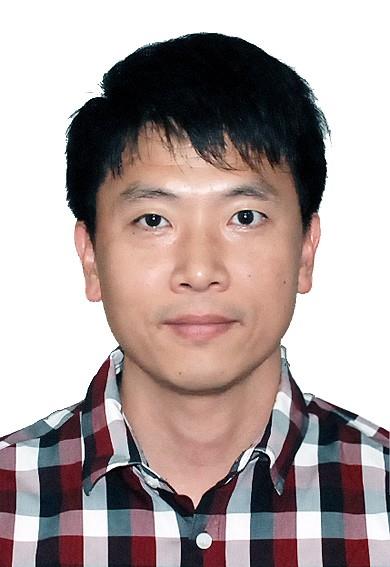 Lingfang Zeng (曾令仿)合作论文数Enflame Joint Innovation Research Center, Zhejiang Lab;College of Computer Science and Technology, Zhejiang University4Xin Zou合作论文数3Mingkai Sheng合作论文数3Yuyang Dai合作论文数2Chenshu Hu合作论文数2
 Wen Cheng合作论文数Huazhong University of Science and Technology, China2Pengbo Hu合作论文数1
 Bo Lyu合作论文数1
 Yu-Ping Ruan合作论文数National Engineering Laboratory of Speech and Language Information Processing, University of Science and Technology of China, Hefei, China1
 Yu Zhang (张煜)合作论文数School of Transportation and Logistics Engineering, Wuhan University of Technology1
 Yuting Cao合作论文数1
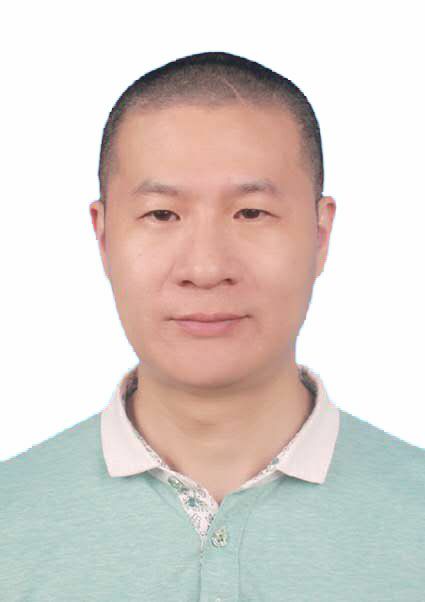 Yongli Cheng (程永利)合作论文数College of Computer and Data Science, Fuzhou University1
 Chris Liu (刘磊)合作论文数School of Software, Shandong University1Yong Li (李勇)合作论文数School of Information Science and Engineering, East China University of Science and Technology1
 Yi Zhou (周熠)合作论文数Department of Electronic Engineering and Information Science, School of Information Science and Technology, University of Science and Technology of China1
 Lei Liu (刘磊)合作论文数School of Artificial Intelligence and Automation, Huazhong University of Science and Technology1
 Yin "David" Yang合作论文数Division of Information and Computing Technologies, College of Science and Engineering, Hamad Bin Khalifa University1
 Shiping Wen合作论文数Faculty of Engineering and Information Technology, University of Technology Sydney;Intelligent Computing System Lab, University of Technology Sydney1




