In the post-Moore era, the chiplet technology based on advanced packaging would be a quite promising solution for the high-performance AI chips. The chiplet technology with 2.5D/3D stacking package architecture transforms traditional on-chip interconnection into chip-to-chip (C2C) interconnection. The C2C interconnection usually comprised of through-silicon-via (TSV), metal wiring (RDL) and bonding bumps with varying structures, sizes, materials and spatial layout, which could affect the signal integrity of the C2C channel. To further develop the chiplet technology, quantitatively evaluating the signal integrity performance of C2C interconnection in chiplet 2.5D/3D packages is very important. In this paper, the effects of C2C interconnect structures (RDL, TSV, bump) and their related parameters (size, pitch, and number of stacked layers) on signal integrity were investigated by simulations with HFSS and ADS tools. The simulation results show that the thickness of the dielectric layer between the RDL significantly affects the signal transmission capability of the channel. Besides, as the TSV spacing increases, the S11 and S21 of the channel are gradually improved, but the crosstalk is likewise increased. In combination with the optimized design parameters, the S21 of the 1650.m long 5-layer stacked C2C interconnection channel is better than -4.1 dB in the 56 GHz range, but the S11 is above -20 dB after 17 GHz, which can be attributed to the impedance discontinuities in the complex C2C interconnection structure. This work reveals the signaling capabilities of the RDL-TSVbump interconnection, which can provide a reference for chiplet 2.5D/3D packaging design.
Hash representation learning of multi-view heterogeneous data is the key to improving the accuracy of multimedia retrieval. However, existing methods utilize local similarity and fall short of deeply fusing the multi-view features, resulting in poor retrieval accuracy. Current methods only use local similarity to train their model. These methods ignore global similarity. Furthermore, most recent works fuse the multi-view features via a weighted sum or concatenation. We contend that these fusion methods are insufficient for capturing the interaction between various views. We present a novel Central Similarity Multi-View Hashing (CSMVH) method to address the mentioned problems. Central similarity learning is used for solving the local similarity problem, which can utilize the global similarity between the hash center and samples. We present copious empirical data demonstrating the superiority of gate-based fusion over conventional approaches. On the MS COCO and NUS-WIDE, the proposed CSMVH performs better than the state-of-the-art methods by a large margin (up to 11.41% mean Average Precision (mAP) improvement).
Computational fluid dynamics (CFD) simulations are widely employed for investigating dense gas–solid flows. However, conducting numerical simulations covering varying geometries and operating conditions is prohibitively expensive. In recent years, neural network-based methods have shown immense potential for accelerating flow field simulation. Still, forecasting the spatiotemporal evolution of gas–solid flow fields remains an open challenge for surrogate models. This study presents a physics-encoded neural network model to predict gas–solid dynamics in bubbling fluidized beds with different geometry sizes. With a novel module to estimate the particle migration distribution, the model overcomes the limitation present in pure data-driven approaches and intrinsically ensures the conservation of solid mass in the system. Additionally, it not only utilizes grid-scale information but also learns particle-scale details, thereby enhancing the forecasting performance. Through comprehensive evaluations, the physics-encoded model demonstrates significant improvements in accuracy of predicting instantaneous distributions, time-averaged and fluctuating fields, as well as bubble characteristics, in comparison to traditional data-driven models. Furthermore, our approach exhibits robust generalization capabilities, enabling it to handle previously unseen conditions with varied particle number. In contrast, data-driven models tend to memorize flow patterns seen during training, resulting in drastic deviations. In summary, the proposed method offers for a thousand-fold speedup and provides reasonable predictions for gas–solid systems with varying geometrical dimensions.
Heat transfer analysis is crucial in electronic packaging design due to the coefficient of thermal expansion mismatch, which can cause mechanical failure. However, the classical numerical computation method is expensive which makes it hard to satisfy the electronic packaging design. With the rapid development of deep learning, it has widely been used in plenty of areas. In this work, we design a deep-learning model to study the transient thermal simulation with complex structures and various materials. The Rothe method is used to train the model. Numerical simulations have verified the high efficiency of the DL model.
Detailed information of flow fields is of great significance for designing and optimizing multiphase flow systems. However, predicting spatiotemporal evolution of gas-solid flows using numerical simulation often requires a significant amount of computation and time. In this study, we proposed a 3D convolutional neural network for predicting reactive dense gas-solid flows. We first explored the design of model architecture and extensively evaluated the performance in terms of efficiency, accuracy, long-term prediction stability and generalizability for a non-reactive fluidized bed. Then we extended the method to a biomass fast pyrolysis process. The proposed model achieves real-time prediction, 3–4 orders of magnitude faster than CFD-DEM simulations. The surrogate model reasonably captures bubble-driven flow behaviors and effects of bubble on fast pyrolysis reactions. The predicted bubble characteristics, and time-averaged and RMS flow fields match well with the simulation results. Our approach exhibits excellent long-term stability and has good generalization capability to unseen fluidization velocities. To the best of our knowledge, this is the first time a neural network has been successfully applied to learn spatiotemporal evolution of reactive dense gas-solid flows.
The multi-view hash method is crucial in multimedia retrieval via transforming heterogeneous data from multiple views into binary hash codes. Existing methods primarily focus on leveraging complementary information across multiple views, while ignoring the issue of imbalanced optimization. That is, the features from some views in multi-view data are stronger than others, which leads to a less optimization of the networks handling those weaker features. To fully utilize the data from all the views, we propose a novel Adaptive Loss-aware Modulation (ALM) method to address this imbalance issue during the fusion of multi-view features. Specifically, in training, ALM automatically calculates the total loss for each view to reflect the performance of the respective view's backbone network. The modulation coefficient is then determined based on the total loss of the corresponding view. By multiplying the gradient of the network of each view with its corresponding modulation coefficient, we can suppress the gradient update rate of the view with stronger features, while maintaining the normal gradient update rate for the ones with weaker features. Based on ALM, we further introduce a new Balanced Multi-View Hashing (BMVH) method. Extensive experiments on three public datasets demonstrate that the proposed BMVH outperforms state-of-the-art methods, with a maximum increase of 3.22% in mAP.
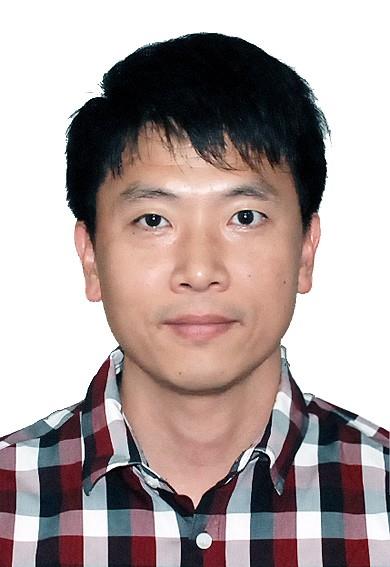 Lingfang Zeng (曾令仿)合作论文数Enflame Joint Innovation Research Center, Zhejiang Lab;College of Computer Science and Technology, Zhejiang University4
 Chenshu Hu合作论文数3Shuai Zhang合作论文数2
 Wen Cheng合作论文数Huazhong University of Science and Technology, China2Xiaolin Guo (郭晓琳)合作论文数College of Materials and Chemistry, China Jiliang University2
 Hongbo Xu合作论文数2Yu Cui合作论文数1Jian Zhu合作论文数1
 Chang Tang (唐厂)合作论文数School of Software Engineering, Huazhong University of Science and Technology1Yong Li (李勇)合作论文数School of Information Science and Engineering, East China University of Science and Technology1




