PURPOSE:Large Language Models (LLMs) like Generative Pre-trained Transformer (GPT) from OpenAI and LLaMA (Large Language Model Meta AI) from Meta AI are increasingly recognized for their potential in the field of cheminformatics, particularly in understanding Simplified Molecular Input Line Entry System (SMILES), a standard method for representing chemical structures. These LLMs also have the ability to decode SMILES strings into vector representations. METHOD:We investigate the performance of GPT and LLaMA compared to pre-trained models on SMILES in embedding SMILES strings on downstream tasks, focusing on two key applications: molecular property prediction and drug-drug interaction prediction. RESULTS:We find that SMILES embeddings generated using LLaMA outperform those from GPT in both molecular property and DDI prediction tasks. Notably, LLaMA-based SMILES embeddings show results comparable to pre-trained models on SMILES in molecular prediction tasks and outperform the pre-trained models for the DDI prediction tasks. CONCLUSION:The performance of LLMs in generating SMILES embeddings shows great potential for further investigation of these models for molecular embedding. We hope our study bridges the gap between LLMs and molecular embedding, motivating additional research into the potential of LLMs in the molecular representation field. GitHub: https://github.com/sshaghayeghs/LLaMA-VS-GPT .
Purpose: Large Language Models (LLMs) like ChatGPT and LLaMA are increasingly recognized for their potential in the field of cheminformatics, particularly in interpreting Simplified Molecular Input Line Entry System (SMILES), a standard method for representing chemical structures. These LLMs can decode SMILES strings into vector representations, providing a novel approach to understanding chemical graphs. Methods: We investigate the performance of ChatGPT and LLaMA in embedding SMILES strings. Our evaluation focuses on two key applications: molecular property (MP) prediction and drug-drug interaction (DDI) prediction, both essential in drug development and healthcare. Results: We find that SMILES embeddings generated using LLaMA outperform those from ChatGPT in both MP and DDI prediction tasks. Notably, LLaMA-based SMILES embeddings show results comparable to existing methods in both prediction tasks. Conclusion: The application of LLMs in cheminformatics, particularly in utilizing SMILES embeddings, shows significant promise for advancing drug development. This includes improving the prediction of chemical properties and facilitating the drug discovery process. GitHub: https://github.com/sshaghayeghs/LLaMA-VS-ChatGPT
Sentence embedding is a cornerstone in NLP. Whitening has been claimed to be an effective operation to improve embedding quality obtained from Large Language Models (LLMs). However, we find that the efficacy of whitening is model-dependent and task-dependent. In particular, whitening degenerates embeddings for classification tasks. The conclusion is supported by extensive experiments. We also explored a variety of whitening operations, including PCA, ZCA, PCA-Cor, ZCA-Cor and Cholesky whitenings. A by-product of our research is embedding evaluation platform for LLMs called SentEval+.
Drug repurposing is the process of discovering new indications (i.e., diseases or conditions) for already approved drugs. Many computational methods have been proposed for predicting new associations between drugs and diseases. In this article, we proposed a new method, called DR-HGNN, an integrative heterogeneous graph neural network-based method for multi-labeled drug repurposing, to discover new indications for existing drugs. For this purpose, we first used the DTINet dataset to construct a heterogeneous drug–protein–disease (DPD) network, which is a graph composed of four types of nodes (drugs, proteins, diseases, and drug side effects) and eight types of edges. Second, we labeled each drug–protein edge, dp i , j = ( d i , p j ), of the DPD network with a set of diseases, { δ i , j ,1 , … , δ i , j , k } associated with both d i and p j and then devised multi-label ranking approaches which incorporate neural network architecture that operates on the heterogeneous graph-structured data and which leverages both the interaction patterns and the features of drug and protein nodes. We used a derivative of the GraphSAGE algorithm, HinSAGE, on the heterogeneous DPD network to learn low-dimensional vector representation of features of drugs and proteins. Finally, we used the drug–protein network to learn the embeddings of the drug–protein edges and then predict the disease labels that act as bridges between drugs and proteins. The proposed method shows better results than existing methods applied to the DTINet dataset, with an AUC of 0.964.
Abstract Motivation Drug repurposing is a potential alternative to the traditional drug discovery process. Drug repurposing can be formulated as a recommender system that recommends novel indications for available drugs based on known drug-disease associations. This article presents a method based on non-negative matrix factorization (NMF-DR) to predict the drug-related candidate disease indications. This work proposes a recommender system-based method for drug repurposing to predict novel drug indications by integrating drug and diseases related data sources. For this purpose, this framework first integrates two types of disease similarities, the associations between drugs and diseases, and the various similarities between drugs from different views to make a heterogeneous drug–disease interaction network. Then, an improved non-negative matrix factorization-based method is proposed to complete the drug–disease adjacency matrix with predicted scores for unknown drug–disease pairs. Results The comprehensive experimental results show that NMF-DR achieves superior prediction performance when compared with several existing methods for drug–disease association prediction. Availability and implementation The program is available at https://github.com/sshaghayeghs/NMF-DR. Supplementary information Supplementary data are available at Bioinformatics online.
The aim of Medical Knowledge Graph Completion is to automatically predict one of three parts (head entity, relationship, and tail entity) in RDF triples from medical data, mainly text data. Following their introduction, the use of pretrained language models, such as Word2vec, BERT, and XLNET, to complete Medical Knowledge Graphs has become a popular research topic. The existing work focuses mainly on relationship completion and has rarely solved entities and related triples. In this paper, a framework to predict RDF triples for Medical Knowledge Graphs based on word embeddings (named PTMKG-WE) is proposed, for the specific use for the completion of entities and triples. The framework first formalizes existing samples for a given relationship from the Medical Knowledge Graph as prior knowledge. Second, it trains word embeddings from big medical data according to prior knowledge through Word2vec. Third, it can acquire candidate triples from word embeddings based on analogies from existing samples. In this framework, the paper proposes two strategies to improve the relation features. One is used to refine the relational semantics by clustering existing triple samples. Another is used to accurately embed the expression of the relationship through means of existing samples. These two strategies can be used separately (called PTMKG-WE-C and PTMKG-WE-M, respectively), and can also be superimposed (called PTMKG-WE-C-M) in the framework. Finally, in the current study, PubMed data and the National Drug File-Reference Terminology (NDF-RT) were collected, and a series of experiments was conducted. The experimental results show that the framework proposed in this paper and the two improvement strategies can be used to predict new triples for Medical Knowledge Graphs, when medical data are sufficiently abundant and the Knowledge Graph has appropriate prior knowledge. The two strategies designed to improve the relation features have a significant effect on the lifting precision, and the superposition effect becomes more obvious. Another conclusion is that, under the same parameter setting, the semantic precision of word embedding can be improved by extending the breadth and depth of data, and the precision of the prediction framework in this paper can be further improved in most cases. Thus, collecting and training big medical data is a viable method to learn more useful knowledge.
The number of triangles (hereafter denoted by $\Delta$Δ) is an important metric to analyze massive graphs. It is also used to compute clustering coefficient in networks. This paper proposes a new algorithm called PES (Priority Edge Sampling) to estimate the number of triangles in the streaming model where we need to minimize the memory window. PES combines edge sampling and reservoir sampling. Compared with the state-of-the-art streaming algorithms, PES outperforms consistently. The results are verified extensively in 48 large real-world networks in different domains and structures. The performance ratio can be as large as 11. More importantly, the ratio grows with data size almost exponentially. This is especially important in the era of big data–while we can tolerate existing algorithms for smaller datasets, our method is indispensable when sampling very large data. In addition to empirical comparisons, we also proved that the estimator is unbiased, and derived the variance.
In network embedding algorithms, long random walks are often used to convert the graph into ‘text’ so that node embeddings can be learned by skip-gram with negative sampling model. However, in a directed graph, long random walks can be trapped or interrupted, leading to low-quality embeddings. This paper proposes a new algorithm, called ShortWalk, to improve the directed graph network embeddings. ShortWalk performs short random walks that restart more frequently thus produces shorter traces. It also gives nodes equal weights by generating the training pairs using pair-wise combination of nodes on the traces. We validate our method on eight directed graphs with different sizes and structures. Experimental results confirm that ShortWalk outperforms DeepWalk consistently on all datasets in node classification and link prediction tasks.
Academic influence has been traditionally measured by citation counts and metrics derived from it, such as H-index and G-index. PageRank based algorithms have been used to give higher weight to citations from more influential papers. A better metric is to add authors into the citation network so that the importance of authors and papers are evaluated recursively within the same framework. Based on such heterogeneous author-citation academic network, this paper gives a new algorithm for ranking authors. It is tested on two large networks, one in Heath domain that contains about 500 million citation links, the other in Computer Science that contains 8 million links. We find that our method outperforms other 10 methods in terms of the number of award winners identified in their top-k rankings. Surprisingly, our method can identify 8 Turing award winners among top 20 authors. It also demonstrates some interesting phenomenons. For instance, among the top authors, our ranking negatively correlates with citation ranking and paper count ranking.
Academic papers not only contain text but also links via citation links. Representing such data is crucial for many tasks, such as classification, disambiguation, duplicates detection, recommendation and influence prediction. The success of the skip-gram model has inspired many algorithms for learning embeddings for words, documents, and networks. However, there is limited research on learning the representation of linked documents such as academic papers. In this paper, we propose a new neural network based algorithm, called P2V (paper2vector), to learn high-quality embeddings for academic papers on large-scale datasets. We compare our model with traditional non-neural network based algorithms and state-of-the-art neural network methods on four datasets of various sizes. The largest dataset we used contains 46.64 million papers and 528.68 million citation links. Experimental results show that P2V achieves state-of-the-art performance in paper classification, paper similarity, and paper influence prediction task.
Clustering coefficient is one of the most important metrics to understand the complex structure of networks. This paper addresses the estimation of clustering coefficient in network streams. There have been substantial work in this area, most of conducting empirical comparisons of various algorithms. The variance and the bias of the estimators have not been quantified. Starting with a simple yet powerful streaming algorithm, we derived the variance and bias for the estimator, and the estimators for the variances and bias. More importantly, we simplify the estimators so that it can be used in practice. The variance and bias estimators are verified extensively on 49 real networks.
We show that uniform random sampling is not as effective as PPS (probability proportional to size) sampling in many estimation tasks. In the setting of (graph) size estimation, this paper demonstrates that random edge sampling outperforms random node sampling, with a performance ratio proportional to the normalized graph degree variance. This result is particularly important in the era of big data, when data are typically large and scale-free, resulting in large degree variance. We derive the result by first giving the variances of random node and random edge estimators. A simpler and more intuitive result is obtained by assuming that the data is large and degree distribution follows a power law.
Learning network representations is essential for many downstream tasks such as node classification, link prediction, and recommendation. Many algorithms derived from SGNS (skip-gram with negative sampling) have been proposed, such as LINE, DeepWalk, and node2vec. In this paper, we show that these algorithms suffer from norm convergence problem, and propose to use L2 regularization to rectify the problem. The proposed method improves the embeddings consistently. This is verified on seven different datasets with various sizes and structures. The best improvement is 46.41% for the task of node classification.
The norm of data size estimation is to use uniform random samples whenever possible. There have been tremendous efforts in obtaining uniform random samples using methods such as Metropolis-Hasting random walk or importance sampling [2]. This paper shows that, on the contrary to the common practice, uniform random sampling should be avoided when PPS (probability proportional to size) sampling is available for large data. To develop intuition of the sampling process, we discuss the sampling and estimation problem in the context of graph. The size is the number of nodes in the graph; uniform random sampling corresponds to uniform random node (RN) sampling; and PPS sampling is approximated by random edge (RE) sampling. In this setting, we show that for large graphs RE sampling outperforms RN sampling with a ratio proportional to the normalized graph degree variance. This result is particularly important in the era of big data, when data are typically large and scale-free [3], resulting in large degree variance. We derive the result by giving the variances of RN and RE estimators. Each step of the derivation is supported and demonstrated by simulation studies assuming power law distributions. Then we use 18 real-world networks to verify the result. Furthermore, we show that the performance of random walk (RW) sampling is data dependent and can be significantly worse than RN and RE. More specifically, RW can estimate online social networks but not Web graphs due to the difference of the graph conductance. Crown Copyright (C) 2017 Published by Elsevier Inc. All rights reserved.
Clustering coefficient (C) is an important structural property to understand the complex structure of a graph. Calculating C is a computationally intensive task. Thereby, sampling-based methods have attracted substantial research for estimating C, and the closely related metric, the number of triangles. Unfortunately, widely used estimators for C are biased. We quantify the bias using Taylor expansion and find that the bias can be determined by the number of shared wedges and triangles in the sample. Based on the understanding of the bias, we give a new estimator that corrects the bias. The results are derived analytically and verified extensively in 56 networks ranging in different size and structure. The experiments reveal that the bias ranges widely from data to data. The relative bias can be as high as 4% or can be negative. For most of the graphs, the bias is small, although every graph does have a bias as quantified by our analytical results. Negative or small biases occur in online social networks where clustering coefficient is typically high. Positive and large biases typically occur in Web graphs, where there are nodes with high degrees but few neighboring nodes connecting with each other.
This paper addresses the problem of classifying academic papers. It is a building block in constructing an advanced scholarly search engine, such as in crawling and recommending papers in a particular area. Our goal is to identify the best classification method for scholarly data, to choose appropriate parameters, and to gauge how accurate academic papers can be classified using document content only. In addition, we also want to find out whether the neural network approach, which has been proven very successful in many other areas, can help in this particular problem. Our experiments are conducted on 160,000 papers from arXiv data set, each is already labeled as either a computer science (CS) paper or a paper in other areas. We experimented with a variety of classification methods, including Multinomial Naive Bayes on unigram and bigram models, and Logistic Regression on distributional representation obtained from sentence2vec. We find that computer science papers can be identified with high accuracy (F1 close to 0.95). The best method is the bigram model using Multinomial Naive Bayes method and point-wise mutual information (PMI) as the feature selection method.
Weibo is the Chinese counterpart of Twitter, which has attracted hundreds of millions of users. Just like other Online Social Networks (hereafter OSNs), Weibo has a large number of fake accounts. They are created to sell their following links to customers, who want to boost their follower counts. These bogus accounts are difficult to identify individually, especially when they are created by sophisticated programs or controlled by human beings directly. This paper proposes a novel fake account detection method that is based on the very purpose of the existence of these accounts: they are created to follow their targets en masse, resulting in high-overlapping between the follower lists of their customers. This paper investigates the top Weibo accounts whose follower lists duplicate or nearly duplicate each other (hereafter called near-duplicates). Discovering near-duplicates is a challenging task. The network is large; the data in its entirety are not available; the pair-wise comparison is very expensive. We developed a sampling-based approach to discover all the near-duplicates of the top accounts, who have at least 50,000 followers. In the experiment, we found 395 near-duplicates, which leads us to 11.90 million fake accounts (4.56 % of total users) who send 741.10 million links (9.50 % of the entire edges). Furthermore, we characterize four typical structures of the spammers, cluster these spammers into 34 groups, and analyze the properties of each group.
Weibo is the Twitter counterpart in China that has attracted hundreds of millions of users. We crawled an almost complete Weibo user network that contains 222 million users and 27 billion links in 2013. This paper analyzes the structural properties of this network, and compares it with a Twitter user network. The topological properties we studied include the degree distributions, connected components, distance distributions, reciprocity, clustering coefficient, PageRank centrality, and degree assortativity. We find that Weibo users have a higher diversity index, higher Gini index, but a lower reciprocity and clustering coefficient for most of the nodes. A surprising observation is that the reciprocity of Weibo is only about a quarter of the reciprocity of the Twitter user network. We also show that Weibo adoption rate correlates with economic development positively, and Weibo network can be used to quantify the connections between provinces and regions in China. In particular, point-wise mutual information is shown to be accurate in quantifying the strength of connections. We developed an interactive analyzing software framework for this study, and released the data and code online.
CiteSeer is considered as the first academic search engine that have been serving data for almost twenty years. Recently, CiteSeer graciously makes all the data public, including raw PDF files, text transformed from PDF, and metadata extracted from the text. Numerous efforts have been tried to improve the accuracy of the metadata extraction. The problem is inherently challenging and errors are abundant. In this paper, we propose an innovative record-linkage-based method for data cleaning, which use two new matching algorithms to significantly improve the cleaning performance for the CiteSeer dataset. One is an enhanced matching algorithm for local datasets, the other is developed for online datasets. Experimental results show that 48.1 % wrong metadata entries can be corrected by our method in total and the improvement is more than 539 % compared to existing state-of-the-art data cleaning methods.
 Yan Wang (王焱)合作论文数School of Information, Central University of Finance and Economics10
 John Mylopoulos合作论文数School of Electrical Engineering and Computer Science, Faculty of Engineering, University of Ottawa;Department of Computer Science, University of Toronto8
 Yi Zhang合作论文数7
 Jie Liang合作论文数6
 Yijun Yu合作论文数School of Computing and Communications, Faculty of Science, Technology, Engineering and Mathematics, The Open University;Centre for Research in Computing, The Open University5
 Dingding Li (李丁丁)合作论文数School of Computer Science, South China Normal University;School of Artificial Intelligence, Faculty of Engineering, South China Normal University5Terence C. Lau合作论文数4
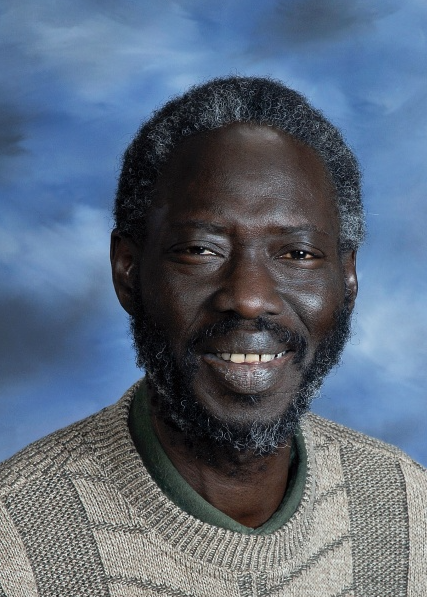 Alioune Ngom合作论文数School of Computer Science, University of Windsor4
 Katia Sycara合作论文数Advanced Agent-Robotics Technology Lab, Robotics Institute, School of Computer Science, Carnegie Mellon University;Center for Advanced Learning and Discovery, Carnegie Mellon University;Human-Computer Interaction Institute, Carnegie Mellon University4Roohollah Etemadi合作论文数School of Computer Science,University of Windsor4
 Matthias Klusch合作论文数German Research Center for Artificial Intelligence4
 Shaghayegh Sadeghi合作论文数Sch Comp Sci, Univ Windsor3Ju Wang合作论文数3Fen Zhao合作论文数3
 Shengrui Wang合作论文数Département D'informatique, Faculté des Sciences, Universite de Sherbrooke3Jessica Chen合作论文数University of Windsor;School of Computer Science3Seth Widoff合作论文数3Ziyan Zhu合作论文数2
 Jiming Liu (刘际明)合作论文数Hong Kong Baptist University2
 Weiwei Sun (孙未未)合作论文数School of Computer Science, Fudan University2
 Weimin Zheng (郑纬民)合作论文数Department of Computer Science and Technology, Tsinghua University;College of Computer Science and Technology, Nanjing University of Aeronautics and Astronautics2
 Wenguang Chen (陈文光)合作论文数Department of Computer Science and Technology, School of Information Science and Technology, Tsinghua University;School of Computer Science and Technology, Qinghai University2Ofer Shai合作论文数University of Toronto (Canada)2
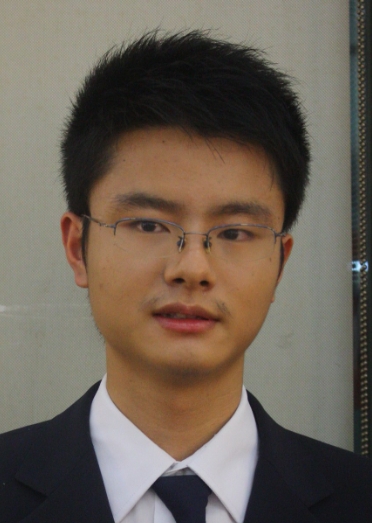 Xiaowei Zhu (朱晓伟)合作论文数Ant Group2
 Kostas Kontogiannis合作论文数Dept. of Computer Science, Middlesex College, Western University2Wentao Han (韩文弢)合作论文数2
 Jinghao Xue合作论文数Department of Statistical Science, University College London2Eh D'Hollander合作论文数1Minghao Li合作论文数1Yanlin Ma合作论文数1Laleh Soltan Ghoraie合作论文数Univ Hlth Network, Princess Margaret Canc Ctr, Toronto, ON, Canada1Masateru Harao合作论文数1
 Masami Hagiya (萩谷昌巳)合作论文数Department of Computer Science, Graduate School of Information Science and Technology, University of Tokyo1Kenneth Cheung合作论文数1
 Mingxia Gao (高明霞)合作论文数Faculty of Information Technology, Beijing University of Technology1Bo Yi合作论文数1
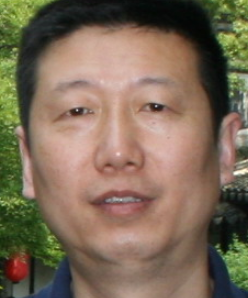 Hao Wang (王浩)合作论文数School of Computer Science and Information Engineering, Hefei University of Technology1Furong Chen合作论文数1Yu Ping合作论文数1
 Yung (Peter) H. Tsin合作论文数School of Computer Science, Faculty of Science, University of Windsor1Sabiha Sathulla合作论文数1Tack Tong合作论文数1Ali Akhavan Malayeri合作论文数1Yumman Chan合作论文数1Samaneh Navabpour合作论文数1Yanyin Zhang合作论文数1
 Markus Strohmaier合作论文数Department of Data-Science in the Economic and Social Sciences, Business School, University of Mannheim;GESIS - Leibniz Institute for the Social Sciences;Complexity Science Hub1




