The segmentation of multiple degradations has been a challenging problem in the field of image segmentation. Existing level set approaches commonly adopt a length regularization term to constrain the geometric shape of the segmentation contour. However, the introduction of the length term often results in numerical instability and high computational cost. In this paper, we show that the length term is not essential under certain smoothness constraints, and theoretically prove that the presence of the length term affects the property of |∇ ϕ|=1. Based on the finding, we define a class of smooth images, construct the grayscale level set, and propose a fast segmentation framework for degraded images, such as heavily noisy images and intensity inhomogeneous images. The framework transforms PDE evolution into one-dimensional threshold search, which has significant advantages in computational speed, especially on large-scale images. Experiments validate the segmentation performance of the proposed framework on various degraded images.
Plug-and-Play (PnP) image restoration provides a flexible framework that integrates model-based optimization with powerful deep denoising priors. However, PnP methods based on deep neural networks are highly sensitive to perturbations. In this work, we propose a robust PnP framework embedding a frequency-domain robust correction block and an adaptive noise-level scheduling block for adaptive image restoration. The frequency-domain block selectively suppresses corrupted high-frequency components to align adversarial noise with AWGN assumptions, serving as a general-purpose preprocessing strategy that can be applied beyond PnP. The adaptive noise-level scheduling block based on patch-wise PCA estimation dynamically adjusts the denoiser noise level throughout the iterative process. Experiments on deblurring and superresolution demonstrate that our method achieves stronger robustness and restoration performance than existing PnP methods under adversarial attacks. Ablation studies validate the complementary contributions of the two proposed blocks.
Deep neural networks (DNNs) have shown superior performance comparing to traditional image denoising algorithms. However, DNNs are inevitably vulnerable while facing adversarial attacks. In this paper, we propose an adversarial attack method named denoising-PGD which can successfully attack all the current deep denoising models while keep the noise distribution almost unchanged. We surprisingly find that the current mainstream non-blind denoising models (DnCNN, FFDNet, ECNDNet, BRDNet), blind denoising models (DnCNN-B, Noise2Noise, RDDCNN-B, FAN), plug-and-play (DPIR, CurvPnP) and unfolding denoising models (DeamNet) almost share the same adversarial sample set on both grayscale and color images, respectively. Shared adversarial sample set indicates that all these models are similar in term of local behaviors at the neighborhood of all the test samples. Thus, we further propose an indicator to measure the local similarity of models, called robustness similitude. Non-blind denoising models are found to have high robustness similitude across each other, while hybrid-driven models are also found to have high robustness similitude with pure data-driven non-blind denoising models. According to our robustness assessment, data-driven non-blind denoising models are the most robust. We use adversarial training to complement the vulnerability to adversarial attacks. Moreover, the model-driven image denoising BM3D shows resistance on adversarial attacks.
Segmentation of adjacent structures with similar intensity distributions remains a challenging problem in image analysis, particularly when object boundaries are weak or ambiguous. Under such conditions, classical variational models may suffer from degenerated image-driven forces, leading to boundary leakage or undesired merging of neighboring regions. To address these limitations, we propose a smooth phase-separation variational model based on the Cahn–Hilliard equation for weak-boundary segmentation of homogeneous-appearance structures. The proposed framework integrates softmax-based region fitting with Cahn–Hilliard phase-field regularization to maintain interface discrimination under weak image-driven forces. We further introduce a mixed L^2-H^-1 gradient flow, which preserves higher-order interfacial regularization while allowing adaptive changes of phase masses, establish the continuous energy dissipation law, and prove the existence and uniqueness of weak solutions in the natural solution class. For numerical computation, we develop a stabilized scalar auxiliary variable (SAV) scheme that is linear, FFT-based, and satisfies a modified discrete energy dissipation law. Numerical experiments on synthetic and medical images demonstrate that the proposed method effectively separates adjacent homogeneous structures across weak boundaries and achieves competitive segmentation accuracy and improved boundary localization compared with representative variational, phase-field, and deep learning methods.
Optimal transport (OT) provides a principled framework for learning mappings between probability distributions, and has found broad applications in generative modeling, inverse problems and scientific computing. Recently, flow matching methods have emerged as an efficient paradigm for learning continuous-time transport dynamics. However, existing OT-based flow matching methods often suffer from either high computational cost due to inner optimization or limited consistency. Moreover, it remains challenging to design neural architectures that can simultaneously guarantee convexity, stability, and efficient transport learning. In this paper, we propose a framework for consistent optimal transport flow matching. Specifically, we parameterize the transport potential using partially input convex neural networks (PICNN), and incorporate a Hamilton-Jacobi residual into the training objective to enforce dynamical consistency of the learned flow. This design enables a unified formulation that supports both one-step transport and multi-step ODE-based sampling, without requiring costly inner optimization. Extensive experiments on benchmark datasets demonstrate that the proposed method achieves competitive performance compared with existing OT-based and flow matching approaches, while maintaining favorable computational efficiency. In particular, under the D=256 benchmark, COFM achieves more than a 2x reduction in L^2-UVP compared with state-of-the-art (SOTA) models, while requiring approximately 9x less computational time. These results suggest that combining convex potential structures with HJ-based dynamical regularization provides an effective framework for scalable and geometrically consistent transport learning.
In this paper, we propose a novel variational model for color-texture image segmentation by embedding the molecular beam epitaxy (MBE) equation into a multi-cue segmentation (MCS) framework. The MBE equation incorporates a fourth-order diffusion term to smooth high-frequency noise while preserving curvature variations, along with a non-equilibrium term to ensure mass conservation and suppress oscillations, thereby eliminating the need for frequent re-initialization. Inspired by the physical principles of crystal film growth, this approach regulates the level set evolution by controlling thin-film growth dynamics, improving both stability and accuracy. We derive the gradient flow equation of the proposed model and prove the existence of a weak solution using the Galerkin approximation method. To solve the model efficiently, we design an implicit-explicit (IMEX) scheme, and employ an additive operator splitting (AOS) method to obtain the diffusion tensor. Extensive experiments demonstrate that the MBE-MCS model achieves more stable level set evolutions, better preserves fine structural details, and delivers superior segmentation accuracy, even for images with noise, sharp corners, and complex backgrounds.
This paper addresses the problem of tracking time-varying optimal trajectories for convex optimization problems where the objective function is time-varying and its explicit form is unknown but measurable. We propose a discrete-time extremum seeking algorithm that leverages sampled-data measurements to approximate derivatives and iteratively update the system state. The algorithm employs five sampling points within each interval to estimate the gradient, Hessian, and mixed time derivatives of the objective function via finite difference approximations. Under the assumptions of uniform strong convexity and smoothness of the objective function with bounded derivatives, we establish the practical stability of the algorithm and derive an ultimate bound for the tracking error. The key innovation lies in transforming the continuous-time dynamic optimization problem into a discrete iterative framework while rigorously quantifying approximation errors. The efficiency of the new approach is demonstrated by an example.
Hyperspectral images (HSI) face difficulties in achieving high resolution (HR) due to the limitations of the imaging devices. To address this challenge, image super-resolution (SR) techniques have been introduced to reconstruct HR images from low-resolution (LR) inputs. Several deep learning-based image SR algorithms have demonstrated impressive performance. However, these methods face challenges in effectively leveraging the spectral and spatial correlations, as HSI exhibit spectral low-rank characteristics and spatial self-similarity. In this paper, we propose learning a low-rank representation (LRR) that captures the correlations between spectral bands. Specifically, the learned LRR can be incorporated into the attention mechanism, which simultaneously leverages the spatial self-similarity of HSI. The LRR reveals the underlying structure of HSI, enhancing the model’s ability to capture fine details. Moreover, we employ a 2-D/3-D hybrid convolution that leverages spectral information and enhances the learning of spatial features. Experimental results demonstrate that our method can reconstruct the SR images with more accurate edges and finer details.
Deep learning-based image denoising models demonstrate remarkable performance, but their lack of robustness analysis remains a significant concern. A major issue is that these models are susceptible to adversarial attacks, where small, carefully crafted perturbations to input data can cause them to fail. Surprisingly, perturbations specifically crafted for one model can easily transfer across various models, including CNNs, Transformers, unfolding models, and plug-and-play models, leading to failures in those models as well. Such high adversarial transferability is not observed in classification models. We analyze the possible underlying reasons behind the high adversarial transferability through a series of hypotheses and validation experiments. By characterizing the manifolds of Gaussian noise and adversarial perturbations using the concept of typical set and the asymptotic equipartition property, we prove that adversarial samples deviate slightly from the typical set of the original input distribution, causing the models to fail. Based on these insights, we propose a novel adversarial defense method: the Out-of-Distribution Typical Set Sampling Training strategy (TS). TS not only significantly enhances the model's robustness but also marginally improves denoising performance compared to the original model.
In this paper, local Hölder regularization is incorporated into a physics-informed neural networks (PINNs) framework for solving elliptic partial differential equations (PDEs). Motivated by the interior regularity properties of linear elliptic PDEs, a modified loss function is constructed by introducing local Hölder regularization term. To approximate this term effectively, a variable-distance discrete sampling strategy is developed. Error estimates are established to assess the generalization performance of the proposed method. Numerical experiments on a range of elliptic problems demonstrate notable improvements in both prediction accuracy and robustness compared to standard physics-informed neural networks.
In this paper, we propose a method of the mixture-of-experts (MoE) model embedded with physics-informed neural networks (PINNs) for the hyperbolic conservation laws. The issue on solving hyperbolic conservation laws with PINNs is still challenging since the solutions of conservation laws may contain discontinuities. PINNs, as functional approximators, nearly fail in such cases, and numerical solutions for its variants may suffer from various problems. Some specially designed variants of PINNs can be well applied to specific hyperbolic equations, but these models usually pay less attention to the generalization capability, and improvement can be made in computing efficiency. In view of this, we propose the adaptive algorithm that embeds PINNs with different strategies into the MoE model, which the algorithm selects “experts of PINNs” through a gating network, choosing the optimal strategy that every “expert” shows its expertise for different structures of the solution. We prove that the generalization error of the proposed model is not higher than that of any single expert, and the bounds for generalization error are also obtained. The numerical experiment results demonstrate the validity of our model and confirm the algorithm’s generalization capability that it is fully adaptable for different equations.
Synthetic aperture radar (SAR) images suffer from multiplicative noise, which significantly degrades their quality and visual effect. To address this issue, we propose a time-fractional equation with a gray level indicator for SAR image denoising. By introducing the time-fractional derivative, the model effectively interpolates between the heat and wave equations, preserving valuable information in highly oscillatory regions. Moreover, the fractional-order derivative operator possesses nonlocal properties, allowing for the inclusion of information from nonlocal domains. In order to achieve better control over the diffusion process, we incorporate a gray level indicator into the diffusion coefficients of our model, which allows us to fully take into account the gray level information of the image. We also investigate the well-posedness of the proposed model. Experiments on natural and real SAR images demonstrate the superiority of our method in removing multiplicative noise, particularly in highly oscillatory regions and texture-rich images.
Variational level set method has become a powerful tool in image segmentation due to its ability to handle complex topological changes and maintain continuity and smoothness in the process of evolution. However its evolution process can be unstable, which results in over flatted or over sharpened contours and segmentation failure. To improve the accuracy and stability of evolution, we propose a high-order level set variational segmentation method integrated with molecular beam epitaxy (MBE) equation regularization. This method uses the crystal growth in the MBE process to limit the evolution of the level set function, and thus can avoid the re-initialization in the evolution process and regulate the smoothness of the segmented curve. It also works for noisy images with intensity inhomogeneity, which is a challenge in image segmentation. To solve the variational model, we derive the gradient flow and design scalar auxiliary variable (SAV) scheme coupled with fast Fourier transform (FFT), which can significantly improve the computational efficiency compared with the traditional semi-implicit and semi-explicit scheme. Numerical experiments show that the proposed method can generate smooth segmentation curves, retain fine segmentation targets and obtain robust segmentation results of small objects. Compared to existing level set methods, this model is state-of-the-art in both accuracy and efficiency.
The rapid development of deep learning has significantly advanced Synthetic Aperture Radar (SAR) despeckling techniques. However, as the uncertainty and vulnerability of the network structure is ignited by the fuse of adversarial attacks, its authenticity and widespread applicability are subsequently drawn into question. This study examines the robustness and performance of deep learning-based image despeckling models under a denoising-PGD adversarial attack. Furthermore, we investigate the impact of varying feature extraction approaches on model performance, with the goal of providing reliable guidelines for model training.
Image deblurring is a fundamental image processing task, and research for efficient image deblurring methods is still a great challenge. Most of the currently existing methods are focused on TV-based models and regularization term construction; little efforts are paid to model proposal and correlated algorithms for the fidelity term in fractional-order derivative space. In this paper, we propose a novel fractional-order variational model for image deblurring, which can efficiently address three different blur kernels. The objective functional contains a fractional-order gradient fidelity term and a total generalized variation (TGV) regularization term, and it highlights the ability to preserve details and eliminate the staircase effect. To solve the problem efficiently, we provide two numerical algorithms based on the Chambolle-Pock primal-dual method (PD) and the alternating direction method of multipliers (ADMM). A series of experiments show that the proposed method achieves a good balance between detail preservation and deblurring compared with several existing advanced models.
Image inpainting models and the corresponding numerical algorithms play key roles in image processing. At present, the visual output of the oscillatory inpainting area is usually not natural. In this paper, we propose an image inpainting model based on the Ginzburg-Landau functional and H^-1 -norm. In the model, the H^-1 -fidelity term performs well in preserving the edges of the oscillatory inpainting areas, and the Ginzburg-Landau functional can provide additional geometric content. Theoretically, we prove the existence of the minimizer for the proposed energy functional. Based on the scalar auxiliary variable approach, we develop an efficient numerical scheme to solve the proposed model. Further, we use a time step adaptive strategy to accelerate the convergence. Experimental results validate the effectiveness of the proposed algorithm for image inpainting.
Multiplicative noise removal from texture images poses a significant challenge. Different from the diffusion equation-based filter, we consider the telegraph diffusion equation-based model, which can effectively preserve fine structures and edges for texture images. The fractional-order derivative is imposed due to its textural detail enhancing capability. We also introduce the gray level indicator, which fully considers the gray level information of multiplicative noise images, so that the model can effectively remove high level noise and protect the details of the structure. The well-posedness of the proposed fractional-order telegraph diffusion model is presented by applying the Schauder's fixed-point theorem. To solve the model, we develop an iterative algorithm based on the discrete Fourier transform in the frequency domain. We give various numerical results on despeckling natural and real SAR images. The experiments demonstrate that the proposed method can remove multiplicative noise and preserve texture well.
近年来,人工智能在学术界和工业界都取得了极大的成功,这正是由于深度神经网络在最近十年内的飞速发展.神经网络模型的目标就是最优化,对一个复杂的问题中作出最优决策.几乎所有的神经网络模型都可以建模为一个优化问题.本文就求解神经网络模型过程中涉及的优化算法进行总结,并对《最优化方法》课程教学内容进行了探索.通过将神经网络模型及其优化算法与《最优化方法》课程教学融合,使学生熟悉并掌握其原理和优化求解方法,具备更强的核心竞争力.
In this paper, we propose a fractional-order anisotropic diffusion model based on fractional Fick’s law for multiplicative noise removal in texture-rich images. A fast explicit diffusion solving algorithm is considered. The new model is different from the model derived from the fractional-order variation method and has a clear physical background. Numerically, we use the discrete Grünwald–Letnikov approximation to implement the finite difference discretization of the model, which yields a dense coefficient matrix. To keep the method computationally tractable, limited nodes are employed in Grünwald–Letnikov approximation to produce a sparse coefficient matrix. The fast explicit diffusion method is used to speed up the calculation. The superior performance of the proposed fractional-order diffusion model is illustrated by comparing it with other denoising models on various images.
 Boying Wu (吴勃英)合作论文数School of Mathematics, HIT49
 Zhichang Guo (郭志昌)合作论文数School of Mathematics, HIT33
 Dazhi Zhang (张达治)合作论文数School of Mathematics, Harbin Institute of Technology24
 Wenjuan Yao (姚文娟)合作论文数School of Pharmacy, Nantong University7
 Wenjie Liu (刘文杰)合作论文数School of Mathematics, Harbin Institute of Technology5
 Shengzhu Shi (时盛竹)合作论文数School of Mathematics, Harbin Institute of Technology4
 Yuanyuan Ke (柯媛元)合作论文数School of Mathematics, Renmin University of China4
 Jing Li (李静)合作论文数College of Science, Minzu University of China4
 Zhe Yu (于哲)合作论文数School of Science, Harbin Institute of Technology, Shenzhen3
 Jie Shen (沈捷)合作论文数School of Mathematical Science, Eastern Institute of Technology, Ningbo;Department of Mathematics, Purdue University3
 Jingxue Yin (尹景学)合作论文数School of Mathematical Sciences, South China Normal University3
 Yanli Zhai合作论文数3Zhenyu Zhou合作论文数2Xiangyu Bai合作论文数2
 Yao Li (李爻)合作论文数School of Mathematics, Harbin Institute of Technology2Ying Wen合作论文数2
 Gang Dong合作论文数2
 Xiujie Shan合作论文数Delft University of Technology2Kehan Shi合作论文数2Qiang Liu (刘强)合作论文数College of Mathematics and Statistics,Shenzhen University2
 Raad Awad Hameed合作论文数Harbin Institute of Technology, Harbin Institute of Technology2
 Xunbo Yin (尹逊波)合作论文数School of Mathematics, Harbin Institute of Technology2
 Tiantian Qiao (乔田田)合作论文数College of Science, China University of Petroleum2Jie Ning合作论文数1Yan, Dong合作论文数1Yang Chang (杨畅)合作论文数1
 Jia Li (李佳)合作论文数School of Mathematics, Harbin Institute of Technology1
 Xuefei Yang (杨雪飞)合作论文数School of Astronautics, Harbin Institute of Technology1Wangkui Liu合作论文数1XingDong Liu (刘幸东)合作论文数1
 Elisha Achieng Ogada合作论文数1
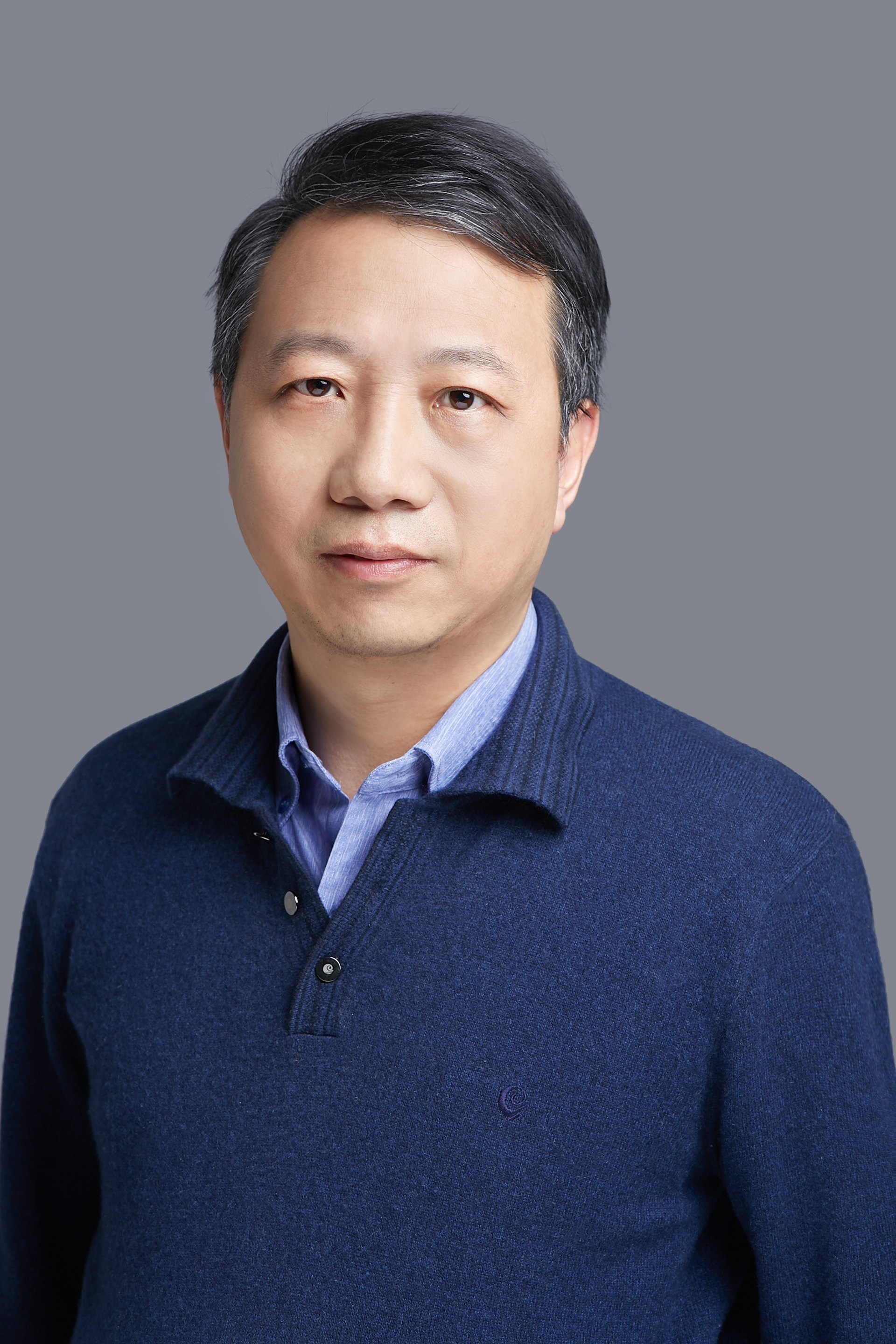 Yifu Wang (王一夫)合作论文数School of Mathematics and Statistics, Beijing Institute of Technology1Chunhua Jin (金春花)合作论文数School of Mathematical Sciences, South China Normal University1Rui Huang (黄锐)合作论文数School of Mathematical Sciences, South China Normal University1Qinglei Liao (廖庆磊)合作论文数1
 Huijun Gao (高会军)合作论文数School of Astronautics, Harbin Institute of Technology1Hong-Wei Li合作论文数1Xiaohui Qian (钱晓惠)合作论文数1
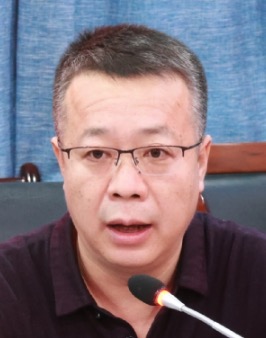 Yuming Xing (邢宇明)合作论文数School of Mathematics, Harbin Institute of Technology1




