The Gary B. Melton Visiting Professorship was created to honor and celebrate the legacy of Dr. Melton and to encourage scholars and advocates to continue to build on his impressive body of interdisciplinary work on children’s rights, global approach to child health and well-being, and social frameworks of family and community. A collaboration of the Haruv Institute and the Kempe Center for the Prevention and Treatment of Child Abuse and Neglect at the University of Colorado, the Melton Lecture was designed to be interdisciplinary, with the inaugural professorship and lecture given by a pediatrician and an anthropologist. This set of award recipients encompassed Gary Melton’s concerns from the individual and family to the larger context of culture and community. In this inaugural Melton Lecture, we take as our starting point Gary Melton’s quote, “Child abuse is wrong….” On this, we all can agree. Agreement lessens in response to the second part of the quote, “…the nation’s lack of an effective response to it is also wrong….” Indeed, the field continues to grapple with long-standing issues on how to ensure an effective response to child abuse. We use this lecture to consider how to move toward an effective response without simply rearranging the deck chairs on a sinking ship.
BACKGROUND:Nearly one-quarter of the approximately 400,000 reports to child protective services originating from non-mandated reporters come from neighbors. Understanding factors leading non-mandated reporters to contact authorities is important because if modifiable, they might serve as intervention targets to promote reporting of suspected maltreatment. OBJECTIVE:Investigate associations between neighbors' reported responses to scenarios involving children in need, child/teen misbehavior, and suspected maltreatment with individual and neighborhood characteristics, including neighborhood collective efficacy, fear of victimization, and fear of retaliation. HYPOTHESIS:Increased collective efficacy would be associated with increased likelihood of neighbors taking action in response to the situation. PARTICIPANTS & SETTING:400 caregivers of minors in Cleveland, OH, USA living in 20 census tracts. METHODS:Generalized linear mixed-effects modeling. RESULTS:Analyses adjusted for covariates confirmed our primary hypothesis: a 1-unit increase in the collective efficacy measure was associated with a 64% increase in the odds of neighbors taking action compared to doing nothing (odds ratio = 1.64, 95th percentile confidence interval 1.41-1.92). Also, participants with less than a high-school education had 36% greater odds of reporting their neighbors taking action compared to more educated participants. An interaction effect between participants' fear of victimization in their neighborhood, but not fear of retaliation, was also observed: the effect of collective efficacy on the odds of neighbors taking action was substantially greater among residents expressing moderate and high fear of victimization. CONCLUSION:Enhancing collective efficacy may be an effective strategy for fostering community response to suspected child maltreatment and other situations of a child in need because it may catalyze a variety of positive responses to these situations.
The significant role of the community in the lives of children and youth at-risk has become increasingly clear to social work academics and professionals over the last three decades. Alongside the more traditional individual and family responses, community interventions have been designed to catalyze change in the environment of children and youth at-risk and supply holistic and sustainable responses to their needs. Ten such community intervention programs were identified from the United States, Australia, Canada, and Israel. Most employed the community development model, focused on developing leadership and social capital (improving community networking) and advancing coordination between the organizations and sectors in the field of risk among children and youth. The diverse programs reviewed focused both on at-risk children and youth in general or specifically on child abuse and neglect. The programs originated from different health, education, and welfare disciplines and sponsoring authorities. The majority were funded originally by private foundations; however, government involvement was significant, particularly in the adoption and support of initiatives after their development. The current analysis of the programs refers to core issues that arose from the review: professional orientation, main target unit, main initiator, and research and evaluation. Analysis of program characteristics enables identifying relevant aspects of these programs for use by policy, governmental, and nonprofit sector stakeholders seeking to develop similar programs. Conclusions and recommendations to advance the field are suggested considering the current context of government cuts in welfare funds.
Background Alongside deficits in children's wellbeing, the COVID-19 pandemic has created an elevated risk for child maltreatment and challenges for child protective services worldwide. Therefore, some children might be doubly marginalized, as prior inequalities become exacerbated and new risk factors arise. Objective To provide initial insight into international researchers' identification of children who might have been overlooked or excluded from services during the pandemic. Participants and setting This study was part of an international collaboration involving researchers from Brazil, Canada, Colombia, Israel, South Africa, Uganda, the UK and the USA. Researchers from each country provided a written narrative in response to the three research questions in focus, which integrated the available data from their countries. Method Three main questions were explored: 1) Who are the children that were doubly marginalized? 2) What possible mechanisms may be at the root? and 3) In what ways were children doubly marginalized? The international scholars provided information regarding the three questions. A thematic analysis was employed using the intersectional theoretical framework to highlight the impact of children's various identities. Results The analysis yielded three domains: (1) five categories of doubly marginalized children at increased risk of maltreatment, (2) mechanisms of neglect consisting of unplanned, discriminatory and inadequate actions, and (3) children were doubly marginalized through exclusion in policy and practice and the challenges faced by belonging to vulnerable groups. Conclusion The COVID-19 pandemic can be used as a case study to illustrate the protection of children from maltreatment during worldwide crises. Findings generated the understanding that child protective systems worldwide must adhere to an intersectionality framework to protect all children and promote quality child protection services.
Background: A year has passed since COVID-19 began disrupting systems. Although children are not considered a risk population for the virus, there is accumulating knowledge regarding children's escalating risk for maltreatment during the pandemic. Objective: The current study is part of a larger initiative using an international platform to examine child maltreatment (CM) reports and child protective service (CPS) responses in various countries. The first data collection, which included a comparison between eight countries after the pandemic's first wave (March-June 2020), illustrated a worrisome picture regarding children's wellbeing. The current study presents the second wave of data across 12 regions via population data (Australia [New South Wales], Brazil, United States [California, Pennsylvania], Method: Regional information was gathered, including demographics, economic situation, and CPS responses to COVID-19. A descriptive analysis was conducted to provide an overview of the phenomenon.
Drawing on Coleman's concept of social capital, researchers have investigated how the quality of neighborhood social networks influences child development and well-being. The role of non-kin older neighbors in advancing child well-being through the enhancement of social capital, however, has been under-studied. Our objective was to delineate specific pathways through which non-kin older neighbors contribute to neighborhood quality for children and families and potentially advance child well-being. We examined open-ended interview data from 400 parents who cared for at least one child under 18 years of age and resided in 20 neighborhoods in Cleveland, Ohio. A subsample of 113 parents connected older neighbors to neighborhood quality for families and children in their narratives. Our analysis identified three primary pathways through which parents positively linked older neighbors to neighborhood quality: older neighbors support parents and children, promote neighborhood safety, and contribute to neighborhood residential stability. These contributions are evidence of intergenerational closure, reciprocated exchange, and informal social control working together to create social capital in neighborhoods for children. It is by enhancing social capital that older neighbors potentially improve child well-being. We discuss the implications of our findings for neighborhood research and practice.
BACKGROUND:Child protection is and will be drastically impacted by the COVID-19 pandemic. Comprehending this new reality and identifying research, practice and policy paths are urgent needs. OBJECTIVE:The current paper aims to suggest a framework for risk and protective factors that need to be considered in child protection in its various domains of research, policy, and practice during and after the COVID-19 pandemic. STRATEGY:From an international collaboration involving researchers and child protection professionals from eight countries, the current paper examines various factors that were identified as playing an important role in the child protection system. THE INITIAL SUGGESTED FRAMEWORK:Through the use of an ecological framework, the current paper points to risk and protective factors that need further exploration. Key conclusions point to the urgent need to address the protection of children in this time of a worldwide pandemic. Discussion of risk and protective factors is significantly influenced by the societal context of various countries, which emphasizes the importance of international collaboration in protecting children, especially in the time of a worldwide pandemic. CONCLUSION:The COVID-19 pandemic has stressed the urgent need to advance both theory and practice in order to ensure children's rights to safety and security during any pandemic. The suggested framework has the potential to advance these efforts so that children will be better protected from maltreatment amidst a pandemic in the future.
Drawing on Coleman’s concept of social capital, researchers have investigated how the quality of neighborhood social networks influences child development and well-being. The role of non-kin older neighbors in advancing child well-being through the enhancement of social capital, however, has been under-studied. Our objective was to delineate specific pathways through which non-kin older neighbors contribute to neighborhood quality for children and families and potentially advance child well-being. We examined open-ended interview data from 400 parents who cared for at least one child under 18 years of age and resided in 20 neighborhoods in Cleveland, Ohio. A subsample of 113 parents connected older neighbors to neighborhood quality for families and children in their narratives. Our analysis identified three primary pathways through which parents positively linked older neighbors to neighborhood quality: older neighbors support parents and children, promote neighborhood safety, and contribute to neighborhood residential stability. These contributions are evidence of intergenerational closure, reciprocated exchange, and informal social control working together to create social capital in neighborhoods for children. It is by enhancing social capital that older neighbors potentially improve child well-being. We discuss the implications of our findings for neighborhood research and practice.
Topic of Review: The current study sought to review the state of existing knowledge on rural maltreatment. Method of Review: We conducted a scoping literature review to answer two research questions: (1) Is maltreatment higher in rural areas compared to urban areas? and 2) Are there unique correlates of maltreatment in rural areas? Number of Research Studies Meeting the Criteria for Review: This review included studies that compared child maltreatment in rural and urban areas in the United States (9) and predictors of maltreatment in rural areas (7). Criteria for Inclusion: Studies that compared child maltreatment in rural and urban areas in the United States were included. For our second research question, related to understanding maltreatment in rural areas, we included those studies that exclusively examined rural areas, when maltreatment was the outcome variable. How Research Studies Were Identified: Studies were reviewed from relevant databases ( Annual Reviews, PsychINFO, PubMed, Web of Science) between 1975 and 2019. Major Findings: Findings were mixed on whether rates of maltreatment were higher or lower in rural areas. While five studies reported higher rates of maltreatment in rural areas, four reported higher rates in urban areas. Overall, child maltreatment rates tended to be higher in urban areas among people of color and higher in rural areas among White people. One study found that community economic factors were not related to maltreatment in a rural area, in stark contrast to robust findings from urban areas.
This invited commentary considers how the cultural context matters in understanding child maltreatment.
While relationships between neighborhood violent crime and adverse child outcomes are well-established, less is known about how neighborhood violent crime influences child-rearing strategies. To address this gap, we blend neighborhood ecologies and stratified reproduction frameworks and examine interview data collected in 2014-2015 from 107 adult caregivers residing in three low and three elevated violent crime neighborhoods in Cleveland, Ohio. Our objective is to examine how perceptions of neighborhood violent crime and its relationship to self-reported child-rearing practices vary by level of neighborhood violence. We find that, although caregivers in low and elevated violent crime neighborhoods shared the perception of neighborhood violent crime as a concern, their narratives of child-rearing practices differed. Caregivers in elevated violent crime neighborhoods were more likely than their low violent crime counterparts to describe in experience-near terms how violent crime threatened their children's well-being. To protect children, caregivers in elevated violent crime neighborhoods reported engaging in severely constrained child-rearing strategies. These constraints have unintended consequences. While they may protect children in the short-term, they may also reproduce inequities by reducing family quality of life in other ways. These findings advance understanding of how neighborhood violent crime differentially affects child-rearing. We integrate neighborhood ecologies and stratified reproduction frameworks to capture how social inequities interact in neighborhood settings to constrain child-rearing and perpetuate inequities over time.
Children around the world are vulnerable to multiple and varying sources of adversity and risk, the meanings, experiences, and outcomes of which are shaped by the cultural context and the individual’s place in that context. In this paper we explore how the cultural context and intersectionality frameworks may aid in understanding which children are vulnerable and under which circumstances. Culture influences child vulnerability by providing the context in which children live in their families, communities and the larger global world. Nevertheless, within any cultural context, some children are more vulnerable than are others. Intersectionality takes into account the ways in which multiple meaningful and overlapping social group memberships combine to shape experiences of vulnerability. Taken together, cultural context and intersectional approaches enhance the potential of planning meaningful actions to improve the safety and well-being of children, families, and communities.
 James Spilsbury合作论文数23
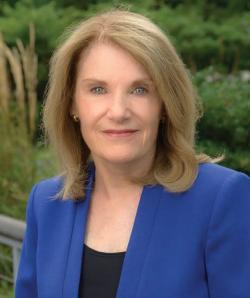 Claudia J. Coulton合作论文数Jack, Joseph and Morton Mandel School of Applied Social Sciences, Case Western Reserve University21Georgia Anetzberger合作论文数7
 David S. Crampton合作论文数Mandel School of Applied Social Sciences, Case Western Reserve University6
 Brooke Jespersen合作论文数Dept Anthropol, Case Western Reserve Univ5
 Bridget Haas合作论文数Dept Anthropol, Case Western Reserve Univ5M Su合作论文数4
 Daphna Gross-Manos合作论文数Dept Social Work, Tel Hai Acad Coll4
 Elmien Crofford-Truter合作论文数Child Protect Social Work, North West Univ4
 Natalia Varela合作论文数Fac Social & Human Sci, Externado Univ4
 Ansie Fouche合作论文数Faculty of Health Sciences, North-West University4
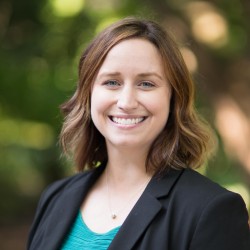 Kathryn L. Maguire-Jack合作论文数School of Social Work, University of Michigan-Ann Arbor4
 Yochay Nadan合作论文数The Paul Baerwald School of Social Work and Social Welfare, The Hebrew University of Jerusalem4Tiwari Ashwini合作论文数School of Public Health, Georgia State University4
 Carmit Katz合作论文数University of Tel Aviv4
 Ilan Katz合作论文数Social Policy Research Centre;University of New South Wales;Social Policy Research Centre, University of New South Wales4Richard Krugman合作论文数4
 Francisca Richter合作论文数Graduate School of Business, Pontificia Universidad Católica del Perú4craig austin ma合作论文数3Sarah C Miller-Fellows合作论文数3
 Sidnei Rinaldo Priolo Filho合作论文数3
 Pablo Muñoz合作论文数Nacl Univ Colombia3Sadiyya Haffejee合作论文数50 Southy Rd3Christine Wekerle合作论文数Department of Psychiatry, Temerty Faculty of Medicine, University of Toronto3Kaawa-Mafigiri David合作论文数3
 Annie Berube合作论文数Université du Québec en Outaouais3
 Ferran Casas合作论文数Institut de Recerca sobre Qualitat de Vida, Universitat de Girona3
 Asher Ben-Arieh合作论文数The Hebrew University of Jerusalem3Lawrence P. Greksa合作论文数3Ivar Frones合作论文数3
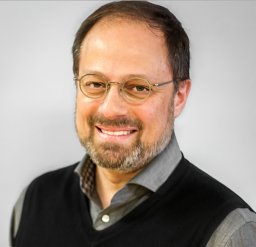 George M Tarabulsy合作论文数Groupe de recherche sur l’inadaptation psychosociale chez l’enfant, Université Laval3Nadia Massarweh合作论文数2Katie Maguire-Jack合作论文数2rhoda thomasson合作论文数2
 Diane Thembekile Levine合作论文数University of Leicester2
 Noa Cohen合作论文数2
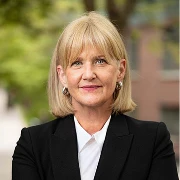 Barbara Fallon合作论文数Factor-Inwentash Faculty of Social Work, University of Toronto2
 John Kevin Eckert合作论文数Department of Sociology and Anthropology, University of Maryland2
 James McDonell合作论文数School of Social and Community Services, University of Tennessee at Chattanooga2
 Akhtar Munir .合作论文数2Molly Irwin合作论文数2Delphine Collin-Vezina合作论文数1mott foundation合作论文数1barbara fink合作论文数1DL JACKSON合作论文数1ABEL L. ROBERTSON合作论文数1Susan K. Tomita合作论文数1
 Eileen Anderson-Fye合作论文数1Carol Dutton Stepick合作论文数1




