This work proposes an intra-Class-confidence and inter-Class-confusion guided Dynamic Contrastive (CCDC) learning framework for medical image segmentation. A core contribution is to dynamically select the most expressive pixels to build positive and negative pairs for contrastive learning at different training phases. For the positive pairs, dynamically adaptive sampling strategies are introduced for sampling different sets of pixels based on their hardness (namely the easiest, easy, and hard pixels). For the negative pairs, to efficiently learn from the classes with high confusion degree w.r.t a query class (i.e., a class containing the query pixels), a new hard class mining strategy is presented. Furthermore, pixel-level representations are extended to the neighbourhood region to leverage the spatial consistency of adjacent pixels. Extensive experiments on the three public datasets demonstrate that the proposed method significantly surpasses the state-of-the-art.
Deep learning-based semi-supervised learning (SSL) algorithms are promising in reducing the cost of manual annotation of clinicians by using unlabelled data, when developing medical image segmentation tools. However, to date, most existing semi-supervised learning (SSL) algorithms treat the labelled images and unlabelled images separately and ignore the explicit connection between them; this disregards essential shared information and thus hinders further performance improvements. To mine the shared information between the labelled and unlabelled images, we introduce a class-specific representation extraction approach, in which a task-affinity module is specifically designed for representation extraction. We further cast the representation into two different views of feature maps; one is focusing on low-level context, while the other concentrates on structural information. The two views of feature maps are incorporated into the task-affinity module, which then extracts the class-specific representations to aid the knowledge transfer from the labelled images to the unlabelled images. In particular, a task-affinity consistency loss between the labelled images and unlabelled images based on the multi-scale class-specific representations is formulated, leading to a significant performance improvement. Experimental results on three datasets show that our method consistently outperforms existing state-of-the-art methods. Our findings highlight the potential of consistency between class-specific knowledge for semi-supervised medical image segmentation. The code and models are to be made publicly available at https://github.com/jingkunchen/TAC.
Accurate computing, analysis and modeling of the ventricles and myocardium from medical images are important, especially in the diagnosis and treatment management for patients suffering from myocardial infarction (MI). Late gadolinium enhancement (LGE) cardiac magnetic resonance (CMR) provides an important protocol to visualize MI. However, compared with the other sequences LGE CMR images with gold standard labels are particularly limited. This paper presents the selective results from the Multi-Sequence Cardiac MR (MS-CMR) Segmentation challenge, in conjunction with MICCAI 2019. The challenge offered a data set of paired MS-CMR images, including auxiliary CMR sequences as well as LGE CMR, from 45 patients who underwent cardiomyopathy. It was aimed to develop new algorithms, as well as benchmark existing ones for LGE CMR segmentation focusing on myocardial wall of the left ventricle and blood cavity of the two ventricles. In addition, the paired MS-CMR images could enable algorithms to combine the complementary information from the other sequences for the ventricle segmentation of LGE CMR. Nine representative works were selected for evaluation and comparisons, among which three methods are unsupervised domain adaptation (UDA) methods and the other six are supervised. The results showed that the average performance of the nine methods was comparable to the inter-observer variations. Particularly, the top-ranking algorithms from both the supervised and UDA methods could generate reliable and robust segmentation results. The success of these methods was mainly attributed to the inclusion of the auxiliary sequences from the MS-CMR images, which provide important label information for the training of deep neural networks. The challenge continues as an ongoing resource, and the gold standard segmentation as well as the MS-CMR images of both the training and test data are available upon registration via its homepage (www.sdspeople.fudan.edu.cn/zhuangxiahai/0/mscmrseg/).
Anomaly detection aims to detect anomaly with only normal data available for training. It attracts considerable attentions in the medical domain, as normal data is relatively easy to obtain but it is rather difficult to have abnormal data especially for some rare diseases, making training a standard classifier challenging or even impossible. Recently, generative adversarial networks (GANs) become prevalent for anomaly detection and most existing GAN-based methods detect outliers by the reconstruction error. In this paper, we propose a novel framework called adGAN for anomaly detection using GAN. Unlike existing GAN-based methods, adGAN is a discriminative model, which uses the fake data generated from GAN as an abnormal class, and then learns a boundary between normal data and simulated abnormal data. Thus it is able to output the anomaly scores directly similar as one-class SVM (OCSVM), without any reconstruction process. We explicitly design adGAN with two key elements, i.e., fake pool generation and concentration loss . The fake pool is created by incrementally collecting the fake data produced by intermediate-state GAN, which are likely surrounding the normal data distribution. The concentration loss is innovatively introduced to penalize large standard deviations of discriminator outputs for normal data, aiming to make the distribution of normal data more compact and more likely to be separated from the distribution of the potential abnormal data. The trained discriminator is finally used as an anomaly detector. We evaluated adGAN on three datasets, including ab-MNIST for synthetic anomaly detection, the ISIC’2016 for skin lesion detection, and the BraTS’2017 for brain lesion detection. The extensive experiments demonstrate that adGAN is consistently superior to its competitors on all three datasets.
Analysis and modeling of the ventricles and myocardium are important in the diagnostic and treatment of heart diseases. Manual delineation of those tissues in cardiac MR (CMR) scans is laborious and time-consuming. The ambiguity of the boundaries makes the segmentation task rather challenging. Furthermore, the annotations on some modalities such as Late Gadolinium Enhancement (LGE) MRI, are often not available. We propose an end-to-end segmentation framework based on convolutional neural network (CNN) and adversarial learning. A dilated residual U-shape network is used as a segmentor to generate the prediction mask; meanwhile, a CNN is utilized as a discriminator model to judge the segmentation quality. To leverage the available annotations across modalities per patient, a new loss function named weak domain-transfer loss is introduced to the pipeline. The proposed model is evaluated on the public dataset released by the challenge organizer in MICCAI 2019, which consists of 45 sets of multi-sequence CMR images. We demonstrate that the proposed adversarial pipeline outperforms baseline deep-learning methods.
Multi-modal medical image segmentation plays an essential role in clinical diagnosis. It remains challenging as the input modalities are often not well-aligned spatially. Existing learning-based methods mainly consider sharing trainable layers across modalities and minimizing visual feature discrepancies. While the problem is often formulated as joint supervised feature learning, multiple-scale features and class-specific representation have not yet been explored. In this paper, we propose an affinity-guided fully convolutional network for multimodal image segmentation. To learn effective representations, we design class-specific affinity matrices to encode the knowledge of hierarchical feature reasoning, together with the shared convolutional layers to ensure the cross-modality generalization. Our affinity matrix does not depend on spatial alignments of the visual features and thus allows us to train with unpaired, multimodal inputs. We extensively evaluated our method on two public multimodal benchmark datasets and outperform state-of-the-art methods.
 Jianguo Zhang (张建国)合作论文数Department of Computer Science and Engineering, College of Engineering, Southern University of Science and Technology5
 Hongwei Bran Li (李宏伟)合作论文数Harvard Medical School;Massachusetts General Hospital3
 Jungong Han (韩军功)合作论文数Department of Automation, School of Information Science and Technology, Tsinghua University2
 Kurt Debattista合作论文数University of Warwick2
 Wenqi Li (李文琦)合作论文数NVIDIA1
 Jiahang Xu合作论文数1Wenjian Huang合作论文数Dept. of Computer Science and Engineering, Southern University of Science and Technology1Xinzhe Luo合作论文数Fudan Univ, Sch Data Sci, Shanghai, Peoples R China1Buntheng Ly合作论文数1
 Lei Li合作论文数School of Data Science, Fudan University, Shanghai, China1
 Sen Yang合作论文数College of Electrical Engineering and Information Technology, Sichuan University, 610065, China1Gongning Luo (骆功宁)合作论文数1
 Yashu Liu合作论文数Harbin Inst Technol, Sch Comp Sci & Technol, Harbin, Peoples R China1
 Victor Campello合作论文数Univ Barcelona, Dept Matemat & Informat, Barcelona, Spain1
 Sulaiman Vesal合作论文数Friedrich Alexander Univ Erlangen Nurnberg, Pattern Recognit Lab, Erlangen, Germany1
 Changrui Chen (陈常瑞)合作论文数University of Warwick1
 Cheng Ouyang合作论文数Institute of Biomedical Engineering, Department of Engineering Science, University of Oxford1
 Wentao Zhu合作论文数Amazon1
 Haocheng Shen合作论文数1
 Nishant Ravikumar合作论文数School of Computing, University of Leeds;Adsilico Limited1
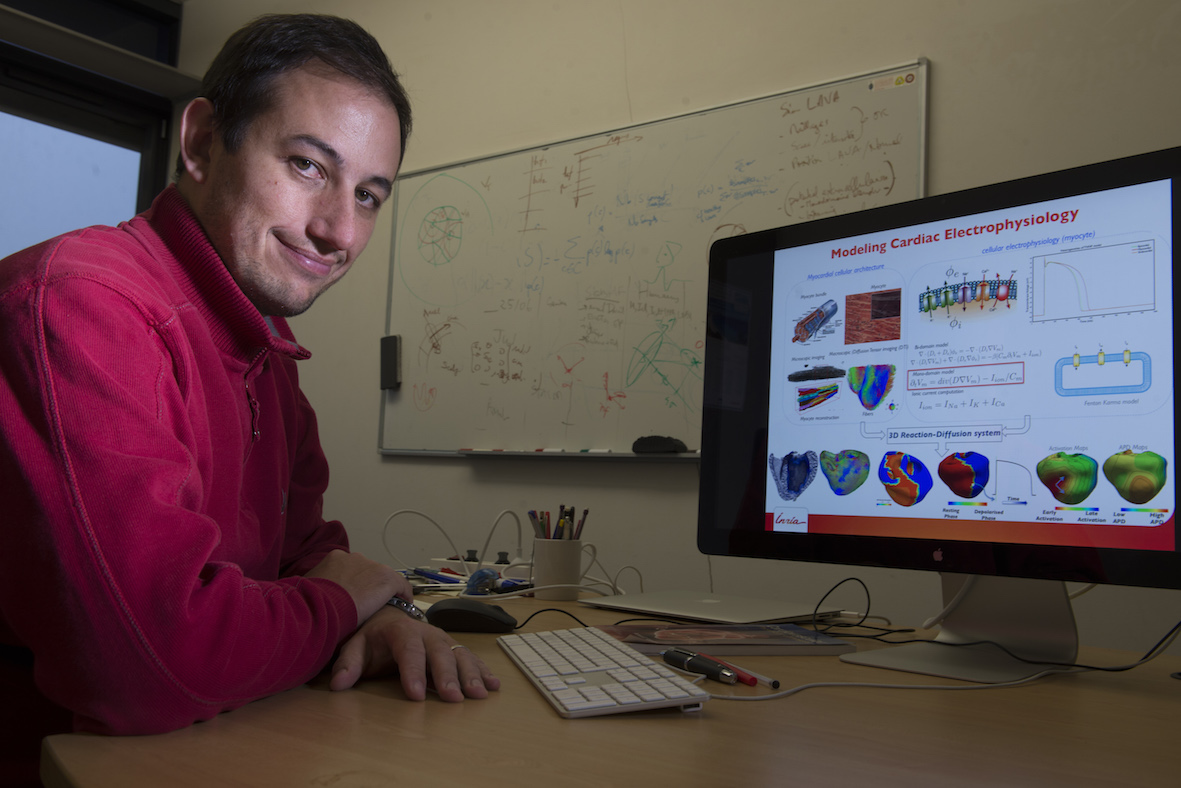 Maxime Sermesant合作论文数INRIA Sophia Antipolis,France1
 Daniel Rueckert合作论文数Department of Computing, Imperial College London;Centre for Cardiac Engineering, Imperial College London;School of Computation, Information and Technology, Technical University of Munich;School of Medicine and Health, Technical University of Munich1
 Xiahai Zhuang (庄吓海)合作论文数School of Date Science, Fudan University;Intelligent Medicine Institute, Fudan University1
 Karim Lekadir合作论文数Visual Information Processing Group, Department of Computing1
 Ruixuan Wang (王瑞轩)合作论文数Intelligence Science and System Lab, School of Computer Science and Engineering, Sun Yat-Sen University1
 Bjoern Menze合作论文数Department of Quantitative Biomedicine, University of Zurich;Faculty of Science, University of Zurich1
 Holger Roth合作论文数NVIDIA Corporation1
 Xinghao Ding (丁兴号)合作论文数School of Informatics, Xiamen University;Lab of Smart Data and Signal Processing, Xiamen University1Jiexiang Wang (王杰祥)合作论文数厦门大学1




