Bone defects remain a challenging problem for doctors and patients in clinical practice. Processed pyritum is a traditional Chinese medicine that is often used to clinically treat bone fractures. It contains mainly Fe, Zn, Cu, Mn, and other elements. In this study, we added the extract of processed pyritum to β-tricalcium phosphate and produced a porous composite TPP (TCP/processed pyritum) scaffold using digital light processing (DLP) 3D printing technology. Scanning electron microscopy (SEM) analysis revealed that TPP scaffolds contained interconnected pore structures. When compared with TCP scaffolds (1.35 ± 0.15 MPa), TPP scaffolds (5.50 ± 0.24 MPa) have stronger mechanical strength and can effectively induce osteoblast proliferation, differentiation, and mineralization in vitro. Meanwhile, the in vivo study showed that the TPP scaffold had better osteogenic capacity than the TCP scaffold. Furthermore, the TPP scaffold had good biosafety after implantation. In summary, the TPP scaffold is a promising biomaterial for the clinical treatment of bone defects.
Bone defects remain a challenging problem for doctors and patients in clinical practice. Processed pyritum is a traditional Chinese medicine that is often used to clinically treat bone fractures. It contains mainly Fe, Zn, Cu, Mn, and other elements. In this study, we added the extract of processed pyritum to 13-tricalcium phosphate and produced a porous composite TPP (TCP/processed pyritum) scaffold using digital light processing (DLP) 3D printing technology. Scanning electron microscopy (SEM) analysis revealed that TPP scaffolds contained interconnected pore structures. When compared with TCP scaffolds (1.35 +/- 0.15 MPa), TPP scaffolds (5.50 +/- 0.24 MPa) have stronger mechanical strength and can effectively induce osteoblast proliferation, differentiation, and mineralization in vitro. Meanwhile, the in vivo study showed that the TPP scaffold had better osteogenic capacity than the TCP scaffold. Furthermore, the TPP scaffold had good biosafety after implantation. In summary, the TPP scaffold is a promising biomaterial for the clinical treatment of bone defects.
目的 探讨自然铜及其煅淬品中Fe、Zn、Mg、Cu等多种金属元素与促进成骨细胞增殖的谱效关系.方法 将雄性SD大鼠随机分为空白组、生品组(7.5 g·kg-1)和煅淬品组(7.5 g·kg-1),按照相应剂量灌胃给药.采用电感耦合等离子体发射光谱(ICP-OES)法测定给药0.5、1、2、3、4、6、8、12 h后大鼠血清中Fe、Zn、Mg、Cu等元素的含量.取新生24 h内的SD大鼠,制备成骨细胞,并以不同时间点含药血清进行干预;采用MTT法测定成骨细胞的增殖情况.采用偏最小二乘回归(PLSR)法对含药血清中的金属元素含量与血清对成骨细胞的增殖作用进行谱效相关性分析,计算偏回归系数与VIP值.结果 与空白组比较,除12 h外,其他各时间点的生品组及煅淬品组的成骨细胞增殖率明显升高(P<0.01);在3、4 h 2个时间点,与生品组比较,煅淬品组的成骨细胞增殖率明显升高(P<0.01).自然铜生品组Fe元素的VIP值>1,煅淬品组中Fe、Mg元素的VIP值均>1,且Fe元素VIP值>Mg元素VIP值;自然铜含药血清中Fe元素与促进成骨细胞增殖作用的相关性最强,其次为Mg、Zn、Cu元素.结论 自然铜生品与煅淬品均能促进成骨细胞增殖,与其所含Fe、Zn、Mg、Cu等金属元素有关,且与Fe的相关性最大.
背景:随着医疗水平的提高,临床对骨修复材料的需求逐渐增多,要求也越来越高.目的:综述近年来骨修复材料领域的相关研究进展,分析不同材料的优缺点,展望该领域的未来发展.方法:以"组织工程学、骨修复材料、骨缺损、天然骨材料、骨移植替代材料、中药;Tissue engineering、Bone repair material、Bone defect、Natural bone material、Bone graft replacement material、traditional Chinese medicine"等作为关键词,在CNKI、万方数据学库、PubMed、Web of Science数据库进行检索,文献的语种限定为中文和英文,检索时间为1950至2019年.共检索到文献900余篇,最终纳入68篇进行综述.结果与结论:近年来随着组织工程学的蓬勃发展,骨组织修复材料的研究方兴未艾,除在天然骨的基础上对天然骨进行优化之外,也开发了各式各样的骨移植替代材料,如天然高分子材料、合成高分子材料、生物医用陶瓷材料、生物医用金属材料等,但这些材料性能不一,水平参差不齐,所以目前骨修复材料虽多,但理想的骨修复材料在临床的应用依然较少,因而骨缺损修复和重建仍是目前临床亟待解决的骨科难题之一.另外,将传统应用于骨修复的中药如自然铜与现代骨修复材料相结合应用,可有效规避现行各种骨修复材料的一些弊端,有效发挥治疗骨缺损疾病的作用,是骨修复领域一个值得深入研究的方向.
Qing'e pills is clinically used for treating osteoporosis in postmenopausal women in China. Eucommiae Cortex and Psoraleae Fructus are the main herbs of Qing'e pills and are both required to be salt-processed. In order to study the influence of salt-processing on the tissue distribution of Qing'e pills, a UPLC-MS/MS method was established for studying the tissue distribution of 12 main bioactive ingredients of Qing'e pills in rats. The linear relationships of the 12 compounds in each tissue were good. The method was fully validated for its selectivity, accuracy, precision, stability, matrix effect, and extraction recovery. Then, the validated method was successfully applied for simultaneous determination of the 12 chemical components in Qing'e pills in tissues for the first time. Areas under the curve (AUC) results showed that, except for pinoresinol diglucoside, psoralen, and isopsoralen, the distribution of the other components was increased in the kidney, uterus, ovary, and testes. Relative targeting efficiency (RTE) results showed that all 12 chemical components targeted the kidney and sexual organs. The results indicated that the Eucommiae Cortex and Psoraleae Fructus after salt-processing could significantly increase the distribution of components to the kidney and generative organs.
背景:运用3D打印技术可将药物与材料结合实现药物联合用药,制成具有特定释放速率的剂型,从而更好的应用于临床.目的:综述临床常用西药、中药、金属元素及离子等与相关材料制成药物复合材料的制备工艺、优点及适应证等.方法:由第一作者以"药物;中药或金属;复合材料;3D打印"作为关键词,以"并含"的逻辑组合关系在CNKI、万方数据库进行检索;以"Drug;Chinese medicine;Metal;Composite materials;3D printing"作为关键词,以"and"的逻辑组合关系在PubMed、Web of Science数据库进行检索,检索时间均为1950至2019年.初步检索文献339篇,筛选后对46篇文献进行分析.结果与结论:将西药、中药、金属元素及离子等与相关材料制成药物复合材料,在制药领域和临床使用中均有一定的优越性,其不仅可提高药物的生物利用度、降低毒副作用,还可实现联合用药.近年来,药物复合材料已被运用于骨科、牙科、心血管内科、耳鼻喉科等领域,但其应用还处于初级阶段,很多方面需要提高和改进,如提高药物复合材料质量;提高力学稳定性,减少脆性;打印功能齐全,与人体大小相适应的血管和器官;更好地模仿人体真实组织的生物力学、组织结构等.
目的:比较市售山药与产地加工炮制一体化山药免疫调节和胃肠道调节功能的差异,为山药产地加工炮制一体化生产提供参考.方法:采用环磷酰胺致小鼠免疫低下模型,以廓清指数、吞噬指数、脾脏指数和胸腺指数为指标,比较不同加工工艺的山药对小鼠免疫功能的影响.采用大黄水煎液致小鼠脾虚模型,以胃排空率及小肠推进率为指标,比较两种加工工艺的山药对脾虚小鼠胃肠道功能的影响.结果:2种加工工艺的山药均有增强免疫低下小鼠免疫力的功能,且与模型组相比,山药一体化高剂量组可显著性增强小鼠免疫力.二者均可显著降低脾虚小鼠的胃排空率和小肠推进率;与市售山药高、低剂量组相比,一体化山药高、低剂量组的脾脏指数显著升高.结论:一体化山药与市售山药均可提高免疫力低下小鼠免疫力,增强脾虚小鼠胃肠道功能,且一体化山药优于市售山药.
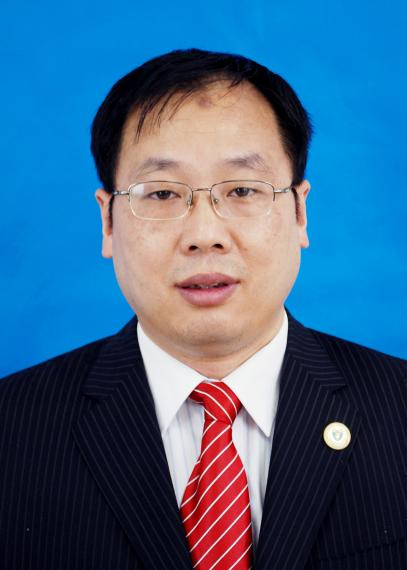 Weidong Li (李伟东)合作论文数Nanjing University of Chinese Medicine7
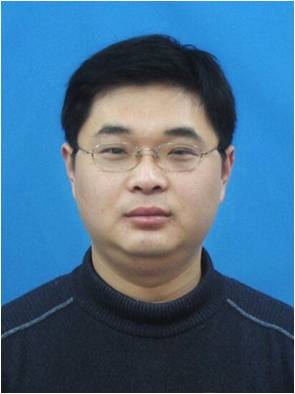 Zhipeng Chen (陈志鹏)合作论文数Nanjing University of Chinese Medicine6
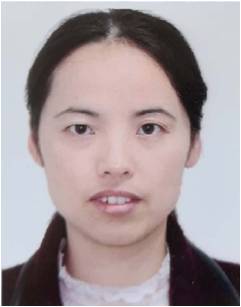 Li Wu (吴丽)合作论文数Nanjing University of Chinese Medicine3
 Shuyang Qi合作论文数2Jinlan Lu合作论文数2Chenxu Wei合作论文数2Weichen Xu合作论文数2XIA Chenjie (夏晨洁)合作论文数2Yuan Zhu合作论文数2Shangyang Lin (林上阳)合作论文数2
 Dan Wang合作论文数Chem Engn Program, Univ Calif San Diego2
 Kunming Qin (秦昆明)合作论文数School of Pharmacy, Jiangsu Ocean University2Xingyu Zhu合作论文数1Hou-wei DING (丁厚伟)合作论文数1Qianqian Gao合作论文数1
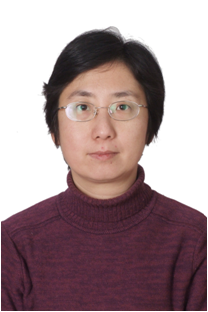 Hui Xie (谢辉)合作论文数Nanjing University of Chinese Medicine1Yu Wu (吴育)合作论文数1




